

Nuts, pistachio nuts, raw
Whole food · Nut and Seed Products

Photo: Wikipedia
Raw pistachios are the vibrant green kernels of a stone fruit, prized for their satisfyingly crunchy texture and subtly sweet, nutty flavor with a hint of pine. Nutritionally, they are a powerhouse, offering a complete protein profile and being exceptionally high in fiber compared to other nuts, all while providing healthy monounsaturated fats.
Calorie split: 14% protein · 18% carbs · 68% fat
↓ Full nutrition💚 Why it's loved
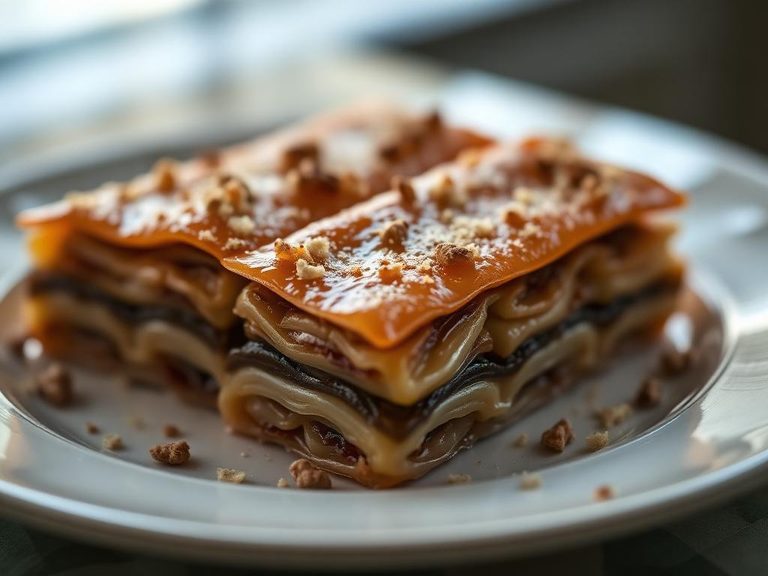
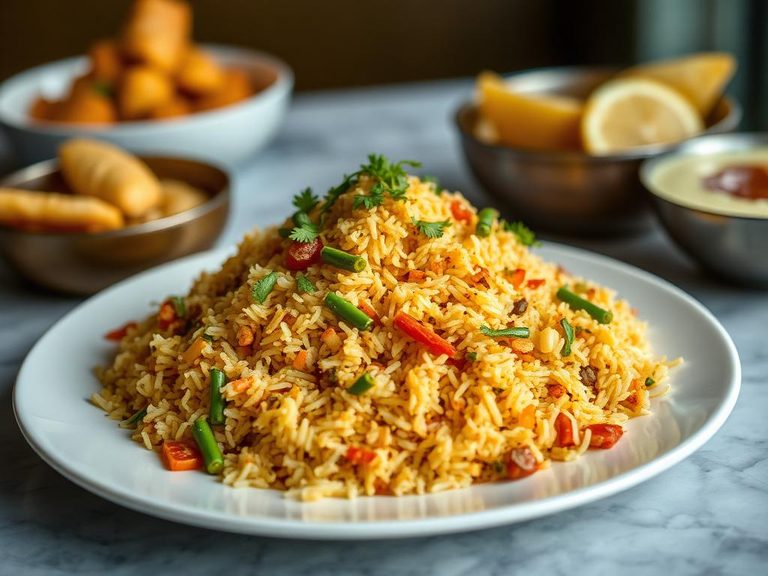
People adore pistachios for their uniquely complex, savory-sweet flavor and the engaging ritual of cracking open the shell, which naturally encourages mindful, slower eating. Their versatility allows them to shine in both savory dishes like pilafs and sweets like baklava.
⚠️ Watch-outs & how to enjoy it better
The shells can be high in sodium if salted, and pistachios are a tree nut allergen. Their high fiber and FODMAP content may cause digestive discomfort in sensitive individuals. To mitigate, opt for unsalted varieties, practice portion control (about a handful), and pair with a source of fat or protein if using them in a sweet dish to blunt any blood sugar impact.
Key benefits
- Excellent source of complete protein (all 9 essential amino acids).
- One of the highest-fiber nuts, aiding digestion and satiety.
- Rich in antioxidants, including lutein and zeaxanthin for eye health.
- Provides a good source of potassium and vitamin B6.
- Contains healthy monounsaturated fats that support heart health.
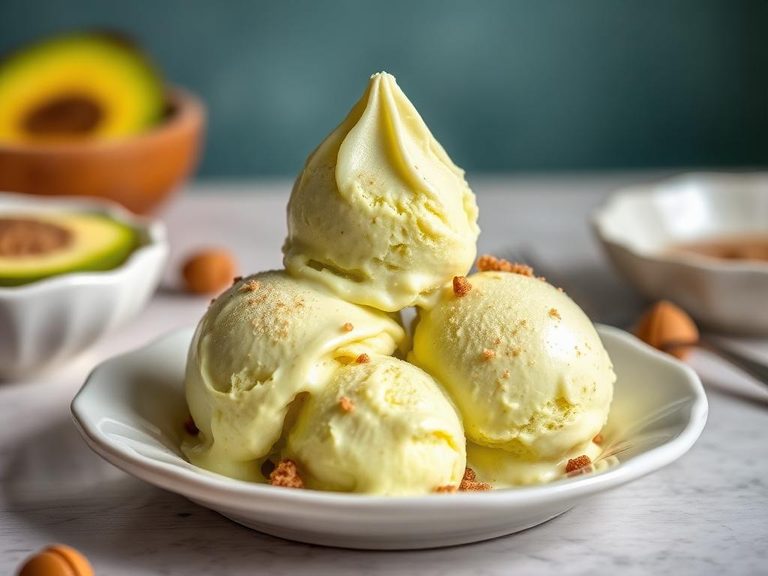
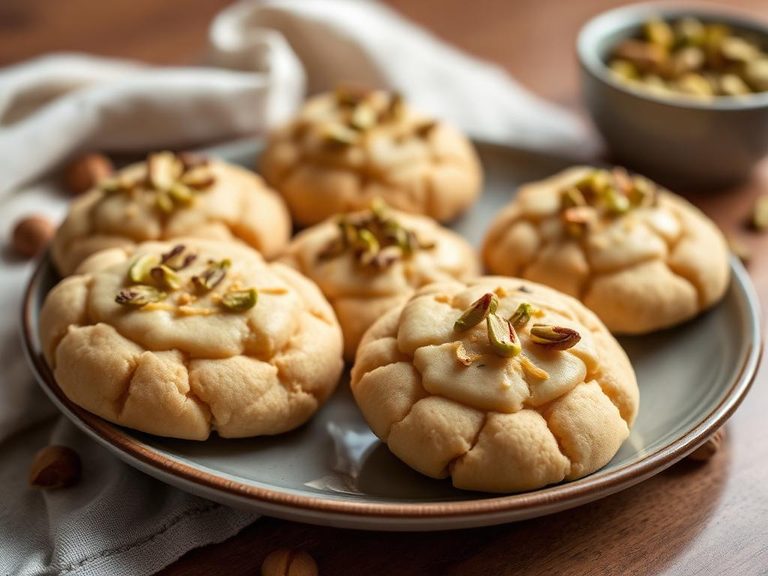
🍽️ Popular dishes

🌍 Where it's eaten
💡 Did you know?
The vibrant green color of pistachios comes from chlorophyll, the same pigment found in plants, which is unusual for a nut and can fade over time with light exposure.
Full nutrition (USDA data · scales with serving)
| Water | 4.4 g |
| Energy | 560 kcal |
| Energy | 2342 kj |
| Protein | 20.2 g |
| Total lipid (fat) | 45.3 g |
| Ash | 3.0 g |
| Carbohydrate, by difference | 27.2 g |
| Fiber, total dietary | 10.6 g |
| Total Sugars | 7.7 g |
| Sucrose | 6.9 g |
| Glucose | 0.32 g |
| Fructose | 0.24 g |
| Lactose | 0.00 g |
| Maltose | 0.17 g |
| Starch | 1.7 g |
| Calcium, Ca | 105 mg |
| Iron, Fe | 3.9 mg |
| Magnesium, Mg | 121 mg |
| Phosphorus, P | 490 mg |
| Potassium, K | 1025 mg |
| Sodium, Na | 1.0 mg |
| Zinc, Zn | 2.2 mg |
| Copper, Cu | 1.3 mg |
| Manganese, Mn | 1.2 mg |
| Selenium, Se | 7.0 ug |
| Fluoride, F | 3.4 ug |
| Vitamin C, total ascorbic acid | 5.6 mg |
| Thiamin | 0.87 mg |
| Riboflavin | 0.16 mg |
| Niacin | 1.3 mg |
| Pantothenic acid | 0.52 mg |
| Vitamin B-6 | 1.7 mg |
| Folate, total | 51.0 ug |
| Folic acid | 0.00 ug |
| Folate, food | 51.0 ug |
| Folate, DFE | 51.0 ug |
| Vitamin B-12 | 0.00 ug |
| Vitamin A, RAE | 26.0 ug |
| Retinol | 0.00 ug |
| Carotene, beta | 305 ug |
| Carotene, alpha | 10.0 ug |
| Cryptoxanthin, beta | 0.00 ug |
| Vitamin A, IU | 516 iu |
| Lutein + zeaxanthin | 2903 ug |
| Vitamin E (alpha-tocopherol) | 2.9 mg |
| Tocopherol, beta | 0.00 mg |
| Tocopherol, gamma | 20.4 mg |
| Tocopherol, delta | 0.80 mg |
| Tocotrienol, gamma | 1.7 mg |
| Vitamin D (D2 + D3), International Units | 0.00 iu |
| Vitamin D (D2 + D3) | 0.00 ug |
| Alcohol, ethyl | 0.00 g |
| Caffeine | 0.00 mg |
| Theobromine | 0.00 mg |
Fat & fatty acid profile (per 100g)
| Fatty acids, total saturated | 5.9 g |
| SFA 4:0 | 0.00 g |
| SFA 6:0 | 0.01 g |
| SFA 8:0 | 0.00 g |
| SFA 10:0 | 0.00 g |
| SFA 12:0 | 0.00 g |
| SFA 13:0 | 0.00 g |
| SFA 14:0 | 0.02 g |
| SFA 15:0 | 0.00 g |
| SFA 16:0 | 5.3 g |
| SFA 17:0 | 0.01 g |
| SFA 18:0 | 0.48 g |
| SFA 20:0 | 0.05 g |
| SFA 22:0 | 0.04 g |
| SFA 24:0 | 0.00 g |
| Fatty acids, total monounsaturated | 23.3 g |
| MUFA 14:1 | 0.00 g |
| MUFA 16:1 | 0.49 g |
| MUFA 18:1 | 22.7 g |
| MUFA 20:1 | 0.09 g |
| MUFA 22:1 | 0.00 g |
| MUFA 24:1 c | 0.00 g |
| Fatty acids, total polyunsaturated | 14.4 g |
| PUFA 18:2 | 14.1 g |
| PUFA 18:2 n-6 c,c | 14.1 g |
| PUFA 18:3 | 0.29 g |
| PUFA 18:4 | 0.00 g |
| PUFA 20:2 n-6 c,c | 0.00 g |
| PUFA 20:3 | 0.00 g |
| PUFA 20:4 | 0.00 g |
| PUFA 20:5 n-3 (EPA) | 0.00 g |
| PUFA 22:5 n-3 (DPA) | 0.00 g |
| PUFA 22:6 n-3 (DHA) | 0.00 g |
| Fatty acids, total trans | 0.00 g |
| Cholesterol | 0.00 mg |
| Phytosterols | 214 mg |
| Stigmasterol | 5.0 mg |
| Campesterol | 10.0 mg |
| Beta-sitosterol | 198 mg |
Amino acid profile (per 100g)
| Tryptophan | 0.25 g |
| Threonine | 0.68 g |
| Isoleucine | 0.92 g |
| Leucine | 1.6 g |
| Lysine | 1.1 g |
| Methionine | 0.36 g |
| Cystine | 0.29 g |
| Phenylalanine | 1.1 g |
| Tyrosine | 0.51 g |
| Valine | 1.2 g |
| Arginine | 2.1 g |
| Histidine | 0.51 g |
| Alanine | 0.97 g |
| Aspartic acid | 1.9 g |
| Glutamic acid | 4.3 g |
| Glycine | 1.0 g |
| Proline | 0.94 g |
| Serine | 1.3 g |
FAQ
Why are some pistachio shells partially open?
This is a natural split that occurs as the nut grows and matures inside. It's a sign of a well-ripened nut and makes them easier to shell.
Are pistachios with red skins the same as regular pistachios?
Yes, the red skins are just the thin, papery outer layer of the kernel. Some varieties naturally have a reddish hue, while others are dyed for visual appeal in certain dishes.
How should I store pistachios to keep them fresh?
Store shelled pistachios in an airtight container in a cool, dark place for up to 3 months, or in the freezer for up to a year to prevent the oils from going rancid.
Nutrient density (calculated · NRF9.3)
Nutrient Rich Foods index: beneficial nutrients (protein, fiber, vitamins, minerals) minus saturated fat, added sugar & sodium, per 100 kcal.
NRF9.3 index — Fulgoni, Keast & Drewnowski, 2009. Computed from USDA nutrients.
Weight-loss friendliness (composite index)
Energy density 5.60 kcal/g · 14% calories from protein · 10.6 g fiber · 7.7 g sugar per 100 g.
Composite of energy density (Rolls et al., 1999), protein & fiber satiety, minus sugar. A calculated heuristic — ranks satiety-per-calorie, not a clinical measure.
Dietary load (calculated from USDA values)
Potential renal acid load. Positive = acid-forming, negative = alkaline-forming.
Sodium-to-potassium ratio: 0.00 (lower is better — aim for ≤ 1)
Sodium:potassium per WHO potassium guidance. Computed from USDA nutrients.