

Fish, trout, rainbow, farmed, cooked, dry heat
Whole food · Finfish and Shellfish Products

Photo: Wikipedia
Farmed rainbow trout, cooked with dry heat, delivers a delicate, flaky flesh with a mild, slightly sweet flavor and a tender, moist texture. It is a nutritional powerhouse, offering a substantial 23.8 grams of high-quality protein per 100g serving with virtually no carbohydrates. The healthy fat content, primarily from omega-3 fatty acids, contributes to its satisfying mouthfeel and nutritional profile.
Calorie split: 59% protein · 0% carbs · 41% fat
↓ Full nutrition💚 Why it's loved
People love its gentle, non-fishy flavor that acts as a perfect canvas for herbs, spices, and sauces, making it incredibly versatile in the kitchen. Its tender, flaky texture is consistently satisfying, and it's a staple in cuisines from the Pacific Northwest to European rivers.
⚠️ Watch-outs & how to enjoy it better
As a finfish, it is a common allergen and should be avoided by those with fish or seafood allergies. Farmed varieties can have a higher environmental impact and trace contaminants compared to wild-caught, so sourcing from certified sustainable farms is recommended. To maximize benefits, pair it with non-starchy vegetables and a healthy fat like olive oil to create a balanced, low-glycemic meal.
Key benefits
- Excellent source of complete, high-quality protein
- Rich in heart-healthy omega-3 fatty acids (EPA & DHA)
- Provides essential vitamins like B12 and niacin
- Good source of minerals such as selenium and phosphorus
- Lean protein source with zero carbohydrates
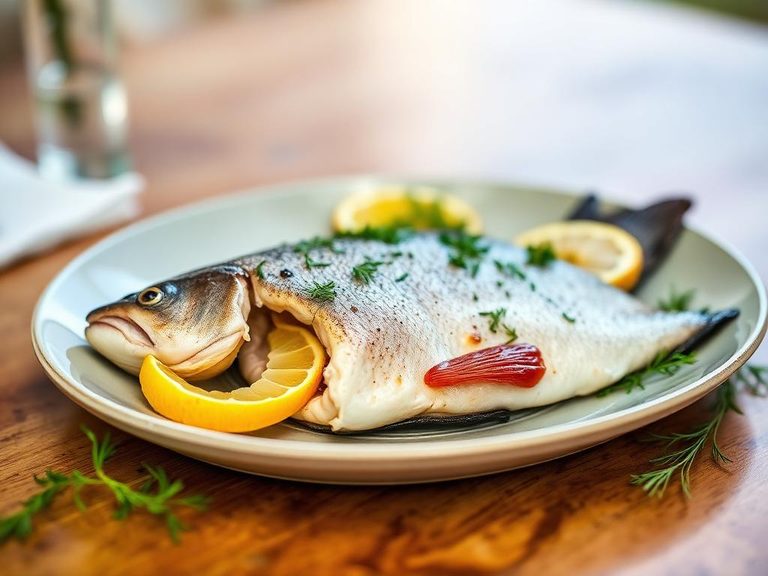
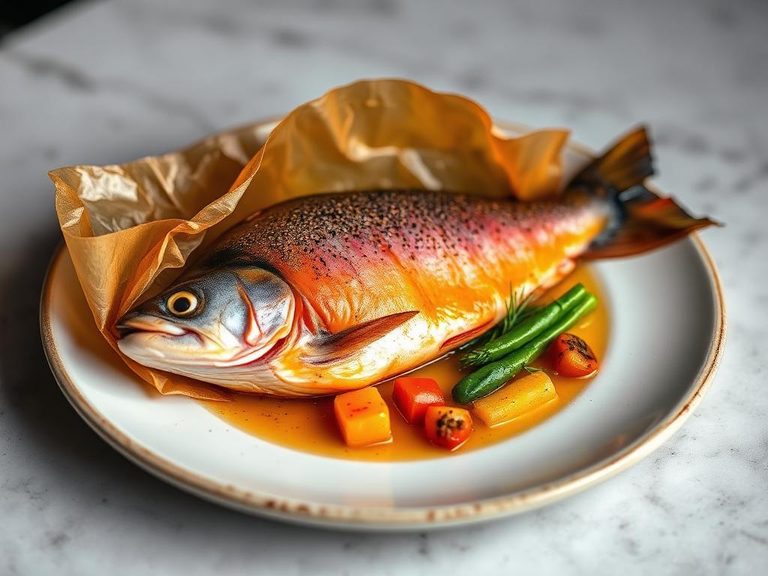
🍽️ Popular dishes
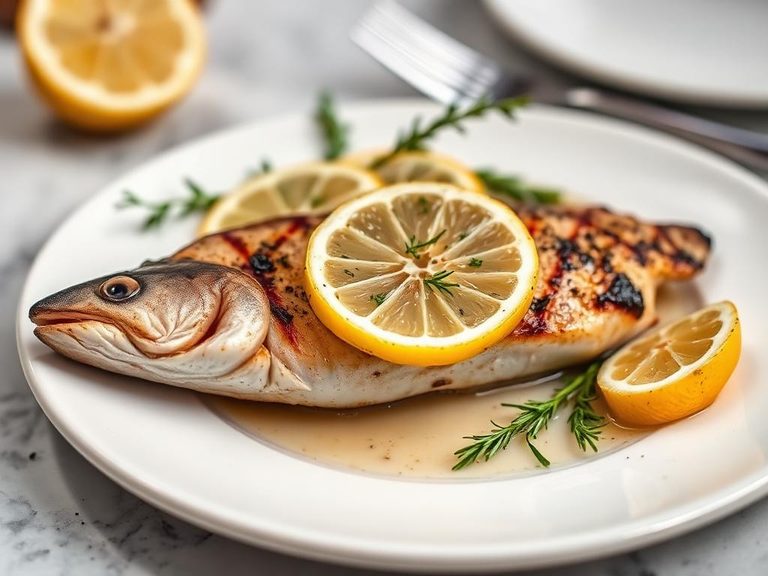
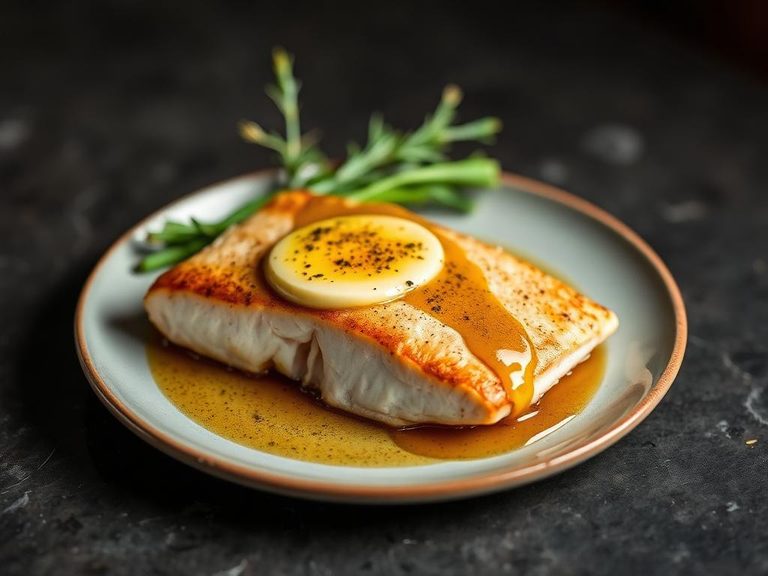
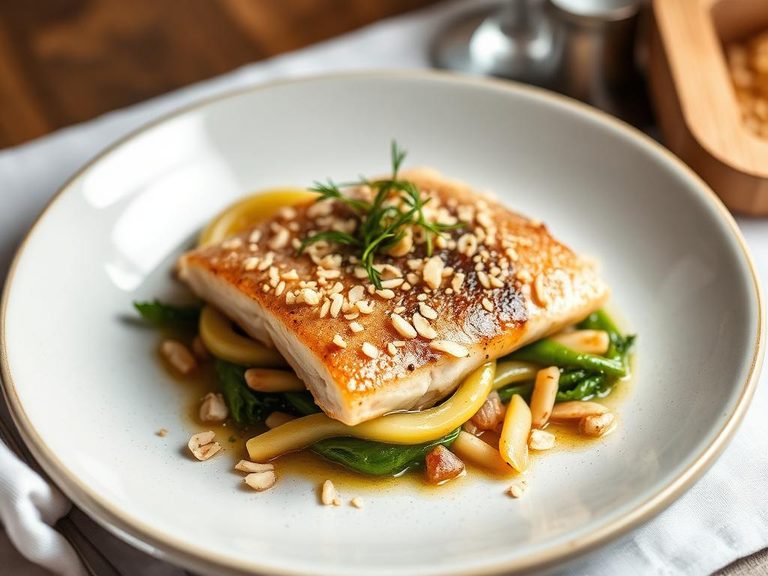
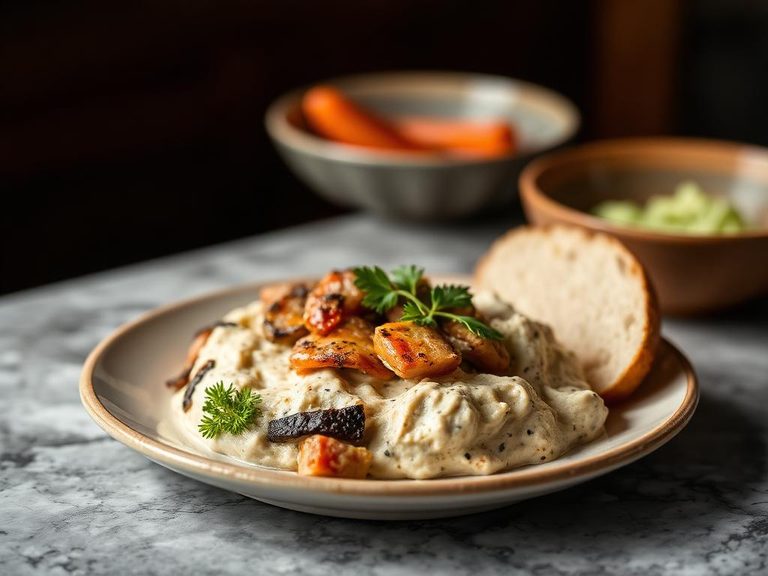
🌍 Where it's eaten
💡 Did you know?
Rainbow trout get their name from the vibrant, pinkish-red lateral stripe that runs along their sides, which becomes especially vivid during spawning season.
Full nutrition (USDA data · scales with serving)
| Water | 68.7 g |
| Energy | 168 kcal |
| Energy | 704 kj |
| Protein | 23.8 g |
| Total lipid (fat) | 7.4 g |
| Ash | 1.4 g |
| Carbohydrate, by difference | 0.00 g |
| Fiber, total dietary | 0.00 g |
| Total Sugars | 0.00 g |
| Calcium, Ca | 30.0 mg |
| Iron, Fe | 0.36 mg |
| Magnesium, Mg | 30.0 mg |
| Phosphorus, P | 270 mg |
| Potassium, K | 450 mg |
| Sodium, Na | 61.0 mg |
| Zinc, Zn | 0.54 mg |
| Copper, Cu | 0.06 mg |
| Manganese, Mn | 0.01 mg |
| Selenium, Se | 28.1 ug |
| Vitamin C, total ascorbic acid | 2.9 mg |
| Thiamin | 0.14 mg |
| Riboflavin | 0.11 mg |
| Niacin | 6.6 mg |
| Pantothenic acid | 2.0 mg |
| Vitamin B-6 | 0.39 mg |
| Folate, total | 12.0 ug |
| Folic acid | 0.00 ug |
| Folate, food | 12.0 ug |
| Folate, DFE | 12.0 ug |
| Choline, total | 77.6 mg |
| Vitamin B-12 | 4.1 ug |
| Vitamin B-12, added | 0.00 ug |
| Vitamin A, RAE | 100 ug |
| Retinol | 100 ug |
| Carotene, beta | 0.00 ug |
| Carotene, alpha | 0.00 ug |
| Cryptoxanthin, beta | 0.00 ug |
| Vitamin A, IU | 301 iu |
| Lycopene | 0.00 ug |
| Lutein + zeaxanthin | 0.00 ug |
| Vitamin E (alpha-tocopherol) | 2.8 mg |
| Vitamin E, added | 0.00 mg |
| Tocopherol, beta | 0.00 mg |
| Tocopherol, gamma | 0.05 mg |
| Tocopherol, delta | 0.00 mg |
| Tocotrienol, alpha | 0.01 mg |
| Tocotrienol, beta | 0.00 mg |
| Tocotrienol, gamma | 0.01 mg |
| Tocotrienol, delta | 0.00 mg |
| Vitamin D (D2 + D3), International Units | 759 iu |
| Vitamin D (D2 + D3) | 19.0 ug |
| Vitamin D3 (cholecalciferol) | 19.0 ug |
| Vitamin K (phylloquinone) | 0.10 ug |
| Alcohol, ethyl | 0.00 g |
| Caffeine | 0.00 mg |
| Theobromine | 0.00 mg |
Fat & fatty acid profile (per 100g)
| Fatty acids, total saturated | 1.7 g |
| SFA 4:0 | 0.00 g |
| SFA 6:0 | 0.00 g |
| SFA 8:0 | 0.00 g |
| SFA 10:0 | 0.00 g |
| SFA 12:0 | 0.01 g |
| SFA 14:0 | 0.22 g |
| SFA 15:0 | 0.02 g |
| SFA 16:0 | 1.1 g |
| SFA 17:0 | 0.01 g |
| SFA 18:0 | 0.27 g |
| SFA 20:0 | 0.01 g |
| SFA 22:0 | 0.00 g |
| SFA 24:0 | 0.00 g |
| Fatty acids, total monounsaturated | 2.4 g |
| MUFA 14:1 | 0.00 g |
| MUFA 15:1 | 0.01 g |
| MUFA 16:1 | 0.41 g |
| MUFA 17:1 | 0.00 g |
| MUFA 18:1 | 1.6 g |
| MUFA 20:1 | 0.27 g |
| MUFA 22:1 | 0.02 g |
| MUFA 24:1 c | 0.02 g |
| Fatty acids, total polyunsaturated | 1.8 g |
| PUFA 18:2 | 0.59 g |
| PUFA 18:3 | 0.08 g |
| PUFA 18:4 | 0.00 g |
| PUFA 20:2 n-6 c,c | 0.05 g |
| PUFA 20:3 | 0.03 g |
| PUFA 20:4 | 0.05 g |
| PUFA 20:5 n-3 (EPA) | 0.26 g |
| PUFA 22:4 | 0.01 g |
| PUFA 22:5 n-3 (DPA) | 0.11 g |
| PUFA 22:6 n-3 (DHA) | 0.62 g |
| Fatty acids, total trans | 0.06 g |
| Cholesterol | 70.0 mg |
Amino acid profile (per 100g)
| Tryptophan | 0.28 g |
| Threonine | 1.1 g |
| Isoleucine | 1.1 g |
| Leucine | 2.0 g |
| Lysine | 2.3 g |
| Methionine | 0.74 g |
| Cystine | 0.27 g |
| Phenylalanine | 0.97 g |
| Tyrosine | 0.84 g |
| Valine | 1.3 g |
| Arginine | 1.5 g |
| Histidine | 0.73 g |
| Alanine | 1.5 g |
| Aspartic acid | 2.6 g |
| Glutamic acid | 3.7 g |
| Glycine | 1.2 g |
| Proline | 0.88 g |
| Serine | 1.0 g |
FAQ
Is farmed rainbow trout safe to eat?
Yes, it is generally considered safe and is a popular, affordable source of omega-3s. Look for trout farmed in the U.S., Canada, or Europe, which often have stricter environmental and safety regulations.
How does the taste differ from wild trout?
Farmed rainbow trout has a milder, more consistent flavor and a higher fat content, making it richer and more tender. Wild trout often has a more pronounced, 'fishier' taste and a firmer texture.
What's the best way to cook it to keep it moist?
Dry-heat methods like baking, broiling, or pan-searing work best. Cook it just until the flesh is opaque and flakes easily with a fork, usually 8-12 minutes depending on thickness. Overcooking is the main cause of dryness.
Nutrient density (calculated · NRF9.3)
Nutrient Rich Foods index: beneficial nutrients (protein, fiber, vitamins, minerals) minus saturated fat, added sugar & sodium, per 100 kcal.
NRF9.3 index — Fulgoni, Keast & Drewnowski, 2009. Computed from USDA nutrients.
Weight-loss friendliness (composite index)
Energy density 1.68 kcal/g · 57% calories from protein · 0.0 g fiber · 0.0 g sugar per 100 g.
Composite of energy density (Rolls et al., 1999), protein & fiber satiety, minus sugar. A calculated heuristic — ranks satiety-per-calorie, not a clinical measure.
Dietary load (calculated from USDA values)
Potential renal acid load. Positive = acid-forming, negative = alkaline-forming.
Sodium-to-potassium ratio: 0.14 (lower is better — aim for ≤ 1)
Sodium:potassium per WHO potassium guidance. Computed from USDA nutrients.