

Fish, tilapia, cooked, dry heat
Whole food · Finfish and Shellfish Products
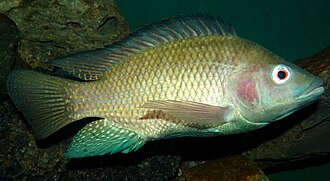
Photo: Wikipedia
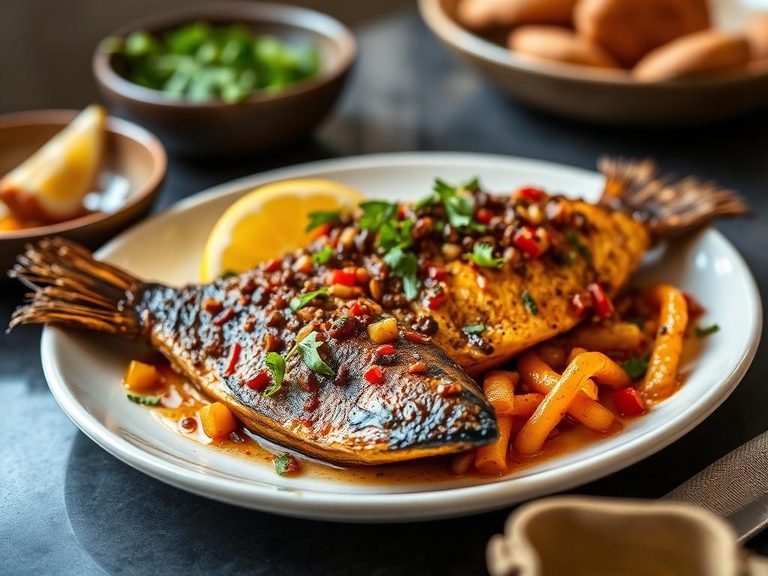
Tilapia cooked with dry heat, like baking or grilling, transforms into a lean, white-fleshed fish with a mild, slightly sweet flavor and a firm, flaky texture. Its standout nutritional feature is its exceptional protein density—over 26 grams per 100 grams—with virtually no carbohydrates or fat, making it a pure, clean source of high-quality protein.
Calorie split: 81% protein · 0% carbs · 19% fat
↓ Full nutrition💚 Why it's loved
People love tilapia for its mild, non-fishy taste and adaptable texture, which readily absorbs marinades and seasonings. Its affordability and quick cooking time make it a weeknight staple for healthy, protein-packed meals across many cultures.
⚠️ Watch-outs & how to enjoy it better
As a very lean fish, it can dry out easily if overcooked, leading to a less appealing texture. Some aquaculture practices have raised environmental concerns, so choosing responsibly sourced tilapia is recommended. To counteract dryness, marinate briefly before cooking, use a meat thermometer to pull it at 145°F (63°C), or baste with a little olive oil or butter.
Key benefits
- Excellent source of high-quality, complete protein for muscle maintenance.
- Very low in fat and calories, supporting weight management goals.
- Contains essential nutrients like selenium and vitamin B12.
- Versatile canvas for a wide range of herbs, spices, and cooking methods.
🍽️ Popular dishes
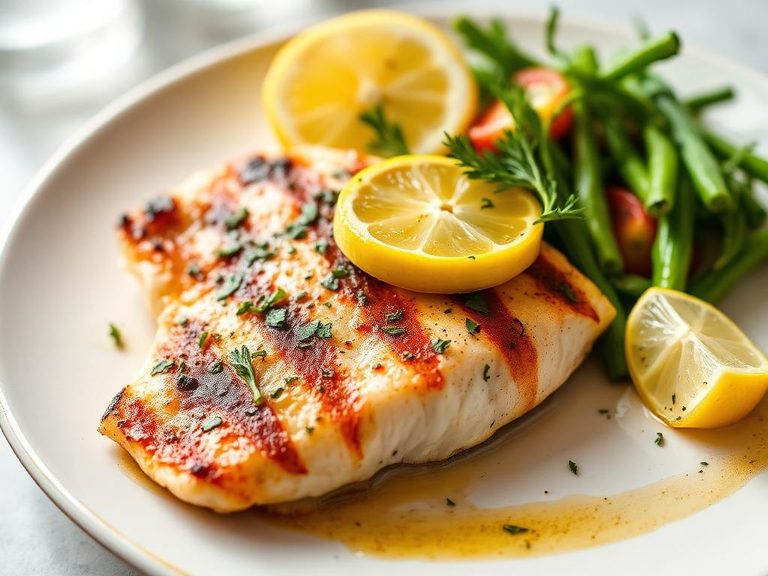

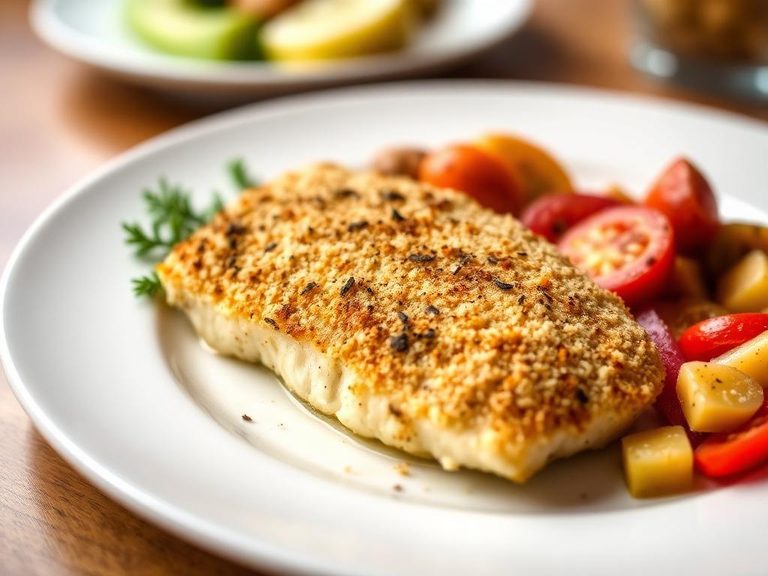
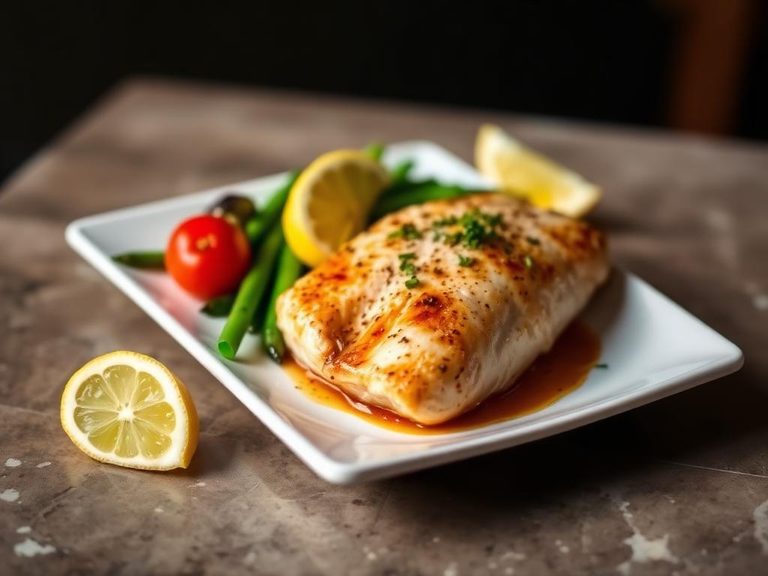

🌍 Where it's eaten
💡 Did you know?
Tilapia is sometimes called the 'aquatic chicken' because it was one of the first fish species to be farmed commercially on a large scale, prized for its fast growth and mild taste.
Full nutrition (USDA data · scales with serving)
| Water | 71.6 g |
| Energy | 128 kcal |
| Energy | 538 kj |
| Protein | 26.1 g |
| Total lipid (fat) | 2.6 g |
| Ash | 1.1 g |
| Carbohydrate, by difference | 0.00 g |
| Fiber, total dietary | 0.00 g |
| Total Sugars | 0.00 g |
| Calcium, Ca | 14.0 mg |
| Iron, Fe | 0.69 mg |
| Magnesium, Mg | 34.0 mg |
| Phosphorus, P | 204 mg |
| Potassium, K | 380 mg |
| Sodium, Na | 56.0 mg |
| Zinc, Zn | 0.41 mg |
| Copper, Cu | 0.07 mg |
| Manganese, Mn | 0.04 mg |
| Selenium, Se | 54.4 ug |
| Vitamin C, total ascorbic acid | 0.00 mg |
| Thiamin | 0.09 mg |
| Riboflavin | 0.07 mg |
| Niacin | 4.7 mg |
| Pantothenic acid | 0.66 mg |
| Vitamin B-6 | 0.12 mg |
| Folate, total | 6.0 ug |
| Folic acid | 0.00 ug |
| Folate, food | 6.0 ug |
| Folate, DFE | 6.0 ug |
| Choline, total | 51.3 mg |
| Betaine | 26.3 mg |
| Vitamin B-12 | 1.9 ug |
| Vitamin B-12, added | 0.00 ug |
| Vitamin A, RAE | 0.00 ug |
| Retinol | 0.00 ug |
| Carotene, beta | 0.00 ug |
| Carotene, alpha | 0.00 ug |
| Cryptoxanthin, beta | 0.00 ug |
| Vitamin A, IU | 0.00 iu |
| Lycopene | 0.00 ug |
| Lutein + zeaxanthin | 0.00 ug |
| Vitamin E (alpha-tocopherol) | 0.79 mg |
| Vitamin E, added | 0.00 mg |
| Tocopherol, beta | 0.00 mg |
| Tocopherol, gamma | 0.06 mg |
| Tocopherol, delta | 0.00 mg |
| Tocotrienol, alpha | 0.00 mg |
| Tocotrienol, beta | 0.00 mg |
| Tocotrienol, gamma | 0.00 mg |
| Tocotrienol, delta | 0.00 mg |
| Vitamin D (D2 + D3), International Units | 150 iu |
| Vitamin D (D2 + D3) | 3.7 ug |
| Vitamin D3 (cholecalciferol) | 3.7 ug |
| Vitamin K (phylloquinone) | 0.90 ug |
| Vitamin K (Dihydrophylloquinone) | 0.00 ug |
| Alcohol, ethyl | 0.00 g |
| Caffeine | 0.00 mg |
| Theobromine | 0.00 mg |
Fat & fatty acid profile (per 100g)
| Fatty acids, total saturated | 0.94 g |
| SFA 4:0 | 0.00 g |
| SFA 6:0 | 0.00 g |
| SFA 8:0 | 0.00 g |
| SFA 10:0 | 0.00 g |
| SFA 12:0 | 0.00 g |
| SFA 14:0 | 0.09 g |
| SFA 15:0 | 0.01 g |
| SFA 16:0 | 0.66 g |
| SFA 17:0 | 0.00 g |
| SFA 18:0 | 0.19 g |
| SFA 20:0 | 0.00 g |
| SFA 22:0 | 0.00 g |
| SFA 24:0 | 0.00 g |
| Fatty acids, total monounsaturated | 0.95 g |
| MUFA 14:1 | 0.00 g |
| MUFA 15:1 | 0.00 g |
| MUFA 16:1 | 0.14 g |
| MUFA 17:1 | 0.00 g |
| MUFA 18:1 | 0.77 g |
| MUFA 20:1 | 0.04 g |
| MUFA 22:1 | 0.00 g |
| Fatty acids, total polyunsaturated | 0.60 g |
| PUFA 18:2 | 0.28 g |
| PUFA 18:3 | 0.04 g |
| PUFA 18:3 n-3 c,c,c (ALA) | 0.04 g |
| PUFA 18:4 | 0.00 g |
| PUFA 20:2 n-6 c,c | 0.01 g |
| PUFA 20:3 | 0.03 g |
| PUFA 20:4 | 0.04 g |
| PUFA 20:5 n-3 (EPA) | 0.01 g |
| PUFA 22:5 n-3 (DPA) | 0.06 g |
| PUFA 22:6 n-3 (DHA) | 0.13 g |
| Cholesterol | 57.0 mg |
Amino acid profile (per 100g)
| Tryptophan | 0.27 g |
| Threonine | 1.2 g |
| Isoleucine | 1.2 g |
| Leucine | 2.0 g |
| Lysine | 2.3 g |
| Methionine | 0.77 g |
| Cystine | 0.27 g |
| Phenylalanine | 1.1 g |
| Tyrosine | 0.87 g |
| Valine | 1.3 g |
| Arginine | 1.6 g |
| Histidine | 0.58 g |
| Alanine | 1.5 g |
| Aspartic acid | 2.8 g |
| Glutamic acid | 3.9 g |
| Glycine | 1.2 g |
| Proline | 0.95 g |
| Serine | 0.96 g |
FAQ
Is tilapia a healthy fish to eat?
Yes, it's very healthy. It's an excellent source of lean protein, low in fat and calories, and provides important nutrients like selenium and vitamin B12. Its health profile is comparable to other white fish like cod or haddock.
How do I prevent tilapia from drying out when cooking?
The key is to avoid overcooking. Cook it quickly over medium-high heat (grilling, pan-searing) or bake at a moderate temperature (400°F/200°C). A brief marinade (15-30 minutes) in an acidic mixture (like lemon juice) or a little oil helps lock in moisture. It's done when the flesh is opaque and flakes easily with a fork.
What does tilapia taste like?
Tilapia has a very mild, slightly sweet flavor with a subtle earthy note. It's not 'fishy' at all, which makes it a great entry point for people who are hesitant about stronger-tasting fish. Its neutral taste makes it a perfect canvas for bold seasonings and sauces.
Nutrient density (calculated · NRF9.3)
Nutrient Rich Foods index: beneficial nutrients (protein, fiber, vitamins, minerals) minus saturated fat, added sugar & sodium, per 100 kcal.
NRF9.3 index — Fulgoni, Keast & Drewnowski, 2009. Computed from USDA nutrients.
Weight-loss friendliness (composite index)
Energy density 1.28 kcal/g · 82% calories from protein · 0.0 g fiber · 0.0 g sugar per 100 g.
Composite of energy density (Rolls et al., 1999), protein & fiber satiety, minus sugar. A calculated heuristic — ranks satiety-per-calorie, not a clinical measure.
Dietary load (calculated from USDA values)
Potential renal acid load. Positive = acid-forming, negative = alkaline-forming.
Sodium-to-potassium ratio: 0.15 (lower is better — aim for ≤ 1)
Sodium:potassium per WHO potassium guidance. Computed from USDA nutrients.