

Fish, swordfish, cooked, dry heat
Whole food · Finfish and Shellfish Products

Photo: Wikipedia
Swordfish steak, cooked by dry heat, transforms into a firm, meaty, and satisfyingly dense texture that holds up beautifully on the grill or in the pan. Its flavor is mild and slightly sweet, often compared to a firm white fish or even a lean cut of meat. A 100-gram serving delivers a powerful protein punch of 23.45 grams with virtually no carbohydrates.
Calorie split: 57% protein · 0% carbs · 43% fat
↓ Full nutrition💚 Why it's loved
People love swordfish for its substantial, steak-like texture that satisfies those who prefer a less flaky fish. Its mild flavor makes it incredibly versatile, pairing well with bold marinades, citrus, and herbs, and it's a staple in coastal cuisines from the Mediterranean to the Americas.
⚠️ Watch-outs & how to enjoy it better
As a large predatory fish, swordfish can be higher in mercury than smaller species, so pregnant women, nursing mothers, and young children should limit consumption. Its dense texture can become dry and tough if overcooked. To counteract this, use a meat thermometer to cook to an internal temperature of 145°F (63°C) and consider marinating beforehand to add moisture and flavor.
Key benefits
- Excellent source of high-quality, complete protein.
- Rich in selenium, an important antioxidant mineral.
- Good source of niacin (vitamin B3) for energy metabolism.
- Contains omega-3 fatty acids, beneficial for heart health.
- Naturally low in carbohydrates and sugar.
🍽️ Popular dishes
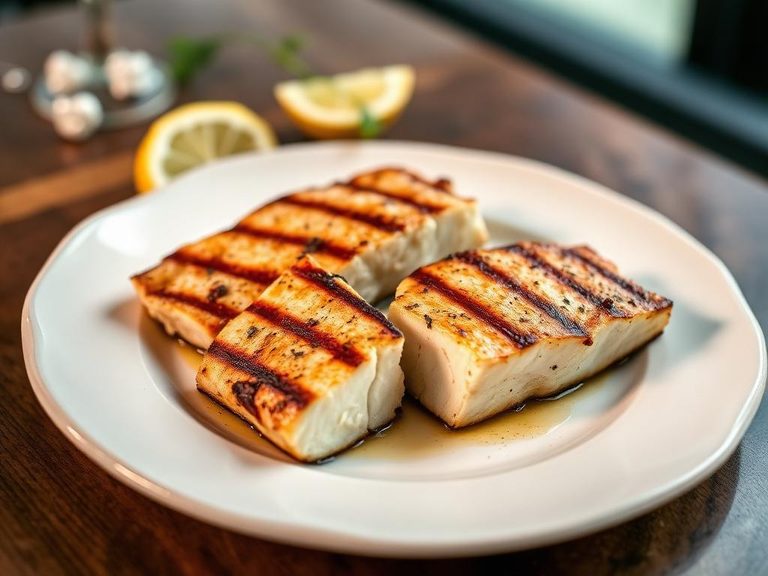
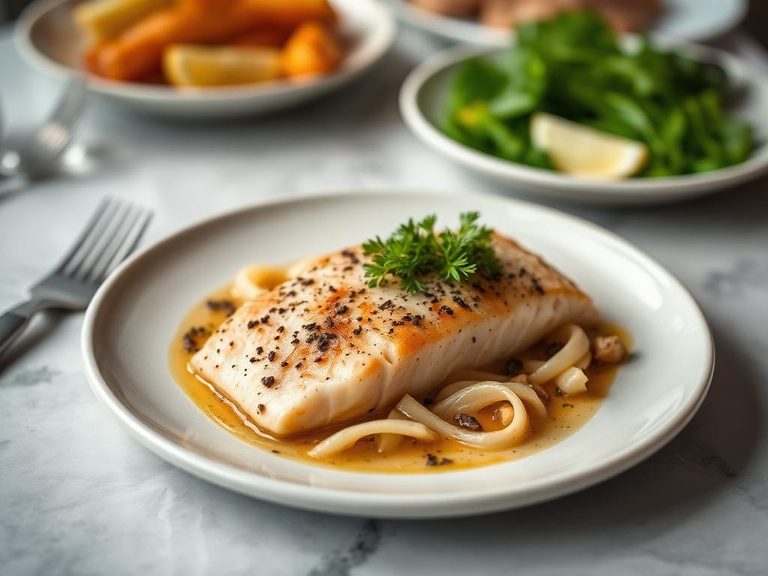
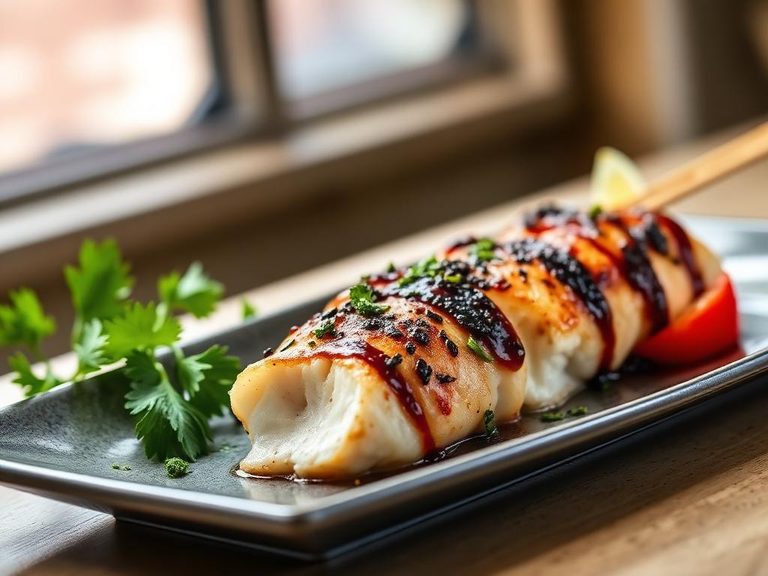
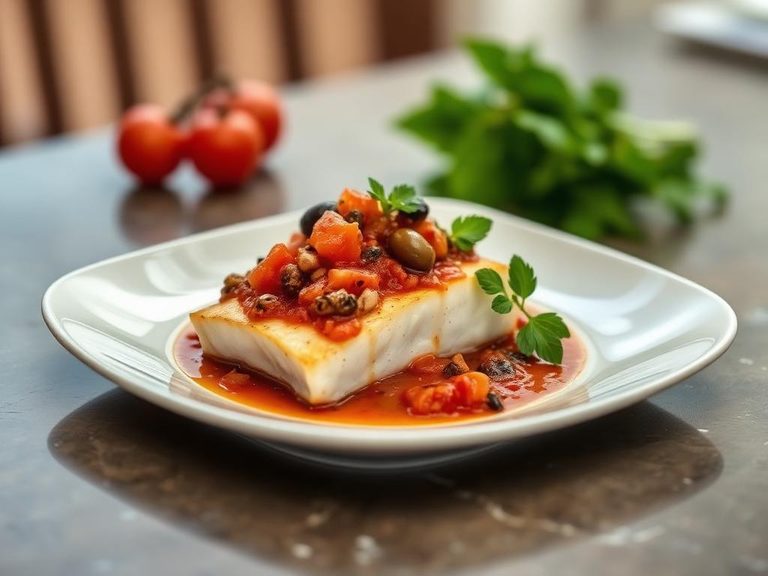
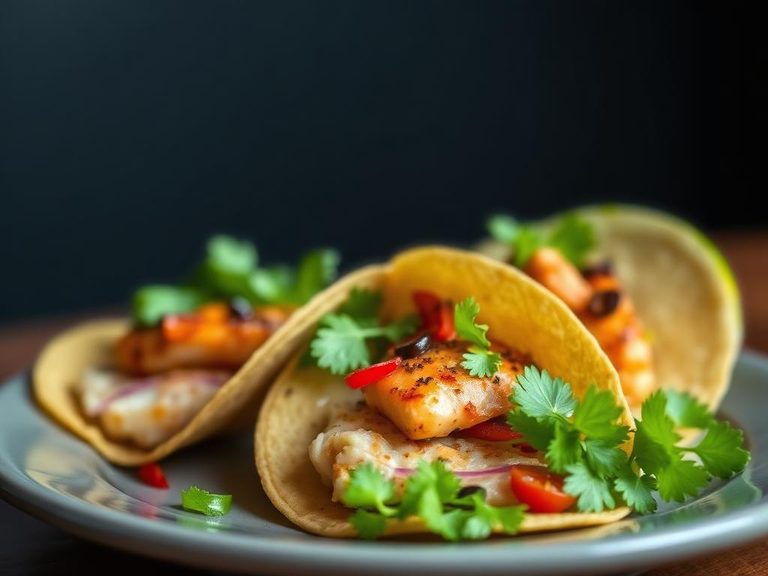
🌍 Where it's eaten
💡 Did you know?
The long, flat bill (or rostrum) of a swordfish, which it uses to slash at prey, is actually more sensitive than a shark's skin and is packed with millions of nerve endings.
Full nutrition (USDA data · scales with serving)
| Water | 68.3 g |
| Energy | 172 kcal |
| Energy | 718 kj |
| Protein | 23.4 g |
| Total lipid (fat) | 7.9 g |
| Ash | 1.7 g |
| Carbohydrate, by difference | 0.00 g |
| Fiber, total dietary | 0.00 g |
| Total Sugars | 0.00 g |
| Calcium, Ca | 6.0 mg |
| Iron, Fe | 0.45 mg |
| Magnesium, Mg | 35.0 mg |
| Phosphorus, P | 304 mg |
| Potassium, K | 499 mg |
| Sodium, Na | 97.0 mg |
| Zinc, Zn | 0.78 mg |
| Copper, Cu | 0.05 mg |
| Manganese, Mn | 0.01 mg |
| Selenium, Se | 68.5 ug |
| Vitamin C, total ascorbic acid | 0.00 mg |
| Thiamin | 0.09 mg |
| Riboflavin | 0.06 mg |
| Niacin | 9.3 mg |
| Pantothenic acid | 0.42 mg |
| Vitamin B-6 | 0.61 mg |
| Folate, total | 2.0 ug |
| Folic acid | 0.00 ug |
| Folate, food | 2.0 ug |
| Folate, DFE | 2.0 ug |
| Choline, total | 77.5 mg |
| Vitamin B-12 | 1.6 ug |
| Vitamin B-12, added | 0.00 ug |
| Vitamin A, RAE | 43.0 ug |
| Retinol | 43.0 ug |
| Carotene, beta | 0.00 ug |
| Carotene, alpha | 0.00 ug |
| Cryptoxanthin, beta | 0.00 ug |
| Vitamin A, IU | 129 iu |
| Lycopene | 0.00 ug |
| Lutein + zeaxanthin | 0.00 ug |
| Vitamin E (alpha-tocopherol) | 2.4 mg |
| Vitamin E, added | 0.00 mg |
| Tocopherol, beta | 0.00 mg |
| Tocopherol, gamma | 0.01 mg |
| Tocopherol, delta | 0.00 mg |
| Tocotrienol, alpha | 0.00 mg |
| Tocotrienol, beta | 0.00 mg |
| Tocotrienol, gamma | 0.00 mg |
| Tocotrienol, delta | 0.00 mg |
| Vitamin D (D2 + D3), International Units | 666 iu |
| Vitamin D (D2 + D3) | 16.6 ug |
| Vitamin D3 (cholecalciferol) | 16.6 ug |
| Vitamin K (phylloquinone) | 0.10 ug |
| Alcohol, ethyl | 0.00 g |
| Caffeine | 0.00 mg |
| Theobromine | 0.00 mg |
Fat & fatty acid profile (per 100g)
| Fatty acids, total saturated | 1.9 g |
| SFA 4:0 | 0.00 g |
| SFA 6:0 | 0.00 g |
| SFA 8:0 | 0.00 g |
| SFA 10:0 | 0.00 g |
| SFA 12:0 | 0.01 g |
| SFA 14:0 | 0.18 g |
| SFA 15:0 | 0.03 g |
| SFA 16:0 | 1.2 g |
| SFA 17:0 | 0.04 g |
| SFA 18:0 | 0.41 g |
| SFA 20:0 | 0.02 g |
| SFA 22:0 | 0.01 g |
| SFA 24:0 | 0.01 g |
| Fatty acids, total monounsaturated | 3.5 g |
| MUFA 14:1 | 0.01 g |
| MUFA 15:1 | 0.00 g |
| MUFA 16:1 | 0.28 g |
| MUFA 17:1 | 0.00 g |
| MUFA 18:1 | 2.7 g |
| MUFA 20:1 | 0.45 g |
| MUFA 22:1 | 0.06 g |
| MUFA 24:1 c | 0.09 g |
| Fatty acids, total polyunsaturated | 1.4 g |
| PUFA 18:2 | 0.09 g |
| PUFA 18:3 | 0.03 g |
| PUFA 18:4 | 0.01 g |
| PUFA 20:2 n-6 c,c | 0.02 g |
| PUFA 20:3 | 0.03 g |
| PUFA 20:4 | 0.08 g |
| PUFA 20:5 n-3 (EPA) | 0.13 g |
| PUFA 22:4 | 0.03 g |
| PUFA 22:5 n-3 (DPA) | 0.17 g |
| PUFA 22:6 n-3 (DHA) | 0.77 g |
| Fatty acids, total trans | 0.06 g |
| Cholesterol | 78.0 mg |
Amino acid profile (per 100g)
| Tryptophan | 0.27 g |
| Threonine | 1.0 g |
| Isoleucine | 1.1 g |
| Leucine | 1.9 g |
| Lysine | 2.2 g |
| Methionine | 0.70 g |
| Cystine | 0.25 g |
| Phenylalanine | 0.92 g |
| Tyrosine | 0.80 g |
| Valine | 1.2 g |
| Arginine | 1.4 g |
| Histidine | 0.69 g |
| Alanine | 1.4 g |
| Aspartic acid | 2.4 g |
| Glutamic acid | 3.5 g |
| Glycine | 1.1 g |
| Proline | 0.83 g |
| Serine | 0.96 g |
FAQ
Is swordfish a healthy choice?
Yes, it's a lean source of high-quality protein and nutrients like selenium and B vitamins. However, due to its position in the food chain, it is higher in mercury, so moderation is key, especially for vulnerable groups.
How do I know when swordfish is cooked?
The flesh should be opaque and firm, and it will flake easily when tested with a fork. The safest method is using an instant-read thermometer; it should read 145°F (63°C) at its thickest point.
What's the best way to cook swordfish to keep it moist?
Avoid overcooking at all costs. High-heat methods like grilling or searing for a short time work well. Marinating for 30 minutes before cooking can add flavor and help retain moisture.
Nutrient density (calculated · NRF9.3)
Nutrient Rich Foods index: beneficial nutrients (protein, fiber, vitamins, minerals) minus saturated fat, added sugar & sodium, per 100 kcal.
NRF9.3 index — Fulgoni, Keast & Drewnowski, 2009. Computed from USDA nutrients.
Weight-loss friendliness (composite index)
Energy density 1.72 kcal/g · 55% calories from protein · 0.0 g fiber · 0.0 g sugar per 100 g.
Composite of energy density (Rolls et al., 1999), protein & fiber satiety, minus sugar. A calculated heuristic — ranks satiety-per-calorie, not a clinical measure.
Dietary load (calculated from USDA values)
Potential renal acid load. Positive = acid-forming, negative = alkaline-forming.
Sodium-to-potassium ratio: 0.19 (lower is better — aim for ≤ 1)
Sodium:potassium per WHO potassium guidance. Computed from USDA nutrients.