

Fish, halibut, cooked, with skin (Alaska Native)
Whole food · American Indian/Alaska Native Foods

Photo: Wikipedia
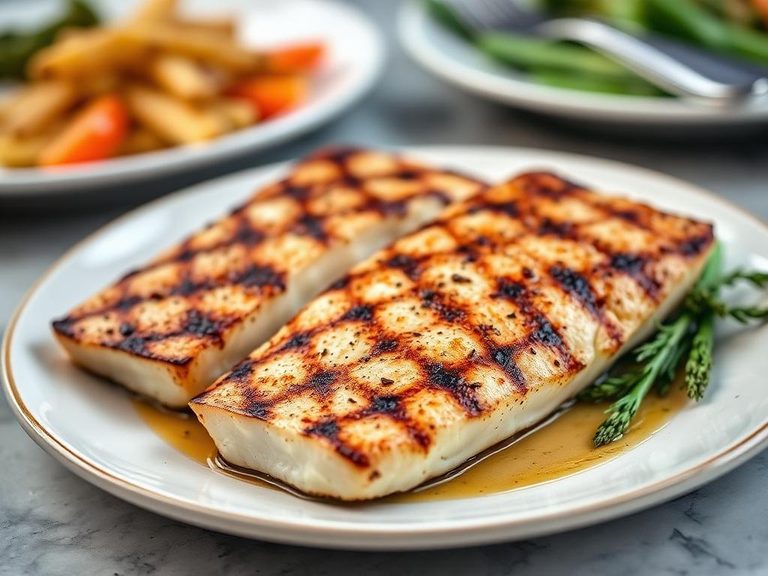
Alaska Native-style cooked halibut with skin is a firm, lean white fish prized for its mild, sweet flavor and meaty, flaky texture. The skin crisps beautifully when cooked, adding a savory contrast to the tender flesh. Nutritionally, it's a powerhouse of high-quality protein with virtually no carbohydrates or sugar.
Calorie split: 78% protein · 0% carbs · 22% fat
↓ Full nutrition💚 Why it's loved
People love its clean, sweet taste that acts as a versatile canvas for bold seasonings, from simple lemon to smoky grill marks. The satisfying, substantial flake and the option to eat the crispy, nutrient-rich skin make it both delicious and texturally interesting.
⚠️ Watch-outs & how to enjoy it better
As a common fish allergen, it must be avoided by those with fish or shellfish sensitivities. Its mild flavor can be lost if overcooked, leading to a dry texture. To counteract dryness, use moist-heat methods like poaching, or pan-sear with the skin on to protect the flesh and add flavor.
Key benefits
- Excellent source of lean, complete protein for muscle maintenance.
- Very low in fat, especially saturated fat.
- Naturally carb-free, making it suitable for ketogenic and low-carb diets.
- Provides essential nutrients like selenium and B vitamins.
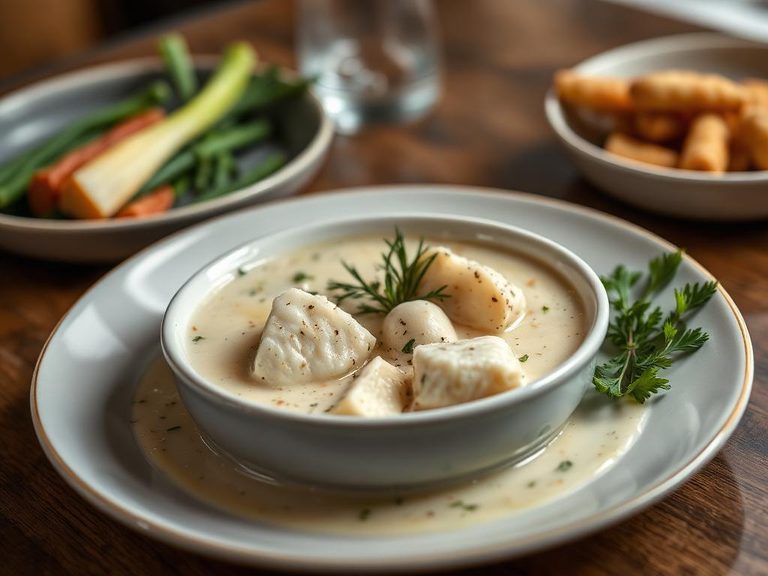
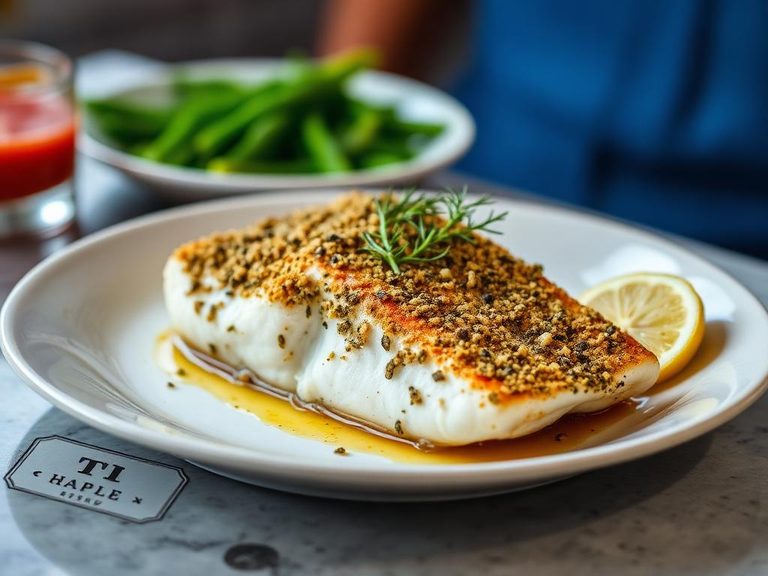
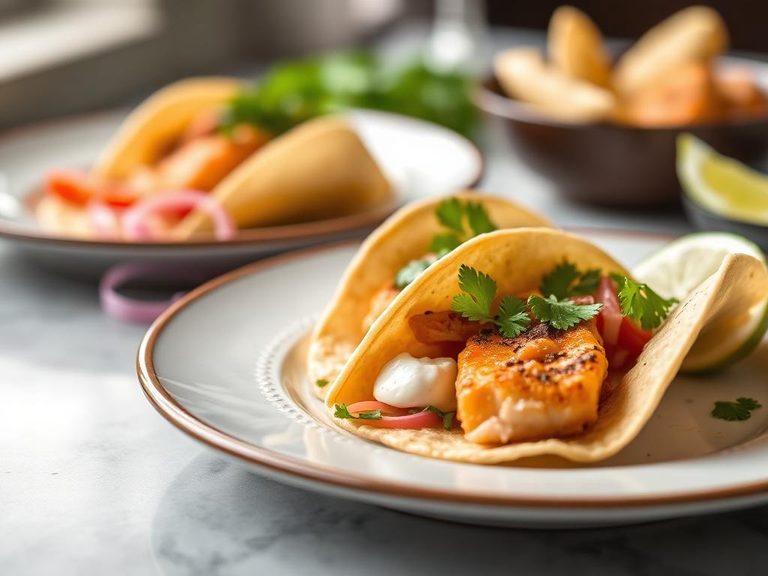
🍽️ Popular dishes
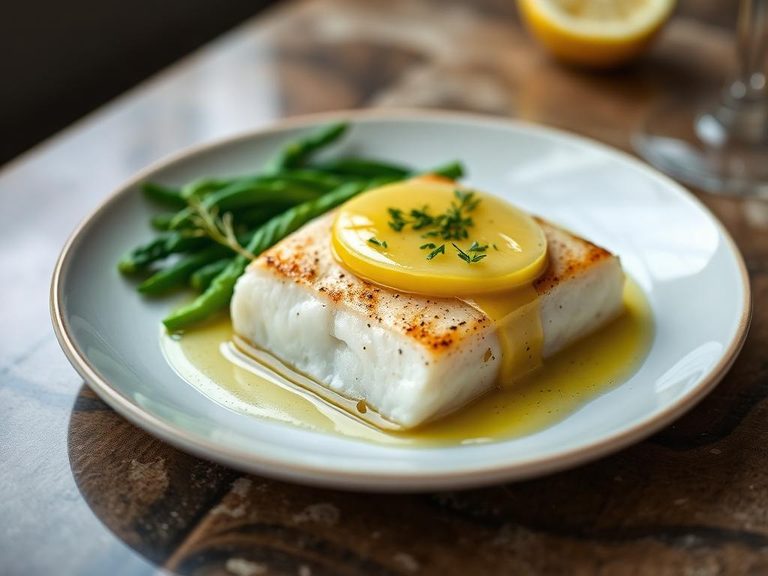
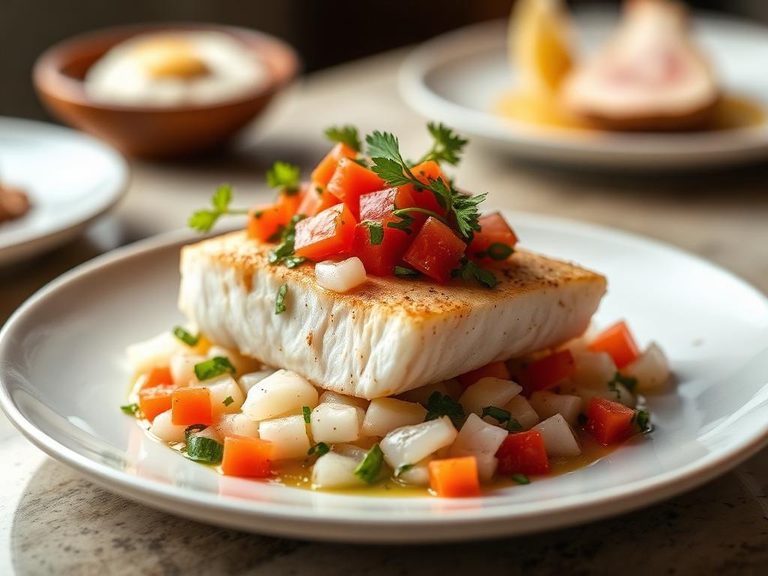
🌍 Where it's eaten
💡 Did you know?
Halibut are the largest flatfish in the world, with females growing much larger than males and capable of reaching over 2.5 meters (8 feet) in length.
Full nutrition (USDA data · scales with serving)
| Water | 72.8 g |
| Energy | 113 kcal |
| Energy | 473 kj |
| Protein | 22.1 g |
| Total lipid (fat) | 2.7 g |
| Ash | 1.4 g |
| Carbohydrate, by difference | 0.00 g |
| Fiber, total dietary | 0.00 g |
| Total Sugars | 0.00 g |
| Sucrose | 0.00 g |
| Glucose | 0.00 g |
| Fructose | 0.00 g |
| Lactose | 0.00 g |
| Maltose | 0.00 g |
| Galactose | 0.00 g |
| Starch | 0.00 g |
| Calcium, Ca | 33.0 mg |
| Iron, Fe | 0.36 mg |
| Magnesium, Mg | 29.0 mg |
| Phosphorus, P | 275 mg |
| Potassium, K | 501 mg |
| Sodium, Na | 86.0 mg |
| Zinc, Zn | 0.75 mg |
| Copper, Cu | 0.04 mg |
| Manganese, Mn | 0.01 mg |
| Selenium, Se | 60.6 ug |
| Thiamin | 0.08 mg |
| Riboflavin | 0.18 mg |
| Niacin | 6.2 mg |
| Pantothenic acid | 0.49 mg |
| Vitamin B-6 | 0.27 mg |
| Folate, total | 22.0 ug |
| Folate, food | 22.0 ug |
| Vitamin B-12 | 2.5 ug |
| Vitamin B-12, added | 0.00 ug |
| Vitamin A, RAE | 48.0 ug |
| Retinol | 48.0 ug |
| Carotene, beta | 0.00 ug |
| Carotene, alpha | 0.00 ug |
| Cryptoxanthin, beta | 0.00 ug |
| Vitamin A, IU | 160 iu |
| Lycopene | 0.00 ug |
| Lutein + zeaxanthin | 0.00 ug |
| Vitamin E (alpha-tocopherol) | 1.1 mg |
| Vitamin E, added | 0.00 mg |
| Tocopherol, beta | 0.01 mg |
| Tocopherol, gamma | 0.00 mg |
| Tocopherol, delta | 0.00 mg |
| Tocotrienol, alpha | 0.00 mg |
| Tocotrienol, beta | 0.00 mg |
| Tocotrienol, gamma | 0.00 mg |
| Tocotrienol, delta | 0.00 mg |
| Vitamin K (phylloquinone) | 0.00 ug |
| Vitamin K (Dihydrophylloquinone) | 0.00 ug |
| Vitamin K (Menaquinone-4) | 0.00 ug |
| Alcohol, ethyl | 0.00 g |
| Caffeine | 0.00 mg |
Fat & fatty acid profile (per 100g)
| Fatty acids, total saturated | 0.50 g |
| SFA 8:0 | 0.00 g |
| SFA 10:0 | 0.00 g |
| SFA 12:0 | 0.00 g |
| SFA 14:0 | 0.08 g |
| SFA 15:0 | 0.01 g |
| SFA 16:0 | 0.33 g |
| SFA 17:0 | 0.00 g |
| SFA 18:0 | 0.07 g |
| SFA 20:0 | 0.00 g |
| SFA 22:0 | 0.00 g |
| SFA 24:0 | 0.00 g |
| Fatty acids, total monounsaturated | 0.84 g |
| MUFA 14:1 | 0.00 g |
| MUFA 15:1 | 0.00 g |
| MUFA 16:1 | 0.21 g |
| MUFA 17:1 | 0.00 g |
| MUFA 18:1 | 0.54 g |
| MUFA 20:1 | 0.09 g |
| MUFA 22:1 | 0.00 g |
| MUFA 22:1 c | 0.00 g |
| Fatty acids, total polyunsaturated | 0.73 g |
| PUFA 18:2 | 0.02 g |
| PUFA 18:3 | 0.01 g |
| PUFA 18:3 n-3 c,c,c (ALA) | 0.01 g |
| PUFA 18:3 n-6 c,c,c | 0.00 g |
| PUFA 20:2 n-6 c,c | 0.01 g |
| PUFA 20:3 | 0.00 g |
| PUFA 20:4 | 0.04 g |
| PUFA 20:5 n-3 (EPA) | 0.24 g |
| PUFA 22:5 n-3 (DPA) | 0.05 g |
| PUFA 22:6 n-3 (DHA) | 0.36 g |
| Cholesterol | 75.0 mg |
Amino acid profile (per 100g)
| Tryptophan | 0.34 g |
| Threonine | 1.0 g |
| Isoleucine | 1.0 g |
| Leucine | 1.7 g |
| Lysine | 2.0 g |
| Methionine | 0.86 g |
| Cystine | 0.38 g |
| Phenylalanine | 0.89 g |
| Tyrosine | 0.75 g |
| Valine | 1.1 g |
| Arginine | 1.3 g |
| Histidine | 0.54 g |
| Alanine | 1.3 g |
| Aspartic acid | 3.0 g |
| Glutamic acid | 3.4 g |
| Glycine | 1.0 g |
| Proline | 0.79 g |
| Serine | 0.98 g |
| Hydroxyproline | 0.11 g |
FAQ
Is halibut with skin safe to eat?
Yes, the skin is not only safe but edible and nutritious, containing healthy fats and collagen. It becomes deliciously crispy when cooked properly.
How do I know when halibut is cooked through?
The flesh should turn from translucent to opaque white and flake easily with a fork. For a 1-inch thick fillet, this typically takes 8-10 minutes of baking or 3-4 minutes per side when pan-searing.
What's the best way to store leftover cooked halibut?
Place it in an airtight container and refrigerate for up to 3 days. For longer storage, freeze it for up to 3 months, though the texture may become slightly drier upon thawing.
Nutrient density (calculated · NRF9.3)
Nutrient Rich Foods index: beneficial nutrients (protein, fiber, vitamins, minerals) minus saturated fat, added sugar & sodium, per 100 kcal.
NRF9.3 index — Fulgoni, Keast & Drewnowski, 2009. Computed from USDA nutrients.
Weight-loss friendliness (composite index)
Energy density 1.13 kcal/g · 78% calories from protein · 0.0 g fiber · 0.0 g sugar per 100 g.
Composite of energy density (Rolls et al., 1999), protein & fiber satiety, minus sugar. A calculated heuristic — ranks satiety-per-calorie, not a clinical measure.
Dietary load (calculated from USDA values)
Potential renal acid load. Positive = acid-forming, negative = alkaline-forming.
Sodium-to-potassium ratio: 0.17 (lower is better — aim for ≤ 1)
Sodium:potassium per WHO potassium guidance. Computed from USDA nutrients.