

DOMINO'S 14" Cheese Pizza, Ultimate Deep Dish Crust
Whole food · Fast Foods

Photo: Wikipedia
This is a hearty, square slice of Domino's Ultimate Deep Dish Cheese Pizza, featuring a thick, buttery, and slightly chewy crust that provides a satisfying, bready foundation. The topping is a generous layer of melted, savory mozzarella cheese with a classic tomato sauce base, creating a rich, umami-forward flavor profile. Nutritionally, a 100g slice offers a substantial protein boost (10.76g) but is also a significant source of carbohydrates (33.48g) and fats (9.83g).
Calorie split: 16% protein · 50% carbs · 33% fat
↓ Full nutrition💚 Why it's loved
People love this pizza for its comforting, indulgent texture—the contrast between the crispy, buttery crust and the stretchy, melted cheese is deeply satisfying. It's a cultural staple for casual gatherings, movie nights, and celebrations, representing a beloved, shareable comfort food.
⚠️ Watch-outs & how to enjoy it better
The deep-dish crust and cheese load make it very calorie-dense and high in refined carbs, which can cause blood-sugar spikes, especially for those managing diabetes. The high sodium content from cheese and sauce is a concern for blood pressure, and it contains common allergens like wheat (gluten) and dairy. To mitigate, pair a smaller slice with a large side salad to add fiber and volume, and choose water over sugary drinks.
Key benefits
- High in protein for muscle maintenance
- Provides quick energy from carbohydrates
- Contains calcium from cheese for bone health
- Convenient and widely available meal option
- Satiating due to its dense, deep-dish structure
🍽️ Popular dishes
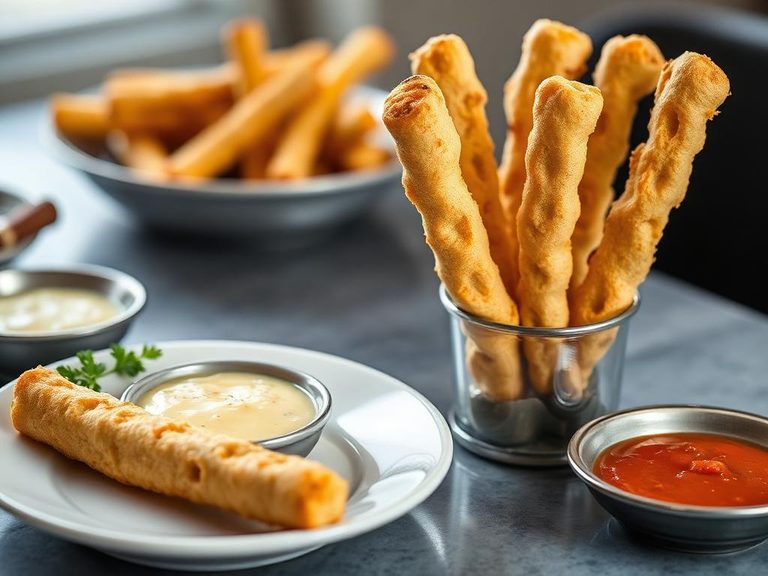
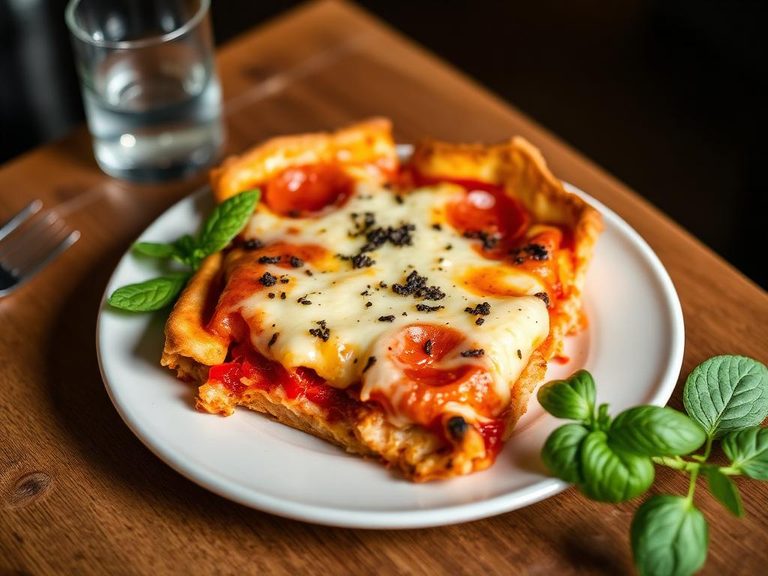
🌍 Where it's eaten
💡 Did you know?
The 'Ultimate Deep Dish' crust from Domino's is engineered with a specific oil blend in the pan to essentially 'fry' the bottom of the dough as it bakes, creating that signature crispy, golden-brown base.
Full nutrition (USDA data · scales with serving)
| Water | 43.4 g |
| Energy | 265 kcal |
| Energy | 1111 kj |
| Protein | 10.8 g |
| Total lipid (fat) | 9.8 g |
| Ash | 2.5 g |
| Carbohydrate, by difference | 33.5 g |
| Fiber, total dietary | 2.4 g |
| Total Sugars | 4.2 g |
| Sucrose | 0.40 g |
| Glucose | 0.60 g |
| Fructose | 0.97 g |
| Lactose | 0.73 g |
| Maltose | 1.4 g |
| Galactose | 0.08 g |
| Starch | 25.0 g |
| Calcium, Ca | 166 mg |
| Iron, Fe | 2.5 mg |
| Magnesium, Mg | 24.0 mg |
| Phosphorus, P | 203 mg |
| Potassium, K | 169 mg |
| Sodium, Na | 615 mg |
| Zinc, Zn | 1.2 mg |
| Copper, Cu | 0.11 mg |
| Manganese, Mn | 0.28 mg |
| Selenium, Se | 20.3 ug |
| Vitamin C, total ascorbic acid | 0.40 mg |
| Thiamin | 0.34 mg |
| Riboflavin | 0.18 mg |
| Niacin | 3.5 mg |
| Vitamin B-6 | 0.04 mg |
| Vitamin B-12 | 0.36 ug |
| Vitamin E (alpha-tocopherol) | 0.89 mg |
| Tocopherol, beta | 0.07 mg |
| Tocopherol, gamma | 2.3 mg |
| Tocopherol, delta | 0.69 mg |
| Tocotrienol, alpha | 0.07 mg |
| Tocotrienol, beta | 0.00 mg |
| Tocotrienol, gamma | 0.00 mg |
| Tocotrienol, delta | 0.00 mg |
| Vitamin K (phylloquinone) | 6.1 ug |
| Vitamin K (Dihydrophylloquinone) | 4.1 ug |
Fat & fatty acid profile (per 100g)
| Fatty acids, total saturated | 4.1 g |
| SFA 4:0 | 0.10 g |
| SFA 6:0 | 0.08 g |
| SFA 8:0 | 0.05 g |
| SFA 10:0 | 0.13 g |
| SFA 12:0 | 0.16 g |
| SFA 14:0 | 0.56 g |
| SFA 15:0 | 0.06 g |
| SFA 16:0 | 2.0 g |
| SFA 17:0 | 0.04 g |
| SFA 18:0 | 0.83 g |
| SFA 20:0 | 0.02 g |
| SFA 22:0 | 0.02 g |
| SFA 24:0 | 0.01 g |
| Fatty acids, total monounsaturated | 2.4 g |
| MUFA 14:1 | 0.04 g |
| MUFA 15:1 | 0.00 g |
| MUFA 16:1 | 0.11 g |
| MUFA 16:1 c | 0.09 g |
| MUFA 17:1 | 0.01 g |
| MUFA 18:1 | 2.2 g |
| MUFA 18:1 c | 2.0 g |
| MUFA 20:1 | 0.04 g |
| MUFA 22:1 | 0.00 g |
| MUFA 22:1 c | 0.00 g |
| MUFA 24:1 c | 0.00 g |
| Fatty acids, total polyunsaturated | 2.4 g |
| PUFA 18:2 | 2.1 g |
| PUFA 18:2 n-6 c,c | 2.0 g |
| PUFA 18:2 CLAs | 0.04 g |
| PUFA 18:3 | 0.27 g |
| PUFA 18:3 n-3 c,c,c (ALA) | 0.26 g |
| PUFA 18:3 n-6 c,c,c | 0.00 g |
| PUFA 18:4 | 0.00 g |
| PUFA 20:2 n-6 c,c | 0.00 g |
| PUFA 20:3 | 0.01 g |
| PUFA 20:3 n-3 | 0.00 g |
| PUFA 20:3 n-6 | 0.01 g |
| PUFA 20:4 | 0.01 g |
| PUFA 20:5 n-3 (EPA) | 0.00 g |
| PUFA 22:4 | 0.01 g |
| PUFA 22:5 n-3 (DPA) | 0.00 g |
| PUFA 22:6 n-3 (DHA) | 0.00 g |
| Fatty acids, total trans | 0.27 g |
| Fatty acids, total trans-monoenoic | 0.21 g |
| TFA 16:1 t | 0.02 g |
| TFA 18:1 t | 0.19 g |
| TFA 22:1 t | 0.00 g |
| TFA 18:2 t not further defined | 0.06 g |
| Fatty acids, total trans-polyenoic | 0.06 g |
| Cholesterol | 16.0 mg |
Amino acid profile (per 100g)
| Tryptophan | 0.11 g |
| Threonine | 0.38 g |
| Isoleucine | 0.51 g |
| Leucine | 0.94 g |
| Lysine | 0.64 g |
| Methionine | 0.28 g |
| Cystine | 0.17 g |
| Phenylalanine | 0.65 g |
| Tyrosine | 0.47 g |
| Valine | 0.65 g |
| Arginine | 0.82 g |
| Histidine | 0.36 g |
| Alanine | 0.38 g |
| Aspartic acid | 0.84 g |
| Glutamic acid | 3.6 g |
| Glycine | 0.35 g |
| Proline | 1.4 g |
| Serine | 0.78 g |
| Hydroxyproline | 0.00 g |
FAQ
Is this pizza vegetarian?
Yes, the cheese pizza is vegetarian as it contains no meat. However, strict vegetarians should confirm the sauce doesn't contain animal-derived ingredients like certain flavorings.
How does the nutrition compare to thin crust?
Per 100g, the deep-dish version is generally higher in calories, carbs, and fat due to its thicker, oilier crust and greater cheese density. Thin crust is typically lighter and crispier.
Can I freeze leftovers?
Yes, individual slices freeze well. Wrap tightly in plastic wrap and foil, then reheat in an oven (not microwave) to best preserve the crust's texture.
Nutrient density (calculated · NRF9.3)
Nutrient Rich Foods index: beneficial nutrients (protein, fiber, vitamins, minerals) minus saturated fat, added sugar & sodium, per 100 kcal.
NRF9.3 index — Fulgoni, Keast & Drewnowski, 2009. Computed from USDA nutrients.
Weight-loss friendliness (composite index)
Energy density 2.65 kcal/g · 16% calories from protein · 2.4 g fiber · 4.2 g sugar per 100 g.
Composite of energy density (Rolls et al., 1999), protein & fiber satiety, minus sugar. A calculated heuristic — ranks satiety-per-calorie, not a clinical measure.
Dietary load (calculated from USDA values)
Potential renal acid load. Positive = acid-forming, negative = alkaline-forming.
Sodium-to-potassium ratio: 3.64 (lower is better — aim for ≤ 1)
Sodium:potassium per WHO potassium guidance. Computed from USDA nutrients.