

Cereals ready-to-eat, RALSTON Corn Biscuits
Whole food · Breakfast Cereals
Ralston Corn Biscuits are a crunchy, golden, ready-to-eat cereal made from corn, offering a satisfyingly light texture with a subtly sweet, toasty corn flavor. Nutritionally, they are a high-carbohydrate, low-fat option, providing a quick source of energy with minimal protein and fiber.
Calorie split: 6% protein · 91% carbs · 3% fat
↓ Full nutrition💚 Why it's loved
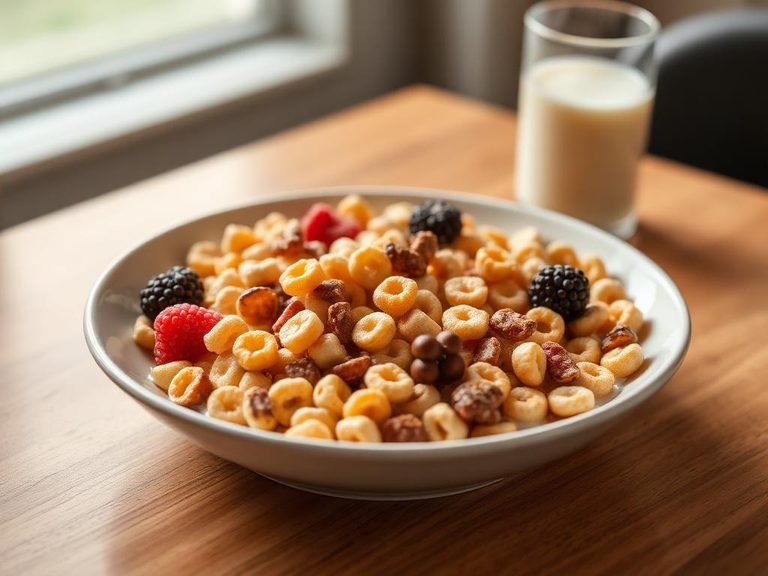
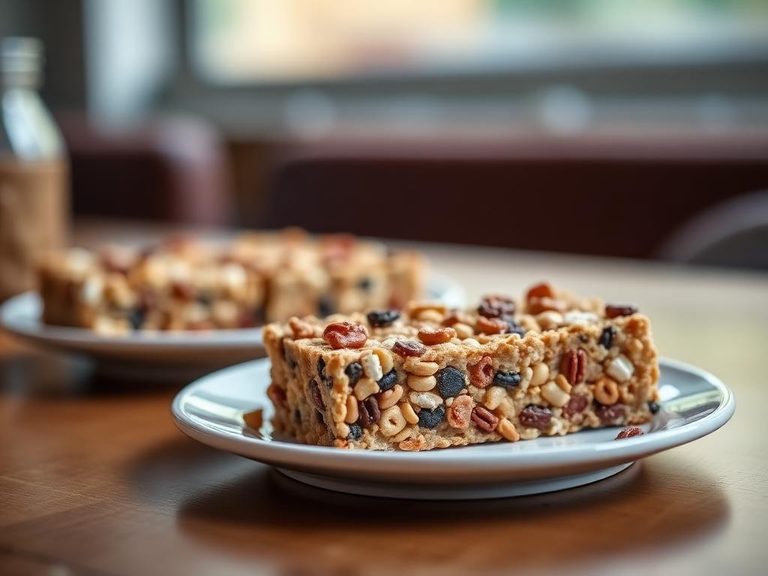
People love it for its simple, comforting corn flavor and satisfying crunch that holds up well in milk. It's a nostalgic, versatile cereal that works for a quick breakfast, a dry snack, or a base for homemade trail mixes.
⚠️ Watch-outs & how to enjoy it better
The high carbohydrate and sugar content (9.51g per 100g) can lead to rapid blood sugar spikes, especially for those with insulin sensitivity. To counteract this, pair it with a source of protein or healthy fat, like Greek yogurt or a handful of nuts, and practice portion control.
Key benefits
- Quick energy source due to high carbohydrate content
- Very low in fat (1.05g per 100g)
- Light and crunchy texture, easy to digest
- Convenient, no-cook breakfast or snack option
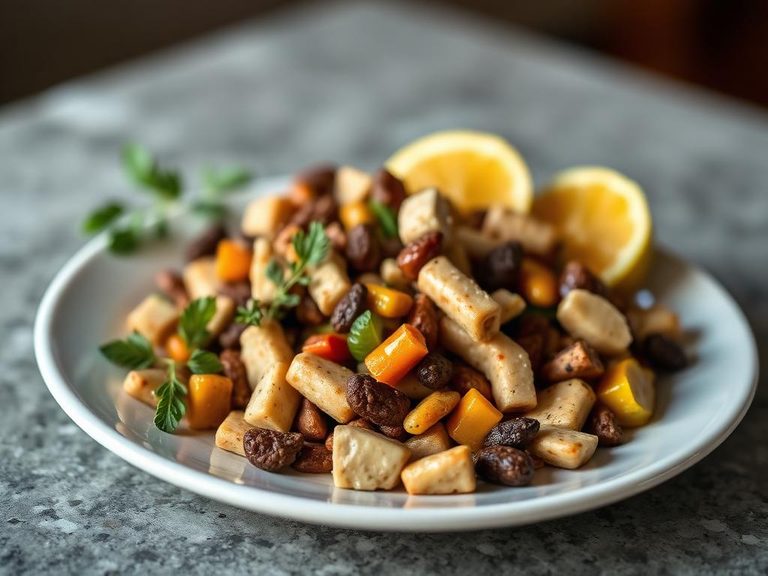
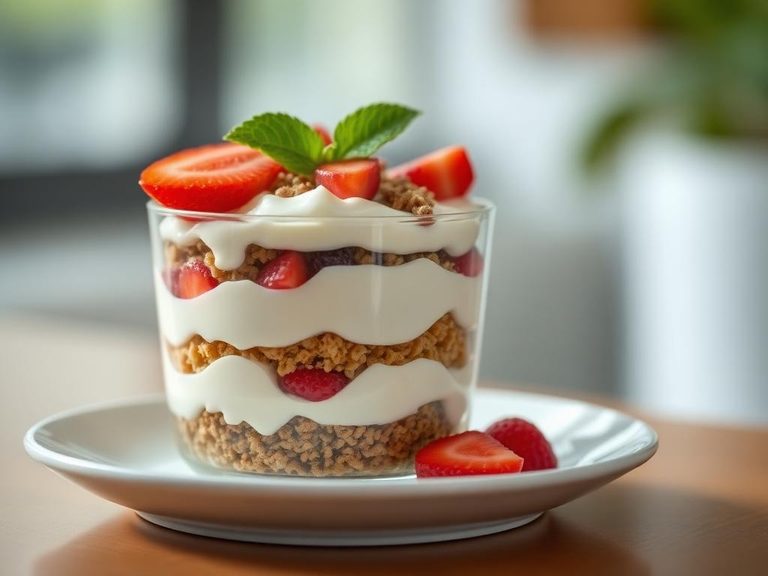
🍽️ Popular dishes
🌍 Where it's eaten
💡 Did you know?
Corn-based ready-to-eat cereals like this have their roots in the 19th-century health food movement, where granola and corn flakes were originally promoted as wholesome, digestible alternatives to heavier breakfast meats and pastries.
Full nutrition (USDA data · scales with serving)
| Water | 3.6 g |
| Energy | 376 kcal |
| Energy | 1573 kj |
| Protein | 5.8 g |
| Total lipid (fat) | 1.1 g |
| Ash | 3.7 g |
| Carbohydrate, by difference | 85.8 g |
| Fiber, total dietary | 2.6 g |
| Total Sugars | 9.5 g |
| Sucrose | 9.5 g |
| Glucose | 0.00 g |
| Fructose | 0.00 g |
| Lactose | 0.00 g |
| Maltose | 0.00 g |
| Galactose | 0.00 g |
| Calcium, Ca | 378 mg |
| Iron, Fe | 38.4 mg |
| Magnesium, Mg | 15.0 mg |
| Phosphorus, P | 38.0 mg |
| Potassium, K | 200 mg |
| Sodium, Na | 767 mg |
| Zinc, Zn | 17.1 mg |
| Copper, Cu | 0.07 mg |
| Manganese, Mn | 0.22 mg |
| Selenium, Se | 2.2 ug |
| Vitamin C, total ascorbic acid | 18.5 mg |
| Thiamin | 1.5 mg |
| Riboflavin | 1.7 mg |
| Niacin | 21.8 mg |
| Pantothenic acid | 0.12 mg |
| Vitamin B-6 | 2.2 mg |
| Folate, total | 667 ug |
| Choline, total | 11.0 mg |
| Betaine | 7.1 mg |
| Vitamin B-12 | 5.0 ug |
| Vitamin A, RAE | 1092 ug |
| Retinol | 1061 ug |
| Carotene, beta | 261 ug |
| Carotene, alpha | 0.00 ug |
| Cryptoxanthin, beta | 234 ug |
| Vitamin A, IU | 4167 iu |
| Lycopene | 0.00 ug |
| Vitamin E (alpha-tocopherol) | 0.10 mg |
| Tocopherol, beta | 0.00 mg |
| Tocopherol, gamma | 0.09 mg |
| Tocopherol, delta | 0.01 mg |
| Tocotrienol, alpha | 0.24 mg |
| Tocotrienol, beta | 0.00 mg |
| Tocotrienol, gamma | 0.31 mg |
| Tocotrienol, delta | 0.00 mg |
| Vitamin D (D2 + D3), International Units | 333 iu |
| Vitamin D (D2 + D3) | 8.3 ug |
| Vitamin D3 (cholecalciferol) | 8.3 ug |
| Vitamin K (phylloquinone) | 0.00 ug |
| Vitamin K (Dihydrophylloquinone) | 0.00 ug |
| Vitamin K (Menaquinone-4) | 0.00 ug |
Fat & fatty acid profile (per 100g)
| Fatty acids, total saturated | 0.19 g |
| SFA 8:0 | 0.00 g |
| SFA 10:0 | 0.00 g |
| SFA 12:0 | 0.00 g |
| SFA 14:0 | 0.00 g |
| SFA 15:0 | 0.00 g |
| SFA 16:0 | 0.17 g |
| SFA 17:0 | 0.00 g |
| SFA 18:0 | 0.02 g |
| SFA 20:0 | 0.00 g |
| SFA 22:0 | 0.00 g |
| SFA 24:0 | 0.00 g |
| Fatty acids, total monounsaturated | 0.13 g |
| MUFA 14:1 | 0.00 g |
| MUFA 15:1 | 0.00 g |
| MUFA 16:1 | 0.00 g |
| MUFA 17:1 | 0.00 g |
| MUFA 18:1 | 0.13 g |
| MUFA 20:1 | 0.00 g |
| MUFA 22:1 | 0.00 g |
| MUFA 24:1 c | 0.00 g |
| Fatty acids, total polyunsaturated | 0.35 g |
| PUFA 18:2 | 0.33 g |
| PUFA 18:3 | 0.02 g |
| PUFA 18:4 | 0.00 g |
| PUFA 20:2 n-6 c,c | 0.00 g |
| PUFA 20:3 | 0.00 g |
| PUFA 20:4 | 0.00 g |
| PUFA 20:5 n-3 (EPA) | 0.00 g |
| PUFA 21:5 | 0.00 g |
| PUFA 22:4 | 0.00 g |
| PUFA 22:5 n-3 (DPA) | 0.00 g |
| PUFA 22:6 n-3 (DHA) | 0.00 g |
| Fatty acids, total trans | 0.00 g |
| Cholesterol | 0.00 mg |
Amino acid profile (per 100g)
| Tryptophan | 0.03 g |
| Threonine | 0.24 g |
| Isoleucine | 0.25 g |
| Leucine | 1.0 g |
| Lysine | 0.05 g |
| Methionine | 0.10 g |
| Cystine | 0.09 g |
| Phenylalanine | 0.40 g |
| Tyrosine | 0.19 g |
| Valine | 0.30 g |
| Arginine | 0.16 g |
| Histidine | 0.16 g |
| Alanine | 0.59 g |
| Aspartic acid | 0.67 g |
| Glutamic acid | 1.6 g |
| Glycine | 0.20 g |
| Proline | 0.93 g |
| Serine | 0.33 g |
FAQ
Is this cereal gluten-free?
While corn itself is gluten-free, cross-contamination can occur during manufacturing. Always check the packaging for a certified gluten-free label if you have celiac disease or severe sensitivity.
Why is the protein content so low?
Corn is naturally lower in protein compared to grains like wheat or oats. This cereal is primarily a carbohydrate-based food, so it's best paired with protein-rich foods to create a more balanced meal.
Can I use this cereal in cooking beyond breakfast?
Absolutely! Crush it to use as a crispy coating for baked chicken or fish, or mix it into cookie dough for added texture. Its mild corn flavor makes it a versatile ingredient in both sweet and savory applications.
Nutrient density (calculated · NRF9.3)
Nutrient Rich Foods index: beneficial nutrients (protein, fiber, vitamins, minerals) minus saturated fat, added sugar & sodium, per 100 kcal.
NRF9.3 index — Fulgoni, Keast & Drewnowski, 2009. Computed from USDA nutrients.
Weight-loss friendliness (composite index)
Energy density 3.76 kcal/g · 6% calories from protein · 2.6 g fiber · 9.5 g sugar per 100 g.
Composite of energy density (Rolls et al., 1999), protein & fiber satiety, minus sugar. A calculated heuristic — ranks satiety-per-calorie, not a clinical measure.
Dietary load (calculated from USDA values)
Potential renal acid load. Positive = acid-forming, negative = alkaline-forming.
Sodium-to-potassium ratio: 3.83 (lower is better — aim for ≤ 1)
Sodium:potassium per WHO potassium guidance. Computed from USDA nutrients.