

Beef, round, top round roast, boneless, separable lean and fat, trimmed to 0" fat, select, cooked, roasted
Whole food · Beef Products
This is a lean, boneless cut from the top of the beef round, roasted to a firm, sliceable texture with a clean, beefy flavor. Its extremely low fat content (3.72g per 100g) makes it a protein powerhouse, delivering nearly 31g of protein for just 157 calories. The result is a dense, satisfying roast that's ideal for those prioritizing high-protein, low-fat meals.
Calorie split: 79% protein · 0% carbs · 21% fat
↓ Full nutrition💚 Why it's loved
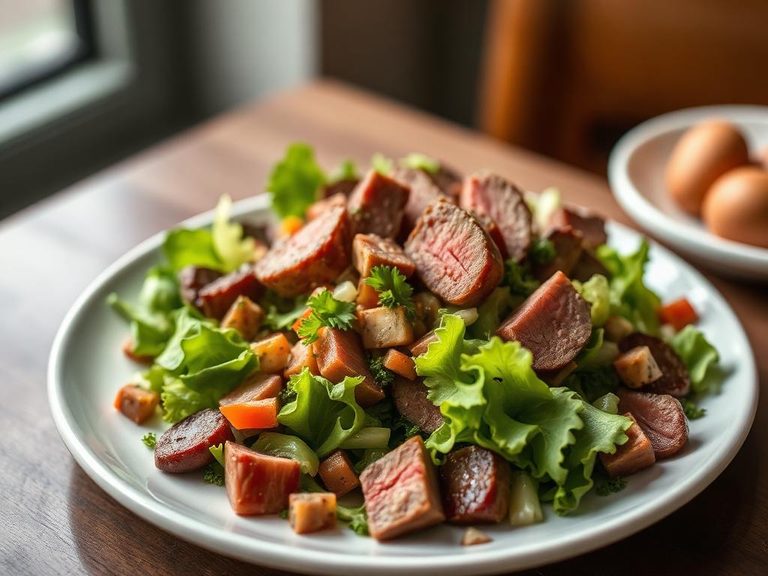
People love it for its clean, robust beef flavor and satisfying, firm texture that holds up well in sandwiches and salads. It's a staple in health-conscious kitchens and traditional Sunday roasts, offering a sense of hearty nourishment without excess fat.
⚠️ Watch-outs & how to enjoy it better
The very lean nature can make it dry and tough if overcooked, which is a common pitfall. To counteract this, cook it to medium-rare or medium (135-145°F internal temp) and let it rest before slicing; pairing it with a flavorful sauce or a side of healthy fats (like avocado or olive oil) can also improve moisture and satisfaction.
Key benefits
- Exceptionally high protein-to-calorie ratio
- Very low in fat and carbohydrates
- Rich source of iron, zinc, and B vitamins
- Supports muscle maintenance and satiety
- Versatile for meal prep and portion control
🍽️ Popular dishes
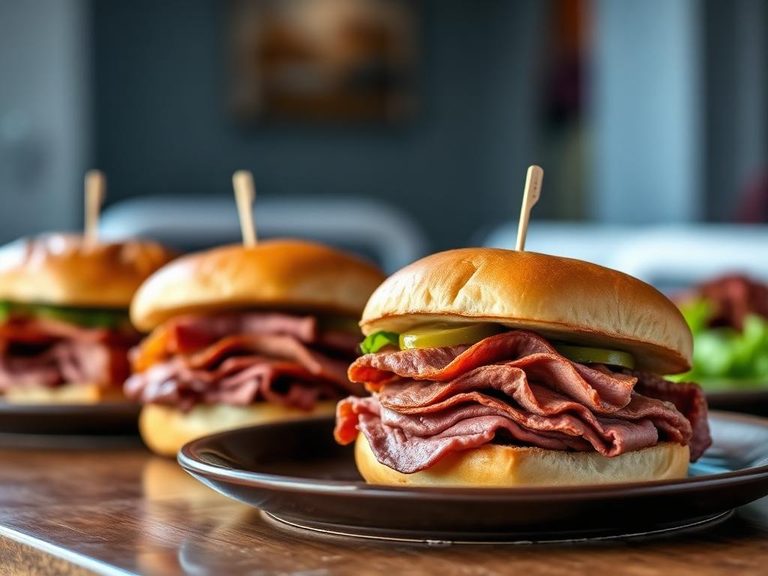
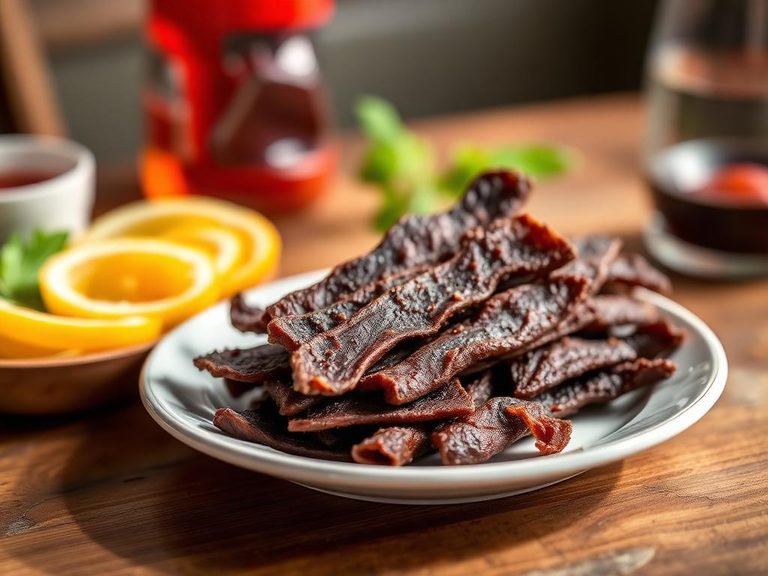
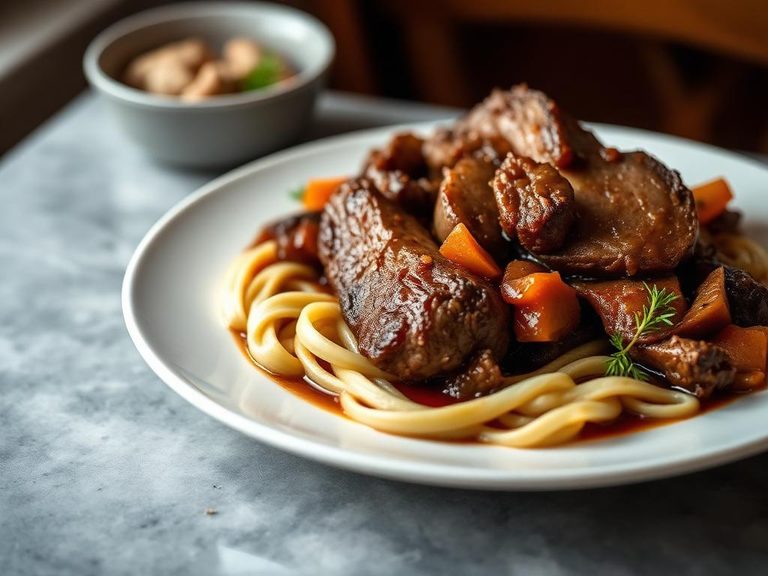
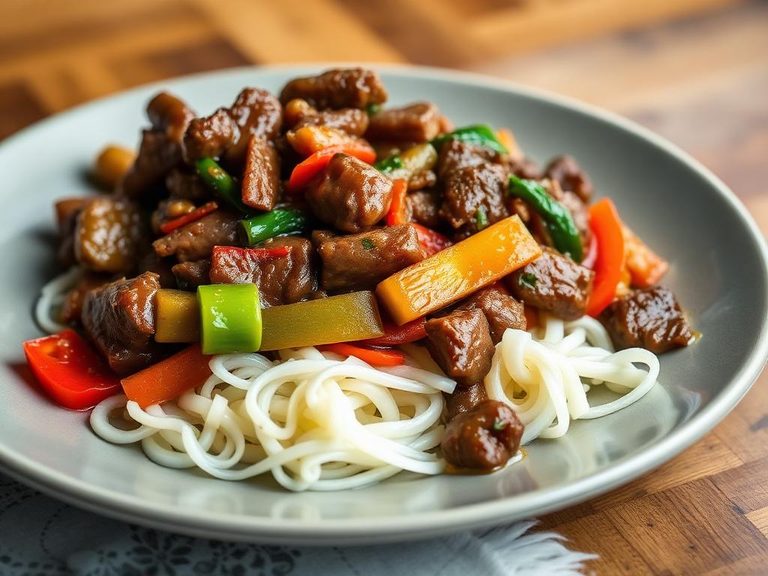
🌍 Where it's eaten
💡 Did you know?
The top round is sometimes called the 'London Broil' cut in the US, though London Broil is technically a cooking method, not a specific cut of meat.
Full nutrition (USDA data · scales with serving)
| Water | 65.1 g |
| Energy | 157 kcal |
| Energy | 658 kj |
| Protein | 31.0 g |
| Total lipid (fat) | 3.7 g |
| Ash | 1.3 g |
| Carbohydrate, by difference | 0.00 g |
| Fiber, total dietary | 0.00 g |
| Total Sugars | 0.00 g |
| Calcium, Ca | 17.0 mg |
| Iron, Fe | 2.9 mg |
| Magnesium, Mg | 15.0 mg |
| Phosphorus, P | 269 mg |
| Potassium, K | 387 mg |
| Sodium, Na | 67.0 mg |
| Zinc, Zn | 4.3 mg |
| Copper, Cu | 0.06 mg |
| Manganese, Mn | 0.00 mg |
| Selenium, Se | 27.8 ug |
| Vitamin C, total ascorbic acid | 0.00 mg |
| Thiamin | 0.08 mg |
| Riboflavin | 0.31 mg |
| Niacin | 7.6 mg |
| Pantothenic acid | 0.46 mg |
| Vitamin B-6 | 0.77 mg |
| Folate, total | 5.0 ug |
| Folic acid | 0.00 ug |
| Folate, food | 5.0 ug |
| Folate, DFE | 5.0 ug |
| Choline, total | 78.7 mg |
| Betaine | 13.3 mg |
| Vitamin B-12 | 2.0 ug |
| Vitamin B-12, added | 0.00 ug |
| Vitamin A, RAE | 4.0 ug |
| Retinol | 4.0 ug |
| Carotene, beta | 0.00 ug |
| Carotene, alpha | 0.00 ug |
| Cryptoxanthin, beta | 0.00 ug |
| Vitamin A, IU | 14.0 iu |
| Lycopene | 0.00 ug |
| Lutein + zeaxanthin | 0.00 ug |
| Vitamin E (alpha-tocopherol) | 0.26 mg |
| Vitamin E, added | 0.00 mg |
| Vitamin D (D2 + D3), International Units | 1.0 iu |
| Vitamin D (D2 + D3) | 0.00 ug |
| Vitamin D3 (cholecalciferol) | 0.00 ug |
| Vitamin K (phylloquinone) | 1.9 ug |
| Alcohol, ethyl | 0.00 g |
| Caffeine | 0.00 mg |
| Theobromine | 0.00 mg |
Fat & fatty acid profile (per 100g)
| Fatty acids, total saturated | 1.4 g |
| SFA 4:0 | 0.00 g |
| SFA 6:0 | 0.00 g |
| SFA 8:0 | 0.00 g |
| SFA 10:0 | 0.01 g |
| SFA 12:0 | 0.00 g |
| SFA 14:0 | 0.08 g |
| SFA 15:0 | 0.01 g |
| SFA 16:0 | 0.80 g |
| SFA 17:0 | 0.04 g |
| SFA 18:0 | 0.47 g |
| SFA 20:0 | 0.00 g |
| SFA 24:0 | 0.00 g |
| Fatty acids, total monounsaturated | 1.6 g |
| MUFA 14:1 | 0.02 g |
| MUFA 16:1 | 0.10 g |
| MUFA 16:1 c | 0.10 g |
| MUFA 17:1 | 0.03 g |
| MUFA 18:1 | 1.4 g |
| MUFA 18:1 c | 1.2 g |
| MUFA 20:1 | 0.01 g |
| MUFA 22:1 | 0.00 g |
| Fatty acids, total polyunsaturated | 0.28 g |
| PUFA 18:2 | 0.20 g |
| PUFA 18:2 n-6 c,c | 0.18 g |
| PUFA 18:2 CLAs | 0.01 g |
| PUFA 18:3 | 0.01 g |
| PUFA 18:3 n-3 c,c,c (ALA) | 0.01 g |
| PUFA 18:4 | 0.00 g |
| PUFA 20:2 n-6 c,c | 0.00 g |
| PUFA 20:3 | 0.02 g |
| PUFA 20:3 n-6 | 0.02 g |
| PUFA 20:4 | 0.04 g |
| PUFA 20:5 n-3 (EPA) | 0.00 g |
| PUFA 22:5 n-3 (DPA) | 0.01 g |
| PUFA 22:6 n-3 (DHA) | 0.00 g |
| Fatty acids, total trans | 0.20 g |
| Fatty acids, total trans-monoenoic | 0.19 g |
| TFA 16:1 t | 0.01 g |
| TFA 18:1 t | 0.18 g |
| TFA 18:2 t not further defined | 0.01 g |
| Fatty acids, total trans-polyenoic | 0.01 g |
| Cholesterol | 78.0 mg |
Amino acid profile (per 100g)
| Tryptophan | 0.35 g |
| Threonine | 1.5 g |
| Isoleucine | 1.5 g |
| Leucine | 2.7 g |
| Lysine | 3.1 g |
| Methionine | 0.86 g |
| Cystine | 0.33 g |
| Phenylalanine | 1.3 g |
| Tyrosine | 1.2 g |
| Valine | 1.6 g |
| Arginine | 2.2 g |
| Histidine | 1.2 g |
| Alanine | 1.9 g |
| Aspartic acid | 3.1 g |
| Glutamic acid | 5.2 g |
| Glycine | 1.5 g |
| Proline | 1.4 g |
| Serine | 1.3 g |
| Hydroxyproline | 0.21 g |
FAQ
Is top round roast good for bodybuilding?
Yes, it's excellent. It's one of the leanest beef cuts with a very high protein content (over 30g per 100g) and minimal fat, making it ideal for building and repairing muscle while managing calorie intake.
How do I prevent it from becoming dry and tough?
Don't overcook it; aim for an internal temperature of 135-145°F (medium-rare to medium). Always let the roast rest for 15-20 minutes after cooking to allow the juices to redistribute. Slicing it thinly against the grain also helps improve tenderness.
What's the difference between top round and bottom round?
The top round is slightly more tender and has a finer grain than the bottom round. Both are lean cuts from the hindquarter, but the top round is generally preferred for roasting, while the bottom round is often used for pot roasts or ground beef.
Nutrient density (calculated · NRF9.3)
Nutrient Rich Foods index: beneficial nutrients (protein, fiber, vitamins, minerals) minus saturated fat, added sugar & sodium, per 100 kcal.
NRF9.3 index — Fulgoni, Keast & Drewnowski, 2009. Computed from USDA nutrients.
Weight-loss friendliness (composite index)
Energy density 1.57 kcal/g · 79% calories from protein · 0.0 g fiber · 0.0 g sugar per 100 g.
Composite of energy density (Rolls et al., 1999), protein & fiber satiety, minus sugar. A calculated heuristic — ranks satiety-per-calorie, not a clinical measure.
Dietary load (calculated from USDA values)
Potential renal acid load. Positive = acid-forming, negative = alkaline-forming.
Sodium-to-potassium ratio: 0.17 (lower is better — aim for ≤ 1)
Sodium:potassium per WHO potassium guidance. Computed from USDA nutrients.