

Beef, round, eye of round steak, boneless, separable lean only, trimmed to 0" fat, all grades, cooked, grilled
Whole food · Beef Products

Photo: Wikipedia
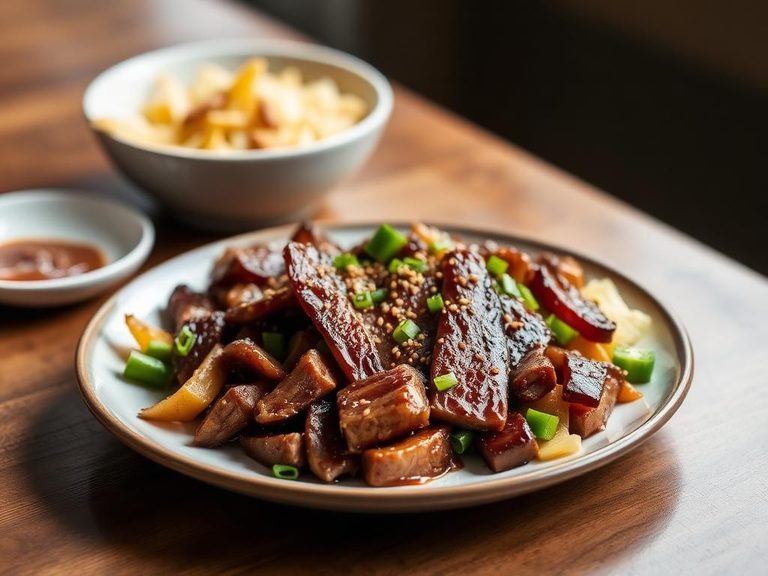
This is a lean, boneless cut from the rear leg of the cow, known for its dense, fine-grained texture and robust beefy flavor. When grilled, it develops a satisfying, slightly firm bite without the marbling of fattier steaks. Its standout feature is its exceptional protein density and virtually fat-free profile, making it a powerhouse for muscle-focused meals.
Calorie split: 77% protein · 0% carbs · 23% fat
↓ Full nutrition💚 Why it's loved
It's prized by athletes and health-conscious cooks for delivering a massive protein punch with minimal fat, allowing the pure, meaty flavor of beef to shine. Its firm texture holds up beautifully to marinades, grilling, and slicing thin for salads or stir-fries.
⚠️ Watch-outs & how to enjoy it better
Its leanness can make it prone to dryness and toughness if overcooked, which is a common pitfall. To counteract this, marinate it briefly in an acidic or enzymatic mixture (like citrus juice or pineapple), use a meat mallet for tenderization, and cook it quickly to medium-rare or slice it very thinly against the grain after resting.
Key benefits
- Extremely high in complete protein per calorie
- Very low in total fat and saturated fat
- Rich source of iron, zinc, and B12
- Supports muscle maintenance and satiety
- Versatile for meal prep and portion control
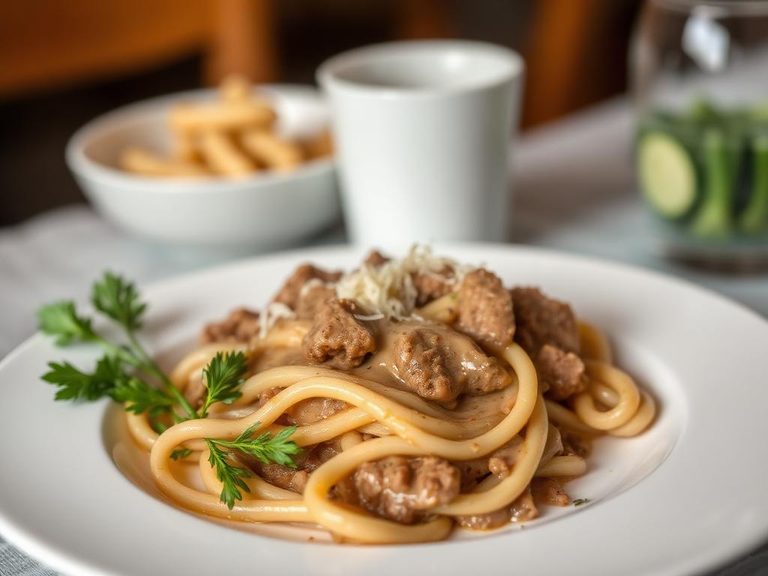
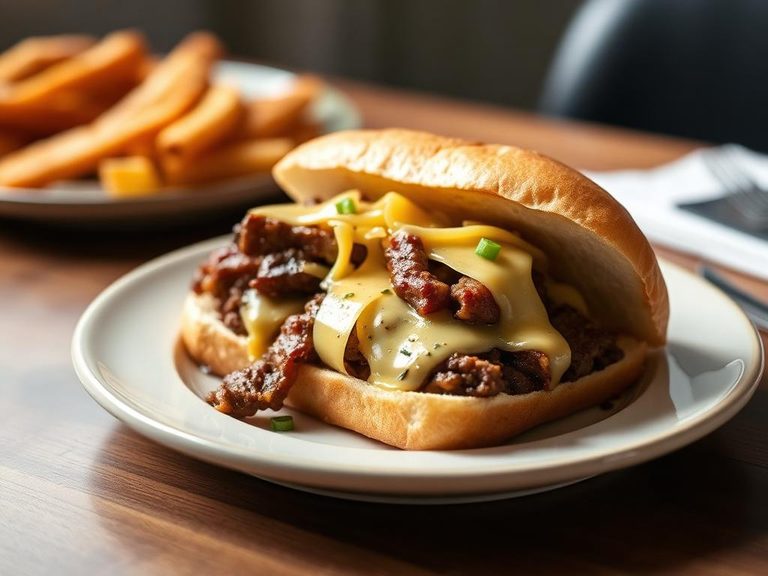
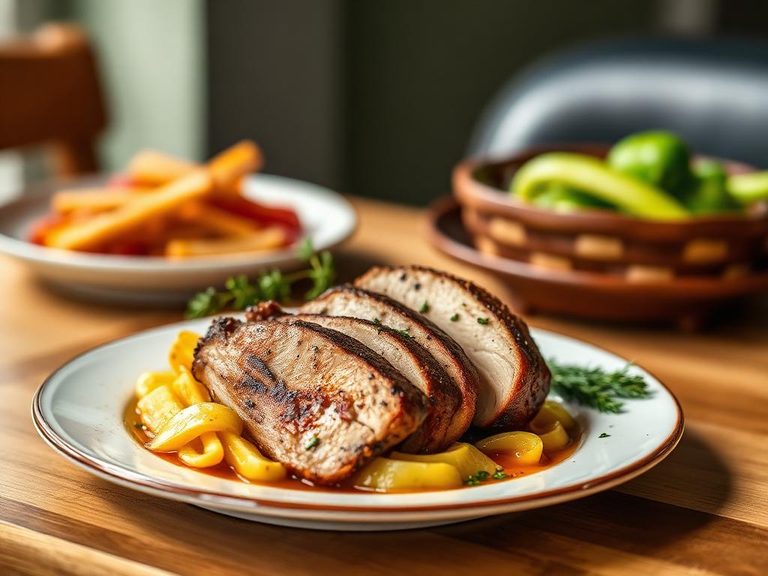
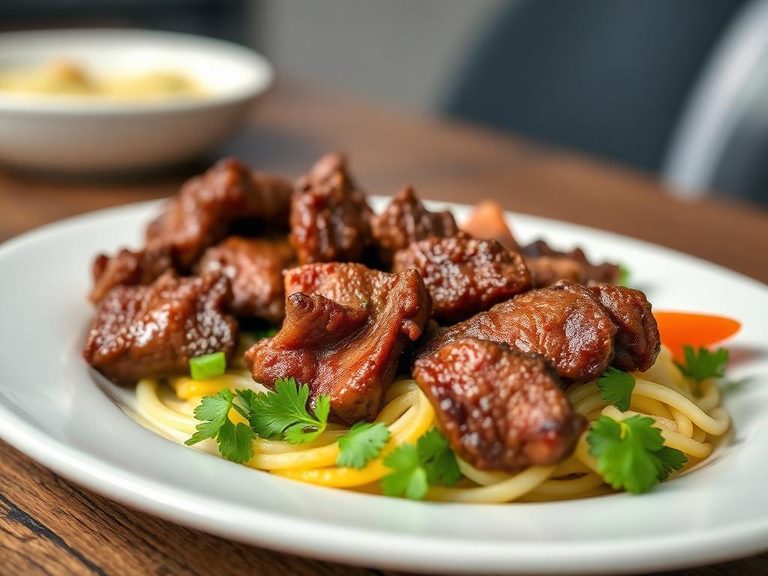
🍽️ Popular dishes
🌍 Where it's eaten
💡 Did you know?
Despite its name, 'eye of round' contains no round bone; the 'eye' refers to the large, circular muscle group found in the center of the round primal cut.
Full nutrition (USDA data · scales with serving)
| Water | 65.3 g |
| Energy | 155 kcal |
| Energy | 646 kj |
| Protein | 29.9 g |
| Total lipid (fat) | 3.9 g |
| Ash | 1.3 g |
| Carbohydrate, by difference | 0.00 g |
| Fiber, total dietary | 0.00 g |
| Total Sugars | 0.00 g |
| Calcium, Ca | 17.0 mg |
| Iron, Fe | 1.9 mg |
| Magnesium, Mg | 15.0 mg |
| Phosphorus, P | 288 mg |
| Potassium, K | 414 mg |
| Sodium, Na | 68.0 mg |
| Zinc, Zn | 4.4 mg |
| Copper, Cu | 0.06 mg |
| Manganese, Mn | 0.00 mg |
| Selenium, Se | 29.3 ug |
| Vitamin C, total ascorbic acid | 0.00 mg |
| Thiamin | 0.08 mg |
| Riboflavin | 0.24 mg |
| Niacin | 8.7 mg |
| Pantothenic acid | 0.46 mg |
| Vitamin B-6 | 0.84 mg |
| Folate, total | 5.0 ug |
| Folic acid | 0.00 ug |
| Folate, food | 5.0 ug |
| Folate, DFE | 5.0 ug |
| Choline, total | 83.4 mg |
| Betaine | 14.3 mg |
| Vitamin B-12 | 2.4 ug |
| Vitamin B-12, added | 0.00 ug |
| Vitamin A, RAE | 2.0 ug |
| Retinol | 2.0 ug |
| Carotene, beta | 0.00 ug |
| Carotene, alpha | 0.00 ug |
| Cryptoxanthin, beta | 0.00 ug |
| Vitamin A, IU | 8.0 iu |
| Lycopene | 0.00 ug |
| Lutein + zeaxanthin | 0.00 ug |
| Vitamin E (alpha-tocopherol) | 0.31 mg |
| Vitamin E, added | 0.00 mg |
| Vitamin D (D2 + D3), International Units | 1.0 iu |
| Vitamin D (D2 + D3) | 0.00 ug |
| Vitamin D3 (cholecalciferol) | 0.00 ug |
| Vitamin K (phylloquinone) | 1.5 ug |
| Alcohol, ethyl | 0.00 g |
| Caffeine | 0.00 mg |
| Theobromine | 0.00 mg |
Fat & fatty acid profile (per 100g)
| Fatty acids, total saturated | 1.4 g |
| SFA 4:0 | 0.00 g |
| SFA 6:0 | 0.00 g |
| SFA 8:0 | 0.00 g |
| SFA 10:0 | 0.00 g |
| SFA 12:0 | 0.00 g |
| SFA 14:0 | 0.09 g |
| SFA 15:0 | 0.01 g |
| SFA 16:0 | 0.82 g |
| SFA 17:0 | 0.04 g |
| SFA 18:0 | 0.43 g |
| SFA 20:0 | 0.00 g |
| SFA 24:0 | 0.00 g |
| Fatty acids, total monounsaturated | 1.6 g |
| MUFA 14:1 | 0.03 g |
| MUFA 16:1 | 0.13 g |
| MUFA 16:1 c | 0.12 g |
| MUFA 17:1 | 0.03 g |
| MUFA 18:1 | 1.4 g |
| MUFA 18:1 c | 1.3 g |
| MUFA 20:1 | 0.01 g |
| MUFA 22:1 | 0.00 g |
| Fatty acids, total polyunsaturated | 0.30 g |
| PUFA 18:2 | 0.21 g |
| PUFA 18:2 n-6 c,c | 0.18 g |
| PUFA 18:2 CLAs | 0.02 g |
| PUFA 18:3 | 0.01 g |
| PUFA 18:3 n-3 c,c,c (ALA) | 0.01 g |
| PUFA 18:4 | 0.00 g |
| PUFA 20:2 n-6 c,c | 0.00 g |
| PUFA 20:3 | 0.02 g |
| PUFA 20:3 n-6 | 0.02 g |
| PUFA 20:4 | 0.05 g |
| PUFA 20:5 n-3 (EPA) | 0.01 g |
| PUFA 22:5 n-3 (DPA) | 0.01 g |
| PUFA 22:6 n-3 (DHA) | 0.00 g |
| Fatty acids, total trans | 0.18 g |
| Fatty acids, total trans-monoenoic | 0.16 g |
| TFA 16:1 t | 0.01 g |
| TFA 18:1 t | 0.15 g |
| TFA 18:2 t not further defined | 0.02 g |
| Fatty acids, total trans-polyenoic | 0.02 g |
| Cholesterol | 78.0 mg |
Amino acid profile (per 100g)
| Tryptophan | 0.37 g |
| Threonine | 1.5 g |
| Isoleucine | 1.5 g |
| Leucine | 2.8 g |
| Lysine | 3.1 g |
| Methionine | 0.87 g |
| Cystine | 0.33 g |
| Phenylalanine | 1.3 g |
| Tyrosine | 1.2 g |
| Valine | 1.6 g |
| Arginine | 2.2 g |
| Histidine | 1.2 g |
| Alanine | 1.9 g |
| Aspartic acid | 3.2 g |
| Glutamic acid | 5.3 g |
| Glycine | 1.4 g |
| Proline | 1.4 g |
| Serine | 1.3 g |
| Hydroxyproline | 0.15 g |
FAQ
How do I prevent eye of round steak from becoming tough and chewy?
The key is to avoid overcooking. Since it's very lean, it has little fat to keep it moist. Cook it quickly over high heat (grilling, broiling, or pan-searing) to an internal temperature of 130-135°F (54-57°C) for medium-rare, then let it rest for 5-10 minutes before slicing thinly against the grain. Marinating for 30 minutes to 2 hours can also help tenderize it.
What's the best way to use leftover grilled eye of round?
Slice it very thinly against the grain. It's perfect for adding to salads, wrapping around vegetables for low-carb snacks, or using in stir-fries and fried rice where it will be reheated quickly. It also makes excellent cold beef sandwiches.
Is this cut suitable for slow cooking?
Generally, no. Its low fat and connective tissue content mean it doesn't benefit from long, slow braising and will likely dry out. It's best suited for dry-heat cooking methods like grilling, broiling, or roasting at a high temperature for a shorter time.
Nutrient density (calculated · NRF9.3)
Nutrient Rich Foods index: beneficial nutrients (protein, fiber, vitamins, minerals) minus saturated fat, added sugar & sodium, per 100 kcal.
NRF9.3 index — Fulgoni, Keast & Drewnowski, 2009. Computed from USDA nutrients.
Weight-loss friendliness (composite index)
Energy density 1.55 kcal/g · 77% calories from protein · 0.0 g fiber · 0.0 g sugar per 100 g.
Composite of energy density (Rolls et al., 1999), protein & fiber satiety, minus sugar. A calculated heuristic — ranks satiety-per-calorie, not a clinical measure.
Dietary load (calculated from USDA values)
Potential renal acid load. Positive = acid-forming, negative = alkaline-forming.
Sodium-to-potassium ratio: 0.16 (lower is better — aim for ≤ 1)
Sodium:potassium per WHO potassium guidance. Computed from USDA nutrients.