

Beef, rib eye roast, bone-in, lip-on, separable lean only, trimmed to 1/8" fat, all grades, cooked, roasted
Whole food · Beef Products
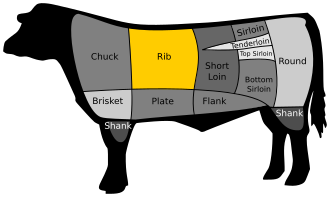
Photo: Wikipedia
This is a premium, flavorful cut from the rib section, known for its rich marbling that melts during roasting to create a tender, juicy texture with a deep, beefy taste. Nutritionally, it's a powerhouse of complete protein with virtually no carbohydrates, making it ideal for high-protein, low-carb diets. The lean-only preparation ensures you get the robust flavor without excessive fat, though it remains a calorically dense option.
Calorie split: 47% protein · 0% carbs · 53% fat
↓ Full nutrition💚 Why it's loved
People adore it for its exceptional tenderness and rich, buttery beef flavor that comes from the intramuscular fat marbling. It's a celebratory centerpiece for holidays and special occasions, prized for its impressive presentation and ability to serve a crowd.
⚠️ Watch-outs & how to enjoy it better
As a red meat, it is high in saturated fat and cholesterol, which should be consumed in moderation by those managing heart health. It can also be a significant source of dietary cholesterol and purines, which may be a concern for individuals with gout or specific kidney conditions. To counteract this, balance portions with fiber-rich vegetables, choose lean trimming, and consider it an occasional indulgence rather than a daily staple.
Key benefits
- Excellent source of high-quality, complete protein
- Zero carbohydrates, suitable for ketogenic and low-carb diets
- Rich in essential nutrients like iron, zinc, and B vitamins (especially B12)
- Bone-in roasting can enhance flavor and moisture retention
- Provides conjugated linoleic acid (CLA), a naturally occurring fatty acid
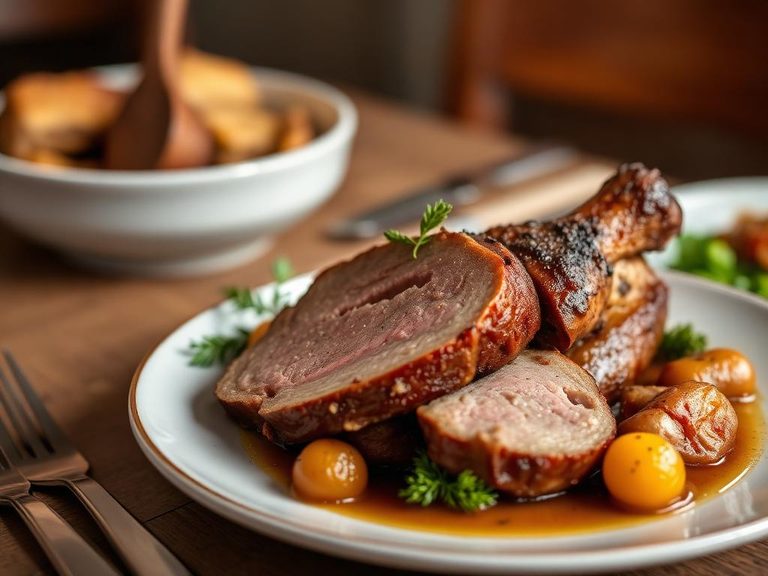
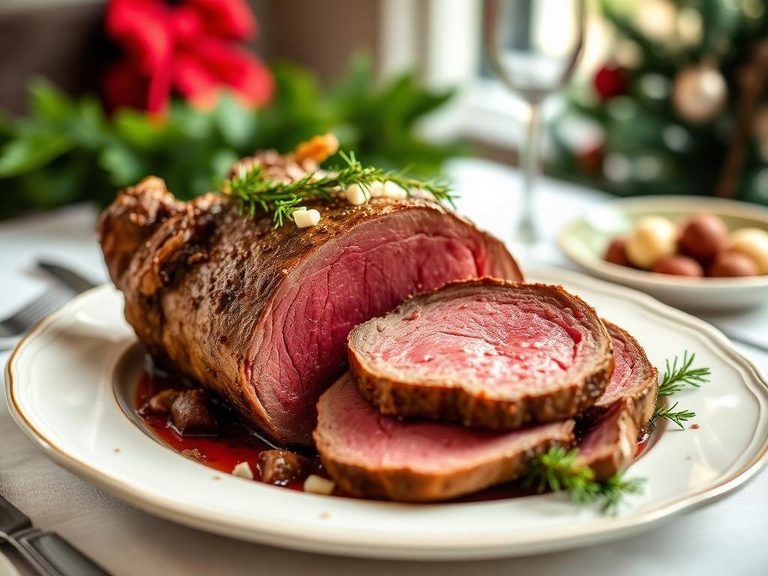
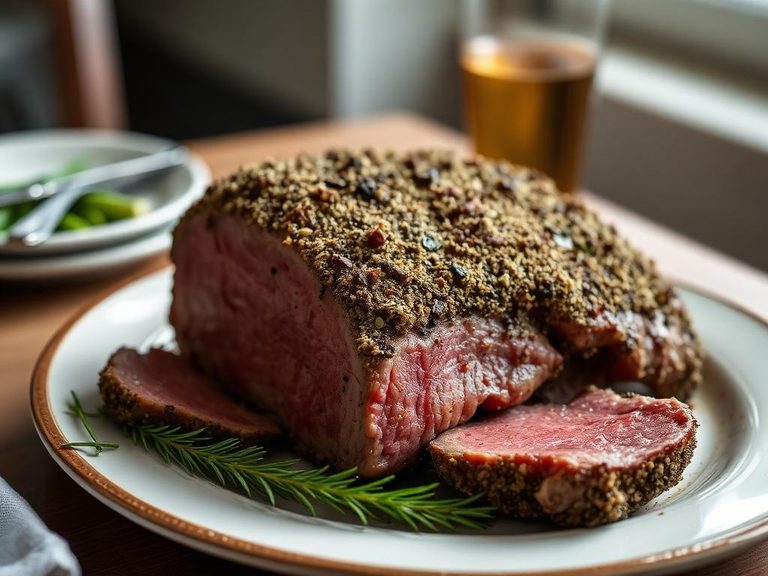
🍽️ Popular dishes
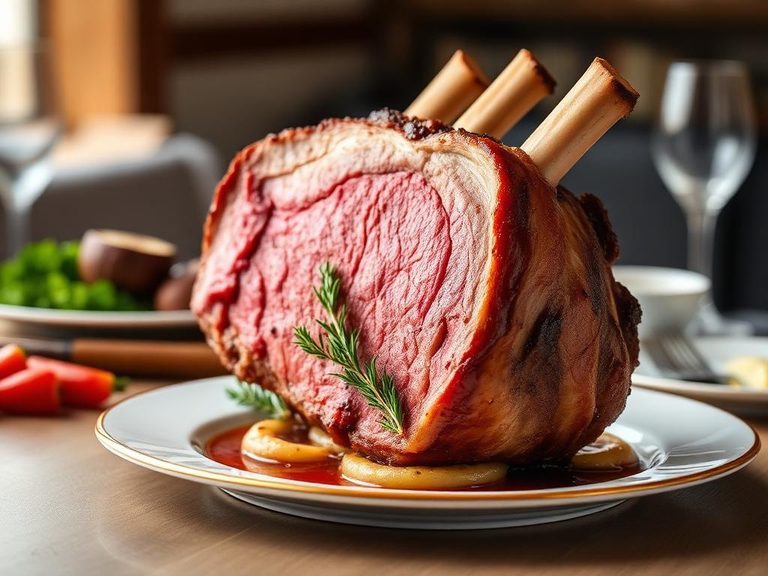
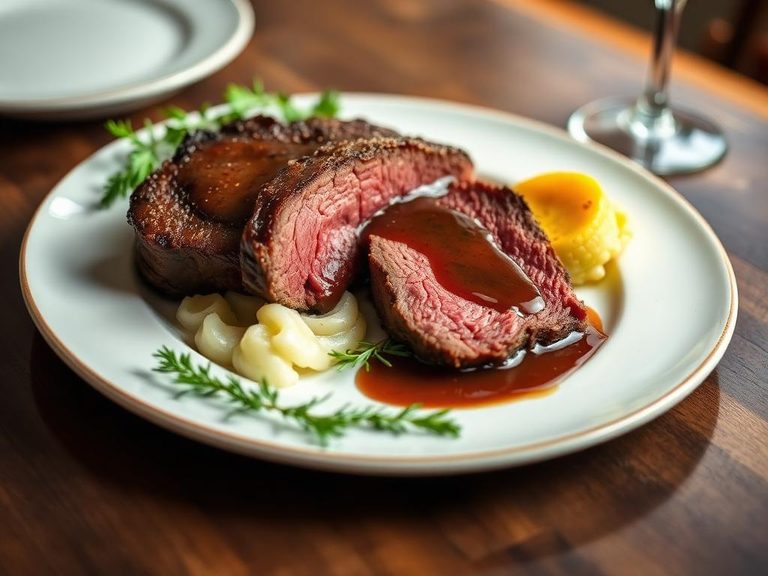
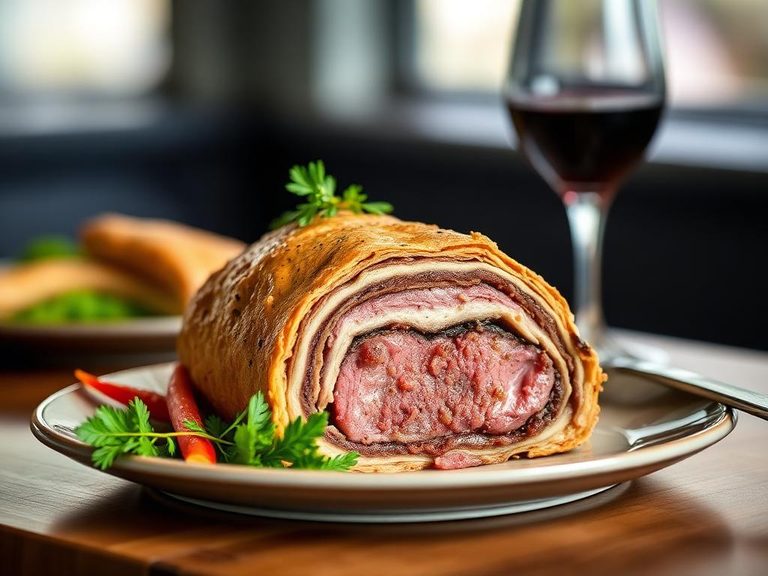
🌍 Where it's eaten
💡 Did you know?
The 'lip-on' designation refers to a strip of fat left on the outer edge, which bastes the meat during cooking and is often prized by chefs for added flavor, though it's typically trimmed before serving.
Full nutrition (USDA data · scales with serving)
| Water | 58.7 g |
| Energy | 231 kcal |
| Energy | 968 kj |
| Protein | 27.1 g |
| Total lipid (fat) | 13.6 g |
| Ash | 1.1 g |
| Carbohydrate, by difference | 0.00 g |
| Fiber, total dietary | 0.00 g |
| Total Sugars | 0.00 g |
| Calcium, Ca | 11.0 mg |
| Iron, Fe | 2.4 mg |
| Magnesium, Mg | 24.0 mg |
| Phosphorus, P | 173 mg |
| Potassium, K | 295 mg |
| Sodium, Na | 69.0 mg |
| Zinc, Zn | 6.1 mg |
| Copper, Cu | 0.09 mg |
| Manganese, Mn | 0.09 mg |
| Selenium, Se | 27.7 ug |
| Vitamin C, total ascorbic acid | 0.00 mg |
| Thiamin | 0.10 mg |
| Riboflavin | 0.33 mg |
| Niacin | 5.6 mg |
| Pantothenic acid | 0.69 mg |
| Vitamin B-6 | 0.54 mg |
| Folate, total | 7.0 ug |
| Folic acid | 0.00 ug |
| Folate, food | 7.0 ug |
| Folate, DFE | 7.0 ug |
| Choline, total | 55.5 mg |
| Betaine | 16.1 mg |
| Vitamin B-12 | 2.3 ug |
| Vitamin B-12, added | 0.00 ug |
| Vitamin A, RAE | 2.0 ug |
| Retinol | 2.0 ug |
| Carotene, beta | 0.00 ug |
| Carotene, alpha | 0.00 ug |
| Cryptoxanthin, beta | 0.00 ug |
| Vitamin A, IU | 6.0 iu |
| Lycopene | 0.00 ug |
| Lutein + zeaxanthin | 0.00 ug |
| Vitamin E (alpha-tocopherol) | 0.10 mg |
| Vitamin E, added | 0.00 mg |
| Vitamin D (D2 + D3), International Units | 4.0 iu |
| Vitamin D (D2 + D3) | 0.10 ug |
| Vitamin D3 (cholecalciferol) | 0.10 ug |
| Vitamin K (phylloquinone) | 1.6 ug |
| Alcohol, ethyl | 0.00 g |
| Caffeine | 0.00 mg |
| Theobromine | 0.00 mg |
Fat & fatty acid profile (per 100g)
| Fatty acids, total saturated | 5.3 g |
| SFA 4:0 | 0.00 g |
| SFA 6:0 | 0.00 g |
| SFA 8:0 | 0.00 g |
| SFA 10:0 | 0.01 g |
| SFA 12:0 | 0.01 g |
| SFA 14:0 | 0.34 g |
| SFA 15:0 | 0.07 g |
| SFA 16:0 | 2.9 g |
| SFA 17:0 | 0.16 g |
| SFA 18:0 | 1.7 g |
| SFA 20:0 | 0.01 g |
| SFA 24:0 | 0.01 g |
| Fatty acids, total monounsaturated | 6.1 g |
| MUFA 14:1 | 0.08 g |
| MUFA 15:1 | 0.05 g |
| MUFA 16:1 | 0.42 g |
| MUFA 16:1 c | 0.41 g |
| MUFA 17:1 | 0.11 g |
| MUFA 18:1 | 5.4 g |
| MUFA 18:1 c | 4.8 g |
| MUFA 20:1 | 0.02 g |
| MUFA 22:1 | 0.00 g |
| Fatty acids, total polyunsaturated | 0.62 g |
| PUFA 18:2 | 0.51 g |
| PUFA 18:2 n-6 c,c | 0.45 g |
| PUFA 18:2 CLAs | 0.05 g |
| PUFA 18:3 | 0.02 g |
| PUFA 18:3 n-3 c,c,c (ALA) | 0.02 g |
| PUFA 18:4 | 0.00 g |
| PUFA 20:2 n-6 c,c | 0.00 g |
| PUFA 20:3 | 0.02 g |
| PUFA 20:3 n-6 | 0.02 g |
| PUFA 20:4 | 0.06 g |
| PUFA 20:5 n-3 (EPA) | 0.00 g |
| PUFA 22:5 n-3 (DPA) | 0.01 g |
| PUFA 22:6 n-3 (DHA) | 0.00 g |
| Fatty acids, total trans | 0.64 g |
| Fatty acids, total trans-monoenoic | 0.63 g |
| TFA 16:1 t | 0.01 g |
| TFA 18:1 t | 0.62 g |
| TFA 18:2 t not further defined | 0.01 g |
| Fatty acids, total trans-polyenoic | 0.01 g |
| Cholesterol | 80.0 mg |
Amino acid profile (per 100g)
| Tryptophan | 0.33 g |
| Threonine | 1.4 g |
| Isoleucine | 1.4 g |
| Leucine | 2.5 g |
| Lysine | 2.9 g |
| Methionine | 0.79 g |
| Cystine | 0.30 g |
| Phenylalanine | 1.2 g |
| Tyrosine | 1.1 g |
| Valine | 1.5 g |
| Arginine | 2.0 g |
| Histidine | 1.1 g |
| Alanine | 1.8 g |
| Aspartic acid | 2.9 g |
| Glutamic acid | 4.8 g |
| Glycine | 1.3 g |
| Proline | 1.2 g |
| Serine | 1.2 g |
| Hydroxyproline | 0.14 g |
FAQ
What's the difference between 'rib eye roast' and 'standing rib roast'?
They are essentially the same cut from the rib section. 'Standing rib roast' often implies the bones are left attached for roasting, which can act as a natural rack and add flavor. 'Rib eye roast' may or may not have the bone, and the 'lip-on' detail specifies a particular trimming style.
How do I prevent it from drying out when roasting?
The key is not to overcook it. Use a meat thermometer to pull it from the oven at 5-10°F below your desired final temperature, as it will continue to cook while resting. Letting it rest for 15-20 minutes after roasting is crucial for the juices to redistribute.
Is the 'separable lean only' part important?
Yes, it means the nutritional values are for the meat after the visible fat cap and large seams of fat have been removed. This results in a leaner, lower-calorie, and lower-fat product compared to the untrimmed roast.
Nutrient density (calculated · NRF9.3)
Nutrient Rich Foods index: beneficial nutrients (protein, fiber, vitamins, minerals) minus saturated fat, added sugar & sodium, per 100 kcal.
NRF9.3 index — Fulgoni, Keast & Drewnowski, 2009. Computed from USDA nutrients.
Weight-loss friendliness (composite index)
Energy density 2.31 kcal/g · 47% calories from protein · 0.0 g fiber · 0.0 g sugar per 100 g.
Composite of energy density (Rolls et al., 1999), protein & fiber satiety, minus sugar. A calculated heuristic — ranks satiety-per-calorie, not a clinical measure.
Dietary load (calculated from USDA values)
Potential renal acid load. Positive = acid-forming, negative = alkaline-forming.
Sodium-to-potassium ratio: 0.23 (lower is better — aim for ≤ 1)
Sodium:potassium per WHO potassium guidance. Computed from USDA nutrients.