

Beef, plate steak, boneless, inside skirt, separable lean only, trimmed to 0" fat, select, raw
Whole food · Beef Products

Photo: Wikipedia
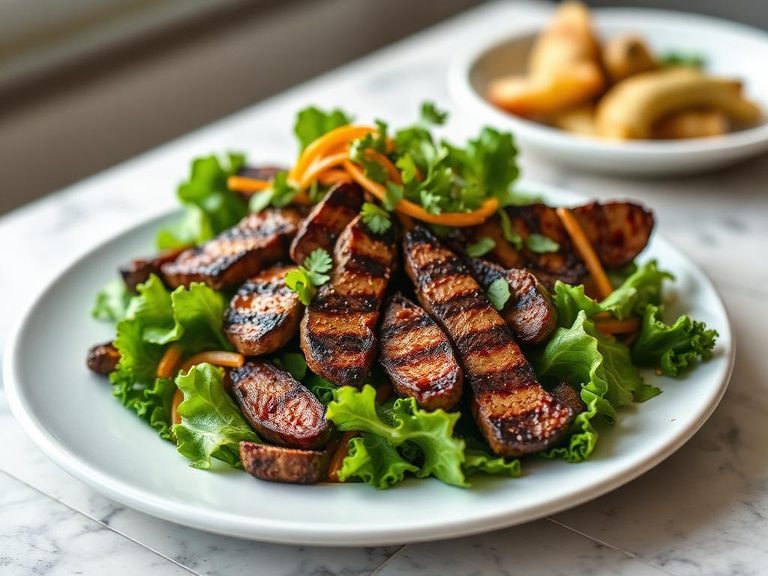
Inside skirt steak is a long, flat, and lean cut from the diaphragm muscle, prized for its deep, beefy flavor and distinct, slightly chewy texture. When trimmed of all fat, it becomes an exceptionally lean protein source, packing over 21 grams of protein per 100 grams with virtually no carbohydrates. Its robust taste makes it a favorite for high-heat cooking methods that caramelize its surface.
Calorie split: 56% protein · 0% carbs · 44% fat
↓ Full nutrition💚 Why it's loved
People love it for its intense, minerally beef flavor that stands up boldly to marinades and high-heat searing. Its long, uniform shape makes it ideal for slicing against the grain into tender, flavorful strips for tacos, salads, and fajitas.
⚠️ Watch-outs & how to enjoy it better
As a working muscle, it can be tough and chewy if not cooked properly or sliced correctly. To counteract this, always marinate it to help tenderize the fibers, cook it quickly to medium-rare or medium, and slice it thinly perpendicular to the direction of the muscle grain.
Key benefits
- Excellent source of high-quality, complete protein for muscle maintenance.
- Very lean cut, low in saturated fat and calories.
- Rich in essential minerals like iron and zinc.
- Naturally zero in carbohydrates and sugars.
- Provides B vitamins, particularly B12, for energy metabolism.
🍽️ Popular dishes
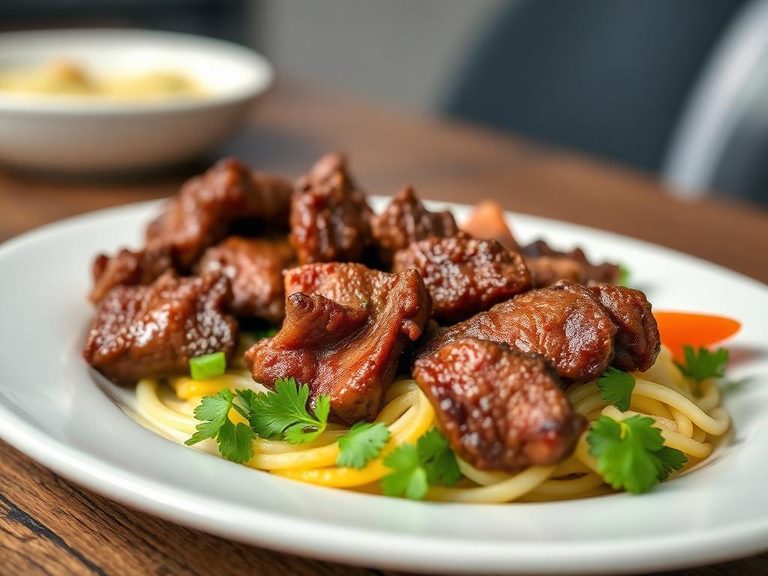
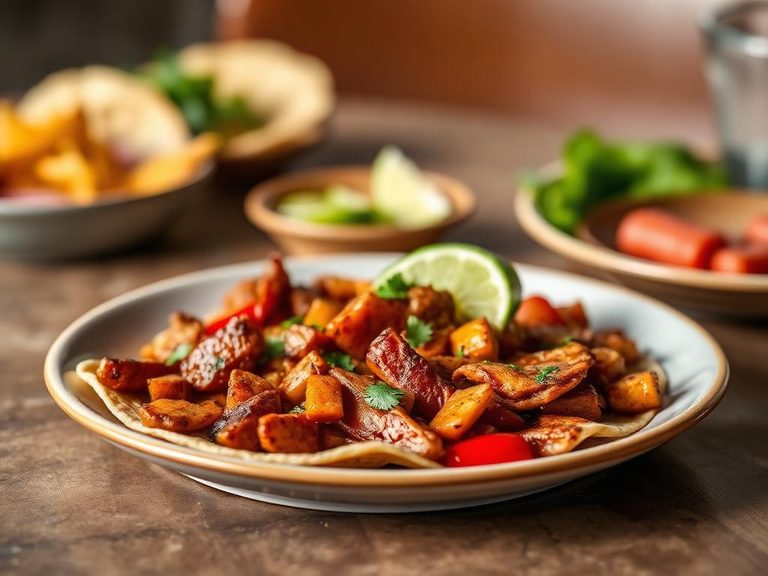
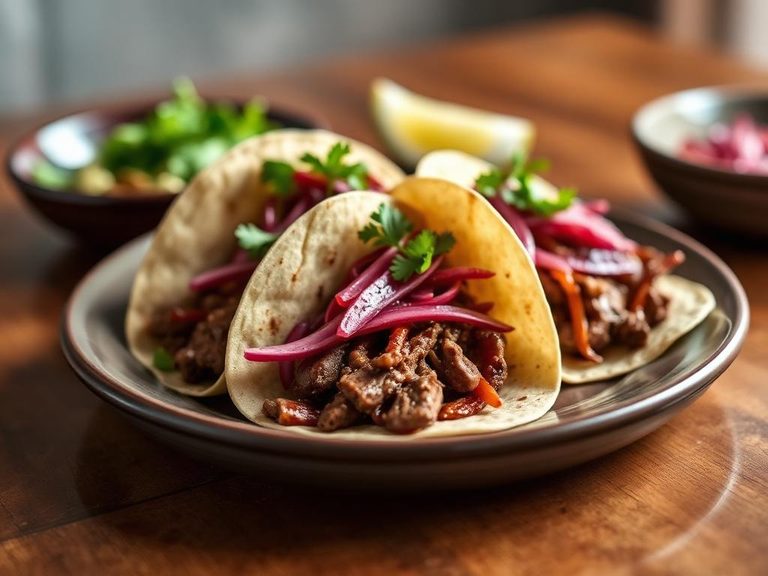
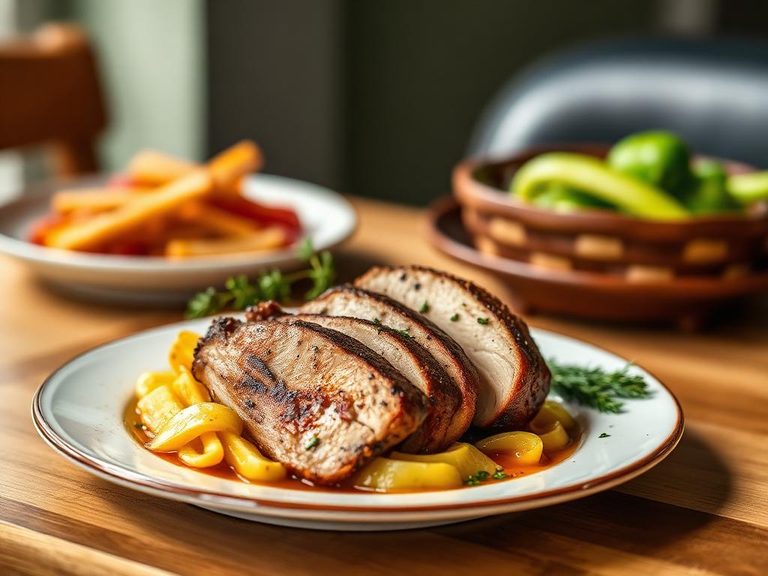
🌍 Where it's eaten
💡 Did you know?
Despite its name, the 'inside skirt' is actually a different, more tender muscle than the 'outside skirt' (diaphragm), and it's often the preferred cut for authentic fajitas.
Full nutrition (USDA data · scales with serving)
| Water | 70.4 g |
| Energy | 153 kcal |
| Energy | 641 kj |
| Protein | 21.6 g |
| Total lipid (fat) | 7.4 g |
| Ash | 0.97 g |
| Carbohydrate, by difference | 0.00 g |
| Fiber, total dietary | 0.00 g |
| Total Sugars | 0.00 g |
| Calcium, Ca | 6.0 mg |
| Iron, Fe | 1.8 mg |
| Magnesium, Mg | 22.0 mg |
| Phosphorus, P | 154 mg |
| Potassium, K | 292 mg |
| Sodium, Na | 66.0 mg |
| Zinc, Zn | 6.4 mg |
| Copper, Cu | 0.08 mg |
| Manganese, Mn | 0.08 mg |
| Selenium, Se | 22.0 ug |
| Vitamin C, total ascorbic acid | 0.00 mg |
| Thiamin | 0.06 mg |
| Riboflavin | 0.32 mg |
| Niacin | 5.7 mg |
| Pantothenic acid | 0.58 mg |
| Vitamin B-6 | 0.43 mg |
| Folate, total | 3.0 ug |
| Folic acid | 0.00 ug |
| Folate, food | 3.0 ug |
| Folate, DFE | 3.0 ug |
| Choline, total | 44.4 mg |
| Betaine | 12.2 mg |
| Vitamin B-12 | 2.1 ug |
| Vitamin B-12, added | 0.00 ug |
| Vitamin A, RAE | 2.0 ug |
| Retinol | 2.0 ug |
| Carotene, beta | 0.00 ug |
| Carotene, alpha | 0.00 ug |
| Cryptoxanthin, beta | 0.00 ug |
| Vitamin A, IU | 8.0 iu |
| Lycopene | 0.00 ug |
| Lutein + zeaxanthin | 0.00 ug |
| Vitamin E (alpha-tocopherol) | 0.10 mg |
| Vitamin E, added | 0.00 mg |
| Vitamin D (D2 + D3), International Units | 3.0 iu |
| Vitamin D (D2 + D3) | 0.10 ug |
| Vitamin D3 (cholecalciferol) | 0.10 ug |
| Vitamin K (phylloquinone) | 1.5 ug |
| Alcohol, ethyl | 0.00 g |
| Caffeine | 0.00 mg |
| Theobromine | 0.00 mg |
Fat & fatty acid profile (per 100g)
| Fatty acids, total saturated | 2.8 g |
| SFA 4:0 | 0.00 g |
| SFA 6:0 | 0.00 g |
| SFA 8:0 | 0.00 g |
| SFA 10:0 | 0.00 g |
| SFA 12:0 | 0.01 g |
| SFA 14:0 | 0.19 g |
| SFA 15:0 | 0.03 g |
| SFA 16:0 | 1.6 g |
| SFA 17:0 | 0.07 g |
| SFA 18:0 | 0.89 g |
| SFA 20:0 | 0.00 g |
| SFA 24:0 | 0.01 g |
| Fatty acids, total monounsaturated | 3.2 g |
| MUFA 14:1 | 0.05 g |
| MUFA 15:1 | 0.04 g |
| MUFA 16:1 | 0.24 g |
| MUFA 16:1 c | 0.23 g |
| MUFA 17:1 | 0.06 g |
| MUFA 18:1 | 2.8 g |
| MUFA 18:1 c | 2.5 g |
| MUFA 20:1 | 0.01 g |
| MUFA 22:1 | 0.00 g |
| Fatty acids, total polyunsaturated | 0.38 g |
| PUFA 18:2 | 0.30 g |
| PUFA 18:2 n-6 c,c | 0.27 g |
| PUFA 18:2 CLAs | 0.02 g |
| PUFA 18:3 | 0.01 g |
| PUFA 18:3 n-3 c,c,c (ALA) | 0.01 g |
| PUFA 18:4 | 0.00 g |
| PUFA 20:2 n-6 c,c | 0.00 g |
| PUFA 20:3 | 0.01 g |
| PUFA 20:3 n-6 | 0.01 g |
| PUFA 20:4 | 0.04 g |
| PUFA 20:5 n-3 (EPA) | 0.00 g |
| PUFA 22:5 n-3 (DPA) | 0.01 g |
| PUFA 22:6 n-3 (DHA) | 0.00 g |
| Fatty acids, total trans | 0.34 g |
| Fatty acids, total trans-monoenoic | 0.34 g |
| TFA 16:1 t | 0.01 g |
| TFA 18:1 t | 0.33 g |
| TFA 18:2 t not further defined | 0.01 g |
| Fatty acids, total trans-polyenoic | 0.01 g |
| Cholesterol | 63.0 mg |
Amino acid profile (per 100g)
| Tryptophan | 0.28 g |
| Threonine | 1.2 g |
| Isoleucine | 1.2 g |
| Leucine | 2.2 g |
| Lysine | 2.5 g |
| Methionine | 0.68 g |
| Cystine | 0.26 g |
| Phenylalanine | 1.0 g |
| Tyrosine | 0.96 g |
| Valine | 1.3 g |
| Arginine | 1.7 g |
| Histidine | 0.97 g |
| Alanine | 1.5 g |
| Aspartic acid | 2.5 g |
| Glutamic acid | 4.2 g |
| Glycine | 1.1 g |
| Proline | 1.1 g |
| Serine | 1.1 g |
| Hydroxyproline | 0.11 g |
FAQ
What's the best way to cook a lean inside skirt steak?
Use high, dry heat. Grill it, broil it, or sear it in a very hot cast-iron skillet for just a few minutes per side. Aim for medium-rare to medium doneness to prevent it from becoming dry and tough.
Why is slicing so important for this cut?
Skirt steak has long, pronounced muscle fibers. Slicing it thinly *against* the grain shortens those fibers, making each bite significantly more tender. Slicing with the grain results in a chewy, stringy texture.
Is this a good cut for a low-carb or keto diet?
Absolutely. With 0g carbs and 0g sugar, it's a perfect protein source for low-carb, keto, and carnivore diets. Its high protein content also helps promote satiety.
Nutrient density (calculated · NRF9.3)
Nutrient Rich Foods index: beneficial nutrients (protein, fiber, vitamins, minerals) minus saturated fat, added sugar & sodium, per 100 kcal.
NRF9.3 index — Fulgoni, Keast & Drewnowski, 2009. Computed from USDA nutrients.
Weight-loss friendliness (composite index)
Energy density 1.53 kcal/g · 56% calories from protein · 0.0 g fiber · 0.0 g sugar per 100 g.
Composite of energy density (Rolls et al., 1999), protein & fiber satiety, minus sugar. A calculated heuristic — ranks satiety-per-calorie, not a clinical measure.
Dietary load (calculated from USDA values)
Potential renal acid load. Positive = acid-forming, negative = alkaline-forming.
Sodium-to-potassium ratio: 0.23 (lower is better — aim for ≤ 1)
Sodium:potassium per WHO potassium guidance. Computed from USDA nutrients.