

Beef, plate steak, boneless, inside skirt, separable lean only, trimmed to 0" fat, select, cooked, grilled
Whole food · Beef Products

Photo: Wikipedia
This is a lean, intensely beefy cut from the diaphragm muscle, known for its long, flat shape and coarse grain. When grilled properly, it develops a deep, savory crust while remaining tender and juicy inside, with a robust, almost iron-rich flavor. Nutritionally, it's a powerhouse of high-quality protein with minimal fat, making it a staple for high-protein, low-carb diets.
Calorie split: 55% protein · 0% carbs · 45% fat
↓ Full nutrition💚 Why it's loved
People love it for its bold, uncompromising beef flavor and satisfying chew that holds up beautifully to high-heat grilling. It's a versatile canvas for marinades and is a cultural cornerstone in dishes like Mexican carne asada and Argentinian asado.
⚠️ Watch-outs & how to enjoy it better
The cut's long muscle fibers can be tough if overcooked or sliced incorrectly. It can also be high in cholesterol, so those monitoring intake should practice portion control. To counteract toughness, always slice thinly against the grain after grilling, and consider a tenderizing marinade with acid (like citrus) or enzymes (like pineapple).
Key benefits
- Excellent source of complete protein for muscle repair
- Naturally zero carbohydrates and sugar
- Rich in iron, zinc, and B vitamins (especially B12)
- Low in saturated fat compared to many steak cuts
- Provides conjugated linoleic acid (CLA), a beneficial fatty acid
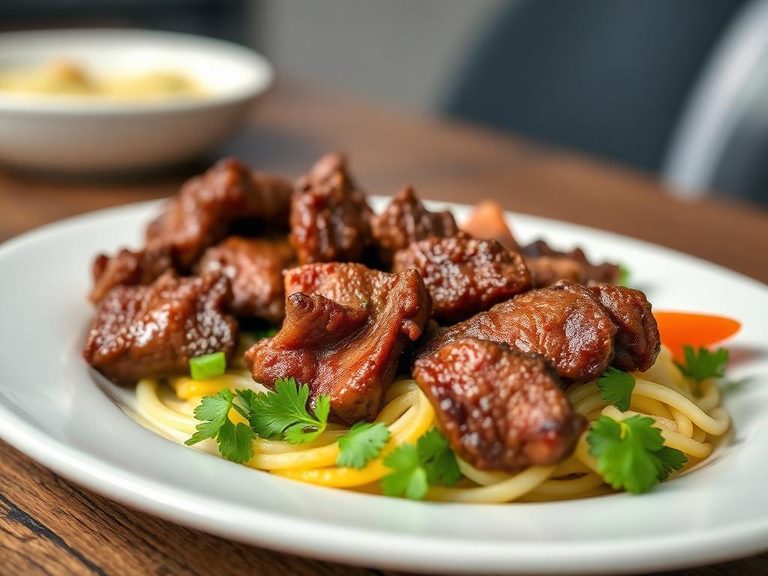
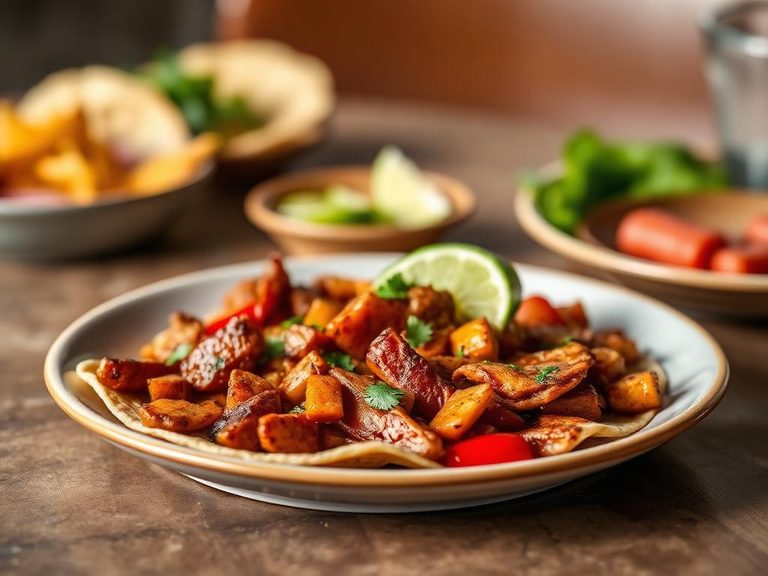
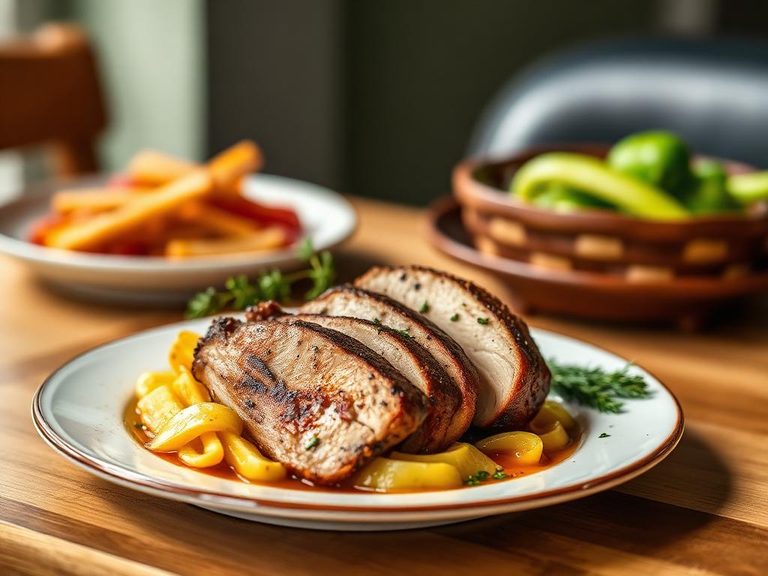
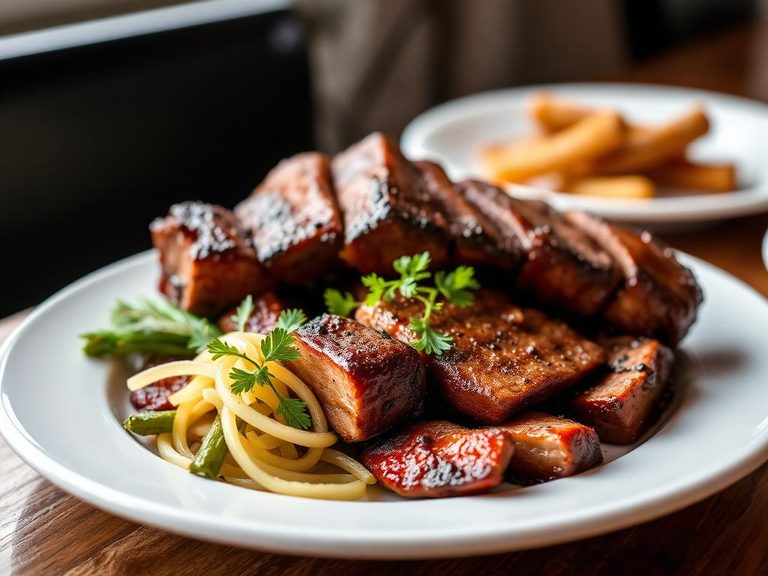
🍽️ Popular dishes
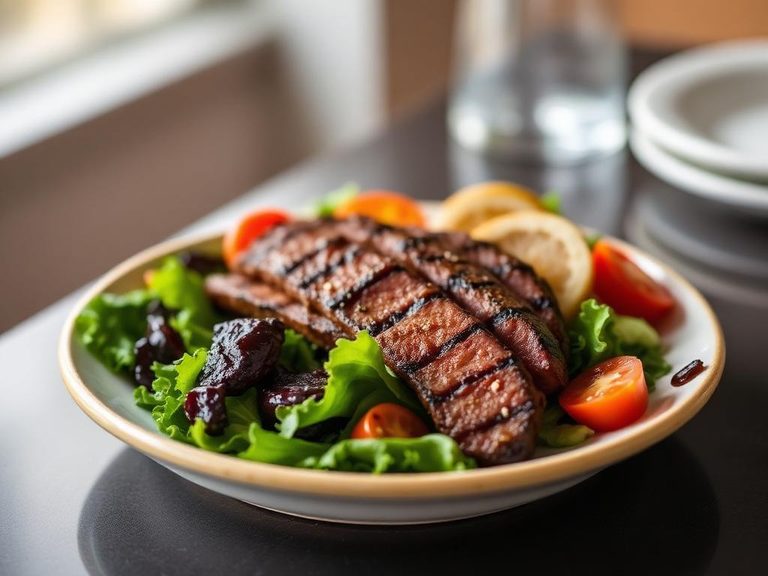
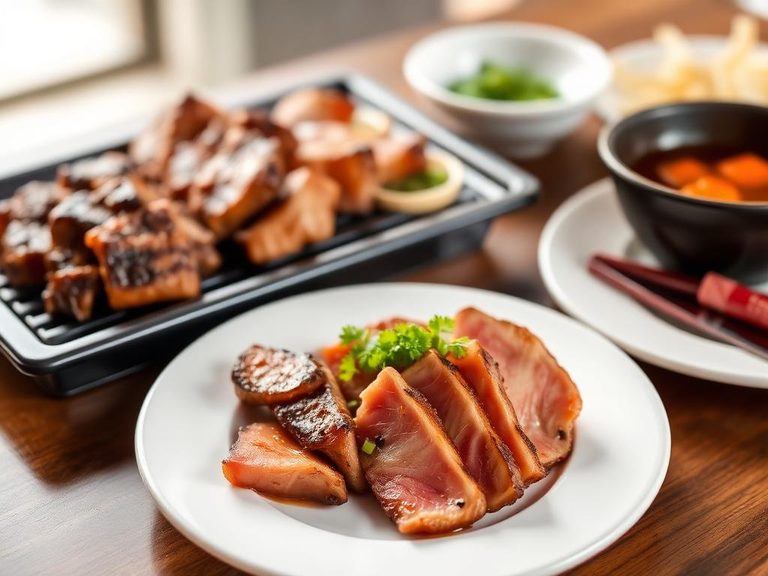
🌍 Where it's eaten
💡 Did you know?
The 'skirt' in skirt steak refers to the diaphragm muscle's skirt-like shape, and it's anatomically the same cut used for the classic British dish 'Deviled Kidneys' when prepared from beef.
Full nutrition (USDA data · scales with serving)
| Water | 58.0 g |
| Energy | 223 kcal |
| Energy | 933 kj |
| Protein | 30.6 g |
| Total lipid (fat) | 11.2 g |
| Ash | 1.1 g |
| Carbohydrate, by difference | 0.00 g |
| Fiber, total dietary | 0.00 g |
| Total Sugars | 0.00 g |
| Calcium, Ca | 7.0 mg |
| Iron, Fe | 2.4 mg |
| Magnesium, Mg | 24.0 mg |
| Phosphorus, P | 176 mg |
| Potassium, K | 312 mg |
| Sodium, Na | 62.0 mg |
| Zinc, Zn | 8.5 mg |
| Copper, Cu | 0.11 mg |
| Manganese, Mn | 0.11 mg |
| Selenium, Se | 35.0 ug |
| Vitamin C, total ascorbic acid | 0.00 mg |
| Thiamin | 0.08 mg |
| Riboflavin | 0.35 mg |
| Niacin | 6.6 mg |
| Pantothenic acid | 0.68 mg |
| Vitamin B-6 | 0.52 mg |
| Folate, total | 7.0 ug |
| Folic acid | 0.00 ug |
| Folate, food | 7.0 ug |
| Folate, DFE | 7.0 ug |
| Choline, total | 61.3 mg |
| Betaine | 12.8 mg |
| Vitamin B-12 | 2.7 ug |
| Vitamin B-12, added | 0.00 ug |
| Vitamin A, RAE | 2.0 ug |
| Retinol | 2.0 ug |
| Carotene, beta | 0.00 ug |
| Carotene, alpha | 0.00 ug |
| Cryptoxanthin, beta | 0.00 ug |
| Vitamin A, IU | 8.0 iu |
| Lycopene | 0.00 ug |
| Lutein + zeaxanthin | 0.00 ug |
| Vitamin E (alpha-tocopherol) | 0.07 mg |
| Vitamin E, added | 0.00 mg |
| Vitamin D (D2 + D3), International Units | 4.0 iu |
| Vitamin D (D2 + D3) | 0.10 ug |
| Vitamin D3 (cholecalciferol) | 0.10 ug |
| Vitamin K (phylloquinone) | 1.6 ug |
| Alcohol, ethyl | 0.00 g |
| Caffeine | 0.00 mg |
| Theobromine | 0.00 mg |
Fat & fatty acid profile (per 100g)
| Fatty acids, total saturated | 3.6 g |
| SFA 4:0 | 0.00 g |
| SFA 6:0 | 0.00 g |
| SFA 8:0 | 0.00 g |
| SFA 10:0 | 0.00 g |
| SFA 12:0 | 0.01 g |
| SFA 14:0 | 0.25 g |
| SFA 15:0 | 0.04 g |
| SFA 16:0 | 2.1 g |
| SFA 17:0 | 0.09 g |
| SFA 18:0 | 1.1 g |
| SFA 20:0 | 0.00 g |
| SFA 24:0 | 0.01 g |
| Fatty acids, total monounsaturated | 4.6 g |
| MUFA 14:1 | 0.07 g |
| MUFA 15:1 | 0.06 g |
| MUFA 16:1 | 0.38 g |
| MUFA 16:1 c | 0.36 g |
| MUFA 17:1 | 0.08 g |
| MUFA 18:1 | 4.0 g |
| MUFA 18:1 c | 3.6 g |
| MUFA 20:1 | 0.01 g |
| MUFA 22:1 | 0.00 g |
| Fatty acids, total polyunsaturated | 0.49 g |
| PUFA 18:2 | 0.38 g |
| PUFA 18:2 n-6 c,c | 0.34 g |
| PUFA 18:2 CLAs | 0.03 g |
| PUFA 18:3 | 0.01 g |
| PUFA 18:3 n-3 c,c,c (ALA) | 0.01 g |
| PUFA 18:4 | 0.00 g |
| PUFA 20:2 n-6 c,c | 0.00 g |
| PUFA 20:3 | 0.02 g |
| PUFA 20:3 n-6 | 0.02 g |
| PUFA 20:4 | 0.06 g |
| PUFA 20:5 n-3 (EPA) | 0.00 g |
| PUFA 22:5 n-3 (DPA) | 0.02 g |
| PUFA 22:6 n-3 (DHA) | 0.00 g |
| Fatty acids, total trans | 0.44 g |
| Fatty acids, total trans-monoenoic | 0.43 g |
| TFA 16:1 t | 0.01 g |
| TFA 18:1 t | 0.42 g |
| TFA 18:2 t not further defined | 0.01 g |
| Fatty acids, total trans-polyenoic | 0.01 g |
| Cholesterol | 91.0 mg |
Amino acid profile (per 100g)
| Tryptophan | 0.40 g |
| Threonine | 1.7 g |
| Isoleucine | 1.7 g |
| Leucine | 3.2 g |
| Lysine | 3.5 g |
| Methionine | 0.97 g |
| Cystine | 0.37 g |
| Phenylalanine | 1.4 g |
| Tyrosine | 1.4 g |
| Valine | 1.8 g |
| Arginine | 2.5 g |
| Histidine | 1.4 g |
| Alanine | 2.2 g |
| Aspartic acid | 3.5 g |
| Glutamic acid | 5.9 g |
| Glycine | 1.6 g |
| Proline | 1.6 g |
| Serine | 1.5 g |
| Hydroxyproline | 0.15 g |
FAQ
What's the difference between inside and outside skirt steak?
The inside skirt is the more common, slightly thicker, and more tender of the two. The outside skirt is thinner, has a more pronounced membrane, and is often considered more flavorful but requires more careful preparation.
Why is my skirt steak tough?
It's likely overcooked or sliced with the grain. Skirt steak should be cooked quickly over high heat to medium-rare and always sliced thinly against the grain to shorten the muscle fibers.
Is skirt steak the same as flank steak?
No, they are different muscles. Skirt steak (diaphragm) has a looser grain and more intense beefy flavor. Flank steak (abdominal muscle) is leaner, denser, and has a finer grain. Both benefit from marinating and quick cooking.
Nutrient density (calculated · NRF9.3)
Nutrient Rich Foods index: beneficial nutrients (protein, fiber, vitamins, minerals) minus saturated fat, added sugar & sodium, per 100 kcal.
NRF9.3 index — Fulgoni, Keast & Drewnowski, 2009. Computed from USDA nutrients.
Weight-loss friendliness (composite index)
Energy density 2.23 kcal/g · 55% calories from protein · 0.0 g fiber · 0.0 g sugar per 100 g.
Composite of energy density (Rolls et al., 1999), protein & fiber satiety, minus sugar. A calculated heuristic — ranks satiety-per-calorie, not a clinical measure.
Dietary load (calculated from USDA values)
Potential renal acid load. Positive = acid-forming, negative = alkaline-forming.
Sodium-to-potassium ratio: 0.20 (lower is better — aim for ≤ 1)
Sodium:potassium per WHO potassium guidance. Computed from USDA nutrients.