

Babyfood, meat, veal, strained
Whole food · Baby Foods

Photo: Wikipedia
A smooth, savory purée of finely ground veal, this baby food offers a concentrated source of high-quality protein with a mild, meaty flavor and a velvety, spoonable texture. Its nutrition profile is remarkably lean, delivering over 13 grams of protein per 100 grams with minimal fat and virtually no carbohydrates, making it a powerhouse for early growth.
Calorie split: 65% protein · 7% carbs · 27% fat
↓ Full nutrition💚 Why it's loved
Parents value it for its simplicity and nutritional density, offering a clean, single-ingredient protein source that's easy to digest. Its mild, savory taste is often a baby's first introduction to meat flavors, forming a foundation for diverse palates.
⚠️ Watch-outs & how to enjoy it better
The plain, strained texture and singular flavor can be unappealing to some infants, potentially leading to food rejection. For babies with a family history of allergies, introducing any new meat should be done cautiously, watching for rare reactions. To enhance palatability, mix a small spoonful with a favorite vegetable purée or a dash of breast milk/formula.
Key benefits
- Excellent source of complete, high-quality animal protein for muscle development.
- Naturally low in fat and carbohydrates, supporting a lean nutrient profile.
- Rich in bioavailable iron, crucial for infant cognitive development.
- Free from added sugars, salt, and common allergens like dairy or gluten.
- Provides essential B vitamins, particularly B12, for nerve function and energy metabolism.
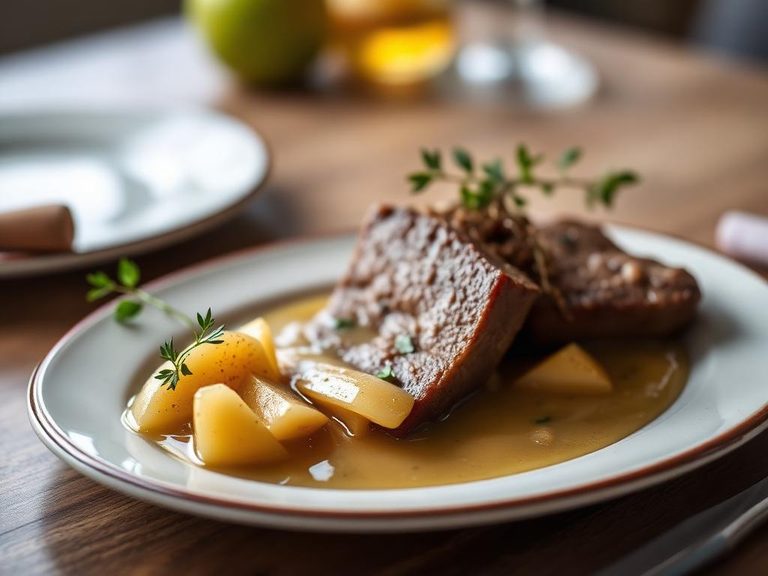
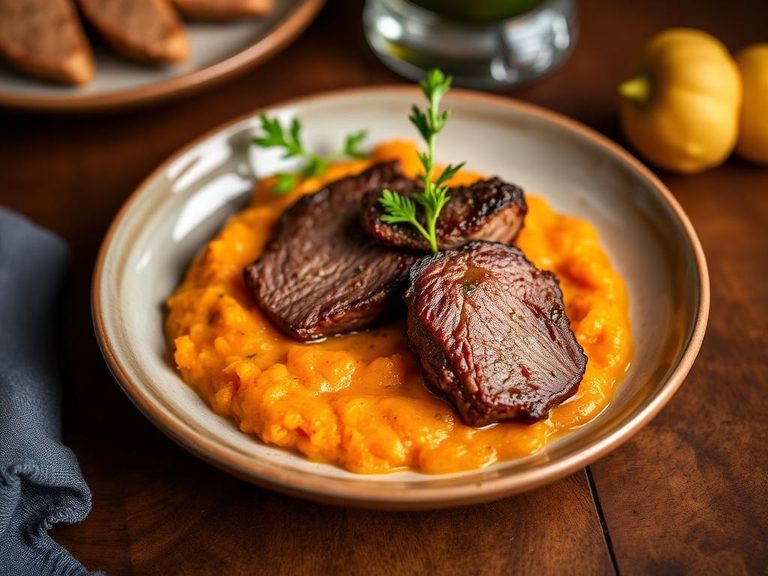
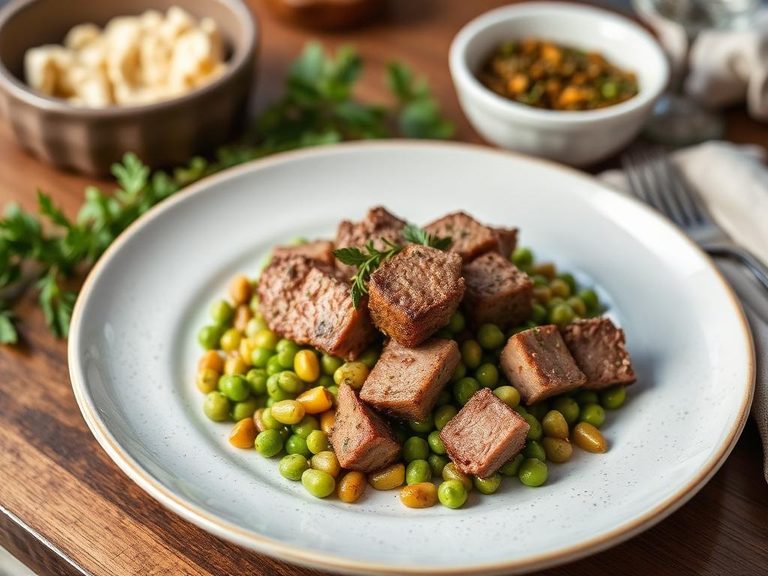
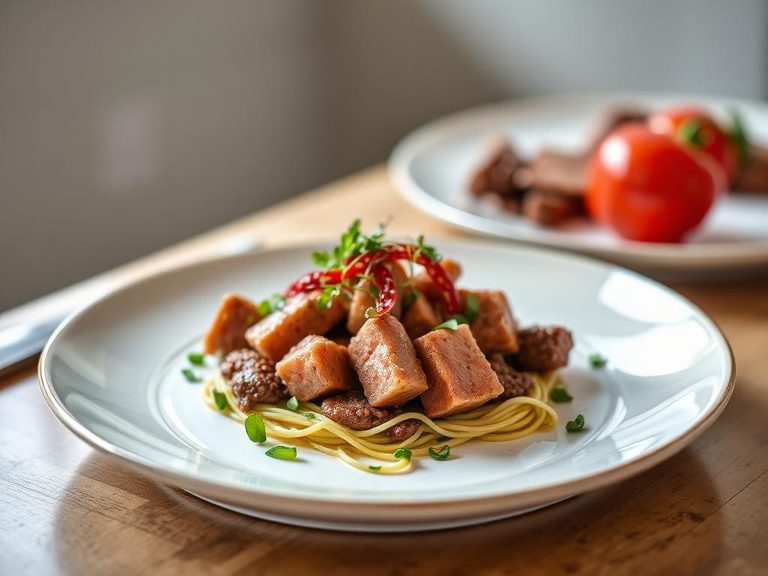
🍽️ Popular dishes
🌍 Where it's eaten
💡 Did you know?
Veal is traditionally prized in culinary circles for its tender, delicate texture, which translates perfectly into a smooth, lump-free purée ideal for a baby's first solids.
Full nutrition (USDA data · scales with serving)
| Water | 82.4 g |
| Energy | 81.0 kcal |
| Energy | 337 kj |
| Protein | 13.1 g |
| Total lipid (fat) | 2.5 g |
| Ash | 0.54 g |
| Carbohydrate, by difference | 1.5 g |
| Fiber, total dietary | 0.00 g |
| Total Sugars | 0.00 g |
| Calcium, Ca | 6.0 mg |
| Iron, Fe | 0.76 mg |
| Magnesium, Mg | 11.0 mg |
| Phosphorus, P | 98.0 mg |
| Potassium, K | 170 mg |
| Sodium, Na | 39.0 mg |
| Zinc, Zn | 2.5 mg |
| Copper, Cu | 0.15 mg |
| Manganese, Mn | 0.04 mg |
| Selenium, Se | 3.5 ug |
| Fluoride, F | 1.3 ug |
| Vitamin C, total ascorbic acid | 0.00 mg |
| Thiamin | 0.02 mg |
| Riboflavin | 0.12 mg |
| Niacin | 2.9 mg |
| Pantothenic acid | 0.15 mg |
| Vitamin B-6 | 0.05 mg |
| Folate, total | 5.0 ug |
| Folic acid | 0.00 ug |
| Folate, food | 5.0 ug |
| Folate, DFE | 5.0 ug |
| Choline, total | 49.5 mg |
| Betaine | 6.9 mg |
| Vitamin B-12 | 1.6 ug |
| Vitamin B-12, added | 0.00 ug |
| Vitamin A, RAE | 0.00 ug |
| Retinol | 0.00 ug |
| Carotene, beta | 0.00 ug |
| Carotene, alpha | 0.00 ug |
| Cryptoxanthin, beta | 0.00 ug |
| Vitamin A, IU | 0.00 iu |
| Lycopene | 0.00 ug |
| Lutein + zeaxanthin | 0.00 ug |
| Vitamin E (alpha-tocopherol) | 0.28 mg |
| Vitamin E, added | 0.00 mg |
| Tocopherol, beta | 0.00 mg |
| Tocopherol, gamma | 0.01 mg |
| Tocopherol, delta | 0.00 mg |
| Tocotrienol, alpha | 0.04 mg |
| Tocotrienol, beta | 0.00 mg |
| Tocotrienol, gamma | 0.00 mg |
| Tocotrienol, delta | 0.00 mg |
| Vitamin D (D2 + D3), International Units | 26.0 iu |
| Vitamin D (D2 + D3) | 0.70 ug |
| Vitamin K (phylloquinone) | 0.00 ug |
| Vitamin K (Dihydrophylloquinone) | 0.00 ug |
| Vitamin K (Menaquinone-4) | 1.5 ug |
| Alcohol, ethyl | 0.00 g |
| Caffeine | 0.00 mg |
| Theobromine | 0.00 mg |
Fat & fatty acid profile (per 100g)
| Fatty acids, total saturated | 1.1 g |
| SFA 4:0 | 0.00 g |
| SFA 6:0 | 0.00 g |
| SFA 8:0 | 0.00 g |
| SFA 10:0 | 0.00 g |
| SFA 12:0 | 0.01 g |
| SFA 14:0 | 0.13 g |
| SFA 15:0 | 0.01 g |
| SFA 16:0 | 0.57 g |
| SFA 17:0 | 0.03 g |
| SFA 18:0 | 0.31 g |
| SFA 20:0 | 0.00 g |
| SFA 22:0 | 0.00 g |
| SFA 24:0 | 0.00 g |
| Fatty acids, total monounsaturated | 1.1 g |
| MUFA 14:1 | 0.03 g |
| MUFA 15:1 | 0.00 g |
| MUFA 16:1 | 0.10 g |
| MUFA 17:1 | 0.02 g |
| MUFA 18:1 | 0.90 g |
| MUFA 20:1 | 0.01 g |
| MUFA 22:1 | 0.00 g |
| MUFA 24:1 c | 0.00 g |
| Fatty acids, total polyunsaturated | 0.16 g |
| PUFA 18:2 | 0.10 g |
| PUFA 18:3 | 0.02 g |
| PUFA 18:4 | 0.02 g |
| PUFA 20:2 n-6 c,c | 0.00 g |
| PUFA 20:3 | 0.00 g |
| PUFA 20:4 | 0.02 g |
| PUFA 20:5 n-3 (EPA) | 0.00 g |
| PUFA 21:5 | 0.00 g |
| PUFA 22:4 | 0.00 g |
| PUFA 22:5 n-3 (DPA) | 0.00 g |
| PUFA 22:6 n-3 (DHA) | 0.00 g |
| Cholesterol | 33.0 mg |
Amino acid profile (per 100g)
Estimated from Babyfood, grape juice, no sugar, canned — USDA does not publish this profile for Babyfood.
| Threonine | 0.02 g |
| Isoleucine | 0.01 g |
| Leucine | 0.02 g |
| Lysine | 0.02 g |
| Methionine | 0.03 g |
| Cystine | 0.01 g |
| Phenylalanine | 0.02 g |
| Tyrosine | 0.02 g |
| Valine | 0.02 g |
| Arginine | 0.06 g |
| Histidine | 0.03 g |
| Alanine | 0.04 g |
| Aspartic acid | 0.10 g |
| Glutamic acid | 0.18 g |
| Glycine | 0.03 g |
| Proline | 0.03 g |
| Serine | 0.04 g |
FAQ
Is this a good first meat for my baby?
Yes, its smooth texture and mild flavor make it an excellent introductory meat, typically offered around 6-8 months when solids are started.
How does the nutrition compare to homemade puréed meat?
Commercial versions are nutritionally similar but offer consistent texture and safety. Homemade allows control over ingredients but requires thorough cooking and blending.
Can I mix it with other foods?
Absolutely. It blends well with vegetable purées like carrot, pea, or squash, or with iron-fortified cereal to create a more balanced meal.
Nutrient density (calculated · NRF9.3)
Nutrient Rich Foods index: beneficial nutrients (protein, fiber, vitamins, minerals) minus saturated fat, added sugar & sodium, per 100 kcal.
NRF9.3 index — Fulgoni, Keast & Drewnowski, 2009. Computed from USDA nutrients.
Weight-loss friendliness (composite index)
Energy density 0.81 kcal/g · 65% calories from protein · 0.0 g fiber · 0.0 g sugar per 100 g.
Composite of energy density (Rolls et al., 1999), protein & fiber satiety, minus sugar. A calculated heuristic — ranks satiety-per-calorie, not a clinical measure.
Dietary load (calculated from USDA values)
Potential renal acid load. Positive = acid-forming, negative = alkaline-forming.
Sodium-to-potassium ratio: 0.23 (lower is better — aim for ≤ 1)
Sodium:potassium per WHO potassium guidance. Computed from USDA nutrients.