

Pork, fresh, shoulder, (Boston butt), blade (steaks), separable lean and fat, with added solution, cooked, braised
Whole food · Pork Products

Photo: Wikipedia
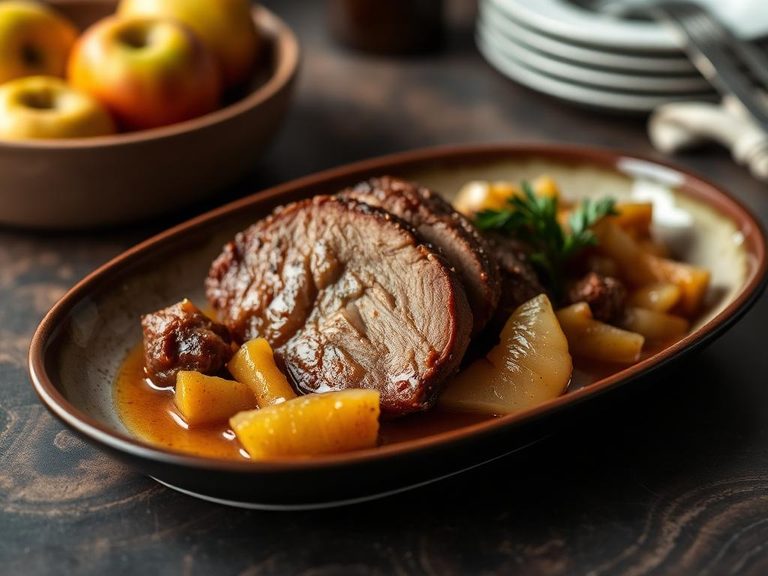
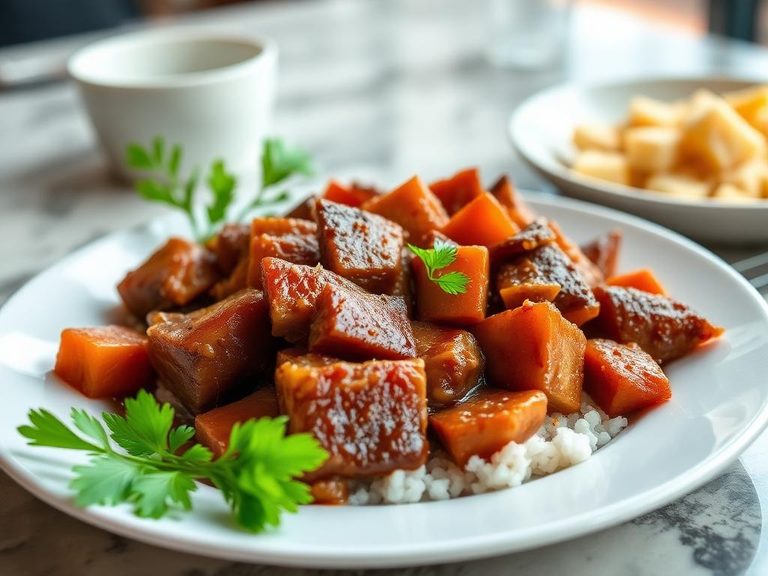
This is a succulent cut of pork shoulder, specifically the Boston butt, known for its rich marbling and deep flavor. When braised, the connective tissue melts into luscious gelatin, creating a tender, pull-apart texture that is both juicy and savory. It is a protein powerhouse with a high fat content, delivering substantial energy and a satisfying mouthfeel.
Calorie split: 40% protein · 0% carbs · 60% fat
↓ Full nutrition💚 Why it's loved
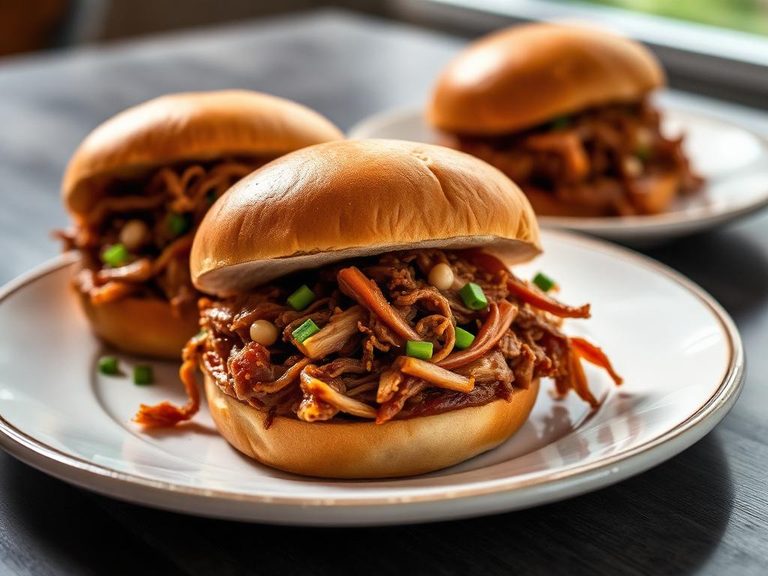
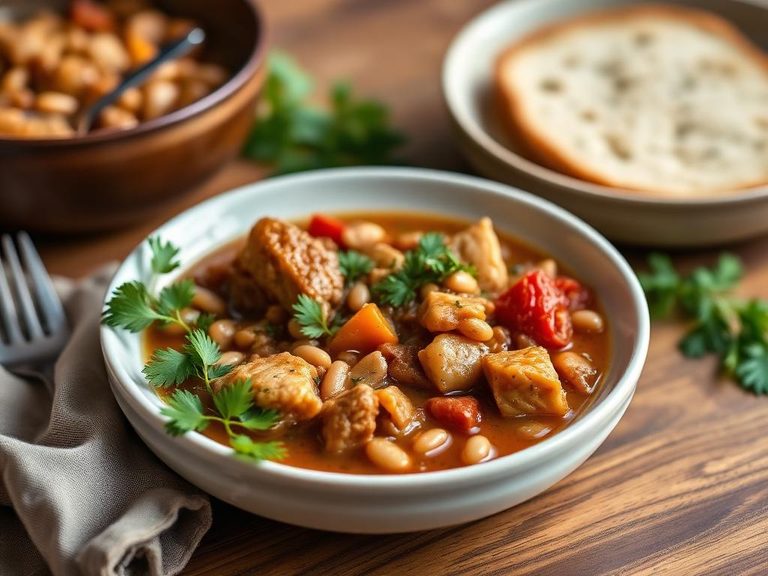
People adore this cut for its incredible depth of flavor and melt-in-your-mouth tenderness when slow-cooked. Its versatility makes it a star in countless comfort foods, from smoky barbecue to hearty stews, embodying a sense of home cooking and cultural tradition.
⚠️ Watch-outs & how to enjoy it better
The high fat and calorie density can be a concern for those managing weight or specific dietary needs. To counteract this, practice portion control and pair it with fiber-rich vegetables like roasted Brussels sprouts or a crisp apple slaw to balance the meal and add nutrients.
Key benefits
- Excellent source of complete protein for muscle maintenance
- Rich in B vitamins, particularly thiamine and B12, for energy metabolism
- Provides essential minerals like zinc and selenium
- High in monounsaturated fats, which can be part of a balanced diet
- The braising method makes it very tender and digestible
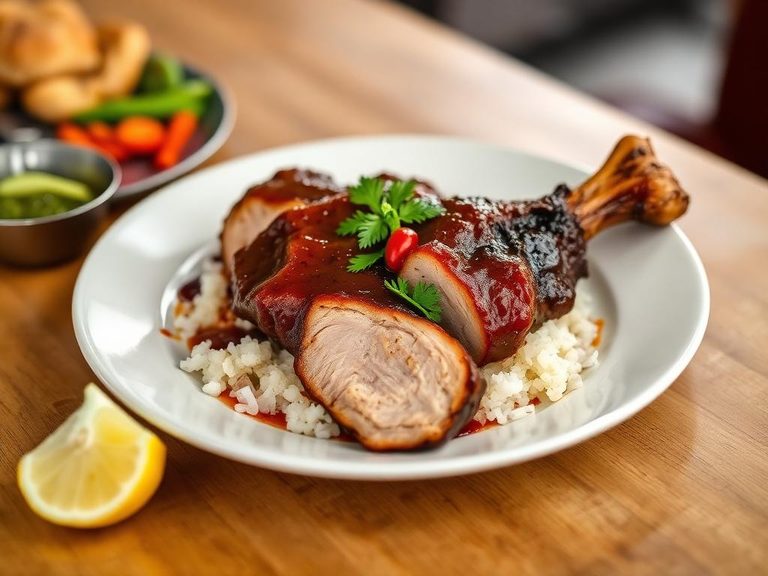
🍽️ Popular dishes

🌍 Where it's eaten
💡 Did you know?
The 'Boston butt' name is a historical misnomer; the cut actually comes from the upper shoulder of the pig, not the rear end. Early American butchers packed this cut into barrels called 'butts' for shipping, and the name stuck.
Full nutrition (USDA data · scales with serving)
| Water | 56.1 g |
| Energy | 263 kcal |
| Energy | 1100 kj |
| Protein | 25.8 g |
| Total lipid (fat) | 16.9 g |
| Ash | 1.2 g |
| Carbohydrate, by difference | 0.03 g |
| Fiber, total dietary | 0.00 g |
| Total Sugars | 0.00 g |
| Calcium, Ca | 27.0 mg |
| Iron, Fe | 1.7 mg |
| Magnesium, Mg | 20.0 mg |
| Phosphorus, P | 227 mg |
| Potassium, K | 370 mg |
| Sodium, Na | 151 mg |
| Zinc, Zn | 4.5 mg |
| Copper, Cu | 0.19 mg |
| Manganese, Mn | 0.01 mg |
| Selenium, Se | 42.3 ug |
| Vitamin C, total ascorbic acid | 0.00 mg |
| Thiamin | 0.41 mg |
| Riboflavin | 0.36 mg |
| Niacin | 3.6 mg |
| Pantothenic acid | 1.3 mg |
| Vitamin B-6 | 0.46 mg |
| Folate, total | 0.00 ug |
| Folic acid | 0.00 ug |
| Folate, food | 0.00 ug |
| Folate, DFE | 0.00 ug |
| Choline, total | 106 mg |
| Betaine | 3.5 mg |
| Vitamin B-12 | 0.98 ug |
| Vitamin B-12, added | 0.00 ug |
| Vitamin A, RAE | 0.00 ug |
| Retinol | 0.00 ug |
| Carotene, beta | 0.00 ug |
| Carotene, alpha | 0.00 ug |
| Cryptoxanthin, beta | 0.00 ug |
| Vitamin A, IU | 0.00 iu |
| Lycopene | 0.00 ug |
| Lutein + zeaxanthin | 0.00 ug |
| Vitamin E (alpha-tocopherol) | 0.12 mg |
| Vitamin E, added | 0.00 mg |
| Vitamin D (D2 + D3), International Units | 44.0 iu |
| Vitamin D (D2 + D3) | 1.1 ug |
| Vitamin D3 (cholecalciferol) | 1.1 ug |
| Vitamin K (phylloquinone) | 0.00 ug |
| Vitamin K (Dihydrophylloquinone) | 0.00 ug |
| Alcohol, ethyl | 0.00 g |
| Caffeine | 0.00 mg |
| Theobromine | 0.00 mg |
Fat & fatty acid profile (per 100g)
| Fatty acids, total saturated | 6.3 g |
| SFA 4:0 | 0.00 g |
| SFA 6:0 | 0.00 g |
| SFA 8:0 | 0.00 g |
| SFA 10:0 | 0.02 g |
| SFA 12:0 | 0.01 g |
| SFA 14:0 | 0.21 g |
| SFA 15:0 | 0.01 g |
| SFA 16:0 | 3.8 g |
| SFA 17:0 | 0.05 g |
| SFA 18:0 | 2.1 g |
| SFA 22:0 | 0.00 g |
| Fatty acids, total monounsaturated | 7.6 g |
| MUFA 14:1 | 0.00 g |
| MUFA 15:1 | 0.00 g |
| MUFA 16:1 | 0.39 g |
| MUFA 17:1 | 0.01 g |
| MUFA 18:1 | 7.1 g |
| MUFA 18:1 c | 7.0 g |
| MUFA 20:1 | 0.12 g |
| MUFA 22:1 | 0.00 g |
| Fatty acids, total polyunsaturated | 2.0 g |
| PUFA 18:2 | 1.8 g |
| PUFA 18:2 n-6 c,c | 1.7 g |
| PUFA 18:3 | 0.08 g |
| PUFA 18:3 n-3 c,c,c (ALA) | 0.08 g |
| PUFA 18:3 n-6 c,c,c | 0.00 g |
| PUFA 18:4 | 0.00 g |
| PUFA 20:2 n-6 c,c | 0.07 g |
| PUFA 20:3 | 0.01 g |
| PUFA 20:4 | 0.09 g |
| PUFA 20:5 n-3 (EPA) | 0.00 g |
| PUFA 22:5 n-3 (DPA) | 0.00 g |
| PUFA 22:6 n-3 (DHA) | 0.00 g |
| Fatty acids, total trans | 0.15 g |
| Fatty acids, total trans-monoenoic | 0.10 g |
| TFA 18:1 t | 0.10 g |
| TFA 18:2 t,t | 0.05 g |
| Fatty acids, total trans-polyenoic | 0.05 g |
| Cholesterol | 97.0 mg |
Amino acid profile (per 100g)
| Tryptophan | 0.27 g |
| Threonine | 1.2 g |
| Isoleucine | 1.3 g |
| Leucine | 2.2 g |
| Lysine | 2.4 g |
| Methionine | 0.71 g |
| Cystine | 0.30 g |
| Phenylalanine | 1.1 g |
| Tyrosine | 0.98 g |
| Valine | 1.4 g |
| Arginine | 1.7 g |
| Histidine | 1.1 g |
| Alanine | 1.5 g |
| Aspartic acid | 2.5 g |
| Glutamic acid | 4.1 g |
| Glycine | 1.2 g |
| Proline | 1.0 g |
| Serine | 1.1 g |
| Hydroxyproline | 0.07 g |
FAQ
What is the difference between a pork shoulder steak and a Boston butt?
A pork shoulder steak is a cross-section cut from the entire shoulder (picnic shoulder), while a Boston butt is the upper portion of the shoulder, which is generally more marbled and tender.
Is this cut healthy to eat regularly?
It can be part of a balanced diet due to its high protein and B-vitamin content, but its high fat and calorie count means it's best enjoyed in moderation, especially for those monitoring saturated fat intake.
What does 'with added solution' mean?
It indicates the meat was injected or marinated with a brine or solution (often containing water, salt, and phosphates) to enhance moisture, tenderness, and shelf life.
How do I cook this cut to make it tender?
The best method is low-and-slow cooking like braising, slow roasting, or smoking. This breaks down the tough collagen into gelatin, resulting in a tender, juicy texture.
Nutrient density (calculated · NRF9.3)
Nutrient Rich Foods index: beneficial nutrients (protein, fiber, vitamins, minerals) minus saturated fat, added sugar & sodium, per 100 kcal.
NRF9.3 index — Fulgoni, Keast & Drewnowski, 2009. Computed from USDA nutrients.
Weight-loss friendliness (composite index)
Energy density 2.63 kcal/g · 39% calories from protein · 0.0 g fiber · 0.0 g sugar per 100 g.
Composite of energy density (Rolls et al., 1999), protein & fiber satiety, minus sugar. A calculated heuristic — ranks satiety-per-calorie, not a clinical measure.
Dietary load (calculated from USDA values)
Potential renal acid load. Positive = acid-forming, negative = alkaline-forming.
Sodium-to-potassium ratio: 0.41 (lower is better — aim for ≤ 1)
Sodium:potassium per WHO potassium guidance. Computed from USDA nutrients.