

Pork, fresh, loin, sirloin (chops), boneless, separable lean and fat, cooked, braised
Whole food · Pork Products

Photo: Wikipedia
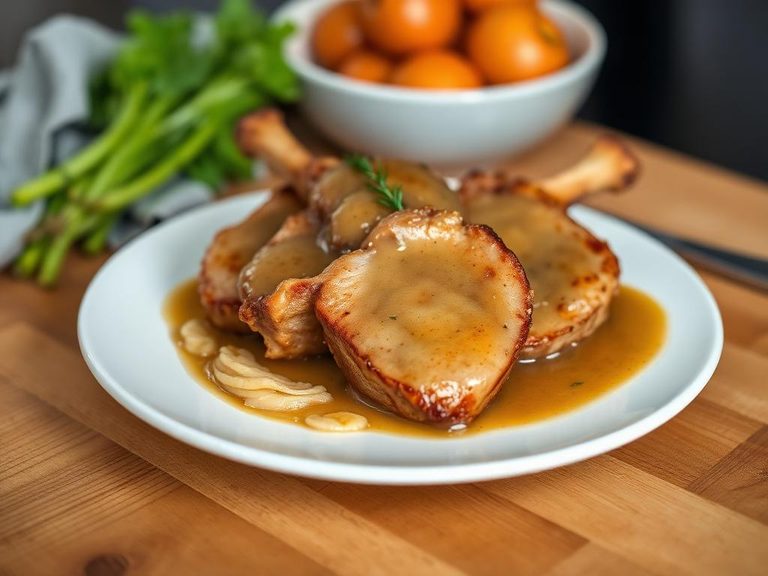
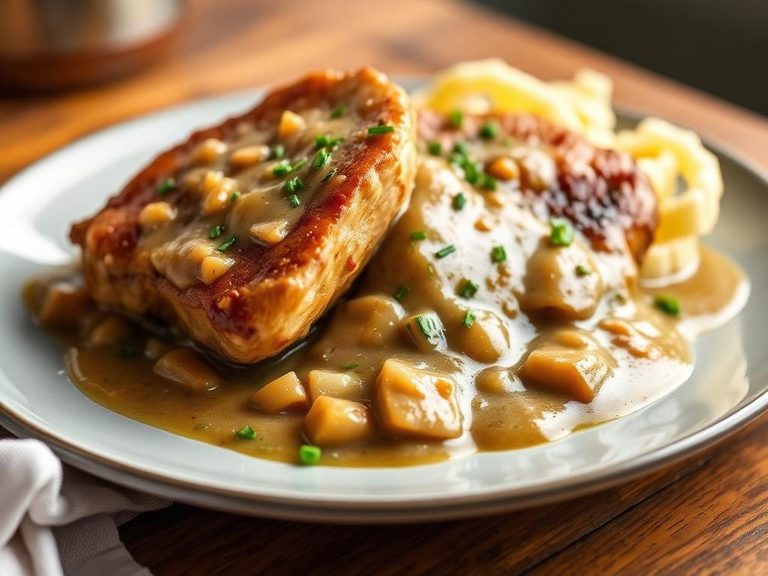
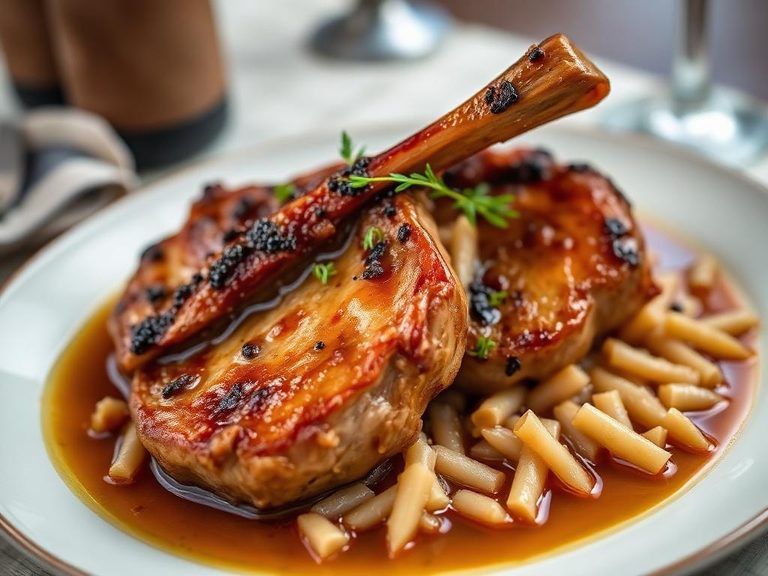
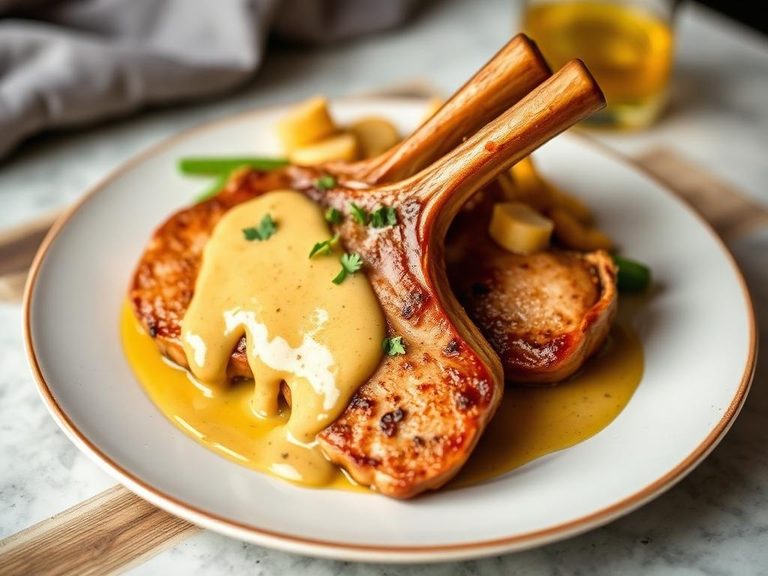
This is a lean, boneless pork chop from the loin, braised to tender perfection. The slow cooking method transforms the sirloin cut into a succulent, fork-tender piece of meat with a rich, savory depth. With nearly 30 grams of high-quality protein per serving and minimal fat, it's a powerhouse for muscle maintenance and satiety.
Calorie split: 70% protein · 0% carbs · 30% fat
↓ Full nutrition💚 Why it's loved
People love it for its deep, satisfying umami flavor that develops during braising and its incredibly tender texture that practically melts. It's a versatile centerpiece that pairs beautifully with everything from creamy mashed potatoes to sharp, vinegary slaws.
⚠️ Watch-outs & how to enjoy it better
While lean, the added fat content can be a consideration for those monitoring saturated fat intake. To balance this, pair it with fiber-rich vegetables like broccoli or Brussels sprouts. Braising often involves salt, so those watching sodium can rinse the meat after cooking or use low-sodium broth in the braising liquid.
Key benefits
- Excellent source of complete protein
- Low in carbohydrates, suitable for low-carb diets
- Rich in B vitamins, especially thiamine (B1) and niacin (B3)
- Contains essential minerals like selenium and phosphorus
- Braising helps retain moisture and nutrients compared to high-heat frying
🍽️ Popular dishes
🌍 Where it's eaten
💡 Did you know?
The 'chop' in pork chop refers to the action of the butcher's cleaver, not the cooking method. A single pork loin can be cut into both boneless sirloin chops and the more common bone-in rib chops.
Full nutrition (USDA data · scales with serving)
| Water | 65.8 g |
| Energy | 171 kcal |
| Energy | 714 kj |
| Protein | 28.4 g |
| Total lipid (fat) | 5.5 g |
| Ash | 1.4 g |
| Carbohydrate, by difference | 0.00 g |
| Fiber, total dietary | 0.00 g |
| Total Sugars | 0.00 g |
| Calcium, Ca | 11.0 mg |
| Iron, Fe | 0.71 mg |
| Magnesium, Mg | 25.0 mg |
| Phosphorus, P | 291 mg |
| Potassium, K | 411 mg |
| Sodium, Na | 56.0 mg |
| Zinc, Zn | 2.0 mg |
| Copper, Cu | 0.08 mg |
| Manganese, Mn | 0.01 mg |
| Selenium, Se | 45.5 ug |
| Vitamin C, total ascorbic acid | 0.00 mg |
| Thiamin | 0.66 mg |
| Riboflavin | 0.27 mg |
| Niacin | 7.8 mg |
| Pantothenic acid | 0.98 mg |
| Vitamin B-6 | 0.52 mg |
| Folate, total | 0.00 ug |
| Folic acid | 0.00 ug |
| Folate, food | 0.00 ug |
| Folate, DFE | 0.00 ug |
| Choline, total | 87.4 mg |
| Betaine | 3.4 mg |
| Vitamin B-12 | 0.62 ug |
| Vitamin B-12, added | 0.00 ug |
| Vitamin A, RAE | 2.0 ug |
| Retinol | 2.0 ug |
| Carotene, beta | 0.00 ug |
| Carotene, alpha | 0.00 ug |
| Cryptoxanthin, beta | 0.00 ug |
| Vitamin A, IU | 7.0 iu |
| Lycopene | 0.00 ug |
| Lutein + zeaxanthin | 0.00 ug |
| Vitamin E (alpha-tocopherol) | 0.18 mg |
| Vitamin E, added | 0.00 mg |
| Vitamin D (D2 + D3), International Units | 15.0 iu |
| Vitamin D (D2 + D3) | 0.40 ug |
| Vitamin D3 (cholecalciferol) | 0.40 ug |
| Vitamin K (phylloquinone) | 0.00 ug |
| Vitamin K (Dihydrophylloquinone) | 0.00 ug |
| Alcohol, ethyl | 0.00 g |
| Caffeine | 0.00 mg |
| Theobromine | 0.00 mg |
Fat & fatty acid profile (per 100g)
| Fatty acids, total saturated | 1.9 g |
| SFA 4:0 | 0.00 g |
| SFA 6:0 | 0.00 g |
| SFA 8:0 | 0.00 g |
| SFA 10:0 | 0.00 g |
| SFA 12:0 | 0.00 g |
| SFA 14:0 | 0.07 g |
| SFA 15:0 | 0.00 g |
| SFA 16:0 | 1.2 g |
| SFA 17:0 | 0.00 g |
| SFA 18:0 | 0.61 g |
| SFA 20:0 | 0.00 g |
| SFA 22:0 | 0.00 g |
| SFA 24:0 | 0.00 g |
| Fatty acids, total monounsaturated | 2.2 g |
| MUFA 14:1 | 0.00 g |
| MUFA 15:1 | 0.00 g |
| MUFA 16:1 | 0.13 g |
| MUFA 17:1 | 0.00 g |
| MUFA 18:1 | 2.1 g |
| MUFA 18:1 c | 0.42 g |
| MUFA 20:1 | 0.04 g |
| MUFA 22:1 | 0.00 g |
| MUFA 22:1 c | 0.00 g |
| Fatty acids, total polyunsaturated | 0.96 g |
| PUFA 18:2 | 0.83 g |
| PUFA 18:2 n-6 c,c | 0.16 g |
| PUFA 18:3 | 0.03 g |
| PUFA 18:3 n-3 c,c,c (ALA) | 0.01 g |
| PUFA 18:3 n-6 c,c,c | 0.00 g |
| PUFA 18:4 | 0.00 g |
| PUFA 20:2 n-6 c,c | 0.01 g |
| PUFA 20:3 | 0.00 g |
| PUFA 20:4 | 0.06 g |
| PUFA 20:5 n-3 (EPA) | 0.00 g |
| PUFA 22:5 n-3 (DPA) | 0.01 g |
| PUFA 22:6 n-3 (DHA) | 0.00 g |
| Fatty acids, total trans | 0.01 g |
| Fatty acids, total trans-monoenoic | 0.01 g |
| TFA 18:1 t | 0.01 g |
| TFA 18:2 t not further defined | 0.00 g |
| Fatty acids, total trans-polyenoic | 0.00 g |
| Cholesterol | 80.0 mg |
Amino acid profile (per 100g)
| Tryptophan | 0.34 g |
| Threonine | 1.2 g |
| Isoleucine | 1.3 g |
| Leucine | 2.3 g |
| Lysine | 2.5 g |
| Methionine | 0.78 g |
| Cystine | 0.32 g |
| Phenylalanine | 1.2 g |
| Tyrosine | 1.1 g |
| Valine | 1.4 g |
| Arginine | 1.8 g |
| Histidine | 1.2 g |
| Alanine | 1.6 g |
| Aspartic acid | 2.7 g |
| Glutamic acid | 4.3 g |
| Glycine | 1.3 g |
| Proline | 1.1 g |
| Serine | 1.2 g |
| Hydroxyproline | 0.10 g |
FAQ
What's the difference between braising and pan-frying this cut?
Pan-frying cooks it quickly over higher heat for a seared crust, while braising involves a slow simmer in liquid (like broth or wine) after an initial sear. Braising is more forgiving for lean cuts like this sirloin, as the moist heat breaks down connective tissue for a more tender result.
Is the fat content listed for the raw or cooked state?
The nutritional values (5.47g fat) are for the cooked, braised product. Cooking can render out some fat, so the final fat content depends on the specific cooking method and whether pan drippings are consumed.
How can I ensure this lean cut doesn't dry out?
The key is not to overcook it. Use a meat thermometer and pull it from the heat at an internal temperature of 145°F (63°C), then let it rest for 5-10 minutes. Braising in a flavorful liquid is the most reliable method to guarantee moisture.
Nutrient density (calculated · NRF9.3)
Nutrient Rich Foods index: beneficial nutrients (protein, fiber, vitamins, minerals) minus saturated fat, added sugar & sodium, per 100 kcal.
NRF9.3 index — Fulgoni, Keast & Drewnowski, 2009. Computed from USDA nutrients.
Weight-loss friendliness (composite index)
Energy density 1.71 kcal/g · 66% calories from protein · 0.0 g fiber · 0.0 g sugar per 100 g.
Composite of energy density (Rolls et al., 1999), protein & fiber satiety, minus sugar. A calculated heuristic — ranks satiety-per-calorie, not a clinical measure.
Dietary load (calculated from USDA values)
Potential renal acid load. Positive = acid-forming, negative = alkaline-forming.
Sodium-to-potassium ratio: 0.14 (lower is better — aim for ≤ 1)
Sodium:potassium per WHO potassium guidance. Computed from USDA nutrients.