

Pasta, dry, unenriched
Whole food · Cereal Grains and Pasta
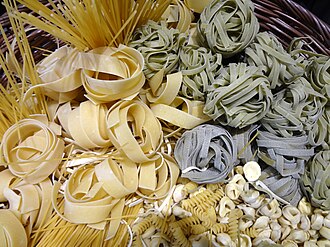
Photo: Wikipedia
Dry, unenriched pasta is the foundational, shelf-stable form of pasta made simply from durum wheat semolina and water. It cooks to a firm, 'al dente' texture with a mild, nutty wheat flavor that acts as a blank canvas for sauces. Nutritionally, it's a dense source of energy-providing carbohydrates and a surprisingly good source of plant-based protein.
Calorie split: 14% protein · 82% carbs · 4% fat
↓ Full nutrition💚 Why it's loved
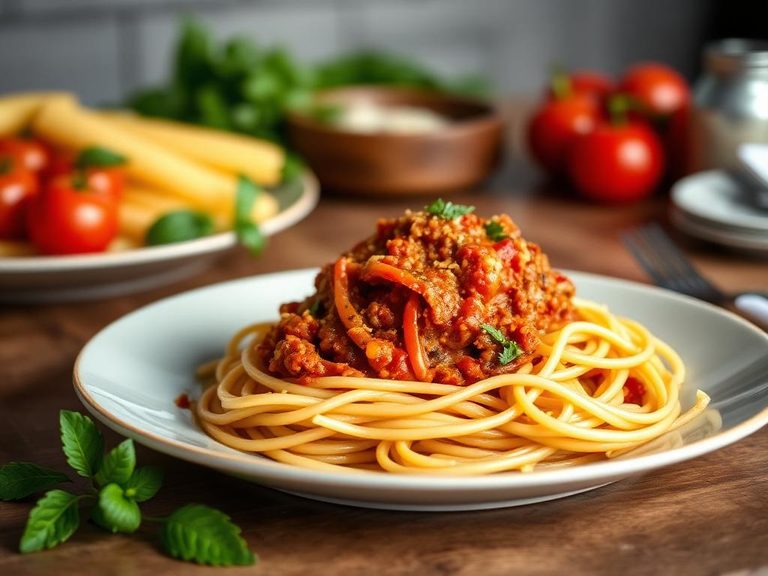
People love it for its incredible versatility and comforting, neutral base that absorbs the flavors of any sauce, from simple garlic and oil to rich bolognese. It's a cornerstone of Italian cuisine and a global symbol of quick, satisfying, and economical home cooking.
⚠️ Watch-outs & how to enjoy it better
Its high carbohydrate density can lead to blood-sugar spikes, especially when eaten in large portions or with sugary sauces. It is a common gluten-containing allergen. To mitigate, pair it with a source of protein (like meat, beans, or cheese) and healthy fats (like olive oil), and practice portion control.
Key benefits
- Excellent source of complex carbohydrates for sustained energy
- Good plant-based protein source (13g per 100g dry)
- Very low in fat (1.5g per 100g dry)
- Provides dietary fiber (3.2g per 100g dry)
- Shelf-stable with a long pantry life
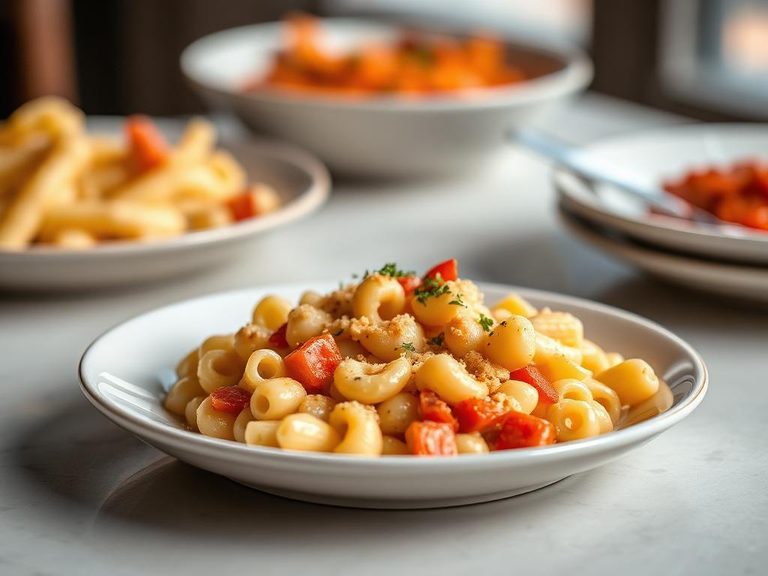
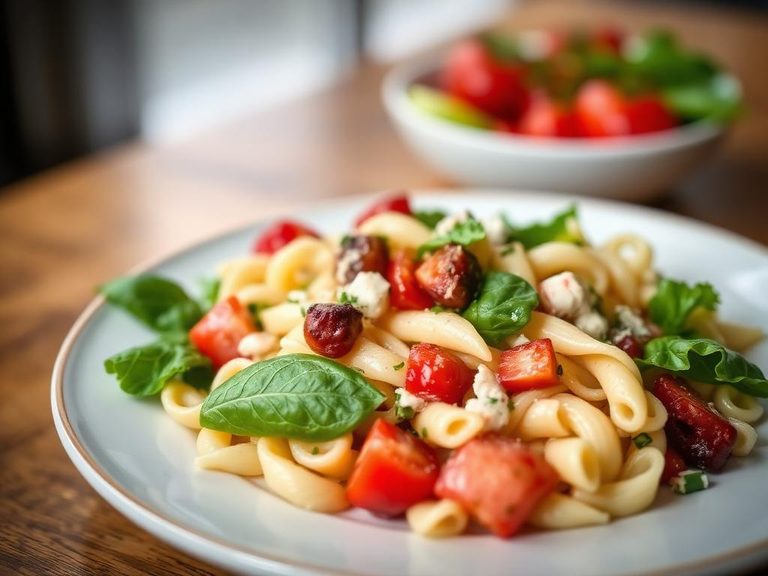
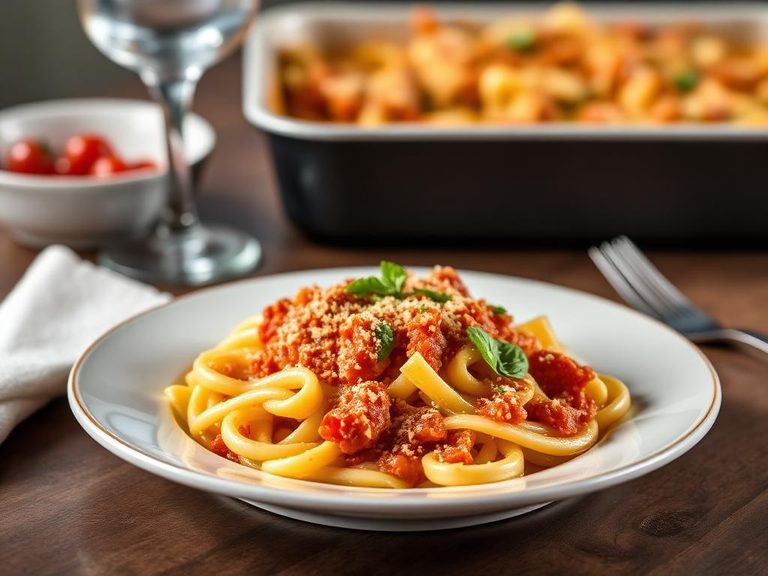
🍽️ Popular dishes
🌍 Where it's eaten
💡 Did you know?
The word 'pasta' comes from the Italian for 'paste' or 'dough,' but the practice of boiling dough strips dates back to ancient China and the Middle East centuries before it became a staple in Italy.
Full nutrition (USDA data · scales with serving)
| Water | 9.9 g |
| Energy | 371 kcal |
| Energy | 1553 kj |
| Protein | 13.0 g |
| Total lipid (fat) | 1.5 g |
| Ash | 0.88 g |
| Carbohydrate, by difference | 74.7 g |
| Fiber, total dietary | 3.2 g |
| Total Sugars | 2.7 g |
| Sucrose | 0.48 g |
| Glucose | 0.12 g |
| Fructose | 0.11 g |
| Lactose | 0.00 g |
| Maltose | 2.0 g |
| Galactose | 0.00 g |
| Starch | 62.5 g |
| Calcium, Ca | 21.0 mg |
| Iron, Fe | 1.3 mg |
| Magnesium, Mg | 53.0 mg |
| Phosphorus, P | 189 mg |
| Potassium, K | 223 mg |
| Sodium, Na | 6.0 mg |
| Zinc, Zn | 1.4 mg |
| Copper, Cu | 0.29 mg |
| Manganese, Mn | 0.92 mg |
| Selenium, Se | 63.2 ug |
| Vitamin C, total ascorbic acid | 0.00 mg |
| Thiamin | 0.09 mg |
| Riboflavin | 0.06 mg |
| Niacin | 1.7 mg |
| Pantothenic acid | 0.43 mg |
| Vitamin B-6 | 0.14 mg |
| Folate, total | 18.0 ug |
| Folic acid | 0.00 ug |
| Folate, food | 18.0 ug |
| Folate, DFE | 18.0 ug |
| Vitamin B-12 | 0.00 ug |
| Vitamin A, RAE | 0.00 ug |
| Retinol | 0.00 ug |
| Vitamin A, IU | 0.00 iu |
| Vitamin E (alpha-tocopherol) | 0.11 mg |
| Tocopherol, beta | 0.05 mg |
| Tocopherol, gamma | 0.88 mg |
| Tocopherol, delta | 0.00 mg |
| Tocotrienol, alpha | 0.13 mg |
| Tocotrienol, beta | 0.01 mg |
| Tocotrienol, gamma | 0.00 mg |
| Tocotrienol, delta | 0.00 mg |
| Vitamin D (D2 + D3), International Units | 0.00 iu |
| Vitamin D (D2 + D3) | 0.00 ug |
| Vitamin K (phylloquinone) | 0.10 ug |
| Vitamin K (Dihydrophylloquinone) | 0.00 ug |
| Alcohol, ethyl | 0.00 g |
Fat & fatty acid profile (per 100g)
| Fatty acids, total saturated | 0.28 g |
| SFA 4:0 | 0.00 g |
| SFA 6:0 | 0.00 g |
| SFA 8:0 | 0.00 g |
| SFA 10:0 | 0.00 g |
| SFA 12:0 | 0.00 g |
| SFA 13:0 | 0.00 g |
| SFA 14:0 | 0.00 g |
| SFA 15:0 | 0.00 g |
| SFA 16:0 | 0.25 g |
| SFA 17:0 | 0.00 g |
| SFA 18:0 | 0.03 g |
| SFA 20:0 | 0.00 g |
| SFA 22:0 | 0.00 g |
| SFA 24:0 | 0.00 g |
| Fatty acids, total monounsaturated | 0.17 g |
| MUFA 14:1 | 0.00 g |
| MUFA 15:1 | 0.00 g |
| MUFA 16:1 | 0.00 g |
| MUFA 17:1 | 0.00 g |
| MUFA 18:1 | 0.17 g |
| MUFA 18:1 c | 0.17 g |
| MUFA 20:1 | 0.00 g |
| MUFA 22:1 | 0.00 g |
| MUFA 24:1 c | 0.00 g |
| Fatty acids, total polyunsaturated | 0.56 g |
| PUFA 18:2 | 0.54 g |
| PUFA 18:3 | 0.02 g |
| PUFA 18:3 n-3 c,c,c (ALA) | 0.02 g |
| PUFA 18:3 n-6 c,c,c | 0.00 g |
| PUFA 18:4 | 0.00 g |
| PUFA 20:2 n-6 c,c | 0.00 g |
| PUFA 20:3 | 0.00 g |
| PUFA 20:4 | 0.00 g |
| PUFA 20:5 n-3 (EPA) | 0.00 g |
| PUFA 22:5 n-3 (DPA) | 0.00 g |
| PUFA 22:6 n-3 (DHA) | 0.00 g |
| Fatty acids, total trans | 0.00 g |
| Fatty acids, total trans-monoenoic | 0.00 g |
| TFA 18:1 t | 0.00 g |
| Cholesterol | 0.00 mg |
Amino acid profile (per 100g)
| Tryptophan | 0.18 g |
| Threonine | 0.46 g |
| Isoleucine | 0.51 g |
| Leucine | 0.99 g |
| Lysine | 0.30 g |
| Methionine | 0.15 g |
| Cystine | 0.26 g |
| Phenylalanine | 0.67 g |
| Tyrosine | 0.24 g |
| Valine | 0.59 g |
| Arginine | 0.47 g |
| Histidine | 0.30 g |
| Alanine | 0.44 g |
| Aspartic acid | 0.62 g |
| Glutamic acid | 4.6 g |
| Glycine | 0.44 g |
| Proline | 1.6 g |
| Serine | 0.62 g |
| Hydroxyproline | 0.00 g |
FAQ
What does 'unenriched' mean for pasta?
It means the pasta is made from refined wheat flour without added vitamins and minerals (like iron and B vitamins) that are often put back into 'enriched' flour products after processing.
How is this different from whole wheat pasta?
Dry, unenriched pasta is typically made from refined durum wheat semolina, which has the bran and germ removed. Whole wheat pasta is made from the entire wheat kernel, resulting in higher fiber and a denser, nuttier texture.
What is the best way to cook it?
Boil in a large pot of well-salted water (it should taste like the sea) until it is 'al dente'—firm to the bite. Reserve some starchy pasta water before draining to help sauces cling to the noodles.
Nutrient density (calculated · NRF9.3)
Nutrient Rich Foods index: beneficial nutrients (protein, fiber, vitamins, minerals) minus saturated fat, added sugar & sodium, per 100 kcal.
NRF9.3 index — Fulgoni, Keast & Drewnowski, 2009. Computed from USDA nutrients.
Weight-loss friendliness (composite index)
Energy density 3.71 kcal/g · 14% calories from protein · 3.2 g fiber · 2.7 g sugar per 100 g.
Composite of energy density (Rolls et al., 1999), protein & fiber satiety, minus sugar. A calculated heuristic — ranks satiety-per-calorie, not a clinical measure.
Dietary load (calculated from USDA values)
Potential renal acid load. Positive = acid-forming, negative = alkaline-forming.
Sodium-to-potassium ratio: 0.03 (lower is better — aim for ≤ 1)
Sodium:potassium per WHO potassium guidance. Computed from USDA nutrients.