Bread, whole-wheat, commercially prepared
Whole food · Baked Products
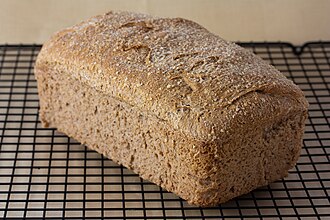
Photo: Wikipedia
Whole-wheat bread is a hearty, rustic loaf made from flour that retains the bran and germ, giving it a dense, chewy crumb and a nutty, slightly earthy flavor. Its nutrition profile is a standout, offering a solid 12.45g of protein and 6g of fiber per 100g, making it a more substantial choice than refined white bread. The deep brown color and robust texture signal its whole-grain integrity and mineral-rich composition.
💚 Why it's loved
People love it for its comforting, nutty flavor and satisfying, hearty texture that holds up well to toppings. It's a versatile staple that forms the foundation for everything from classic sandwiches to simple toast with butter, making it a beloved part of many daily meals.
⚠️ Watch-outs & how to enjoy it better
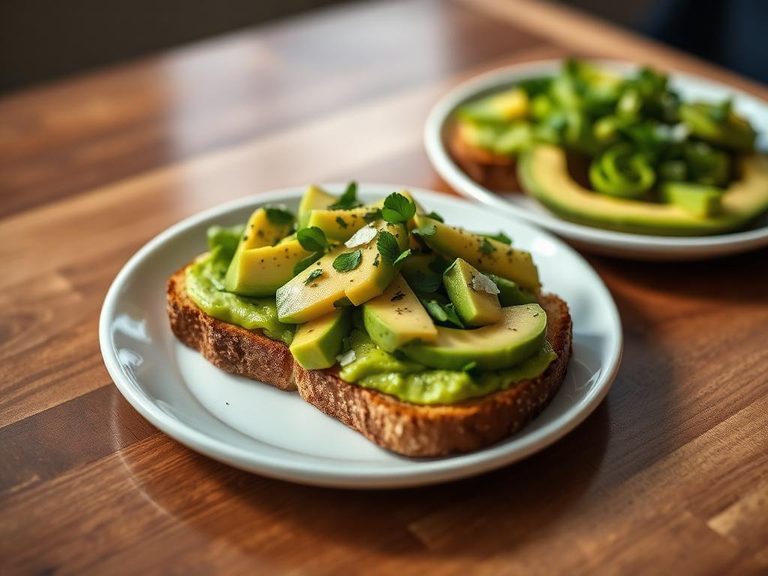
The dense texture can be less appealing to those who prefer lighter, fluffier bread, and its higher fiber content may cause digestive discomfort for some if consumed in large amounts. To counteract this, pair it with protein or healthy fats (like avocado or nut butter) to slow digestion and stabilize blood sugar, and start with smaller portions to allow your system to adjust.
Key benefits
- High in dietary fiber (6g/100g) for digestive health
- Good source of plant-based protein (12.45g/100g)
- Contains more vitamins and minerals than white bread
- Provides complex carbohydrates for sustained energy
- Lower glycemic index than refined white bread
🍽️ Popular dishes



🌍 Where it's eaten
💡 Did you know?
The first commercially baked whole-wheat bread in the U.S. was popularized by the Kellogg brothers in the late 19th century, who initially produced it as a health food for their sanitarium patients.
Full nutrition (scales with serving)
| Water | 39.0 g |
| Energy | 252 kcal |
| Energy | 1055 kj |
| Protein | 12.4 g |
| Total lipid (fat) | 3.5 g |
| Ash | 2.3 g |
| Carbohydrate, by difference | 42.7 g |
| Fiber, total dietary | 6.0 g |
| Total Sugars | 4.3 g |
| Sucrose | 0.03 g |
| Glucose | 1.1 g |
| Fructose | 2.2 g |
| Lactose | 0.01 g |
| Maltose | 1.0 g |
| Galactose | 0.00 g |
| Starch | 28.7 g |
| Calcium, Ca | 161 mg |
| Iron, Fe | 2.5 mg |
| Magnesium, Mg | 75.0 mg |
| Phosphorus, P | 212 mg |
| Potassium, K | 254 mg |
| Sodium, Na | 455 mg |
| Zinc, Zn | 1.8 mg |
| Copper, Cu | 0.23 mg |
| Manganese, Mn | 2.2 mg |
| Selenium, Se | 25.7 ug |
| Vitamin C, total ascorbic acid | 0.00 mg |
| Thiamin | 0.39 mg |
| Riboflavin | 0.17 mg |
| Niacin | 4.4 mg |
| Pantothenic acid | 0.65 mg |
| Vitamin B-6 | 0.21 mg |
| Folate, total | 42.0 ug |
| Folic acid | 0.00 ug |
| Folate, food | 42.0 ug |
| Folate, DFE | 42.0 ug |
| Choline, total | 27.2 mg |
| Betaine | 127 mg |
| Vitamin B-12 | 0.00 ug |
| Vitamin B-12, added | 0.00 ug |
| Vitamin A, RAE | 0.00 ug |
| Retinol | 0.00 ug |
| Carotene, beta | 2.0 ug |
| Carotene, alpha | 0.00 ug |
| Cryptoxanthin, beta | 0.00 ug |
| Vitamin A, IU | 3.0 iu |
| Lycopene | 0.00 ug |
| Lutein + zeaxanthin | 87.0 ug |
| Vitamin E (alpha-tocopherol) | 2.7 mg |
| Vitamin E, added | 0.00 mg |
| Tocopherol, beta | 0.25 mg |
| Tocopherol, gamma | 0.89 mg |
| Tocopherol, delta | 0.28 mg |
| Tocotrienol, alpha | 0.45 mg |
| Tocotrienol, beta | 1.3 mg |
| Tocotrienol, gamma | 0.42 mg |
| Tocotrienol, delta | 0.21 mg |
| Vitamin D (D2 + D3), International Units | 0.00 iu |
| Vitamin D (D2 + D3) | 0.00 ug |
| Vitamin K (phylloquinone) | 7.8 ug |
| Vitamin K (Dihydrophylloquinone) | 0.60 ug |
| Fatty acids, total saturated | 0.72 g |
| SFA 4:0 | 0.00 g |
| SFA 6:0 | 0.00 g |
| SFA 8:0 | 0.00 g |
| SFA 10:0 | 0.01 g |
| SFA 12:0 | 0.01 g |
| SFA 14:0 | 0.01 g |
| SFA 15:0 | 0.00 g |
| SFA 16:0 | 0.43 g |
| SFA 17:0 | 0.00 g |
| SFA 18:0 | 0.23 g |
| SFA 20:0 | 0.01 g |
| SFA 22:0 | 0.01 g |
| SFA 24:0 | 0.00 g |
| Fatty acids, total monounsaturated | 0.62 g |
| MUFA 14:1 | 0.00 g |
| MUFA 15:1 | 0.00 g |
| MUFA 16:1 | 0.02 g |
| MUFA 16:1 c | 0.02 g |
| MUFA 17:1 | 0.00 g |
| MUFA 18:1 | 0.58 g |
| MUFA 18:1 c | 0.57 g |
| MUFA 20:1 | 0.02 g |
| MUFA 22:1 | 0.00 g |
| MUFA 22:1 c | 0.00 g |
| MUFA 24:1 c | 0.00 g |
| Fatty acids, total polyunsaturated | 1.6 g |
| PUFA 18:2 | 1.4 g |
| PUFA 18:2 n-6 c,c | 1.4 g |
| PUFA 18:2 CLAs | 0.00 g |
| PUFA 18:3 | 0.14 g |
| PUFA 18:3 n-3 c,c,c (ALA) | 0.14 g |
| PUFA 18:3 n-6 c,c,c | 0.00 g |
| PUFA 18:3i | 0.00 g |
| PUFA 18:4 | 0.00 g |
| PUFA 20:2 n-6 c,c | 0.00 g |
| PUFA 20:3 | 0.00 g |
| PUFA 20:3 n-3 | 0.00 g |
| PUFA 20:3 n-6 | 0.00 g |
| PUFA 20:4 | 0.00 g |
| PUFA 20:5 n-3 (EPA) | 0.00 g |
| PUFA 22:4 | 0.00 g |
| PUFA 22:5 n-3 (DPA) | 0.00 g |
| PUFA 22:6 n-3 (DHA) | 0.00 g |
| Fatty acids, total trans | 0.02 g |
| Fatty acids, total trans-monoenoic | 0.01 g |
| TFA 16:1 t | 0.00 g |
| TFA 18:1 t | 0.01 g |
| TFA 22:1 t | 0.00 g |
| TFA 18:2 t not further defined | 0.01 g |
| Fatty acids, total trans-polyenoic | 0.01 g |
| Cholesterol | 0.00 mg |
| Alcohol, ethyl | 0.00 g |
| Caffeine | 0.00 mg |
| Theobromine | 0.00 mg |
FAQ
Is whole-wheat bread healthier than white bread?
Generally, yes. Whole-wheat bread retains the bran and germ, providing more fiber, protein, vitamins, and minerals than refined white bread, which has these nutritious parts removed.
Does whole-wheat bread have gluten?
Yes, traditional whole-wheat bread contains gluten, as it is made from wheat flour. People with celiac disease or gluten sensitivity should choose certified gluten-free alternatives.
How can I tell if a bread is truly whole-wheat?
Check the ingredients list; 'whole-wheat flour' should be the first ingredient. Be wary of 'wheat flour' or 'enriched flour,' which are often refined. Also, look for the 'Whole Grain' stamp from the Whole Grains Council.