

Beef stew, canned entree
Whole food · Meals, Entrees, and Side Dishes

Photo: Wikipedia
A savory, tender medley of beef chunks and vegetables simmered in a rich, brown gravy, this canned entree offers a comforting, hearty meal with a soft, melt-in-your-mouth texture. Its nutritional profile is lean for a meat dish, providing a solid protein boost with moderate calories and a balanced mix of fats and carbs.
Calorie split: 18% protein · 32% carbs · 50% fat
↓ Full nutrition💚 Why it's loved
People adore it for its deep, umami-rich flavor and the nostalgic comfort of a warm, one-pot meal that requires zero prep. It's a versatile staple that can be enjoyed straight from the can, over rice, or with crusty bread to soak up the gravy.
⚠️ Watch-outs & how to enjoy it better
Canned versions can be high in sodium, which may concern those monitoring blood pressure, and the gravy often contains thickeners that could cause blood-sugar spikes. To counteract this, pair it with a side of steamed greens or a fresh salad to add fiber, and opt for low-sodium varieties when available.
Key benefits
- High-quality protein for muscle maintenance
- Convenient, shelf-stable meal option
- Contains iron and B vitamins from beef
- Balanced macronutrient ratio for satiety
- Quick source of energy from carbohydrates
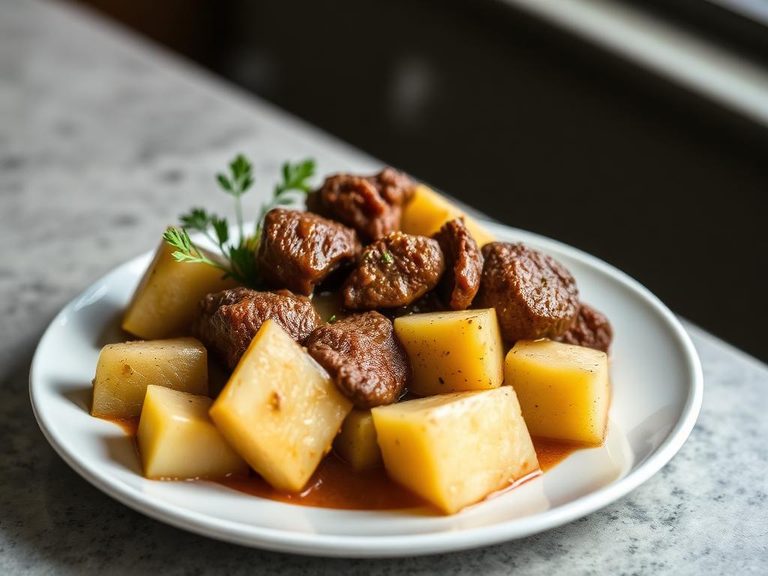
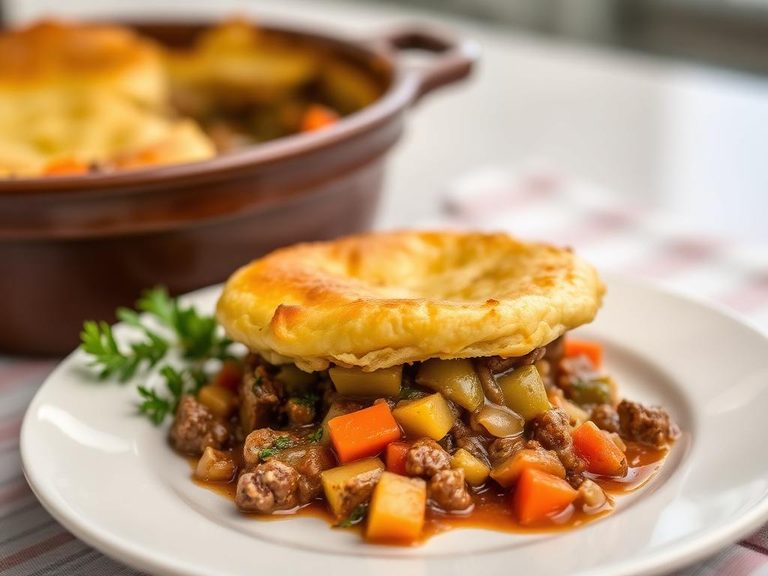
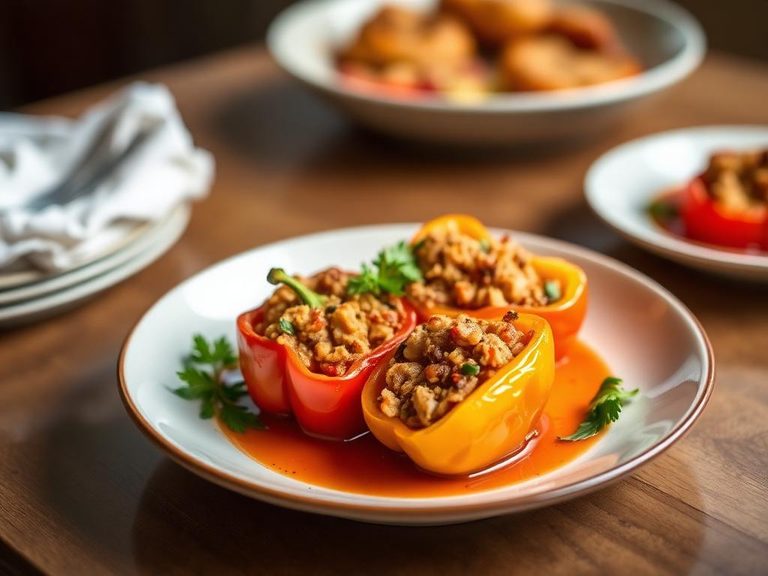
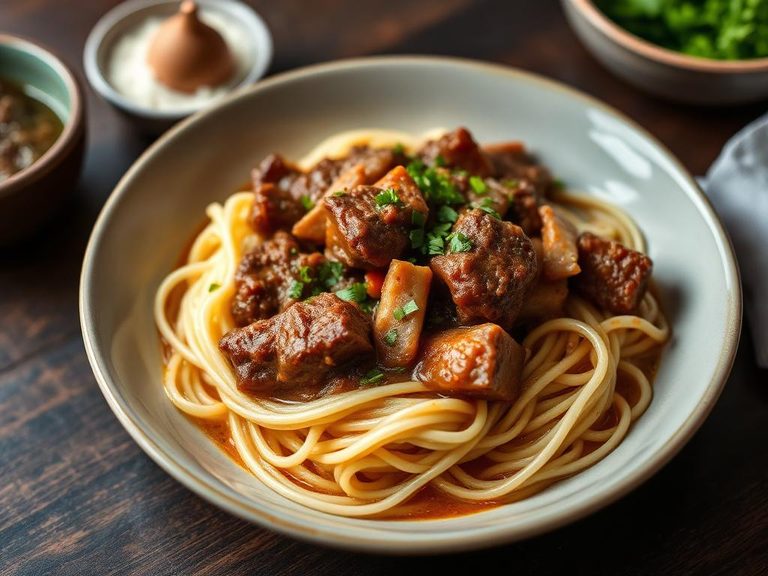
🍽️ Popular dishes

🌍 Where it's eaten
💡 Did you know?
The Maillard reaction, which gives browned beef its complex flavor, is responsible for the deep, savory taste in canned beef stew even after the long cooking and canning process.
Full nutrition (USDA data · scales with serving)
| Water | 80.8 g |
| Energy | 99.0 kcal |
| Energy | 413 kj |
| Protein | 4.4 g |
| Total lipid (fat) | 5.5 g |
| Ash | 1.4 g |
| Carbohydrate, by difference | 7.8 g |
| Fiber, total dietary | 0.90 g |
| Total Sugars | 1.8 g |
| Sucrose | 0.48 g |
| Glucose | 0.95 g |
| Fructose | 0.33 g |
| Lactose | 0.00 g |
| Maltose | 0.00 g |
| Starch | 5.4 g |
| Calcium, Ca | 12.0 mg |
| Iron, Fe | 2.5 mg |
| Magnesium, Mg | 8.0 mg |
| Phosphorus, P | 42.0 mg |
| Potassium, K | 163 mg |
| Sodium, Na | 388 mg |
| Zinc, Zn | 1.0 mg |
| Copper, Cu | 0.14 mg |
| Manganese, Mn | 0.06 mg |
| Selenium, Se | 4.7 ug |
| Fluoride, F | 56.5 ug |
| Vitamin C, total ascorbic acid | 0.70 mg |
| Thiamin | 0.07 mg |
| Riboflavin | 0.05 mg |
| Niacin | 1.1 mg |
| Pantothenic acid | 0.12 mg |
| Vitamin B-6 | 0.09 mg |
| Folate, total | 14.0 ug |
| Folic acid | 0.00 ug |
| Folate, food | 14.0 ug |
| Folate, DFE | 14.0 ug |
| Choline, total | 15.6 mg |
| Betaine | 1.8 mg |
| Vitamin B-12 | 0.50 ug |
| Vitamin B-12, added | 0.00 ug |
| Vitamin A, RAE | 11.0 ug |
| Retinol | 0.00 ug |
| Carotene, beta | 106 ug |
| Carotene, alpha | 53.0 ug |
| Cryptoxanthin, beta | 3.0 ug |
| Vitamin A, IU | 223 iu |
| Lycopene | 28.0 ug |
| Lutein + zeaxanthin | 4.0 ug |
| Vitamin E (alpha-tocopherol) | 0.27 mg |
| Vitamin E, added | 0.00 mg |
| Tocopherol, beta | 0.01 mg |
| Tocopherol, gamma | 0.01 mg |
| Tocopherol, delta | 0.00 mg |
| Tocotrienol, alpha | 0.00 mg |
| Tocotrienol, beta | 0.00 mg |
| Tocotrienol, gamma | 0.00 mg |
| Tocotrienol, delta | 0.00 mg |
| Vitamin D (D2 + D3), International Units | 0.00 iu |
| Vitamin D (D2 + D3) | 0.00 ug |
| Vitamin K (phylloquinone) | 6.2 ug |
| Alcohol, ethyl | 0.00 g |
| Caffeine | 0.00 mg |
| Theobromine | 0.00 mg |
Fat & fatty acid profile (per 100g)
| Fatty acids, total saturated | 2.2 g |
| SFA 4:0 | 0.00 g |
| SFA 6:0 | 0.00 g |
| SFA 8:0 | 0.00 g |
| SFA 10:0 | 0.00 g |
| SFA 12:0 | 0.01 g |
| SFA 14:0 | 0.17 g |
| SFA 15:0 | 0.03 g |
| SFA 16:0 | 1.2 g |
| SFA 17:0 | 0.07 g |
| SFA 18:0 | 0.67 g |
| SFA 20:0 | 0.01 g |
| SFA 22:0 | 0.00 g |
| SFA 24:0 | 0.00 g |
| Fatty acids, total monounsaturated | 2.5 g |
| MUFA 14:1 | 0.06 g |
| MUFA 16:1 | 0.23 g |
| MUFA 17:1 | 0.06 g |
| MUFA 18:1 | 2.1 g |
| MUFA 20:1 | 0.04 g |
| MUFA 22:1 | 0.01 g |
| MUFA 24:1 c | 0.00 g |
| Fatty acids, total polyunsaturated | 0.25 g |
| PUFA 18:2 | 0.20 g |
| PUFA 18:3 | 0.03 g |
| PUFA 18:4 | 0.02 g |
| PUFA 20:2 n-6 c,c | 0.00 g |
| PUFA 20:3 | 0.00 g |
| PUFA 20:4 | 0.00 g |
| PUFA 20:5 n-3 (EPA) | 0.00 g |
| PUFA 21:5 | 0.00 g |
| PUFA 22:4 | 0.00 g |
| PUFA 22:5 n-3 (DPA) | 0.00 g |
| PUFA 22:6 n-3 (DHA) | 0.00 g |
| Cholesterol | 13.0 mg |
Amino acid profile (per 100g)
| Tryptophan | 0.02 g |
| Threonine | 0.16 g |
| Isoleucine | 0.15 g |
| Leucine | 0.27 g |
| Lysine | 0.24 g |
| Methionine | 0.09 g |
| Cystine | 0.04 g |
| Phenylalanine | 0.15 g |
| Tyrosine | 0.08 g |
| Valine | 0.18 g |
| Arginine | 0.20 g |
| Histidine | 0.10 g |
| Alanine | 0.24 g |
| Aspartic acid | 0.38 g |
| Glutamic acid | 0.70 g |
| Glycine | 0.25 g |
| Proline | 0.21 g |
| Serine | 0.16 g |
FAQ
Is canned beef stew a good source of protein?
Yes, it provides a decent amount of protein (about 4.4g per 100g), making it a solid option for a protein-rich meal, especially when paired with other protein sources.
Can I eat canned beef stew straight from the can?
While it's pre-cooked and safe to eat cold, it's typically heated for better flavor and texture. Always check the can for damage or swelling before consumption.
How does the nutrition compare to homemade beef stew?
Canned versions often have higher sodium and may include preservatives, while homemade allows control over salt, fat, and vegetable content. Canned is more convenient but less customizable.
Nutrient density (calculated · NRF9.3)
Nutrient Rich Foods index: beneficial nutrients (protein, fiber, vitamins, minerals) minus saturated fat, added sugar & sodium, per 100 kcal.
NRF9.3 index — Fulgoni, Keast & Drewnowski, 2009. Computed from USDA nutrients.
Weight-loss friendliness (composite index)
Energy density 0.99 kcal/g · 18% calories from protein · 0.9 g fiber · 1.8 g sugar per 100 g.
Composite of energy density (Rolls et al., 1999), protein & fiber satiety, minus sugar. A calculated heuristic — ranks satiety-per-calorie, not a clinical measure.
Dietary load (calculated from USDA values)
Potential renal acid load. Positive = acid-forming, negative = alkaline-forming.
Sodium-to-potassium ratio: 2.38 (lower is better — aim for ≤ 1)
Sodium:potassium per WHO potassium guidance. Computed from USDA nutrients.