

Beef, short loin, t-bone steak, separable lean and fat, trimmed to 1/8" fat, choice, raw
Whole food · Beef Products

Photo: Wikipedia
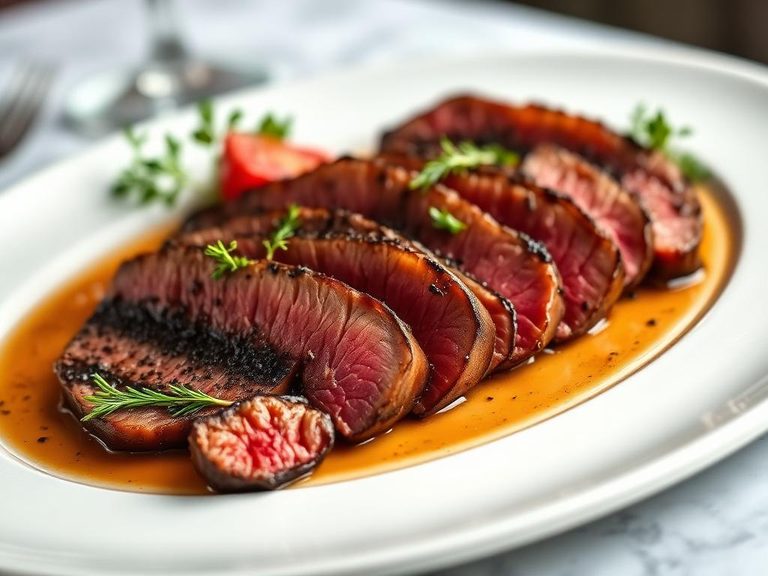
This is a raw T-bone steak, a primal cut featuring the strip loin and tenderloin separated by a T-shaped bone. It offers a robust, beefy flavor with a tender texture from the loin and a buttery richness from the marbled fat. Nutritionally, it's a powerhouse of protein with zero carbohydrates, making it a staple for high-protein, low-carb diets.
Calorie split: 36% protein · 0% carbs · 64% fat
↓ Full nutrition💚 Why it's loved
People love the T-bone for its iconic status and the luxury of two distinct textures and flavors in one cut—the robust strip and the delicate filet. It's the centerpiece of celebratory meals, from American backyard grills to classic Italian bistecca alla fiorentina.
⚠️ Watch-outs & how to enjoy it better
The significant fat content (15.83g per 100g) makes it a high-calorie choice, and the marbling can be excessive for those monitoring saturated fat intake. To counteract, practice portion control (see below) and balance the meal with fibrous, non-starchy vegetables like grilled asparagus or a leafy salad to aid digestion and add volume without excess calories.
Key benefits
- Excellent source of complete protein for muscle repair and satiety.
- Provides essential minerals like iron (heme iron for high absorption) and zinc.
- Rich in B vitamins, particularly B12, crucial for nerve function and energy.
- Contains conjugated linoleic acid (CLA), a fatty acid studied for potential health benefits.
- Zero carbohydrates, making it suitable for ketogenic and carnivore diets.
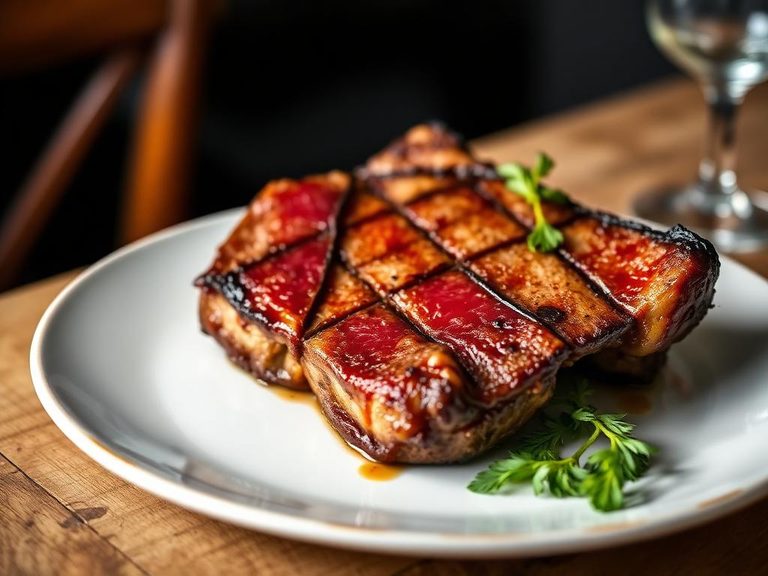
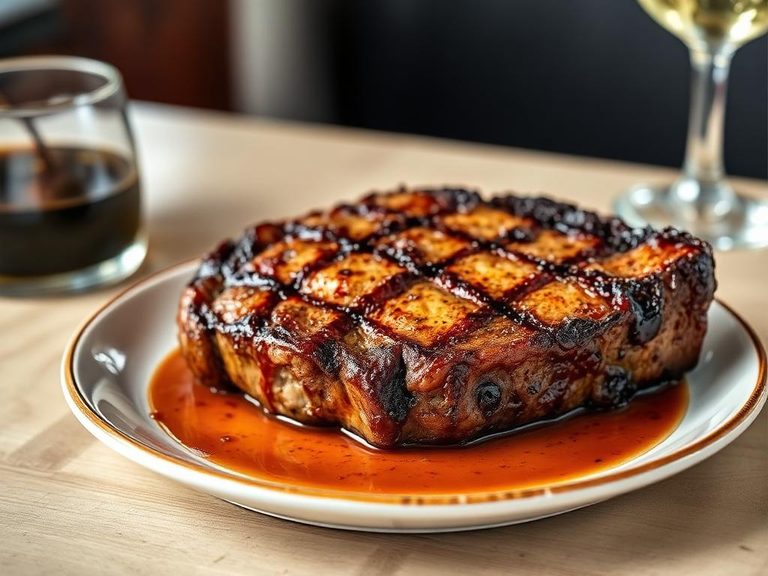
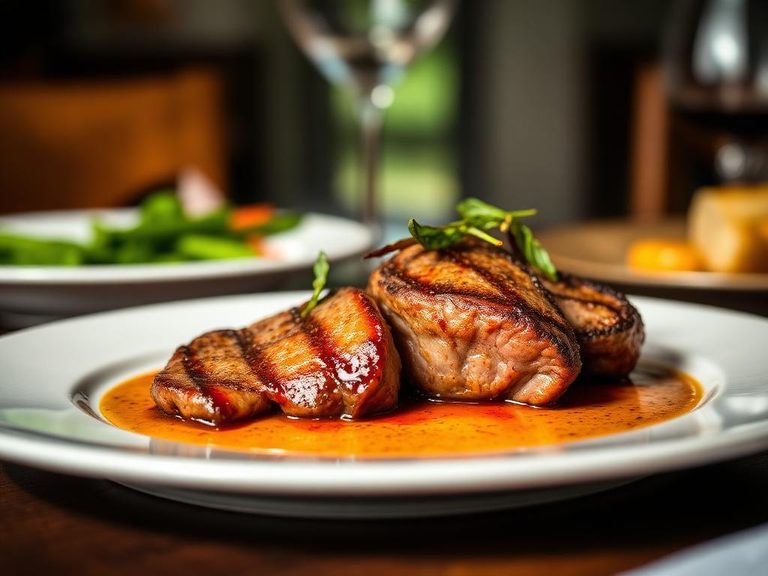
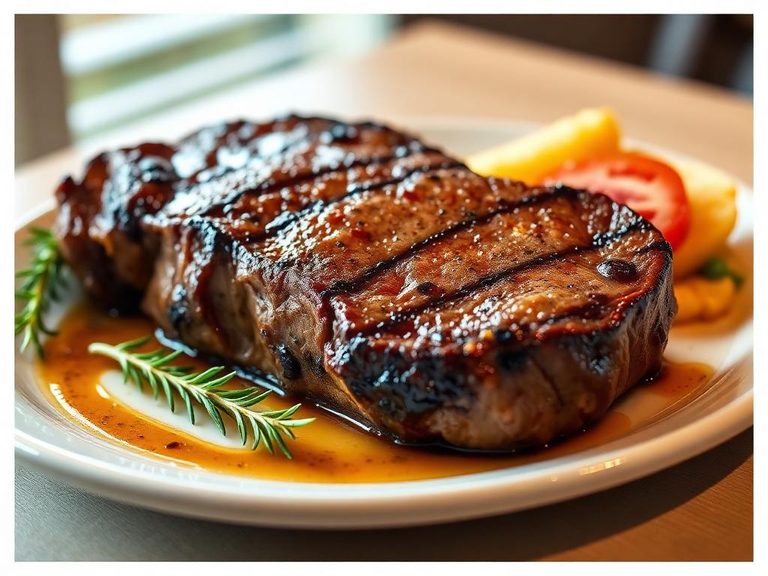
🍽️ Popular dishes
🌍 Where it's eaten
💡 Did you know?
The T-bone and the more famous Porterhouse are actually the same cut from the same part of the cow; the USDA defines a Porterhouse as a T-bone with at least 1.25 inches of tenderloin on the smaller side, making it the larger, more premium version.
Full nutrition (USDA data · scales with serving)
| Water | 63.4 g |
| Energy | 228 kcal |
| Energy | 955 kj |
| Protein | 20.0 g |
| Total lipid (fat) | 15.8 g |
| Ash | 0.91 g |
| Carbohydrate, by difference | 0.00 g |
| Fiber, total dietary | 0.00 g |
| Total Sugars | 0.00 g |
| Calcium, Ca | 21.0 mg |
| Iron, Fe | 1.6 mg |
| Magnesium, Mg | 10.0 mg |
| Phosphorus, P | 174 mg |
| Potassium, K | 229 mg |
| Sodium, Na | 35.0 mg |
| Zinc, Zn | 3.3 mg |
| Copper, Cu | 0.05 mg |
| Manganese, Mn | 0.00 mg |
| Selenium, Se | 19.8 ug |
| Vitamin C, total ascorbic acid | 0.00 mg |
| Thiamin | 0.05 mg |
| Riboflavin | 0.20 mg |
| Niacin | 5.2 mg |
| Vitamin B-6 | 0.57 mg |
| Folate, total | 5.0 ug |
| Folic acid | 0.00 ug |
| Folate, food | 5.0 ug |
| Folate, DFE | 5.0 ug |
| Choline, total | 50.5 mg |
| Betaine | 8.9 mg |
| Vitamin B-12 | 1.7 ug |
| Vitamin B-12, added | 0.00 ug |
| Vitamin A, RAE | 4.0 ug |
| Retinol | 4.0 ug |
| Carotene, beta | 0.00 ug |
| Carotene, alpha | 0.00 ug |
| Cryptoxanthin, beta | 0.00 ug |
| Vitamin A, IU | 14.0 iu |
| Lycopene | 0.00 ug |
| Lutein + zeaxanthin | 0.00 ug |
| Vitamin E (alpha-tocopherol) | 0.27 mg |
| Vitamin E, added | 0.00 mg |
| Vitamin D (D2 + D3), International Units | 5.0 iu |
| Vitamin D (D2 + D3) | 0.10 ug |
| Vitamin D3 (cholecalciferol) | 0.10 ug |
| Vitamin K (phylloquinone) | 1.6 ug |
| Alcohol, ethyl | 0.00 g |
| Caffeine | 0.00 mg |
| Theobromine | 0.00 mg |
Fat & fatty acid profile (per 100g)
| Fatty acids, total saturated | 6.7 g |
| SFA 4:0 | 0.00 g |
| SFA 6:0 | 0.00 g |
| SFA 8:0 | 0.00 g |
| SFA 10:0 | 0.01 g |
| SFA 12:0 | 0.01 g |
| SFA 14:0 | 0.46 g |
| SFA 15:0 | 0.07 g |
| SFA 16:0 | 3.7 g |
| SFA 17:0 | 0.18 g |
| SFA 18:0 | 2.2 g |
| SFA 20:0 | 0.01 g |
| SFA 24:0 | 0.00 g |
| Fatty acids, total monounsaturated | 7.3 g |
| MUFA 14:1 | 0.12 g |
| MUFA 16:1 | 0.55 g |
| MUFA 16:1 c | 0.50 g |
| MUFA 17:1 | 0.12 g |
| MUFA 18:1 | 6.5 g |
| MUFA 18:1 c | 5.7 g |
| MUFA 20:1 | 0.04 g |
| MUFA 22:1 | 0.00 g |
| Fatty acids, total polyunsaturated | 0.72 g |
| PUFA 18:2 | 0.61 g |
| PUFA 18:2 n-6 c,c | 0.44 g |
| PUFA 18:2 CLAs | 0.08 g |
| PUFA 18:3 | 0.03 g |
| PUFA 18:3 n-3 c,c,c (ALA) | 0.03 g |
| PUFA 18:4 | 0.00 g |
| PUFA 20:2 n-6 c,c | 0.01 g |
| PUFA 20:3 | 0.02 g |
| PUFA 20:3 n-6 | 0.02 g |
| PUFA 20:4 | 0.04 g |
| PUFA 20:5 n-3 (EPA) | 0.00 g |
| PUFA 22:5 n-3 (DPA) | 0.01 g |
| PUFA 22:6 n-3 (DHA) | 0.00 g |
| Fatty acids, total trans | 0.91 g |
| Fatty acids, total trans-monoenoic | 0.82 g |
| TFA 16:1 t | 0.05 g |
| TFA 18:1 t | 0.77 g |
| TFA 18:2 t not further defined | 0.09 g |
| Fatty acids, total trans-polyenoic | 0.09 g |
| Cholesterol | 62.0 mg |
Amino acid profile (per 100g)
| Tryptophan | 0.22 g |
| Threonine | 0.94 g |
| Isoleucine | 0.93 g |
| Leucine | 1.7 g |
| Lysine | 1.9 g |
| Methionine | 0.54 g |
| Cystine | 0.20 g |
| Phenylalanine | 0.80 g |
| Tyrosine | 0.74 g |
| Valine | 1.00 g |
| Arginine | 1.4 g |
| Histidine | 0.74 g |
| Alanine | 1.2 g |
| Aspartic acid | 1.9 g |
| Glutamic acid | 3.3 g |
| Glycine | 0.99 g |
| Proline | 0.89 g |
| Serine | 0.82 g |
| Hydroxyproline | 0.14 g |
FAQ
What's the difference between a T-bone and a Porterhouse steak?
They come from the same section of the loin. The key difference is size: a Porterhouse is cut larger and must have a minimum width of tenderloin (the filet side), making it more expensive and containing more of the tender filet muscle.
How should I cook a T-bone steak for the best results?
For a thick-cut steak, a two-zone method is ideal: sear it over high, direct heat (grill or cast-iron skillet) to develop a crust, then finish it over lower, indirect heat or in a moderate oven to reach your desired doneness without burning the exterior. Always rest the steak after cooking.
Is the bone edible?
The bone itself is not typically eaten, but it adds immense flavor during cooking. It helps conduct heat and the marrow contributes to the overall richness. Many people enjoy gnawing on the flavorful bits of meat and fat attached to it.
Nutrient density (calculated · NRF9.3)
Nutrient Rich Foods index: beneficial nutrients (protein, fiber, vitamins, minerals) minus saturated fat, added sugar & sodium, per 100 kcal.
NRF9.3 index — Fulgoni, Keast & Drewnowski, 2009. Computed from USDA nutrients.
Weight-loss friendliness (composite index)
Energy density 2.28 kcal/g · 35% calories from protein · 0.0 g fiber · 0.0 g sugar per 100 g.
Composite of energy density (Rolls et al., 1999), protein & fiber satiety, minus sugar. A calculated heuristic — ranks satiety-per-calorie, not a clinical measure.
Dietary load (calculated from USDA values)
Potential renal acid load. Positive = acid-forming, negative = alkaline-forming.
Sodium-to-potassium ratio: 0.15 (lower is better — aim for ≤ 1)
Sodium:potassium per WHO potassium guidance. Computed from USDA nutrients.