

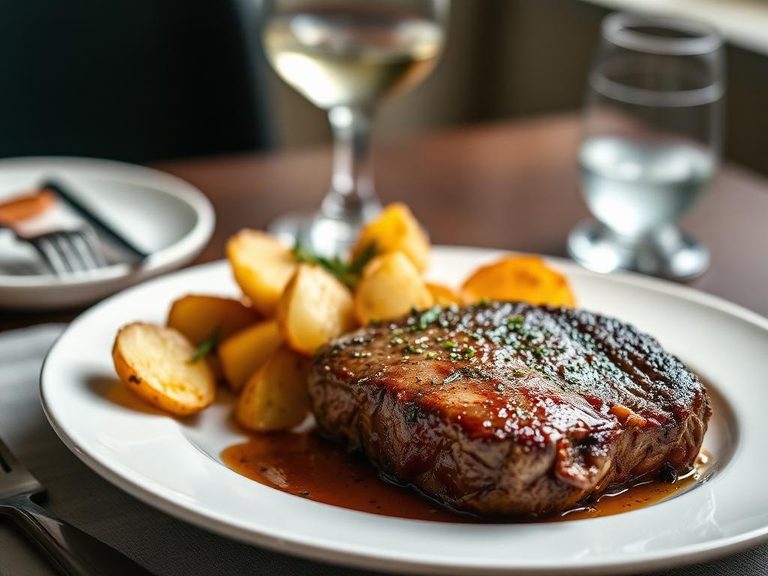
Beef, short loin, porterhouse steak, separable lean and fat, trimmed to 1/8" fat, all grades, cooked, grilled
Whole food · Beef Products

Photo: Wikipedia
The porterhouse steak is a premium cut from the short loin, prized for containing two distinct muscles: the tenderloin and the strip steak, separated by a T-shaped bone. When grilled, it delivers a rich, beefy flavor with a satisfying contrast between the buttery tenderness of the filet and the robust, chewy texture of the strip. Nutritionally, it's a powerhouse of protein and fat, providing substantial energy and essential nutrients without any carbohydrates.
Calorie split: 38% protein · 0% carbs · 62% fat
↓ Full nutrition💚 Why it's loved
People adore the porterhouse for its unique dual-texture experience and deep, savory flavor that intensifies with grilling. It's a centerpiece of celebratory meals, from American steakhouse traditions to Argentine asados, symbolizing indulgence and culinary craftsmanship.
⚠️ Watch-outs & how to enjoy it better
The high fat content, particularly saturated fat, can be a concern for those managing cholesterol or heart health, and it's a calorie-dense choice. To counteract, practice portion control (opt for a 6-8 oz serving), trim visible fat before cooking, and pair with fiber-rich sides like roasted vegetables or a large salad to balance the meal and promote satiety.
Key benefits
- Excellent source of high-quality protein for muscle repair and growth.
- Rich in heme iron, which is more easily absorbed than plant-based iron.
- Provides essential B vitamins, particularly B12, crucial for nerve function and red blood cell formation.
- Contains zinc, which supports immune health and wound healing.
- High in healthy monounsaturated fats, especially when trimmed of excess saturated fat.
🍽️ Popular dishes
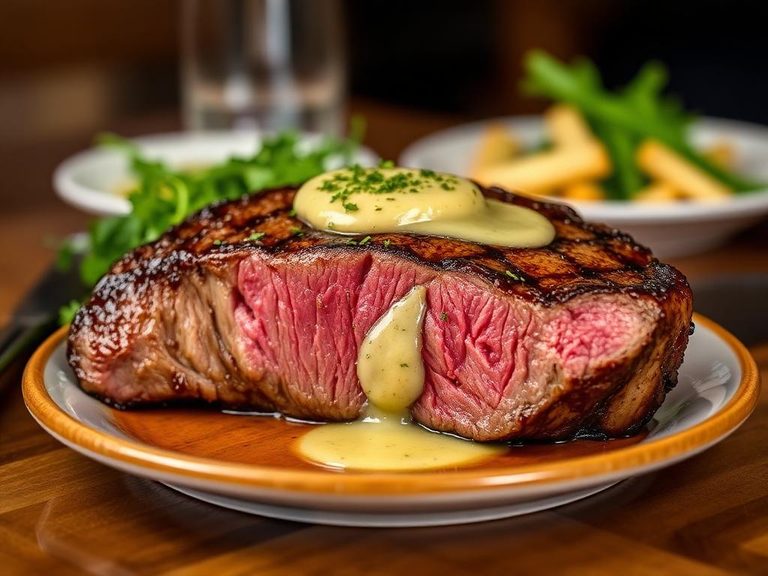
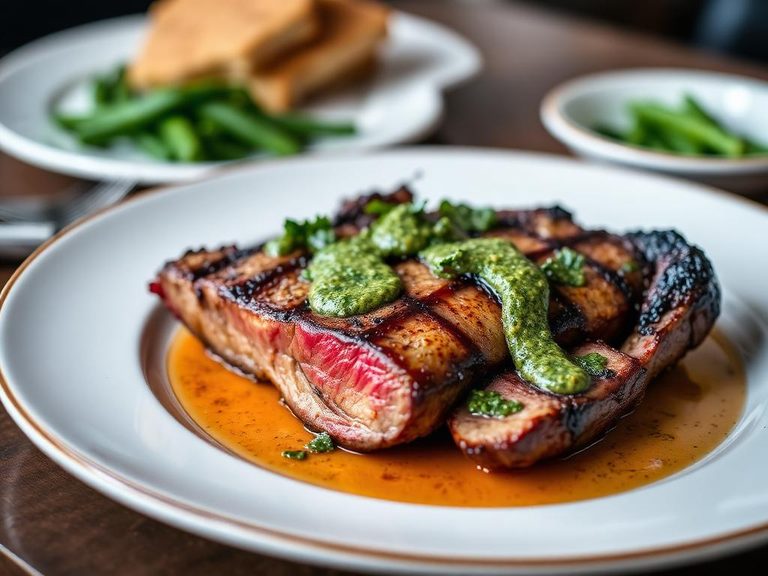
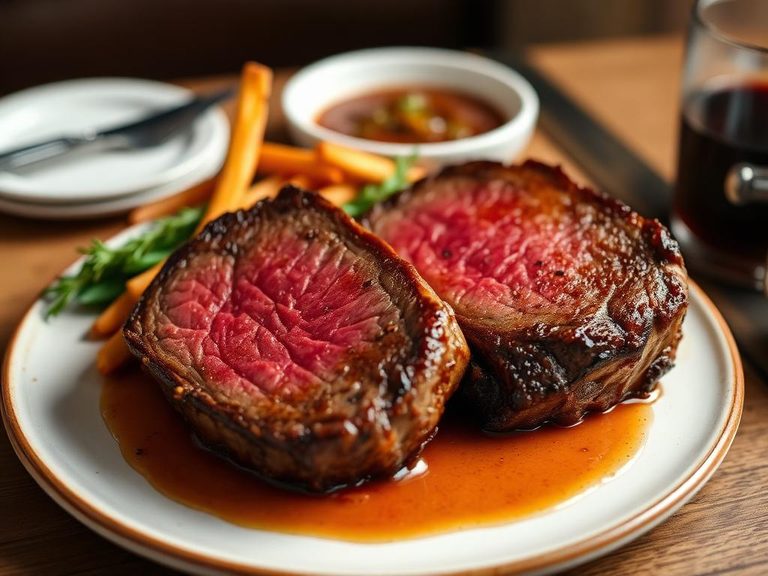
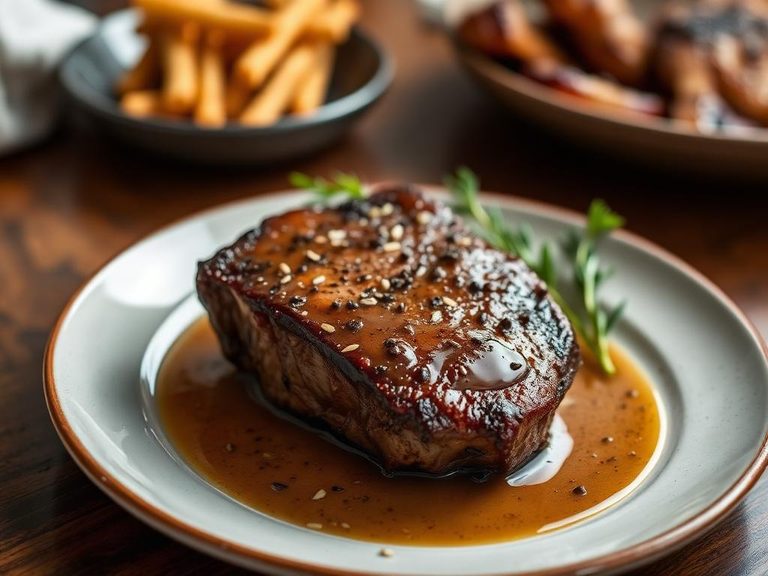
🌍 Where it's eaten
💡 Did you know?
The porterhouse steak is legally defined in the U.S. as a T-bone steak with at least 1.25 inches of tenderloin on the bone side, making it larger and more premium than its T-bone cousin.
Full nutrition (USDA data · scales with serving)
| Water | 55.6 g |
| Energy | 276 kcal |
| Energy | 1154 kj |
| Protein | 25.4 g |
| Total lipid (fat) | 18.6 g |
| Ash | 0.98 g |
| Carbohydrate, by difference | 0.00 g |
| Fiber, total dietary | 0.00 g |
| Total Sugars | 0.00 g |
| Calcium, Ca | 19.0 mg |
| Iron, Fe | 3.0 mg |
| Magnesium, Mg | 20.0 mg |
| Phosphorus, P | 208 mg |
| Potassium, K | 257 mg |
| Sodium, Na | 64.0 mg |
| Zinc, Zn | 4.1 mg |
| Copper, Cu | 0.07 mg |
| Manganese, Mn | 0.00 mg |
| Selenium, Se | 25.1 ug |
| Vitamin C, total ascorbic acid | 0.00 mg |
| Thiamin | 0.06 mg |
| Riboflavin | 0.23 mg |
| Niacin | 5.5 mg |
| Vitamin B-6 | 0.62 mg |
| Folate, total | 4.0 ug |
| Folic acid | 0.00 ug |
| Folate, food | 4.0 ug |
| Folate, DFE | 4.0 ug |
| Choline, total | 89.5 mg |
| Betaine | 11.8 mg |
| Vitamin B-12 | 2.0 ug |
| Vitamin B-12, added | 0.00 ug |
| Vitamin A, RAE | 7.0 ug |
| Retinol | 7.0 ug |
| Carotene, beta | 0.00 ug |
| Carotene, alpha | 0.00 ug |
| Cryptoxanthin, beta | 0.00 ug |
| Vitamin A, IU | 25.0 iu |
| Lycopene | 0.00 ug |
| Lutein + zeaxanthin | 0.00 ug |
| Vitamin E (alpha-tocopherol) | 0.24 mg |
| Vitamin E, added | 0.00 mg |
| Vitamin D (D2 + D3), International Units | 5.0 iu |
| Vitamin D (D2 + D3) | 0.10 ug |
| Vitamin D3 (cholecalciferol) | 0.10 ug |
| Vitamin K (phylloquinone) | 1.6 ug |
| Alcohol, ethyl | 0.00 g |
| Caffeine | 0.00 mg |
| Theobromine | 0.00 mg |
Fat & fatty acid profile (per 100g)
| Fatty acids, total saturated | 7.5 g |
| SFA 4:0 | 0.00 g |
| SFA 6:0 | 0.00 g |
| SFA 8:0 | 0.00 g |
| SFA 10:0 | 0.01 g |
| SFA 12:0 | 0.01 g |
| SFA 14:0 | 0.52 g |
| SFA 15:0 | 0.09 g |
| SFA 16:0 | 4.1 g |
| SFA 17:0 | 0.21 g |
| SFA 18:0 | 2.5 g |
| SFA 20:0 | 0.01 g |
| SFA 24:0 | 0.01 g |
| Fatty acids, total monounsaturated | 8.3 g |
| MUFA 14:1 | 0.14 g |
| MUFA 16:1 | 0.62 g |
| MUFA 16:1 c | 0.56 g |
| MUFA 17:1 | 0.14 g |
| MUFA 18:1 | 7.3 g |
| MUFA 18:1 c | 6.4 g |
| MUFA 20:1 | 0.04 g |
| MUFA 22:1 | 0.00 g |
| Fatty acids, total polyunsaturated | 0.82 g |
| PUFA 18:2 | 0.70 g |
| PUFA 18:2 n-6 c,c | 0.52 g |
| PUFA 18:2 CLAs | 0.09 g |
| PUFA 18:3 | 0.03 g |
| PUFA 18:3 n-3 c,c,c (ALA) | 0.03 g |
| PUFA 18:4 | 0.00 g |
| PUFA 20:2 n-6 c,c | 0.01 g |
| PUFA 20:3 | 0.02 g |
| PUFA 20:3 n-6 | 0.02 g |
| PUFA 20:4 | 0.05 g |
| PUFA 20:5 n-3 (EPA) | 0.00 g |
| PUFA 22:5 n-3 (DPA) | 0.01 g |
| PUFA 22:6 n-3 (DHA) | 0.00 g |
| Fatty acids, total trans | 1.1 g |
| Fatty acids, total trans-monoenoic | 1.0 g |
| TFA 16:1 t | 0.06 g |
| TFA 18:1 t | 0.96 g |
| TFA 18:2 t not further defined | 0.10 g |
| Fatty acids, total trans-polyenoic | 0.10 g |
| Cholesterol | 83.0 mg |
Amino acid profile (per 100g)
| Tryptophan | 0.28 g |
| Threonine | 1.2 g |
| Isoleucine | 1.2 g |
| Leucine | 2.2 g |
| Lysine | 2.4 g |
| Methionine | 0.69 g |
| Cystine | 0.26 g |
| Phenylalanine | 1.0 g |
| Tyrosine | 0.95 g |
| Valine | 1.3 g |
| Arginine | 1.7 g |
| Histidine | 0.95 g |
| Alanine | 1.6 g |
| Aspartic acid | 2.5 g |
| Glutamic acid | 4.2 g |
| Glycine | 1.2 g |
| Proline | 1.1 g |
| Serine | 1.0 g |
| Hydroxyproline | 0.17 g |
FAQ
What's the difference between a porterhouse and a T-bone steak?
The porterhouse is a larger cut from the short loin, featuring a bigger portion of the tenderloin (filet mignon) on one side of the bone, while the T-bone has a smaller tenderloin section. Both have the same T-shaped bone, but the porterhouse is considered the premium, more substantial version.
How should I cook a porterhouse steak for the best results?
For optimal flavor and texture, grill or pan-sear the steak over high heat to create a flavorful crust, then finish in the oven or lower heat to reach your desired doneness (medium-rare is often recommended). Let it rest for 5-10 minutes after cooking to allow the juices to redistribute, ensuring a juicy, tender bite.
Is porterhouse steak a healthy choice?
Porterhouse steak is nutritious, offering high protein, iron, and B vitamins, but it's also high in fat and calories. It can be part of a balanced diet when eaten in moderation (e.g., 4-6 oz servings) and paired with vegetables, whole grains, or legumes to add fiber and nutrients without excess calories.
Nutrient density (calculated · NRF9.3)
Nutrient Rich Foods index: beneficial nutrients (protein, fiber, vitamins, minerals) minus saturated fat, added sugar & sodium, per 100 kcal.
NRF9.3 index — Fulgoni, Keast & Drewnowski, 2009. Computed from USDA nutrients.
Weight-loss friendliness (composite index)
Energy density 2.76 kcal/g · 37% calories from protein · 0.0 g fiber · 0.0 g sugar per 100 g.
Composite of energy density (Rolls et al., 1999), protein & fiber satiety, minus sugar. A calculated heuristic — ranks satiety-per-calorie, not a clinical measure.
Dietary load (calculated from USDA values)
Potential renal acid load. Positive = acid-forming, negative = alkaline-forming.
Sodium-to-potassium ratio: 0.25 (lower is better — aim for ≤ 1)
Sodium:potassium per WHO potassium guidance. Computed from USDA nutrients.