

Beef, New Zealand, imported, striploin, separable lean and fat, cooked, fast fried
Whole food · Beef Products

Photo: Wikipedia
This is premium New Zealand striploin, seared quickly at high heat to preserve its succulent, buttery texture and rich beefy flavor. The lean and fat components cook together, creating a tender, juicy cut with a satisfying mouthfeel. Nutritionally, it's a powerhouse of high-quality protein and natural fats, with virtually no carbohydrates.
Calorie split: 33% protein · 0% carbs · 67% fat
↓ Full nutrition💚 Why it's loved
People adore it for its classic, robust beef flavor and the luxurious, melt-in-your-mouth texture that comes from the well-marbled striploin. It's a versatile cut that shines with simple seasoning, making it a centerpiece for both everyday dinners and celebratory feasts.
⚠️ Watch-outs & how to enjoy it better
Its high fat content (22.33g per 100g) means it's calorie-dense, which may require portion control for those monitoring energy intake. To counteract this, pair a smaller portion with a large volume of non-starchy vegetables or a fresh salad to add fiber and fullness without excess calories.
Key benefits
- Excellent source of complete, high-quality protein (24.89g per 100g).
- Rich in natural, energy-dense fats for satiety and flavor.
- Contains essential micronutrients like iron, zinc, and B12.
- Zero carbohydrates, making it suitable for ketogenic and low-carb diets.
🍽️ Popular dishes
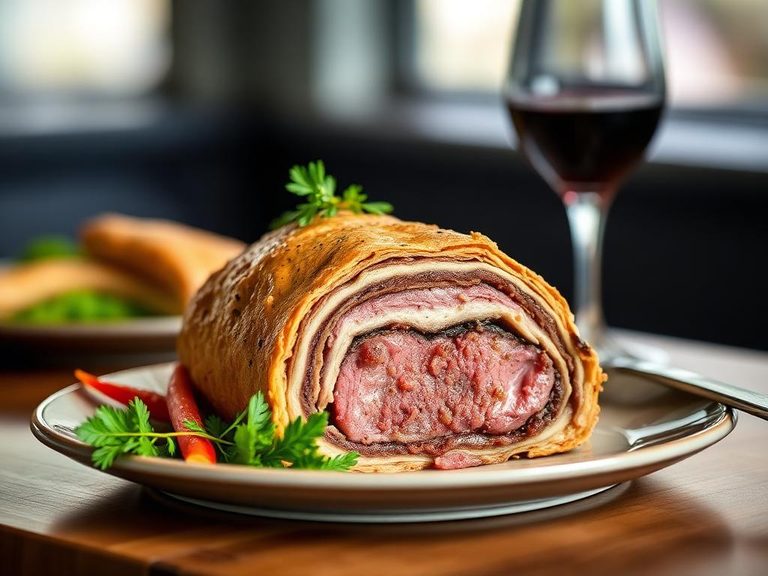


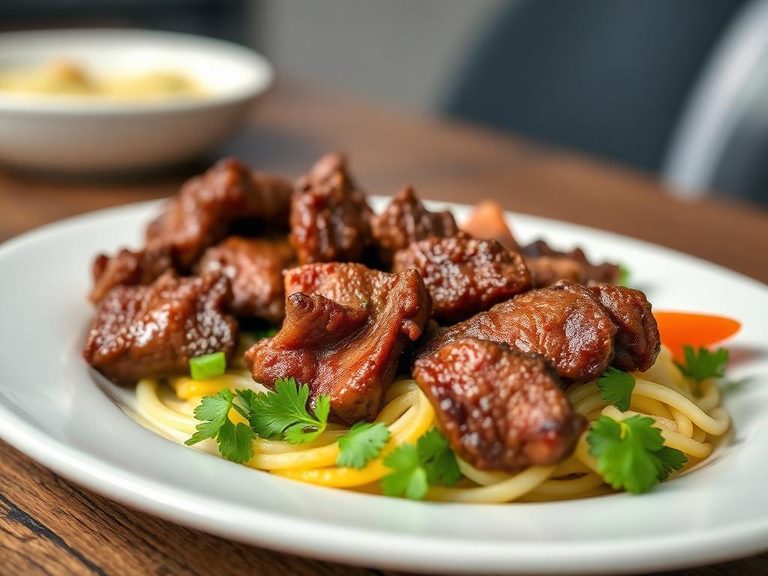
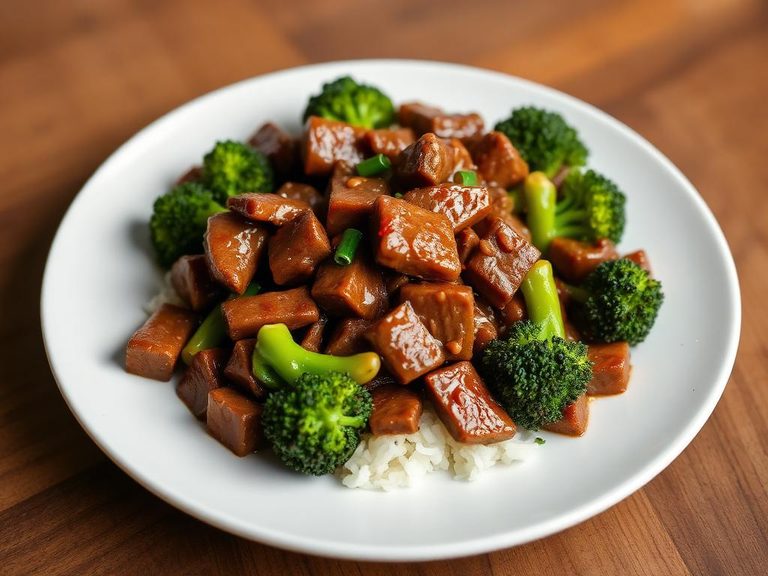
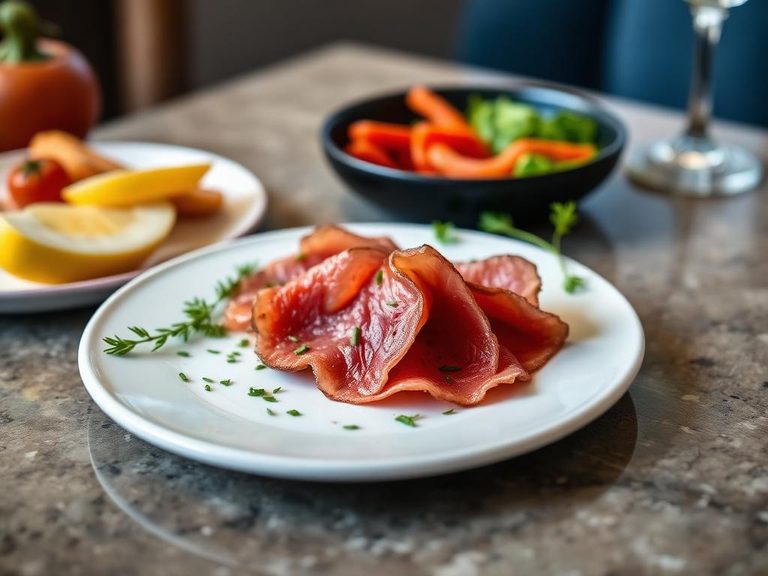
🌍 Where it's eaten
💡 Did you know?
The striploin is taken from the same primal cut as the tenderloin (filet mignon), but it runs along the spine's outer muscle, resulting in more flavor from the marbling and connective tissue.
Full nutrition (USDA data · scales with serving)
| Water | 52.4 g |
| Energy | 301 kcal |
| Energy | 1258 kj |
| Protein | 24.9 g |
| Total lipid (fat) | 22.3 g |
| Ash | 0.95 g |
| Carbohydrate, by difference | 0.02 g |
| Fiber, total dietary | 0.00 g |
| Total Sugars | 0.00 g |
| Calcium, Ca | 8.0 mg |
| Iron, Fe | 1.7 mg |
| Magnesium, Mg | 21.0 mg |
| Phosphorus, P | 192 mg |
| Potassium, K | 325 mg |
| Sodium, Na | 50.0 mg |
| Zinc, Zn | 2.9 mg |
| Copper, Cu | 0.07 mg |
| Manganese, Mn | 0.00 mg |
| Selenium, Se | 3.7 ug |
| Vitamin C, total ascorbic acid | 0.00 mg |
| Thiamin | 0.05 mg |
| Riboflavin | 0.08 mg |
| Niacin | 4.3 mg |
| Pantothenic acid | 0.36 mg |
| Vitamin B-6 | 0.28 mg |
| Vitamin B-12 | 0.84 ug |
| Vitamin B-12, added | 0.00 ug |
| Vitamin A, RAE | 16.0 ug |
| Retinol | 16.0 ug |
| Carotene, beta | 0.00 ug |
| Carotene, alpha | 0.00 ug |
| Cryptoxanthin, beta | 0.00 ug |
| Vitamin A, IU | 53.0 iu |
| Lycopene | 0.00 ug |
| Lutein + zeaxanthin | 0.00 ug |
| Vitamin E (alpha-tocopherol) | 0.44 mg |
| Vitamin E, added | 0.00 mg |
| Vitamin D (D2 + D3), International Units | 13.0 iu |
| Vitamin D (D2 + D3) | 0.30 ug |
| Vitamin D3 (cholecalciferol) | 0.30 ug |
| Alcohol, ethyl | 0.00 g |
| Caffeine | 0.00 mg |
| Theobromine | 0.00 mg |
Fat & fatty acid profile (per 100g)
| Fatty acids, total saturated | 8.2 g |
| SFA 4:0 | 0.00 g |
| SFA 6:0 | 0.00 g |
| SFA 8:0 | 0.00 g |
| SFA 10:0 | 0.01 g |
| SFA 12:0 | 0.01 g |
| SFA 14:0 | 0.54 g |
| SFA 16:0 | 4.4 g |
| SFA 17:0 | 0.27 g |
| SFA 18:0 | 3.0 g |
| SFA 20:0 | 0.02 g |
| SFA 22:0 | 0.01 g |
| SFA 24:0 | 0.00 g |
| Fatty acids, total monounsaturated | 8.1 g |
| MUFA 14:1 | 0.16 g |
| MUFA 15:1 | 0.00 g |
| MUFA 16:1 | 0.71 g |
| MUFA 16:1 c | 0.67 g |
| MUFA 17:1 | 0.00 g |
| MUFA 18:1 | 7.2 g |
| MUFA 18:1 c | 6.6 g |
| MUFA 20:1 | 0.02 g |
| MUFA 22:1 | 0.00 g |
| MUFA 22:1 c | 0.00 g |
| MUFA 24:1 c | 0.00 g |
| Fatty acids, total polyunsaturated | 0.56 g |
| PUFA 18:2 | 0.33 g |
| PUFA 18:2 n-6 c,c | 0.14 g |
| PUFA 18:2 CLAs | 0.17 g |
| PUFA 18:3 | 0.15 g |
| PUFA 18:3 n-3 c,c,c (ALA) | 0.14 g |
| PUFA 18:3 n-6 c,c,c | 0.00 g |
| PUFA 18:4 | 0.00 g |
| PUFA 20:2 n-6 c,c | 0.00 g |
| PUFA 20:3 | 0.01 g |
| PUFA 20:3 n-3 | 0.00 g |
| PUFA 20:3 n-6 | 0.01 g |
| PUFA 20:4 | 0.02 g |
| PUFA 20:4 n-6 | 0.02 g |
| PUFA 20:5 n-3 (EPA) | 0.02 g |
| PUFA 22:5 n-3 (DPA) | 0.03 g |
| PUFA 22:6 n-3 (DHA) | 0.00 g |
| Fatty acids, total trans | 0.61 g |
| Fatty acids, total trans-monoenoic | 0.61 g |
| TFA 16:1 t | 0.05 g |
| TFA 18:1 t | 0.56 g |
| TFA 18:2 t,t | 0.01 g |
| Fatty acids, total trans-polyenoic | 0.01 g |
| Cholesterol | 69.0 mg |
Amino acid profile (per 100g)
| Tryptophan | 0.26 g |
| Threonine | 0.90 g |
| Isoleucine | 1.0 g |
| Leucine | 1.9 g |
| Lysine | 2.0 g |
| Methionine | 0.82 g |
| Phenylalanine | 0.97 g |
| Tyrosine | 0.84 g |
| Valine | 1.1 g |
| Arginine | 1.6 g |
| Histidine | 0.90 g |
| Alanine | 1.3 g |
| Glutamic acid | 3.5 g |
| Glycine | 1.4 g |
| Proline | 0.80 g |
| Serine | 0.88 g |
FAQ
What's the difference between striploin and sirloin?
In many regions, 'sirloin' and 'striploin' refer to the same cut of beef from the loin primal. However, terminology can vary by country; in the US, a 'sirloin' often includes more surrounding muscle, while a 'New York strip' is the specific boneless striploin steak.
How should I cook this cut for best results?
Fast-frying, grilling, or broiling at high heat is ideal. Aim for medium-rare to medium doneness to keep the fat rendered and the meat tender. Let it rest for 5-10 minutes after cooking to allow the juices to redistribute.
Is New Zealand beef grass-fed?
The majority of New Zealand beef is pasture-raised and grass-fed year-round, which can contribute to a slightly different flavor profile and a favorable fatty acid composition compared to grain-finished beef.
Nutrient density (calculated · NRF9.3)
Nutrient Rich Foods index: beneficial nutrients (protein, fiber, vitamins, minerals) minus saturated fat, added sugar & sodium, per 100 kcal.
NRF9.3 index — Fulgoni, Keast & Drewnowski, 2009. Computed from USDA nutrients.
Weight-loss friendliness (composite index)
Energy density 3.01 kcal/g · 33% calories from protein · 0.0 g fiber · 0.0 g sugar per 100 g.
Composite of energy density (Rolls et al., 1999), protein & fiber satiety, minus sugar. A calculated heuristic — ranks satiety-per-calorie, not a clinical measure.
Dietary load (calculated from USDA values)
Potential renal acid load. Positive = acid-forming, negative = alkaline-forming.
Sodium-to-potassium ratio: 0.15 (lower is better — aim for ≤ 1)
Sodium:potassium per WHO potassium guidance. Computed from USDA nutrients.