

Beef, New Zealand, imported, chuck eye roll, separable lean only, raw
Whole food · Beef Products

Photo: Wikipedia
This is a lean, versatile cut from the shoulder of New Zealand grass-fed beef, prized for its fine-grained texture and rich, clean beef flavor. When raw, it presents a deep ruby-red color with minimal marbling, promising a tender bite when cooked correctly. Nutritionally, it's a powerhouse of high-quality protein with a notably low fat content for a beef cut.
Calorie split: 63% protein · 0% carbs · 37% fat
↓ Full nutrition💚 Why it's loved
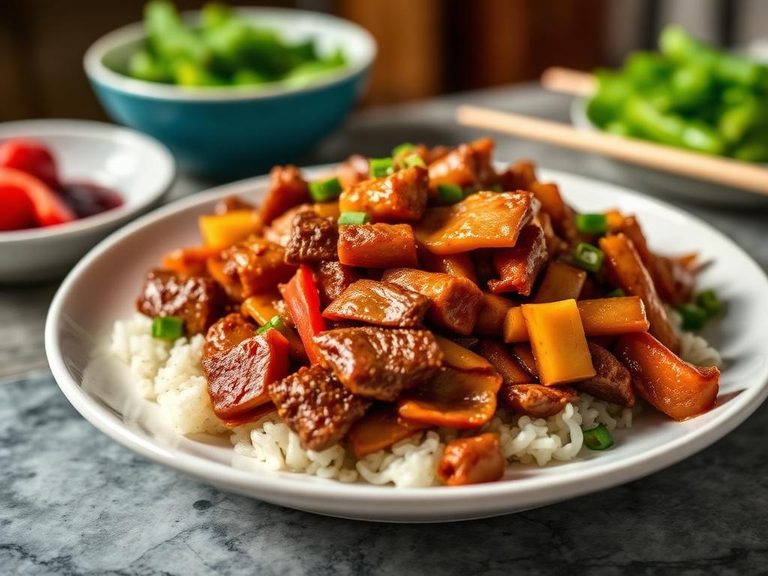
People love it for its robust, pure beef flavor that isn't overwhelmed by fat, making it a true canvas for marinades and seasonings. Its relative leanness and uniform shape make it incredibly versatile for everything from quick stir-fries to slow braises.
⚠️ Watch-outs & how to enjoy it better
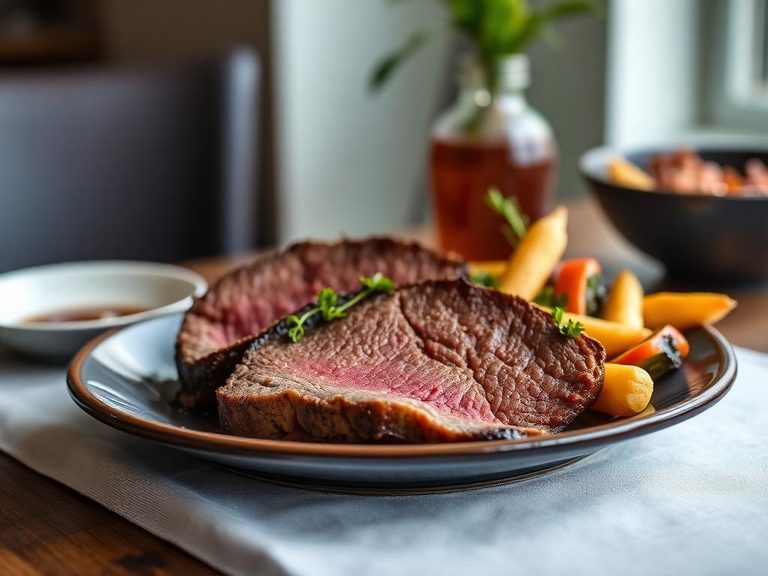
The low fat content means it can become dry and tough if overcooked, demanding careful temperature control. To counteract this, use a meat thermometer, consider marinating to add moisture and flavor, and employ moist-heat cooking methods like braising for tougher preparations.
Key benefits
- Excellent source of complete, high-quality protein for muscle maintenance.
- Very low in fat, especially saturated fat, compared to many other beef cuts.
- Naturally carbohydrate-free, suitable for low-carb and ketogenic diets.
- Grass-fed origin may offer a better omega-3 to omega-6 fatty acid ratio.
- Rich in essential minerals like iron, zinc, and B12.
🍽️ Popular dishes
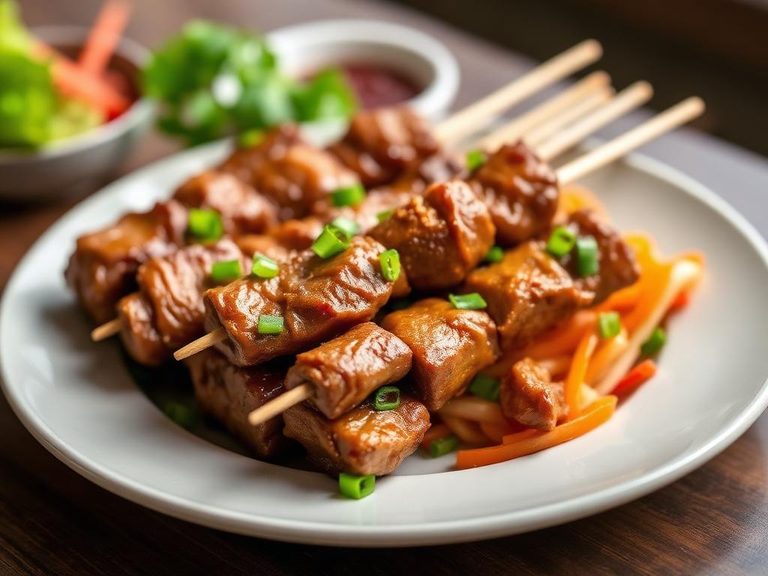
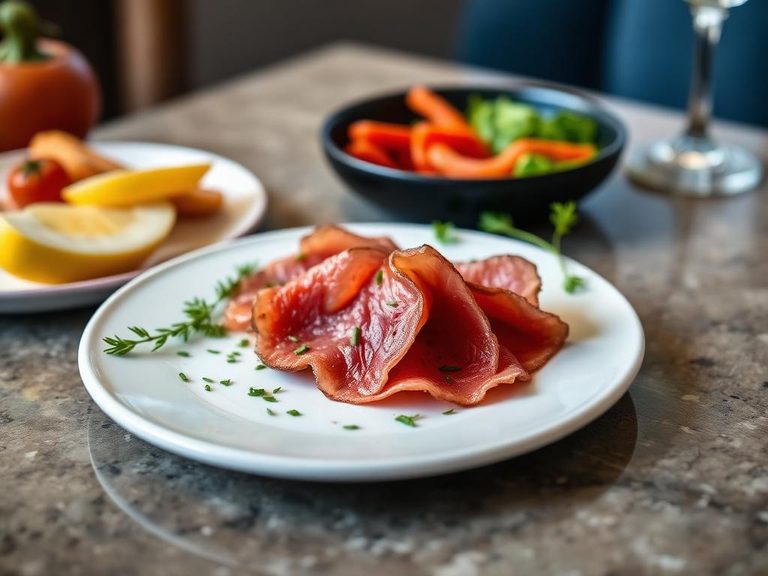
🌍 Where it's eaten
💡 Did you know?
The 'chuck eye roll' is essentially the continuation of the ribeye muscle into the shoulder, which is why it's often called the 'poor man's ribeye' for its similar flavor at a lower cost.
Full nutrition (USDA data · scales with serving)
| Water | 73.5 g |
| Energy | 131 kcal |
| Energy | 546 kj |
| Protein | 20.5 g |
| Total lipid (fat) | 5.4 g |
| Ash | 0.95 g |
| Carbohydrate, by difference | 0.00 g |
| Fiber, total dietary | 0.00 g |
| Total Sugars | 0.00 g |
| Calcium, Ca | 4.0 mg |
| Iron, Fe | 2.0 mg |
| Magnesium, Mg | 20.0 mg |
| Phosphorus, P | 180 mg |
| Potassium, K | 315 mg |
| Sodium, Na | 56.0 mg |
| Zinc, Zn | 4.8 mg |
| Copper, Cu | 0.07 mg |
| Manganese, Mn | 0.01 mg |
| Selenium, Se | 1.3 ug |
| Vitamin C, total ascorbic acid | 0.00 mg |
| Thiamin | 0.05 mg |
| Riboflavin | 0.12 mg |
| Niacin | 2.9 mg |
| Pantothenic acid | 0.27 mg |
| Vitamin B-6 | 0.19 mg |
| Vitamin B-12 | 2.3 ug |
| Vitamin B-12, added | 0.00 ug |
| Vitamin A, RAE | 9.0 ug |
| Retinol | 9.0 ug |
| Carotene, beta | 0.00 ug |
| Carotene, alpha | 0.00 ug |
| Cryptoxanthin, beta | 0.00 ug |
| Vitamin A, IU | 28.0 iu |
| Lycopene | 0.00 ug |
| Lutein + zeaxanthin | 0.00 ug |
| Vitamin E (alpha-tocopherol) | 0.63 mg |
| Vitamin E, added | 0.00 mg |
| Vitamin D (D2 + D3), International Units | 6.0 iu |
| Vitamin D (D2 + D3) | 0.10 ug |
| Vitamin D3 (cholecalciferol) | 0.10 ug |
| Alcohol, ethyl | 0.00 g |
| Caffeine | 0.00 mg |
| Theobromine | 0.00 mg |
Fat & fatty acid profile (per 100g)
| Fatty acids, total saturated | 1.8 g |
| SFA 4:0 | 0.00 g |
| SFA 6:0 | 0.00 g |
| SFA 8:0 | 0.00 g |
| SFA 10:0 | 0.00 g |
| SFA 12:0 | 0.00 g |
| SFA 14:0 | 0.08 g |
| SFA 16:0 | 0.95 g |
| SFA 17:0 | 0.06 g |
| SFA 18:0 | 0.65 g |
| SFA 20:0 | 0.00 g |
| SFA 22:0 | 0.00 g |
| SFA 24:0 | 0.00 g |
| Fatty acids, total monounsaturated | 2.0 g |
| MUFA 14:1 | 0.02 g |
| MUFA 15:1 | 0.00 g |
| MUFA 16:1 | 0.15 g |
| MUFA 16:1 c | 0.14 g |
| MUFA 17:1 | 0.00 g |
| MUFA 18:1 | 1.8 g |
| MUFA 18:1 c | 1.8 g |
| MUFA 20:1 | 0.01 g |
| MUFA 22:1 | 0.00 g |
| MUFA 22:1 c | 0.00 g |
| MUFA 24:1 c | 0.00 g |
| Fatty acids, total polyunsaturated | 0.25 g |
| PUFA 18:2 | 0.11 g |
| PUFA 18:2 n-6 c,c | 0.08 g |
| PUFA 18:2 CLAs | 0.02 g |
| PUFA 18:3 | 0.05 g |
| PUFA 18:3 n-3 c,c,c (ALA) | 0.05 g |
| PUFA 18:3 n-6 c,c,c | 0.00 g |
| PUFA 18:4 | 0.00 g |
| PUFA 20:2 n-6 c,c | 0.00 g |
| PUFA 20:3 | 0.01 g |
| PUFA 20:3 n-3 | 0.00 g |
| PUFA 20:3 n-6 | 0.01 g |
| PUFA 20:4 | 0.03 g |
| PUFA 20:4 n-6 | 0.03 g |
| PUFA 20:5 n-3 (EPA) | 0.02 g |
| PUFA 22:5 n-3 (DPA) | 0.03 g |
| PUFA 22:6 n-3 (DHA) | 0.00 g |
| Fatty acids, total trans | 0.07 g |
| Fatty acids, total trans-monoenoic | 0.07 g |
| TFA 16:1 t | 0.02 g |
| TFA 18:1 t | 0.06 g |
| TFA 18:2 t,t | 0.00 g |
| Fatty acids, total trans-polyenoic | 0.00 g |
| Cholesterol | 61.0 mg |
Amino acid profile (per 100g)
| Tryptophan | 0.34 g |
| Threonine | 1.2 g |
| Isoleucine | 1.3 g |
| Leucine | 2.4 g |
| Lysine | 2.5 g |
| Methionine | 1.1 g |
| Phenylalanine | 1.2 g |
| Tyrosine | 1.1 g |
| Valine | 1.4 g |
| Arginine | 2.1 g |
| Histidine | 1.2 g |
| Alanine | 1.7 g |
| Glutamic acid | 4.5 g |
| Glycine | 1.7 g |
| Proline | 1.0 g |
| Serine | 1.1 g |
FAQ
No. Chuck eye roll is a specific, leaner sub-primal from the shoulder with a finer grain. 'Chuck roast' is a broader term often referring to tougher, fattier chunks from the same region, better suited for long, slow cooking.
What's the best way to cook this lean cut?
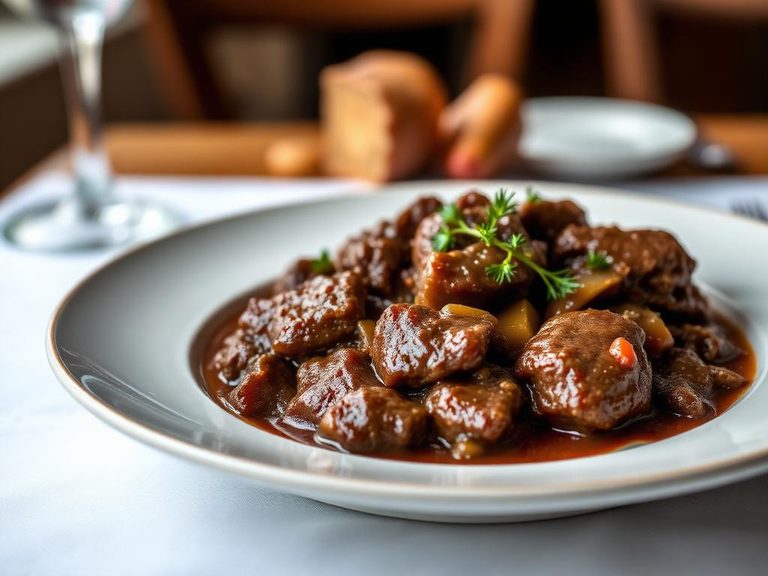
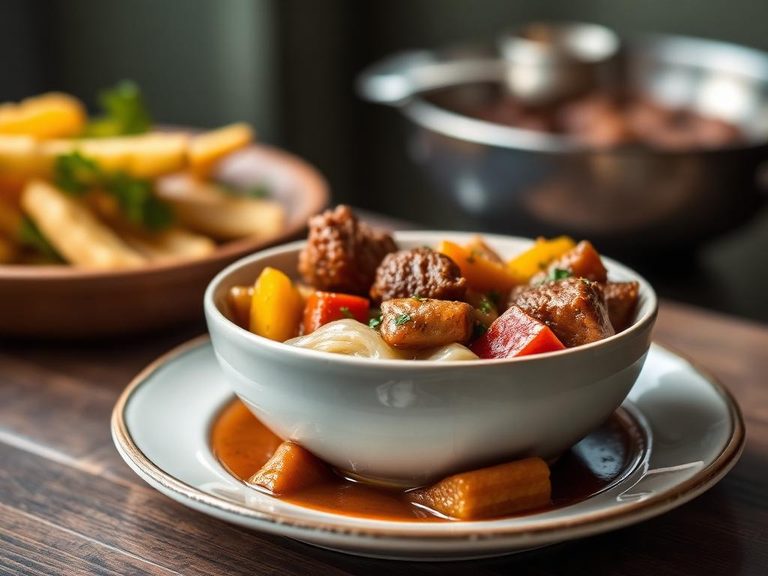
For quick cooking (stir-fry, grilling), slice against the grain and don't overcook. For longer cooking (stew, braise), low and slow methods will break down connective tissue and keep it tender.
Why is it so lean for a beef cut?
This specific description is for 'separable lean only,' meaning all external and intermuscular fat has been trimmed away, highlighting its natural leanness.
Nutrient density (calculated · NRF9.3)
Nutrient Rich Foods index: beneficial nutrients (protein, fiber, vitamins, minerals) minus saturated fat, added sugar & sodium, per 100 kcal.
NRF9.3 index — Fulgoni, Keast & Drewnowski, 2009. Computed from USDA nutrients.
Weight-loss friendliness (composite index)
Energy density 1.31 kcal/g · 62% calories from protein · 0.0 g fiber · 0.0 g sugar per 100 g.
Composite of energy density (Rolls et al., 1999), protein & fiber satiety, minus sugar. A calculated heuristic — ranks satiety-per-calorie, not a clinical measure.
Dietary load (calculated from USDA values)
Potential renal acid load. Positive = acid-forming, negative = alkaline-forming.
Sodium-to-potassium ratio: 0.18 (lower is better — aim for ≤ 1)
Sodium:potassium per WHO potassium guidance. Computed from USDA nutrients.