

Beef, chuck eye steak, boneless, separable lean and fat, trimmed to 0" fat, choice, raw
Whole food · Beef Products

Photo: Wikipedia
Beef chuck eye steak is a boneless cut from the shoulder area, known for its rich marbling and deep beefy flavor. When raw, it presents a vibrant red color with visible intramuscular fat, promising tenderness and juiciness once cooked. It's a protein powerhouse, delivering nearly 19 grams of protein per 100 grams with zero carbohydrates.
Calorie split: 33% protein · 0% carbs · 67% fat
↓ Full nutrition💚 Why it's loved
People adore chuck eye steak for its robust, beefy flavor that's more pronounced than leaner cuts, often called the 'poor man's ribeye.' Its generous marbling ensures it stays juicy and tender, making it a favorite for grilling, pan-searing, or slow braising in hearty stews.
⚠️ Watch-outs & how to enjoy it better
The higher fat content (nearly 17g per 100g) means it's calorie-dense, which may require portion control for those monitoring fat intake. To counteract, pair it with fiber-rich vegetables like roasted broccoli or a fresh salad to add volume and nutrients without excess calories, and trim any external fat before cooking if desired.
Key benefits
- Excellent source of complete protein for muscle maintenance and growth
- Provides essential minerals like iron and zinc
- Contains B vitamins, particularly B12, crucial for nerve function
- Offers conjugated linoleic acid (CLA), a naturally occurring fatty acid
- Versatile for both quick-searing and slow-cooking methods
🍽️ Popular dishes
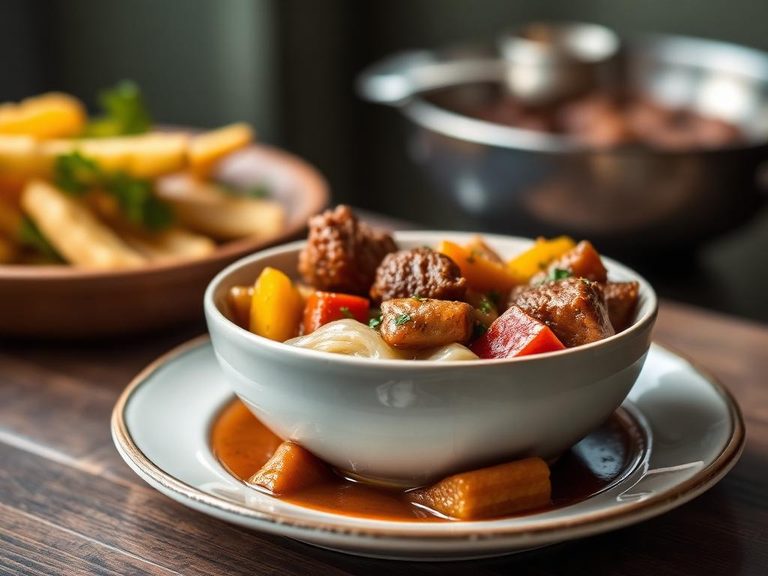
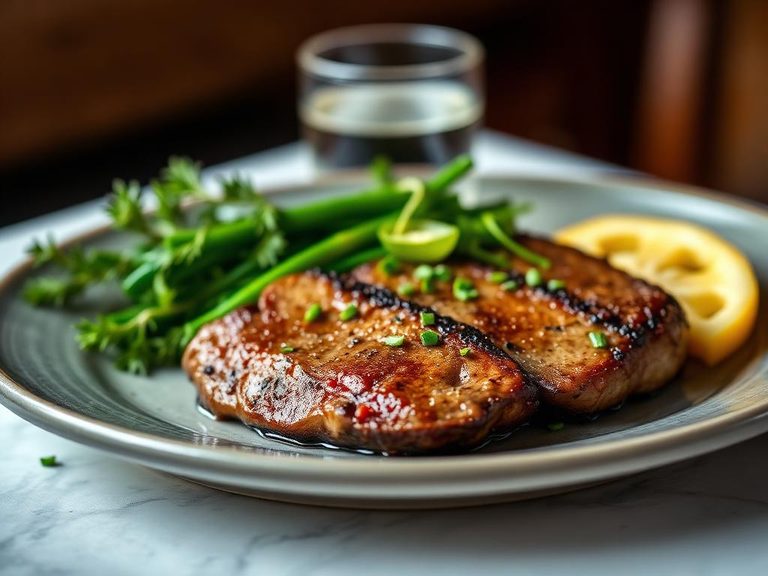
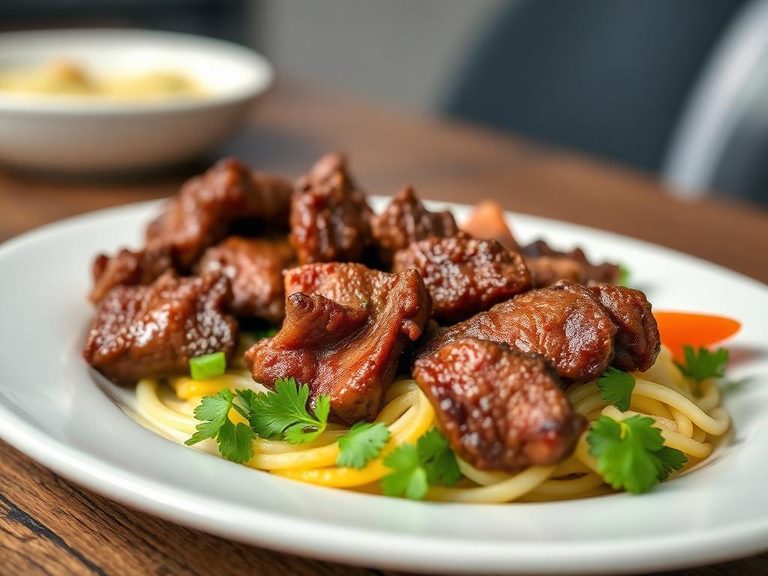
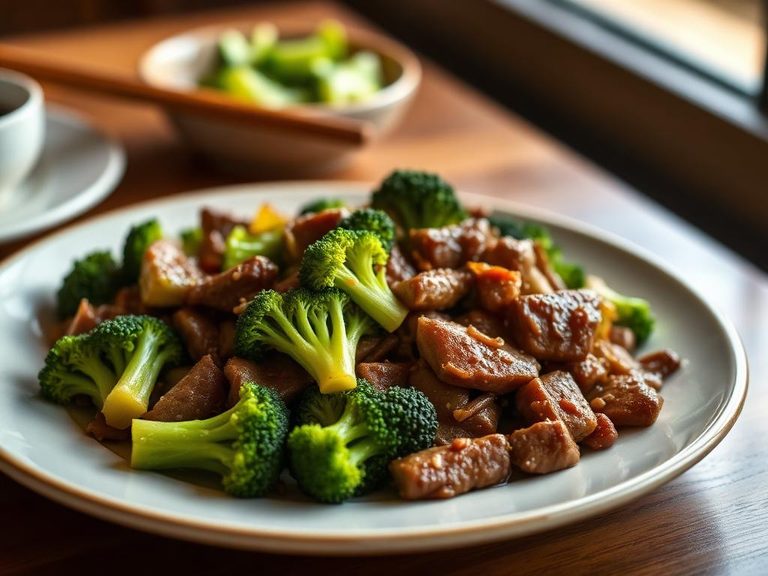
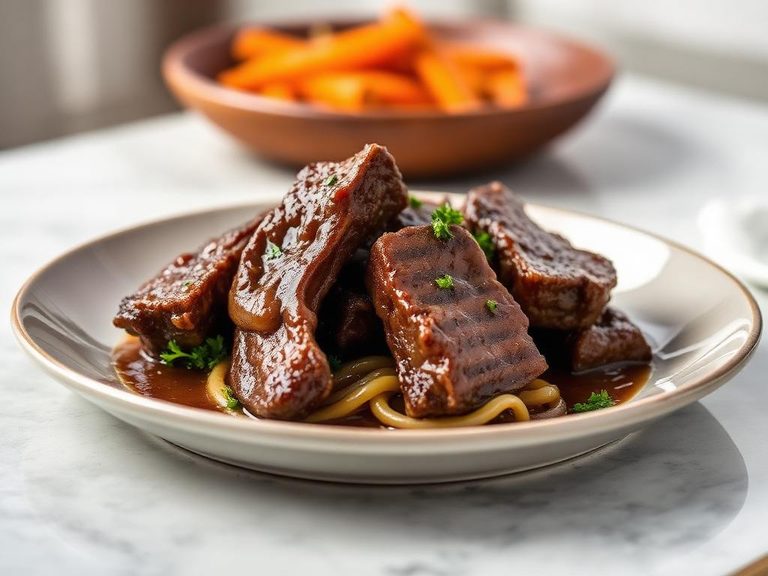
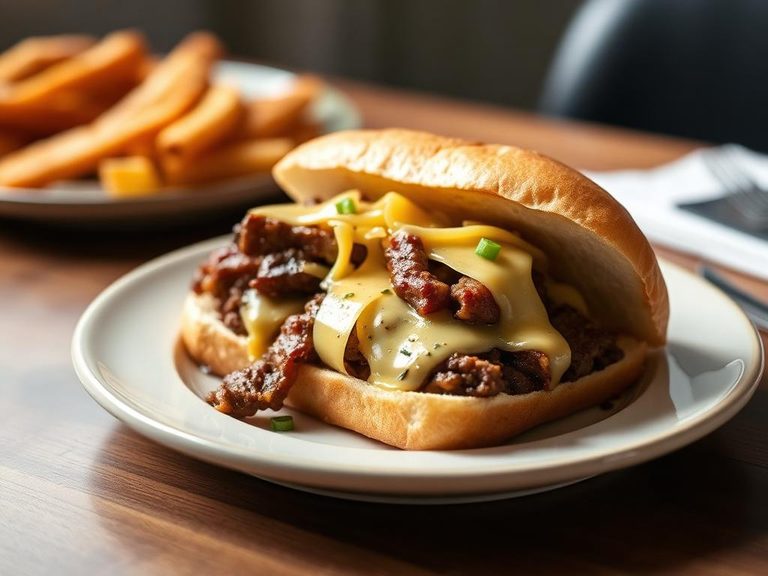
🌍 Where it's eaten
💡 Did you know?
The chuck eye steak is anatomically adjacent to the ribeye, sharing some of the same muscles, which is why it's often considered a flavorful, budget-friendly alternative.
Full nutrition (USDA data · scales with serving)
| Water | 64.0 g |
| Energy | 227 kcal |
| Energy | 950 kj |
| Protein | 18.9 g |
| Total lipid (fat) | 16.9 g |
| Ash | 0.84 g |
| Carbohydrate, by difference | 0.00 g |
| Fiber, total dietary | 0.00 g |
| Total Sugars | 0.00 g |
| Calcium, Ca | 14.0 mg |
| Iron, Fe | 2.1 mg |
| Magnesium, Mg | 19.0 mg |
| Phosphorus, P | 179 mg |
| Potassium, K | 330 mg |
| Sodium, Na | 66.0 mg |
| Zinc, Zn | 7.3 mg |
| Copper, Cu | 0.07 mg |
| Manganese, Mn | 0.01 mg |
| Selenium, Se | 19.9 ug |
| Vitamin C, total ascorbic acid | 0.00 mg |
| Thiamin | 0.07 mg |
| Riboflavin | 0.14 mg |
| Niacin | 4.3 mg |
| Pantothenic acid | 0.64 mg |
| Vitamin B-6 | 0.33 mg |
| Folate, total | 3.0 ug |
| Folic acid | 0.00 ug |
| Folate, food | 3.0 ug |
| Folate, DFE | 3.0 ug |
| Choline, total | 61.3 mg |
| Betaine | 23.2 mg |
| Vitamin B-12 | 2.7 ug |
| Vitamin B-12, added | 0.00 ug |
| Vitamin A, RAE | 4.0 ug |
| Retinol | 4.0 ug |
| Carotene, beta | 0.00 ug |
| Carotene, alpha | 0.00 ug |
| Cryptoxanthin, beta | 0.00 ug |
| Vitamin A, IU | 14.0 iu |
| Lycopene | 0.00 ug |
| Lutein + zeaxanthin | 0.00 ug |
| Vitamin E (alpha-tocopherol) | 0.15 mg |
| Vitamin E, added | 0.00 mg |
| Vitamin D (D2 + D3), International Units | 5.0 iu |
| Vitamin D (D2 + D3) | 0.10 ug |
| Vitamin D3 (cholecalciferol) | 0.10 ug |
| Vitamin K (phylloquinone) | 1.5 ug |
| Alcohol, ethyl | 0.00 g |
| Caffeine | 0.00 mg |
| Theobromine | 0.00 mg |
Fat & fatty acid profile (per 100g)
| Fatty acids, total saturated | 7.2 g |
| SFA 4:0 | 0.00 g |
| SFA 6:0 | 0.00 g |
| SFA 8:0 | 0.00 g |
| SFA 10:0 | 0.00 g |
| SFA 12:0 | 0.00 g |
| SFA 14:0 | 0.49 g |
| SFA 16:0 | 3.8 g |
| SFA 17:0 | 0.21 g |
| SFA 18:0 | 2.6 g |
| SFA 20:0 | 0.01 g |
| SFA 24:0 | 0.01 g |
| Fatty acids, total monounsaturated | 8.0 g |
| MUFA 14:1 | 0.09 g |
| MUFA 16:1 | 0.48 g |
| MUFA 16:1 c | 0.48 g |
| MUFA 17:1 | 0.13 g |
| MUFA 18:1 | 7.2 g |
| MUFA 18:1 c | 6.2 g |
| MUFA 18:1-11 t (18:1t n-7) | 0.36 g |
| MUFA 20:1 | 0.04 g |
| MUFA 22:1 | 0.00 g |
| Fatty acids, total polyunsaturated | 0.65 g |
| PUFA 18:2 | 0.57 g |
| PUFA 18:2 n-6 c,c | 0.50 g |
| PUFA 18:2 CLAs | 0.07 g |
| PUFA 18:3 | 0.03 g |
| PUFA 18:3 n-3 c,c,c (ALA) | 0.03 g |
| PUFA 18:4 | 0.00 g |
| PUFA 20:2 n-6 c,c | 0.00 g |
| PUFA 20:4 | 0.04 g |
| PUFA 20:5 n-3 (EPA) | 0.00 g |
| PUFA 22:5 n-3 (DPA) | 0.00 g |
| PUFA 22:6 n-3 (DHA) | 0.00 g |
| Fatty acids, total trans | 1.1 g |
| Fatty acids, total trans-monoenoic | 1.1 g |
| TFA 18:1 t | 1.1 g |
| Cholesterol | 68.0 mg |
Amino acid profile (per 100g)
| Tryptophan | 0.21 g |
| Threonine | 0.83 g |
| Isoleucine | 0.80 g |
| Leucine | 1.5 g |
| Lysine | 1.6 g |
| Methionine | 0.54 g |
| Cystine | 0.20 g |
| Phenylalanine | 0.72 g |
| Tyrosine | 0.65 g |
| Valine | 0.85 g |
| Arginine | 1.2 g |
| Histidine | 0.61 g |
| Alanine | 1.1 g |
| Aspartic acid | 1.7 g |
| Glutamic acid | 3.0 g |
| Glycine | 0.86 g |
| Proline | 0.78 g |
| Serine | 0.72 g |
| Hydroxyproline | 0.13 g |
FAQ
Is chuck eye steak tough?
It can be if overcooked or prepared with the wrong method. For quick cooking (grilling, pan-searing), cook to medium-rare or medium. For long, moist-heat cooking (braising, stewing), it becomes exceptionally tender.
How is it different from a ribeye?
They come from adjacent areas. The chuck eye has slightly more connective tissue and is generally less expensive, but offers very similar marbling and flavor when cooked properly.
What's the best way to cook it for maximum tenderness?
For a steak: sear hard in a hot pan, finish in the oven to medium-rare. For tougher pieces: braise slowly in liquid (like broth or wine) at low heat for 2-3 hours until fork-tender.
Nutrient density (calculated · NRF9.3)
Nutrient Rich Foods index: beneficial nutrients (protein, fiber, vitamins, minerals) minus saturated fat, added sugar & sodium, per 100 kcal.
NRF9.3 index — Fulgoni, Keast & Drewnowski, 2009. Computed from USDA nutrients.
Weight-loss friendliness (composite index)
Energy density 2.27 kcal/g · 33% calories from protein · 0.0 g fiber · 0.0 g sugar per 100 g.
Composite of energy density (Rolls et al., 1999), protein & fiber satiety, minus sugar. A calculated heuristic — ranks satiety-per-calorie, not a clinical measure.
Dietary load (calculated from USDA values)
Potential renal acid load. Positive = acid-forming, negative = alkaline-forming.
Sodium-to-potassium ratio: 0.20 (lower is better — aim for ≤ 1)
Sodium:potassium per WHO potassium guidance. Computed from USDA nutrients.