

Babyfood, meat, beef, junior
Whole food · Baby Foods

Photo: Wikipedia
A finely pureed, savory meat preparation designed for infants transitioning to solid foods, offering a smooth, almost pâté-like texture. Its primary nutritional highlight is its exceptionally high protein content relative to its calorie count, making it a dense source of amino acids for growing bodies. The flavor is mild, savory, and distinctly beefy, without added sugars or strong seasonings.
Calorie split: 60% protein · 12% carbs · 28% fat
↓ Full nutrition💚 Why it's loved
Parents appreciate it as a straightforward, nutrient-dense introduction to meat, offering a familiar savory flavor that can be easily mixed with pureed vegetables or grains. Its smooth texture is ideal for babies learning to swallow, and it serves as a reliable protein source in early feeding routines.
⚠️ Watch-outs & how to enjoy it better
The plain, uniform texture and mild flavor can be unappealing to some older infants who prefer more varied tastes or textures, potentially leading to food refusal. To counteract this, it can be mixed with a small amount of fruit or vegetable puree to add flavor complexity, or offered alongside a soft finger food to encourage texture exploration.
Key benefits
- Excellent source of high-quality protein for infant growth and muscle development.
- Very low in carbohydrates and sugars, supporting stable energy levels.
- Provides essential nutrients like iron and zinc in a highly digestible form.
- Simple, single-ingredient base with no added sugars, fibers, or complex carbohydrates.
🍽️ Popular dishes
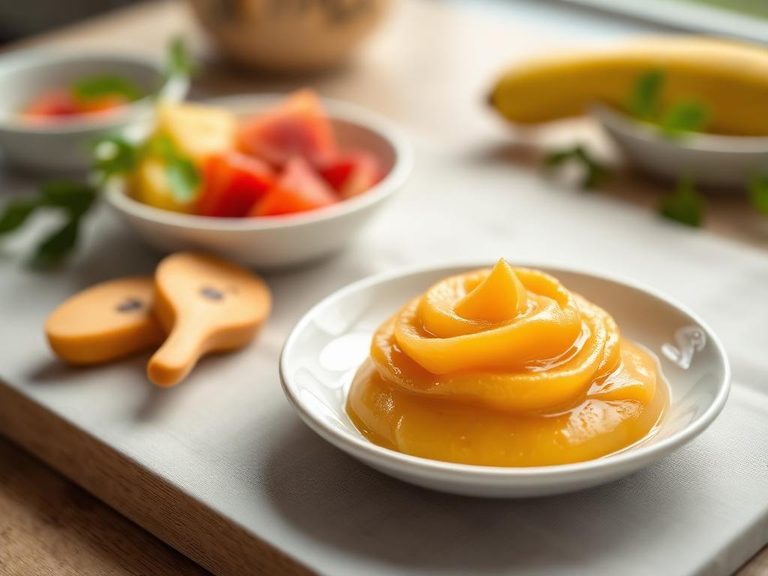
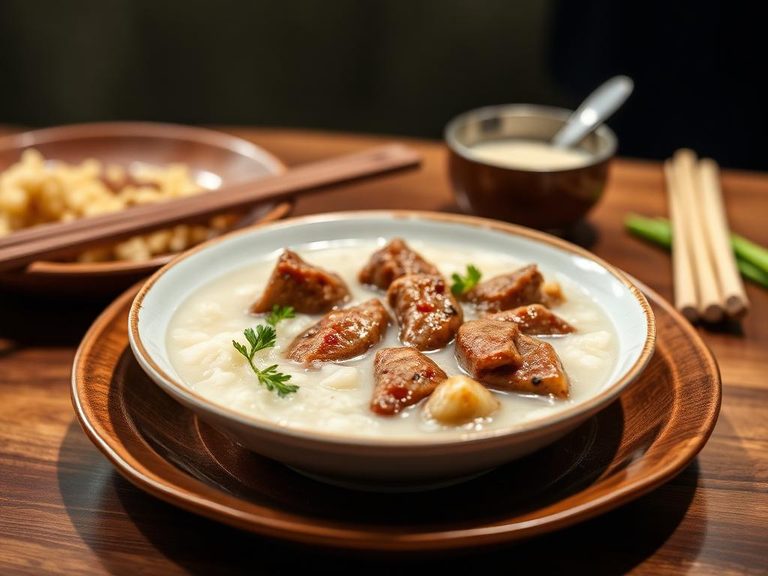
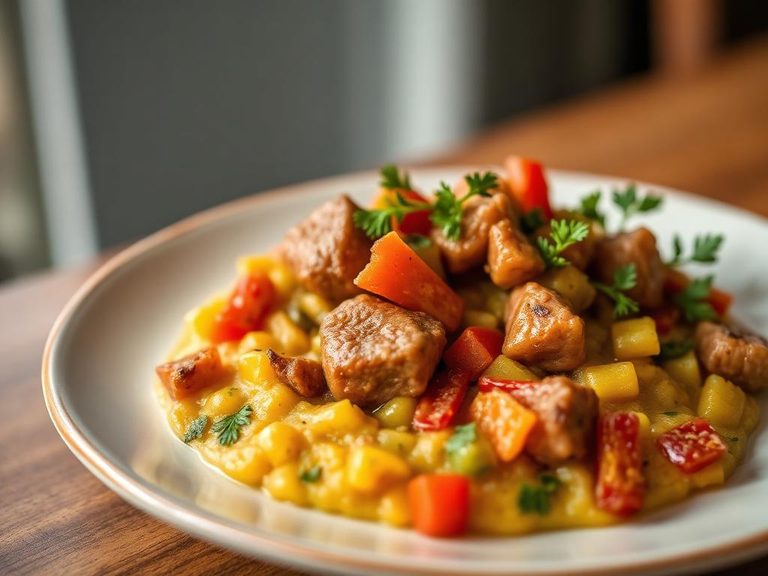
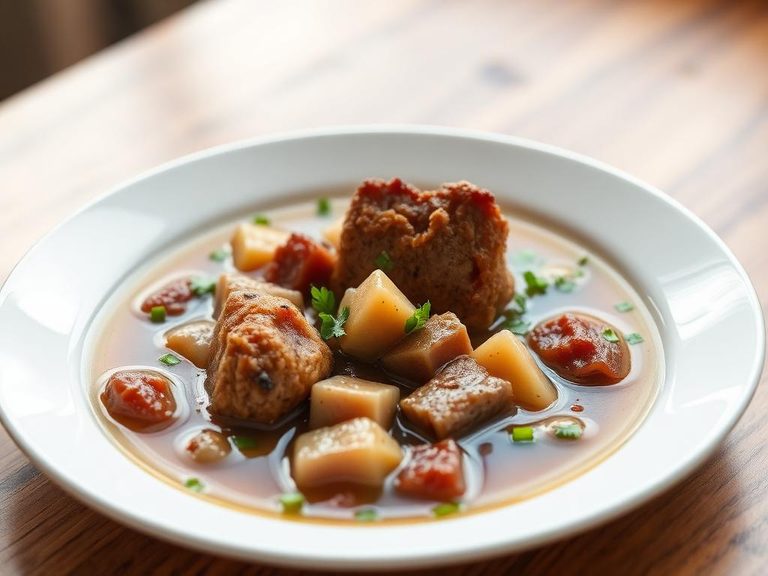
🌍 Where it's eaten
💡 Did you know?
Baby food meat, particularly beef, was one of the first commercially produced, shelf-stable infant foods in the early 20th century, marketed as a convenient way to provide essential iron to babies before the widespread use of iron-fortified cereals.
Full nutrition (USDA data · scales with serving)
| Water | 82.4 g |
| Energy | 81.0 kcal |
| Energy | 337 kj |
| Protein | 12.0 g |
| Total lipid (fat) | 2.5 g |
| Ash | 0.57 g |
| Carbohydrate, by difference | 2.4 g |
| Fiber, total dietary | 0.00 g |
| Total Sugars | 0.00 g |
| Calcium, Ca | 5.0 mg |
| Iron, Fe | 0.98 mg |
| Magnesium, Mg | 11.0 mg |
| Phosphorus, P | 93.0 mg |
| Potassium, K | 187 mg |
| Sodium, Na | 41.0 mg |
| Zinc, Zn | 2.2 mg |
| Copper, Cu | 0.15 mg |
| Manganese, Mn | 0.04 mg |
| Selenium, Se | 2.9 ug |
| Fluoride, F | 2.1 ug |
| Vitamin C, total ascorbic acid | 2.1 mg |
| Thiamin | 0.01 mg |
| Riboflavin | 0.14 mg |
| Niacin | 2.5 mg |
| Pantothenic acid | 0.08 mg |
| Vitamin B-6 | 0.04 mg |
| Folate, total | 8.0 ug |
| Folic acid | 0.00 ug |
| Folate, food | 8.0 ug |
| Folate, DFE | 8.0 ug |
| Choline, total | 37.6 mg |
| Betaine | 3.1 mg |
| Vitamin B-12 | 1.3 ug |
| Vitamin B-12, added | 0.00 ug |
| Vitamin A, RAE | 0.00 ug |
| Retinol | 0.00 ug |
| Carotene, beta | 0.00 ug |
| Carotene, alpha | 0.00 ug |
| Cryptoxanthin, beta | 0.00 ug |
| Vitamin A, IU | 0.00 iu |
| Lycopene | 0.00 ug |
| Lutein + zeaxanthin | 0.00 ug |
| Vitamin E (alpha-tocopherol) | 0.37 mg |
| Vitamin E, added | 0.00 mg |
| Tocopherol, beta | 0.00 mg |
| Tocopherol, gamma | 0.00 mg |
| Tocopherol, delta | 0.00 mg |
| Tocotrienol, alpha | 0.04 mg |
| Tocotrienol, beta | 0.00 mg |
| Tocotrienol, gamma | 0.00 mg |
| Tocotrienol, delta | 0.00 mg |
| Vitamin D (D2 + D3), International Units | 15.0 iu |
| Vitamin D (D2 + D3) | 0.40 ug |
| Vitamin K (phylloquinone) | 0.60 ug |
| Vitamin K (Dihydrophylloquinone) | 0.00 ug |
| Vitamin K (Menaquinone-4) | 1.0 ug |
| Alcohol, ethyl | 0.00 g |
| Caffeine | 0.00 mg |
| Theobromine | 0.00 mg |
Fat & fatty acid profile (per 100g)
| Fatty acids, total saturated | 1.2 g |
| SFA 4:0 | 0.00 g |
| SFA 6:0 | 0.00 g |
| SFA 8:0 | 0.00 g |
| SFA 10:0 | 0.00 g |
| SFA 12:0 | 0.00 g |
| SFA 14:0 | 0.06 g |
| SFA 15:0 | 0.01 g |
| SFA 16:0 | 0.53 g |
| SFA 17:0 | 0.04 g |
| SFA 18:0 | 0.54 g |
| SFA 20:0 | 0.00 g |
| SFA 22:0 | 0.00 g |
| SFA 24:0 | 0.00 g |
| Fatty acids, total monounsaturated | 0.95 g |
| MUFA 14:1 | 0.00 g |
| MUFA 15:1 | 0.00 g |
| MUFA 16:1 | 0.07 g |
| MUFA 17:1 | 0.02 g |
| MUFA 18:1 | 0.86 g |
| MUFA 20:1 | 0.00 g |
| MUFA 22:1 | 0.00 g |
| MUFA 24:1 c | 0.00 g |
| Fatty acids, total polyunsaturated | 0.16 g |
| PUFA 18:2 | 0.09 g |
| PUFA 18:3 | 0.04 g |
| PUFA 18:4 | 0.02 g |
| PUFA 20:2 n-6 c,c | 0.00 g |
| PUFA 20:3 | 0.00 g |
| PUFA 20:4 | 0.01 g |
| PUFA 20:5 n-3 (EPA) | 0.00 g |
| PUFA 21:5 | 0.00 g |
| PUFA 22:4 | 0.00 g |
| PUFA 22:5 n-3 (DPA) | 0.00 g |
| PUFA 22:6 n-3 (DHA) | 0.00 g |
| Cholesterol | 51.0 mg |
Amino acid profile (per 100g)
Estimated from Babyfood, grape juice, no sugar, canned — USDA does not publish this profile for Babyfood.
| Threonine | 0.02 g |
| Isoleucine | 0.01 g |
| Leucine | 0.02 g |
| Lysine | 0.02 g |
| Methionine | 0.03 g |
| Cystine | 0.01 g |
| Phenylalanine | 0.02 g |
| Tyrosine | 0.02 g |
| Valine | 0.02 g |
| Arginine | 0.06 g |
| Histidine | 0.03 g |
| Alanine | 0.04 g |
| Aspartic acid | 0.10 g |
| Glutamic acid | 0.18 g |
| Glycine | 0.03 g |
| Proline | 0.03 g |
| Serine | 0.04 g |
FAQ
Is this baby food safe for a 6-month-old?
Yes, this type of pureed meat is typically introduced around 6 months of age, as it is a single-ingredient, smooth-textured food that provides important nutrients like iron. Always consult your pediatrician before introducing new foods.
How does the nutrition compare to regular ground beef?
This baby food version is much leaner and has a higher protein-to-fat ratio, with significantly fewer calories and less fat per 100g than typical ground beef, making it more concentrated in protein.
Can I mix this with other baby foods?
Absolutely. It is commonly mixed with vegetable purees (like carrot or pea) or infant cereal to create a more balanced meal and introduce different flavors and textures.
Nutrient density (calculated · NRF9.3)
Nutrient Rich Foods index: beneficial nutrients (protein, fiber, vitamins, minerals) minus saturated fat, added sugar & sodium, per 100 kcal.
NRF9.3 index — Fulgoni, Keast & Drewnowski, 2009. Computed from USDA nutrients.
Weight-loss friendliness (composite index)
Energy density 0.81 kcal/g · 59% calories from protein · 0.0 g fiber · 0.0 g sugar per 100 g.
Composite of energy density (Rolls et al., 1999), protein & fiber satiety, minus sugar. A calculated heuristic — ranks satiety-per-calorie, not a clinical measure.
Dietary load (calculated from USDA values)
Potential renal acid load. Positive = acid-forming, negative = alkaline-forming.
Sodium-to-potassium ratio: 0.22 (lower is better — aim for ≤ 1)
Sodium:potassium per WHO potassium guidance. Computed from USDA nutrients.