

Baby food puree
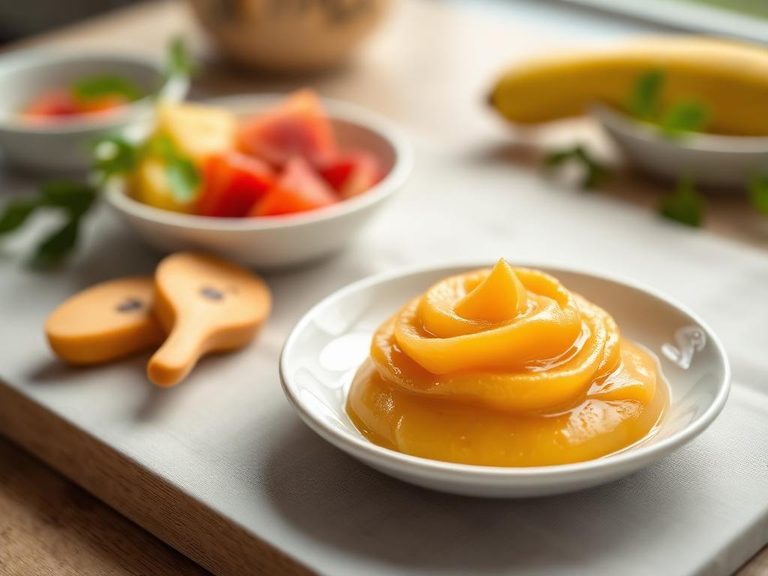
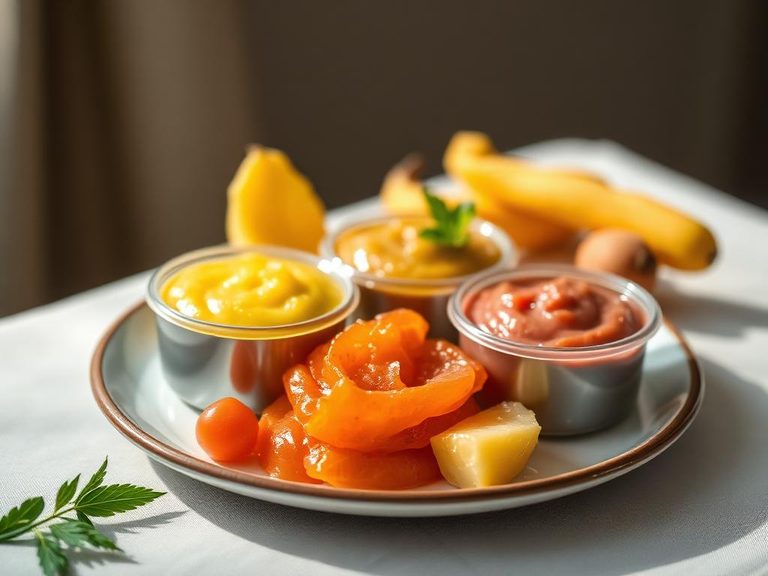
Baby food puree is a smooth, semi-liquid food specifically prepared for infants transitioning to solid foods, typically made from single or blended ingredients like fruits, vegetables, grains, or meats. It is a global staple in infant nutrition, with its origins tied to the universal practice of weaning babies from milk onto more varied diets.
🍽️ Nutrition at a glance
The nutritional profile varies widely by recipe, but it is generally designed to be easily digestible and nutrient-dense, often fortified with iron and other essential vitamins. A typical single-serving jar or pouch (around 4-6 oz) provides approximately 50-100 calories, with a balance of carbohydrates for energy and small amounts of protein or fat depending on the ingredients.
Nutrition breakdown
| Calories | 70 kcal |
| Protein | 1 g |
| Carbs | 15 g |
| Fat | 0.5 g |
| Fiber | 2 g |
| Sugar | 10 g |
| Sodium | 10 mg |
| Vitamin A | 150 mcg RAE |
| Vitamin C | 15 mg |
| Vitamin E | 0.8 mg |
| Vitamin B6 | 0.1 mg |
| Folate | 30 mcg DFE |
| Calcium | 20 mg |
| Iron | 0.5 mg |
| Potassium | 180 mg |
Per 1 jar (113 g) · estimated, varies by recipe
💡 What's interesting
Culturally, the practice of mashing or pureeing food for babies is ancient and universal, reflecting a shared human understanding of infant developmental needs. Nutritionally, it's unique because it's one of the few foods specifically engineered for a specific, temporary life stage, prioritizing safety, digestibility, and nutrient absorption over flavor complexity.
🍽️ Related dishes
AI estimate may be inaccurate · Terms