First-stage baby food puree
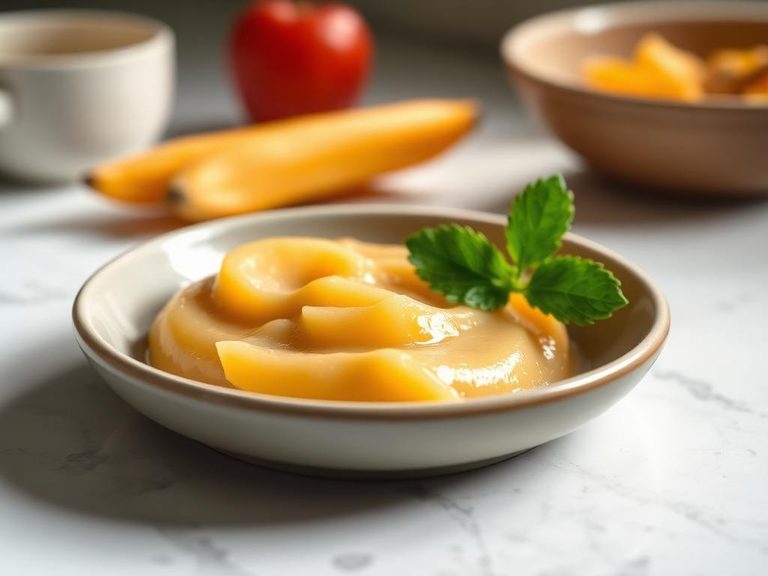
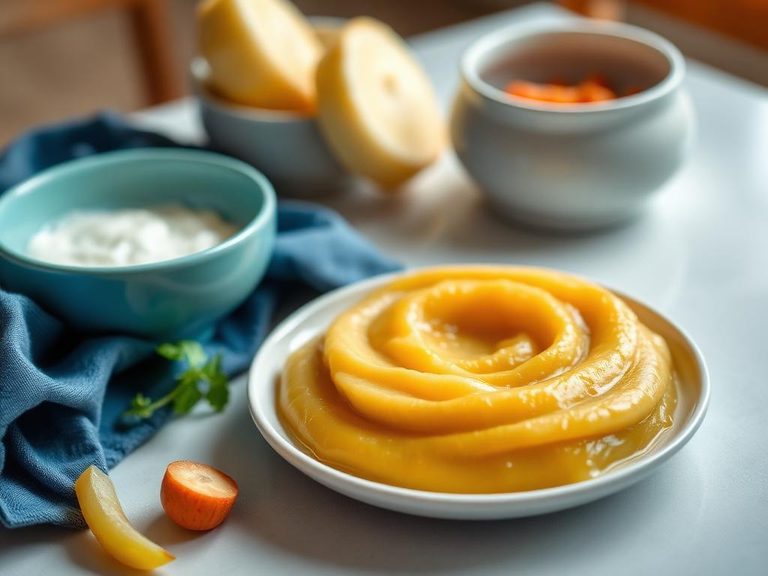
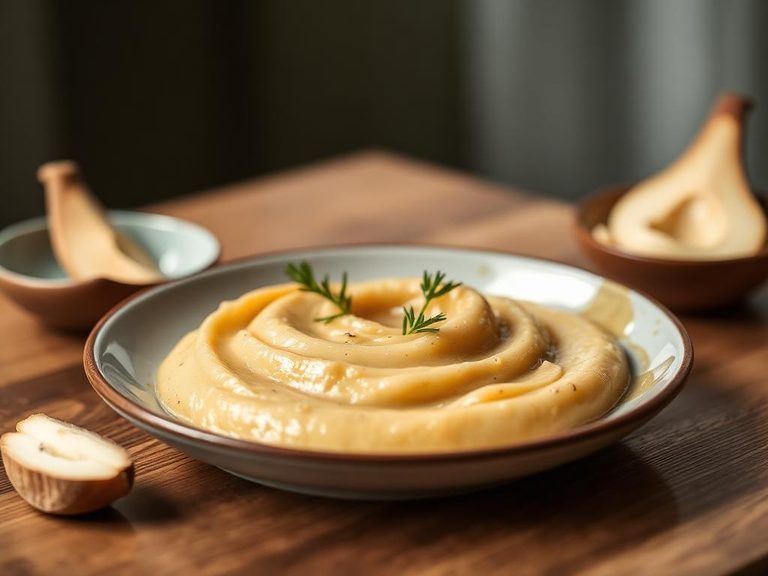
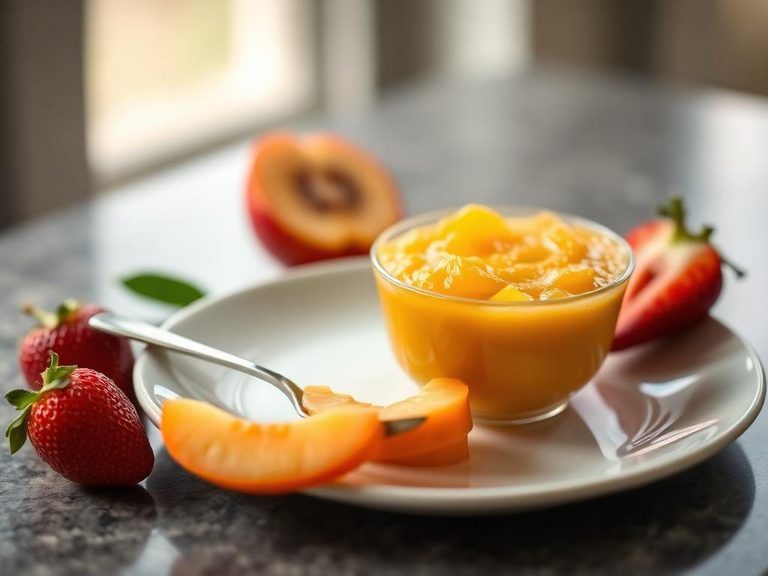
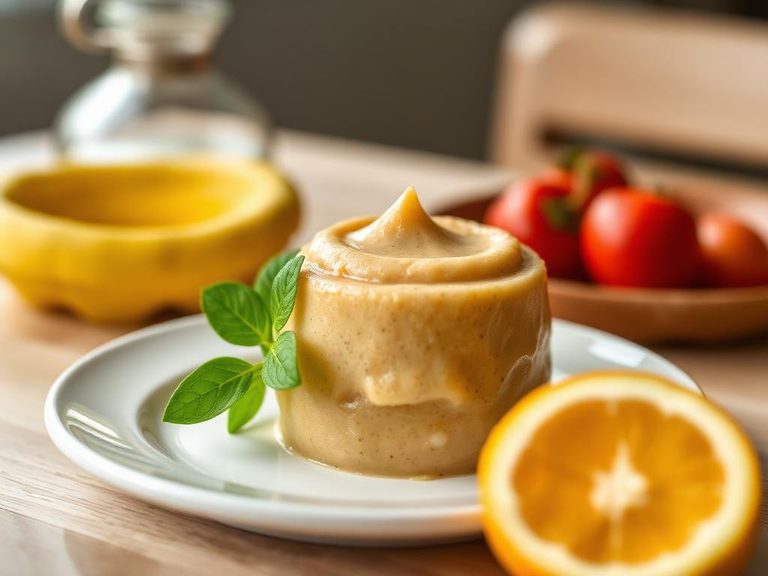
First-stage baby food puree is a smooth, thin, easily swallowable single-ingredient blend designed for infants aged 4–6 months who are just starting solid foods. Common base ingredients include sweet potato, apple, pear, carrot, or banana, processed into a silky, lump-free consistency. Originating from modern infant nutrition practices popularized across the U.S. and Europe, it has become a global staple in early childhood feeding.
🍽️ Nutrition at a glance
First-stage puree is naturally low in fat and protein while being higher in simple carbohydrates from natural fruit and vegetable sugars. It provides key micronutrients like Vitamin A, Vitamin C, potassium, and iron in small but important amounts for developing infants, with a rough estimate of 60–80 calories per standard 4 oz (113g) serving.
Nutrition breakdown
| Calories | 70 kcal |
| Protein | 1 g |
| Carbs | 17 g |
| Fat | 0 g |
| Fiber | 2 g |
| Sugar | 5 g |
| Sodium | 30 mg |
| Vitamin A | 500 IU |
| Vitamin C | 4 mg |
| Potassium | 280 mg |
| Calcium | 20 mg |
| Iron | 1 mg |
| Vitamin B6 | 0.1 mg |
| Manganese | 0.2 mg |
| Folate | 12 mcg |
Per 1 jar/container (113 g / 4 oz) · estimated, varies by recipe
💡 What's interesting
What makes first-stage baby food unique is that it serves as a baby's very first encounter with non-milk food, making it a developmental milestone in almost every culture. Nutritionally, it is intentionally stripped of added salt, sugar, and allergens to protect delicate infant digestive systems, reflecting a modern medical understanding of early infant nutrition.