

Pear, raw
Common food
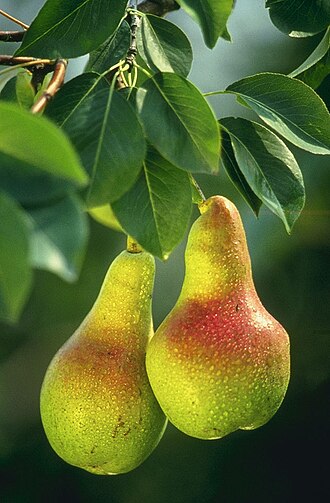
Photo: Wikipedia
A crisp, juicy pome fruit with a granular, slightly grainy texture and a sweet, subtly floral flavor. Nutritionally, it's a light, hydrating snack, notable for its low calorie count and good fiber content relative to its size.
Calorie split: 2% protein · 96% carbs · 2% fat
↓ Full nutrition💚 Why it's loved
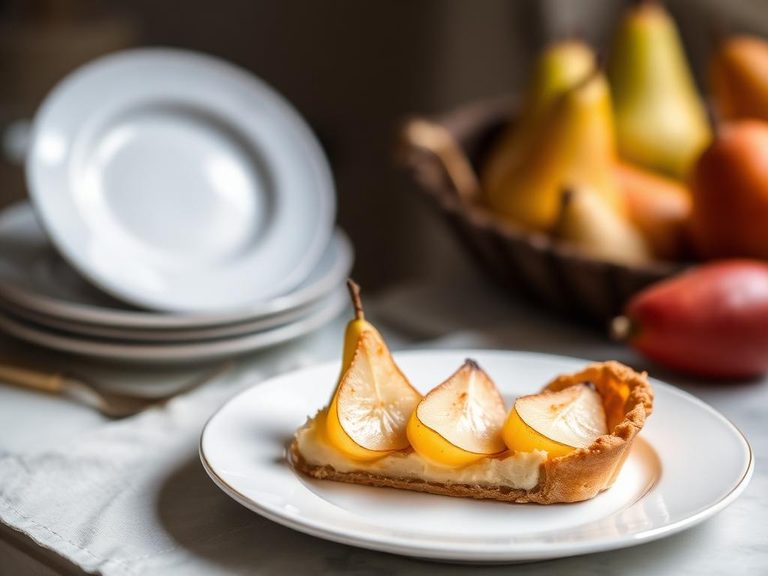
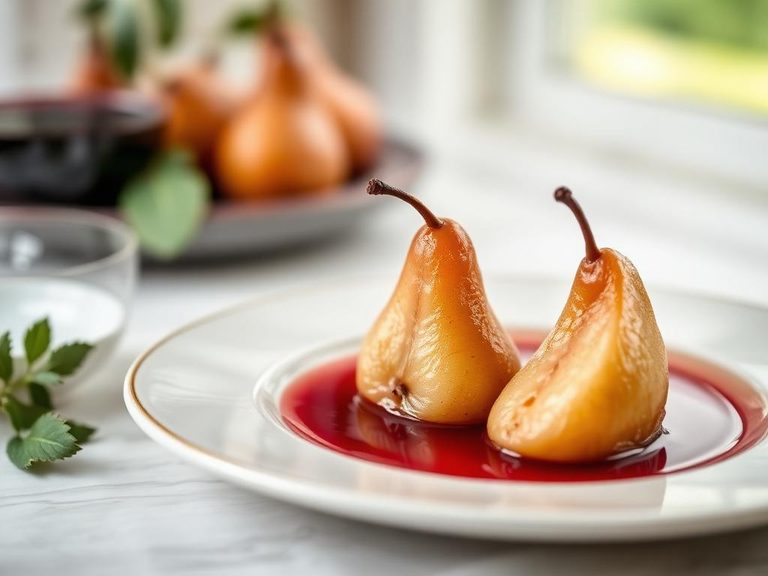
People adore its refreshing, clean sweetness and satisfying crunch, making it a perfect on-the-go snack. Its versatility shines in both raw preparations and cooked desserts, from simple slices to elegant tarts.
⚠️ Watch-outs & how to enjoy it better
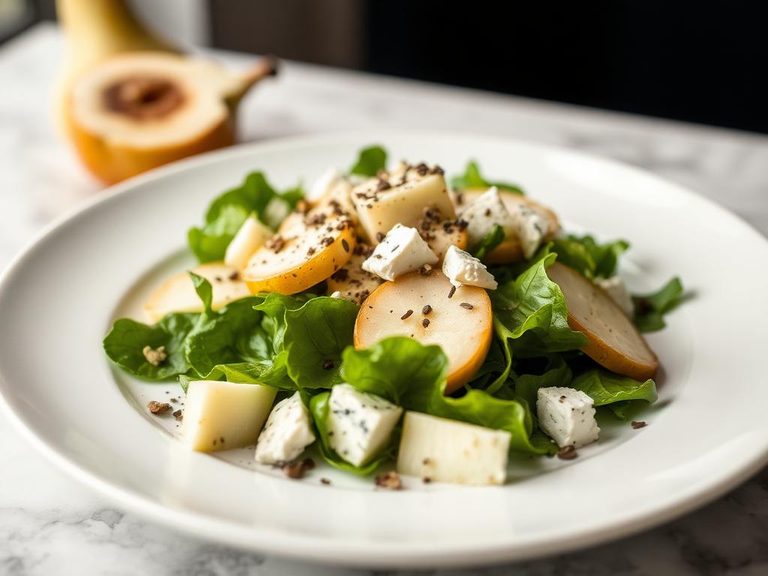
Its high natural sugar content (9.73g per 100g) can cause blood-sugar spikes if eaten in large quantities alone. To counteract this, pair it with a source of protein or fat, like a handful of nuts or a slice of cheese, to slow sugar absorption.
Key benefits
- Low-calorie, hydrating snack
- Good source of dietary fiber (3.1g per 100g)
- Contains vitamin C and potassium
- Naturally fat-free and cholesterol-free
- Provides quick, natural energy from sugars
🍽️ Popular dishes
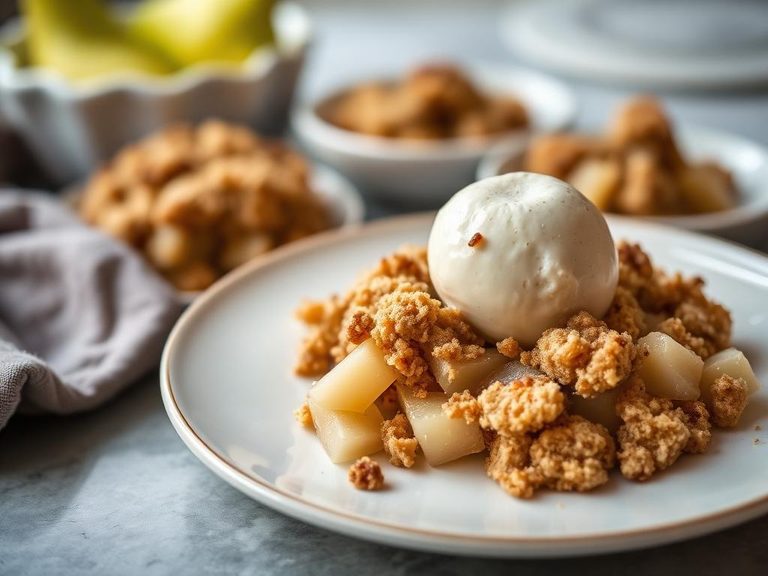
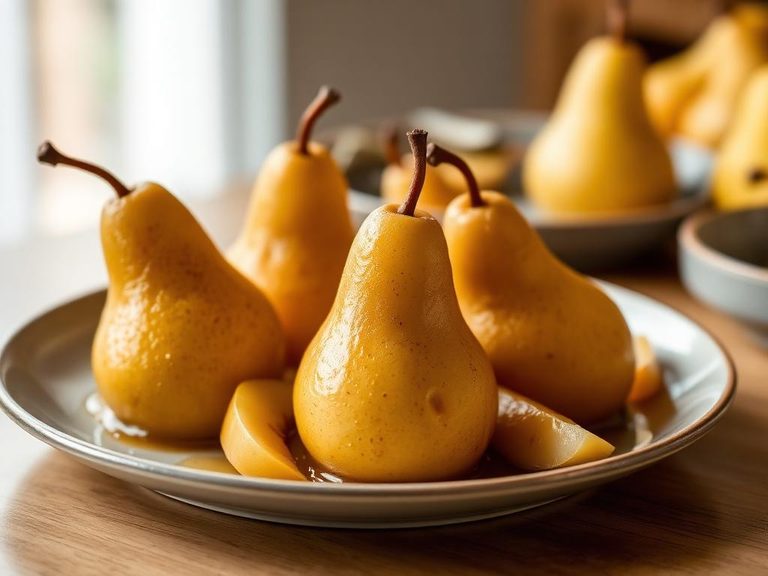
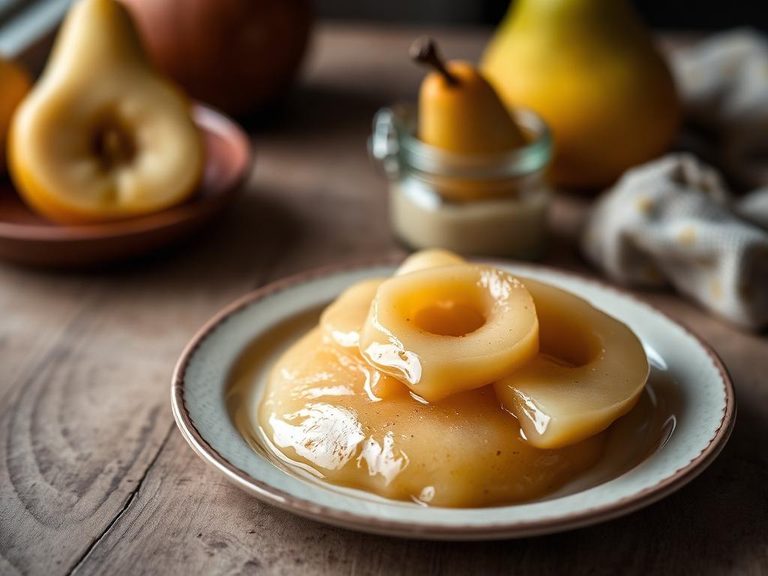
🌍 Where it's eaten
💡 Did you know?
The gritty texture in some pear varieties comes from clusters of stone cells called sclereids, which are not a defect but a natural part of the fruit's structure.
Full nutrition (USDA data · scales with serving)
| Water | 84.0 g |
| Energy | 59.0 kcal |
| Protein | 0.37 g |
| Total lipid (fat) | 0.15 g |
| Carbohydrate, by difference | 15.2 g |
| Fiber, total dietary | 3.1 g |
| Total Sugars | 9.7 g |
| Calcium, Ca | 9.0 mg |
| Iron, Fe | 0.18 mg |
| Magnesium, Mg | 7.0 mg |
| Phosphorus, P | 11.0 mg |
| Potassium, K | 104 mg |
| Sodium, Na | 3.0 mg |
| Zinc, Zn | 0.09 mg |
| Copper, Cu | 0.08 mg |
| Selenium, Se | 0.10 ug |
| Vitamin C, total ascorbic acid | 4.3 mg |
| Thiamin | 0.01 mg |
| Riboflavin | 0.03 mg |
| Niacin | 0.16 mg |
| Vitamin B-6 | 0.03 mg |
| Folate, total | 7.0 ug |
| Folic acid | 0.00 ug |
| Folate, food | 7.0 ug |
| Folate, DFE | 7.0 ug |
| Choline, total | 5.1 mg |
| Vitamin B-12 | 0.00 ug |
| Vitamin B-12, added | 0.00 ug |
| Vitamin A, RAE | 1.0 ug |
| Retinol | 0.00 ug |
| Carotene, beta | 12.0 ug |
| Carotene, alpha | 1.0 ug |
| Cryptoxanthin, beta | 2.0 ug |
| Lycopene | 0.00 ug |
| Lutein + zeaxanthin | 46.0 ug |
| Vitamin E (alpha-tocopherol) | 0.12 mg |
| Vitamin E, added | 0.00 mg |
| Vitamin D (D2 + D3) | 0.00 ug |
| Vitamin K (phylloquinone) | 4.2 ug |
| Alcohol, ethyl | 0.00 g |
| Caffeine | 0.00 mg |
| Theobromine | 0.00 mg |
Fat & fatty acid profile (per 100g)
| Fatty acids, total saturated | 0.02 g |
| SFA 4:0 | 0.00 g |
| SFA 6:0 | 0.00 g |
| SFA 8:0 | 0.00 g |
| SFA 10:0 | 0.00 g |
| SFA 12:0 | 0.00 g |
| SFA 14:0 | 0.00 g |
| SFA 16:0 | 0.02 g |
| SFA 18:0 | 0.00 g |
| Fatty acids, total monounsaturated | 0.08 g |
| MUFA 16:1 | 0.00 g |
| MUFA 18:1 | 0.08 g |
| MUFA 20:1 | 0.00 g |
| MUFA 22:1 | 0.00 g |
| Fatty acids, total polyunsaturated | 0.09 g |
| PUFA 18:2 | 0.09 g |
| PUFA 18:3 | 0.00 g |
| PUFA 18:4 | 0.00 g |
| PUFA 20:4 | 0.00 g |
| PUFA 20:5 n-3 (EPA) | 0.00 g |
| PUFA 22:5 n-3 (DPA) | 0.00 g |
| PUFA 22:6 n-3 (DHA) | 0.00 g |
| Cholesterol | 0.00 mg |
Amino acid profile (per 100g)
Estimated from Pears, canned, juice pack, solids and liquids — USDA does not publish this profile for Pear.
| Threonine | 0.01 g |
| Isoleucine | 0.01 g |
| Leucine | 0.02 g |
| Lysine | 0.01 g |
| Methionine | 0.00 g |
| Cystine | 0.00 g |
| Phenylalanine | 0.01 g |
| Tyrosine | 0.00 g |
| Valine | 0.01 g |
| Arginine | 0.01 g |
| Histidine | 0.00 g |
| Alanine | 0.01 g |
| Aspartic acid | 0.07 g |
| Glutamic acid | 0.03 g |
| Glycine | 0.01 g |
| Proline | 0.01 g |
| Serine | 0.01 g |
FAQ
Why are some pears gritty and others smooth?
The gritty texture comes from stone cells (sclereids). Some varieties, like Bartlett, have fewer, while others, like Bosc, are naturally more gritty. It's a textural characteristic, not a sign of being overripe.
How do I ripen a pear at home?
Most pears are picked firm and ripen off the tree. Leave them at room temperature. To speed ripening, place them in a paper bag with an apple or banana, which releases ethylene gas. They're ready when the neck yields to gentle pressure.
Are the brown spots inside a pear safe to eat?
Yes, the small brown specks are the same stone cells that cause grittiness and are perfectly edible. Larger brown, mushy areas, however, indicate bruising or decay and should be cut away.
Nutrient density (calculated · NRF9.3)
Nutrient Rich Foods index: beneficial nutrients (protein, fiber, vitamins, minerals) minus saturated fat, added sugar & sodium, per 100 kcal.
NRF9.3 index — Fulgoni, Keast & Drewnowski, 2009. Computed from USDA nutrients.
Weight-loss friendliness (composite index)
Energy density 0.59 kcal/g · 3% calories from protein · 3.1 g fiber · 9.7 g sugar per 100 g.
Composite of energy density (Rolls et al., 1999), protein & fiber satiety, minus sugar. A calculated heuristic — ranks satiety-per-calorie, not a clinical measure.
Dietary load (calculated from USDA values)
Potential renal acid load. Positive = acid-forming, negative = alkaline-forming.
Sodium-to-potassium ratio: 0.03 (lower is better — aim for ≤ 1)
Sodium:potassium per WHO potassium guidance. Computed from USDA nutrients.