

Pears, raw, bartlett (Includes foods for USDA's Food Distribution Program)
Whole food · Fruits and Fruit Juices
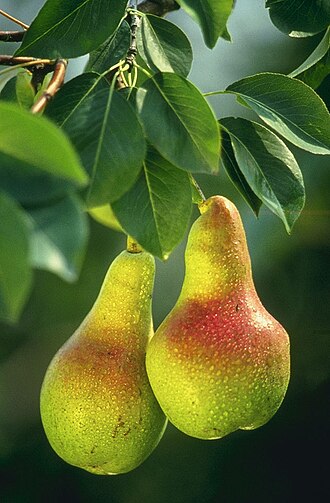
Photo: Wikipedia
The Bartlett pear is the quintessential American pear, prized for its classic teardrop shape and smooth, green-to-yellow skin. When perfectly ripe, its flesh is exceptionally juicy, buttery, and aromatic with a sweet, floral flavor. Nutritionally, it's a low-calorie, fiber-rich fruit that provides a satisfying, naturally sweet snack.
Calorie split: 2% protein · 95% carbs · 2% fat
↓ Full nutrition💚 Why it's loved
People adore the Bartlett for its intensely fragrant aroma and melt-in-your-mouth texture when ripe, making it a favorite for fresh eating. Its classic pear flavor and versatility in both sweet and savory dishes have made it a staple in home kitchens and orchards for generations.
⚠️ Watch-outs & how to enjoy it better
The high natural sugar content (9.69g per 100g) can cause blood-sugar spikes if eaten in large quantities, particularly for those managing diabetes. To mitigate this, pair it with a source of protein or healthy fat, like a handful of nuts or a slice of cheese, to slow sugar absorption. Also, be mindful of portion size, as the soft texture can make it easy to overconsume.
Key benefits
- Excellent source of dietary fiber for digestive health
- Low in calories and fat, aiding weight management
- Provides natural sugars for quick energy
- Rich in vitamin C and potassium
- Contains antioxidants like flavonoids
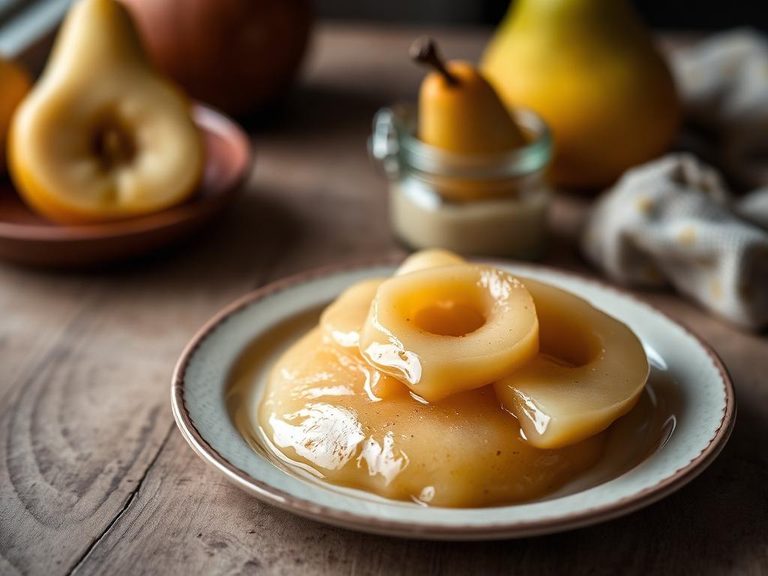
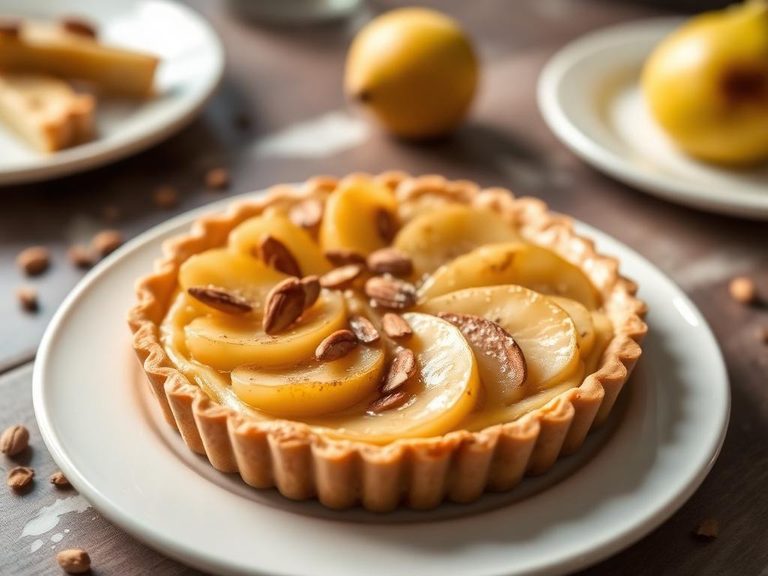
🍽️ Popular dishes
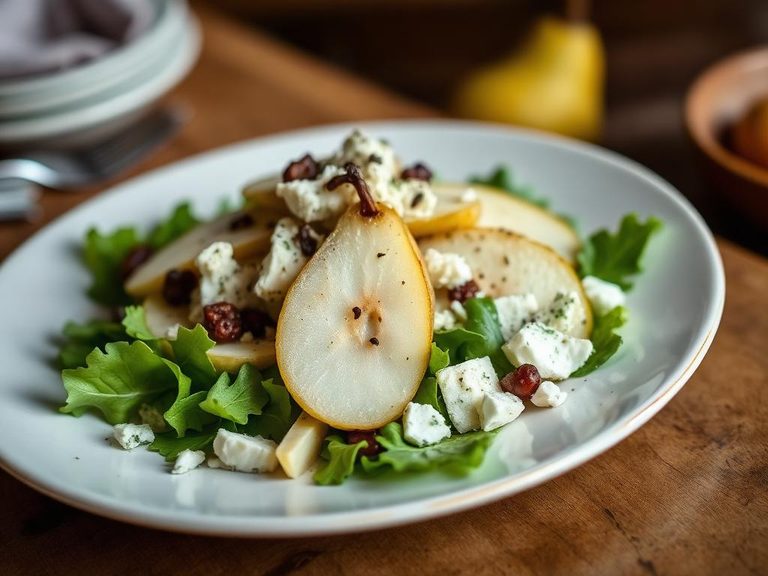
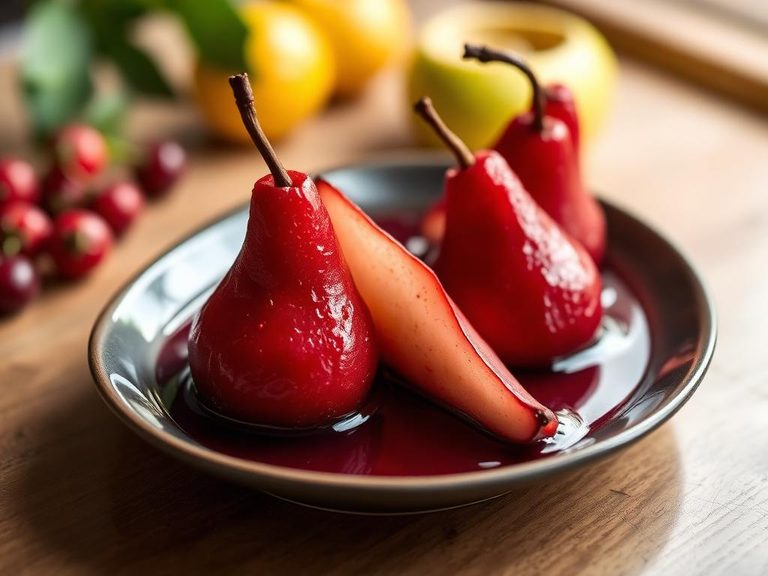
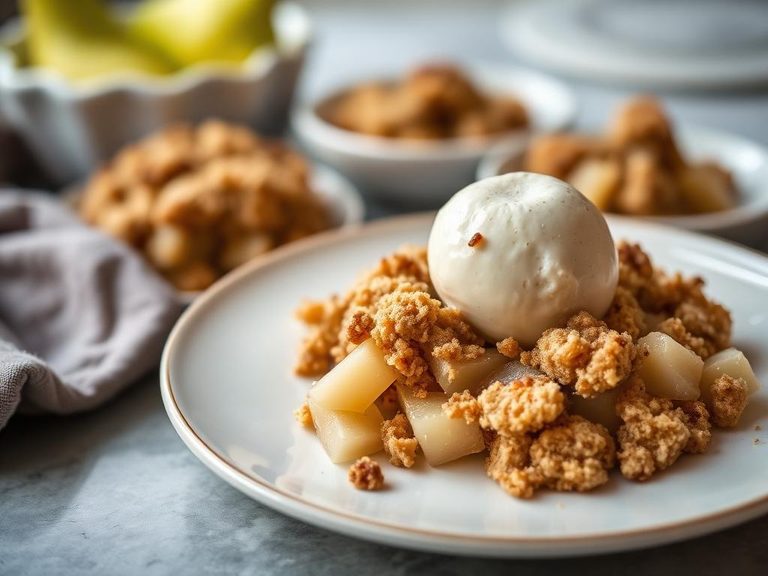
🌍 Where it's eaten
💡 Did you know?
The Bartlett pear is the most common pear variety in the United States and is actually the same cultivar as the Williams pear, which is the dominant variety in Europe and much of the world.
Full nutrition (USDA data · scales with serving)
| Water | 84.1 g |
| Energy | 63.0 kcal |
| Energy | 264 kj |
| Protein | 0.39 g |
| Total lipid (fat) | 0.16 g |
| Ash | 0.30 g |
| Carbohydrate, by difference | 15.0 g |
| Fiber, total dietary | 3.1 g |
| Total Sugars | 9.7 g |
| Sucrose | 0.43 g |
| Glucose | 2.5 g |
| Fructose | 6.8 g |
| Lactose | 0.00 g |
| Maltose | 0.00 g |
| Galactose | 0.00 g |
| Calcium, Ca | 9.0 mg |
| Iron, Fe | 0.19 mg |
| Magnesium, Mg | 6.0 mg |
| Phosphorus, P | 11.0 mg |
| Potassium, K | 101 mg |
| Sodium, Na | 1.0 mg |
| Zinc, Zn | 0.08 mg |
| Copper, Cu | 0.08 mg |
| Manganese, Mn | 0.04 mg |
| Selenium, Se | 0.10 ug |
| Vitamin C, total ascorbic acid | 4.4 mg |
| Thiamin | 0.01 mg |
| Riboflavin | 0.03 mg |
| Niacin | 0.16 mg |
| Pantothenic acid | 0.04 mg |
| Vitamin B-6 | 0.03 mg |
| Folate, total | 6.0 ug |
| Folate, food | 6.0 ug |
| Choline, total | 5.1 mg |
| Vitamin A, RAE | 1.0 ug |
| Carotene, beta | 14.0 ug |
| Carotene, alpha | 2.0 ug |
| Cryptoxanthin, beta | 3.0 ug |
| Vitamin A, IU | 28.0 iu |
| Lycopene | 0.00 ug |
| Lutein + zeaxanthin | 51.0 ug |
| Vitamin E (alpha-tocopherol) | 0.12 mg |
| Vitamin K (phylloquinone) | 3.8 ug |
| Vitamin K (Dihydrophylloquinone) | 0.00 ug |
Fat & fatty acid profile (per 100g)
| Fatty acids, total trans | 0.00 g |
Amino acid profile (per 100g)
| Tryptophan | 0.00 g |
| Threonine | 0.01 g |
| Isoleucine | 0.01 g |
| Leucine | 0.02 g |
| Lysine | 0.02 g |
| Methionine | 0.00 g |
| Cystine | 0.00 g |
| Phenylalanine | 0.01 g |
| Tyrosine | 0.00 g |
| Valine | 0.02 g |
| Arginine | 0.01 g |
| Histidine | 0.00 g |
| Alanine | 0.01 g |
| Aspartic acid | 0.11 g |
| Glutamic acid | 0.03 g |
| Glycine | 0.01 g |
| Proline | 0.02 g |
| Serine | 0.02 g |
FAQ
How do I know when a Bartlett pear is ripe?
A ripe Bartlett will yield slightly to gentle pressure near the stem and have a sweet, floral fragrance. The skin color will also change from green to yellow. If it's hard, let it ripen at room temperature for a few days.
Can I eat the skin of a Bartlett pear?
Yes, the skin is edible and contains a significant portion of the pear's fiber and antioxidants. Simply wash it well before eating.
How should I store Bartlett pears?
Store unripe pears at room temperature. Once ripe, they can be refrigerated for 3-5 days to slow further ripening. Do not store them near ethylene-producing fruits like apples or bananas, as this will speed up ripening.
Nutrient density (calculated · NRF9.3)
Nutrient Rich Foods index: beneficial nutrients (protein, fiber, vitamins, minerals) minus saturated fat, added sugar & sodium, per 100 kcal.
NRF9.3 index — Fulgoni, Keast & Drewnowski, 2009. Computed from USDA nutrients.
Weight-loss friendliness (composite index)
Energy density 0.63 kcal/g · 2% calories from protein · 3.1 g fiber · 9.7 g sugar per 100 g.
Composite of energy density (Rolls et al., 1999), protein & fiber satiety, minus sugar. A calculated heuristic — ranks satiety-per-calorie, not a clinical measure.
Dietary load (calculated from USDA values)
Potential renal acid load. Positive = acid-forming, negative = alkaline-forming.
Sodium-to-potassium ratio: 0.01 (lower is better — aim for ≤ 1)
Sodium:potassium per WHO potassium guidance. Computed from USDA nutrients.