

Pears, raw
Whole food · Fruits and Fruit Juices
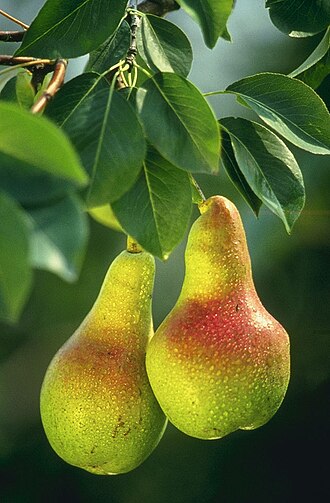
Photo: Wikipedia
A raw pear is a crisp, juicy fruit with a subtly grainy texture and a sweet, floral aroma. Its refreshing, honey-like flavor is balanced by a gentle acidity, making it a hydrating snack. Nutritionally, it's a standout source of dietary fiber, particularly soluble fiber, with very little fat.
Calorie split: 2% protein · 96% carbs · 2% fat
↓ Full nutrition💚 Why it's loved
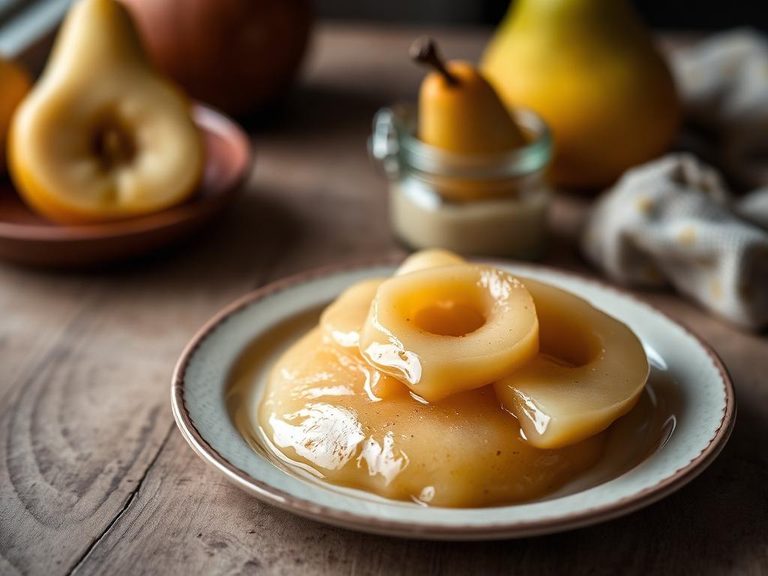
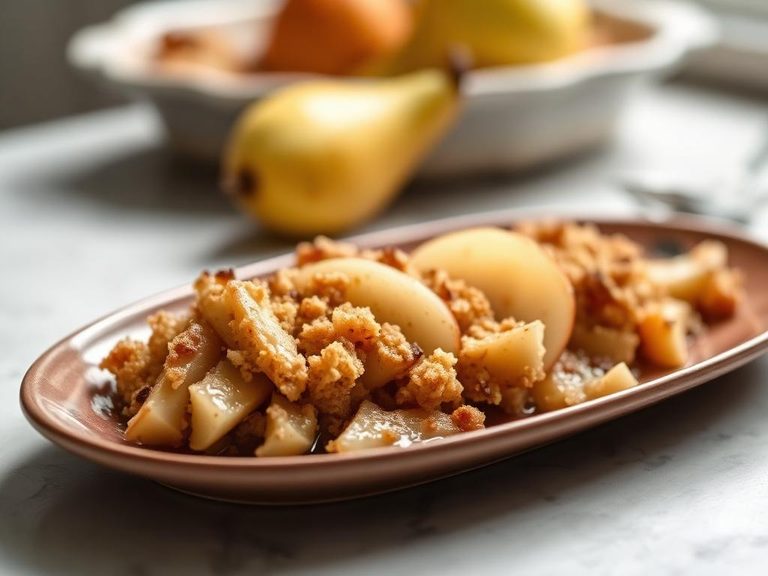
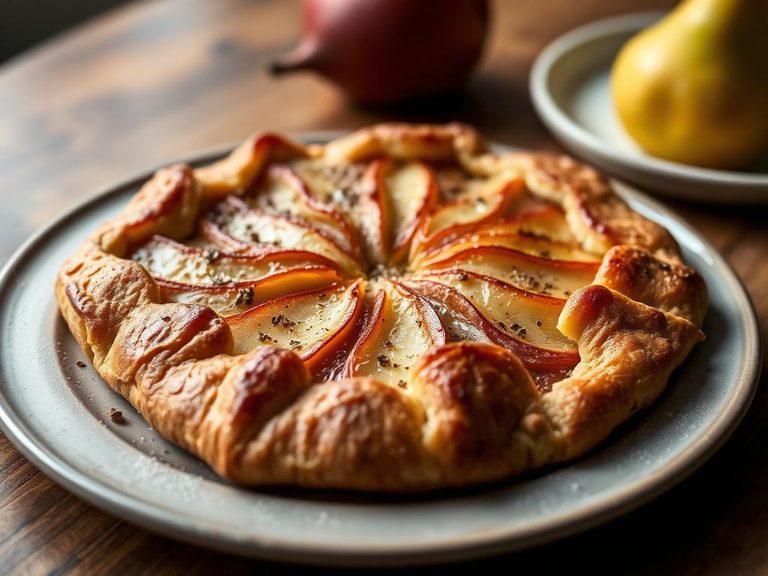
People love pears for their delicate, non-acidic sweetness and satisfying, juicy crunch that softens as they ripen. They are cherished for their versatility, enjoyed fresh, poached, or baked into both rustic and elegant desserts.
⚠️ Watch-outs & how to enjoy it better
The natural sugars (9.75g per 100g) can cause blood-sugar spikes if eaten alone in large quantities. To counteract this, pair a pear with a handful of nuts, cheese, or nut butter to add protein and healthy fats, slowing sugar absorption. Some varieties have tough skin; peeling them can reduce digestive discomfort for sensitive individuals.
Key benefits
- Excellent source of dietary fiber (3.1g per 100g).
- High water content aids hydration.
- Contains natural sugars for quick energy.
- Low in fat and calories.
- Provides vitamin C and potassium.
🍽️ Popular dishes
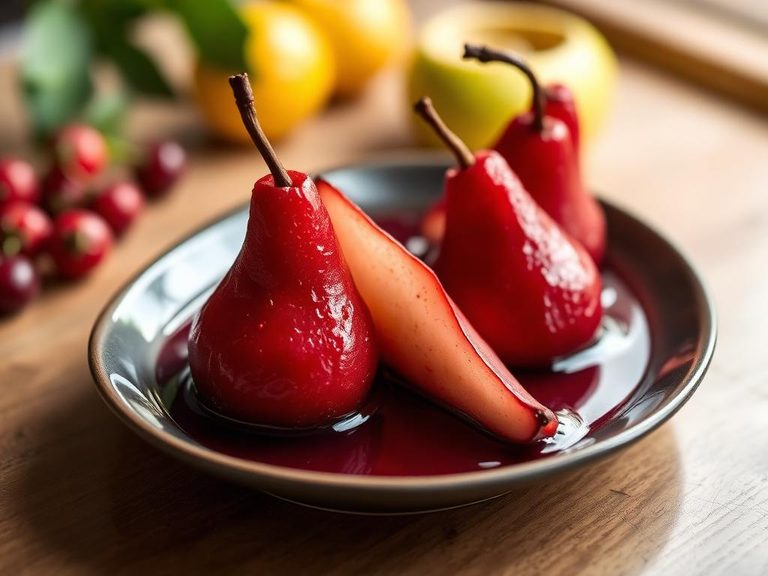
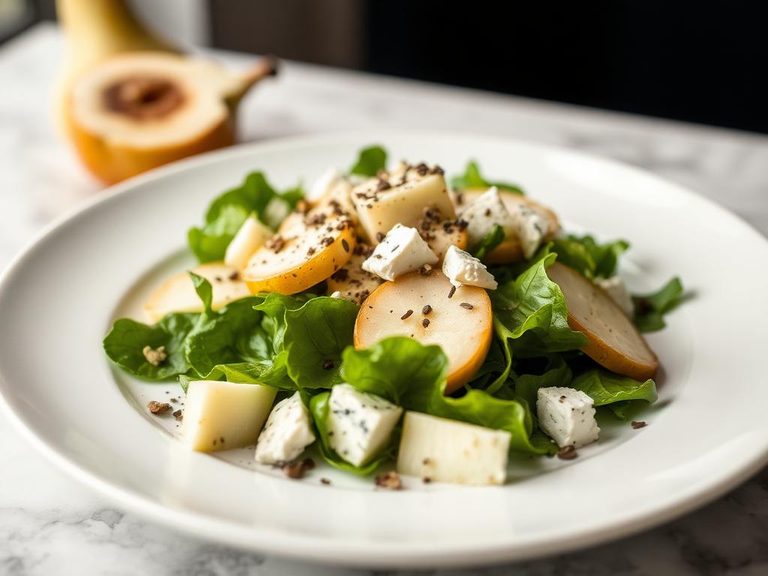
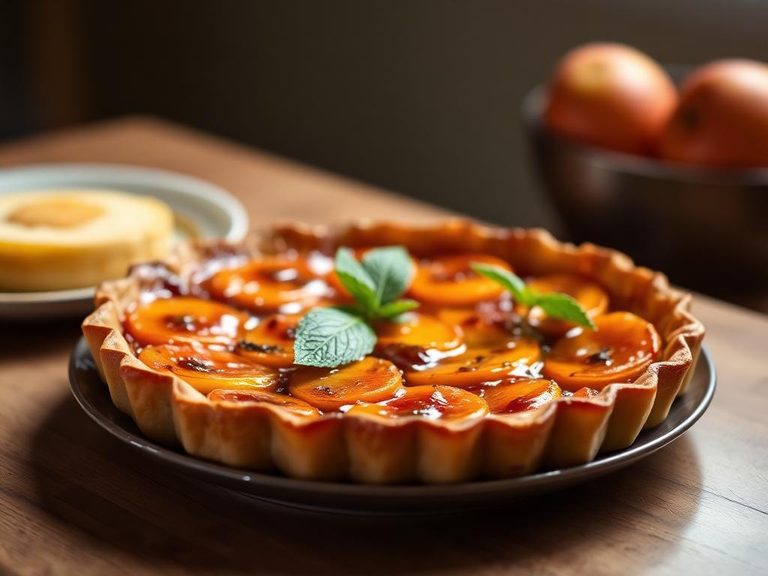
🌍 Where it's eaten
💡 Did you know?
Pears are one of the few fruits that ripen better after being picked, a process called 'climacteric' ripening, which allows them to develop their full sweetness and texture off the tree.
Full nutrition (USDA data · scales with serving)
| Water | 84.0 g |
| Energy | 57.0 kcal |
| Energy | 239 kj |
| Protein | 0.36 g |
| Total lipid (fat) | 0.14 g |
| Ash | 0.32 g |
| Carbohydrate, by difference | 15.2 g |
| Fiber, total dietary | 3.1 g |
| Total Sugars | 9.8 g |
| Sucrose | 0.71 g |
| Glucose | 2.6 g |
| Fructose | 6.4 g |
| Lactose | 0.00 g |
| Maltose | 0.00 g |
| Galactose | 0.00 g |
| Calcium, Ca | 9.0 mg |
| Iron, Fe | 0.18 mg |
| Magnesium, Mg | 7.0 mg |
| Phosphorus, P | 12.0 mg |
| Potassium, K | 116 mg |
| Sodium, Na | 1.0 mg |
| Zinc, Zn | 0.10 mg |
| Copper, Cu | 0.08 mg |
| Manganese, Mn | 0.05 mg |
| Selenium, Se | 0.10 ug |
| Fluoride, F | 2.2 ug |
| Vitamin C, total ascorbic acid | 4.3 mg |
| Thiamin | 0.01 mg |
| Riboflavin | 0.03 mg |
| Niacin | 0.16 mg |
| Pantothenic acid | 0.05 mg |
| Vitamin B-6 | 0.03 mg |
| Folate, total | 7.0 ug |
| Folic acid | 0.00 ug |
| Folate, food | 7.0 ug |
| Folate, DFE | 7.0 ug |
| Choline, total | 5.1 mg |
| Betaine | 0.20 mg |
| Vitamin B-12 | 0.00 ug |
| Vitamin B-12, added | 0.00 ug |
| Vitamin A, RAE | 1.0 ug |
| Retinol | 0.00 ug |
| Carotene, beta | 14.0 ug |
| Carotene, alpha | 1.0 ug |
| Cryptoxanthin, beta | 2.0 ug |
| Vitamin A, IU | 25.0 iu |
| Lycopene | 0.00 ug |
| Lutein + zeaxanthin | 44.0 ug |
| Vitamin E (alpha-tocopherol) | 0.12 mg |
| Vitamin E, added | 0.00 mg |
| Tocopherol, beta | 0.00 mg |
| Tocopherol, gamma | 0.03 mg |
| Tocopherol, delta | 0.00 mg |
| Tocotrienol, alpha | 0.02 mg |
| Tocotrienol, beta | 0.00 mg |
| Tocotrienol, gamma | 0.00 mg |
| Tocotrienol, delta | 0.00 mg |
| Vitamin D (D2 + D3), International Units | 0.00 iu |
| Vitamin D (D2 + D3) | 0.00 ug |
| Vitamin K (phylloquinone) | 4.4 ug |
| Vitamin K (Dihydrophylloquinone) | 0.00 ug |
| Alcohol, ethyl | 0.00 g |
| Caffeine | 0.00 mg |
| Theobromine | 0.00 mg |
Fat & fatty acid profile (per 100g)
| Fatty acids, total saturated | 0.02 g |
| SFA 4:0 | 0.00 g |
| SFA 6:0 | 0.00 g |
| SFA 8:0 | 0.00 g |
| SFA 10:0 | 0.00 g |
| SFA 12:0 | 0.00 g |
| SFA 14:0 | 0.00 g |
| SFA 16:0 | 0.02 g |
| SFA 18:0 | 0.00 g |
| Fatty acids, total monounsaturated | 0.08 g |
| MUFA 16:1 | 0.00 g |
| MUFA 18:1 | 0.08 g |
| MUFA 20:1 | 0.00 g |
| MUFA 22:1 | 0.00 g |
| Fatty acids, total polyunsaturated | 0.09 g |
| PUFA 18:2 | 0.09 g |
| PUFA 18:3 | 0.00 g |
| PUFA 18:4 | 0.00 g |
| PUFA 20:4 | 0.00 g |
| PUFA 20:5 n-3 (EPA) | 0.00 g |
| PUFA 22:5 n-3 (DPA) | 0.00 g |
| PUFA 22:6 n-3 (DHA) | 0.00 g |
| Fatty acids, total trans | 0.00 g |
| Cholesterol | 0.00 mg |
| Phytosterols | 8.0 mg |
Amino acid profile (per 100g)
| Tryptophan | 0.00 g |
| Threonine | 0.01 g |
| Isoleucine | 0.01 g |
| Leucine | 0.02 g |
| Lysine | 0.02 g |
| Methionine | 0.00 g |
| Cystine | 0.00 g |
| Phenylalanine | 0.01 g |
| Tyrosine | 0.00 g |
| Valine | 0.02 g |
| Arginine | 0.01 g |
| Histidine | 0.00 g |
| Alanine | 0.01 g |
| Aspartic acid | 0.10 g |
| Glutamic acid | 0.03 g |
| Glycine | 0.01 g |
| Proline | 0.02 g |
| Serine | 0.01 g |
FAQ
Why are some pears gritty?
The gritty texture comes from clusters of stone cells called 'sclereids' in the pear's flesh. This is a natural characteristic, especially in varieties like Bartlett and Bosc, and is a sign of the fruit's unique texture.
How do I know when a pear is ripe?
Check the neck (the narrow part near the stem). If it yields slightly to gentle pressure, the pear is ripe and ready to eat. If it's hard, let it ripen at room temperature for a few days.
Are pear seeds poisonous?
Like many fruit seeds, pear seeds contain amygdalin, which can release cyanide when crushed or chewed. However, you would need to consume a very large quantity of crushed seeds to be at risk. Swallowing a few whole seeds is harmless.
Nutrient density (calculated · NRF9.3)
Nutrient Rich Foods index: beneficial nutrients (protein, fiber, vitamins, minerals) minus saturated fat, added sugar & sodium, per 100 kcal.
NRF9.3 index — Fulgoni, Keast & Drewnowski, 2009. Computed from USDA nutrients.
Weight-loss friendliness (composite index)
Energy density 0.57 kcal/g · 3% calories from protein · 3.1 g fiber · 9.8 g sugar per 100 g.
Composite of energy density (Rolls et al., 1999), protein & fiber satiety, minus sugar. A calculated heuristic — ranks satiety-per-calorie, not a clinical measure.
Dietary load (calculated from USDA values)
Potential renal acid load. Positive = acid-forming, negative = alkaline-forming.
Sodium-to-potassium ratio: 0.01 (lower is better — aim for ≤ 1)
Sodium:potassium per WHO potassium guidance. Computed from USDA nutrients.