

Pear, Anjou, green, with skin, raw
Whole food · Fruits and Fruit Juices
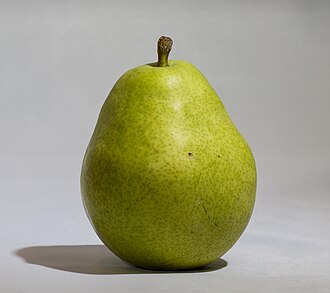
Photo: Wikipedia
The Anjou pear is a classic, bell-shaped fruit with a smooth, green skin and a juicy, buttery flesh that offers a sweet, mildly tangy flavor. Its texture is famously fine-grained and melting, making it a standout among pears. Nutritionally, it's a light, fiber-rich snack, providing a satisfying crunch and natural sweetness with very few calories.
Calorie split: 2% protein · 93% carbs · 5% fat
↓ Full nutrition💚 Why it's loved
People adore the Anjou for its reliable, sweet flavor and exceptionally juicy, smooth texture that holds up well in both fresh and cooked applications. Its versatility makes it a staple in everything from simple snacking to elegant desserts, and it's a beloved symbol of autumn harvest in many cultures.
⚠️ Watch-outs & how to enjoy it better
While generally healthy, its natural sugars can cause blood-sugar spikes for some individuals, especially when eaten in large quantities. To counteract this, pair the pear with a source of protein or healthy fat, like a handful of almonds or a slice of cheese, to slow sugar absorption. Those with oral allergy syndrome (to birch pollen) may experience mild itching; cooking the pear can reduce this reaction.
Key benefits
- High in dietary fiber (2.6g per 100g) for digestive health.
- Low in calories (64 kcal per 100g), ideal for weight management.
- Good source of vitamin C and potassium.
- Contains antioxidant compounds like flavonoids.
- Hydrating, with a high water content.
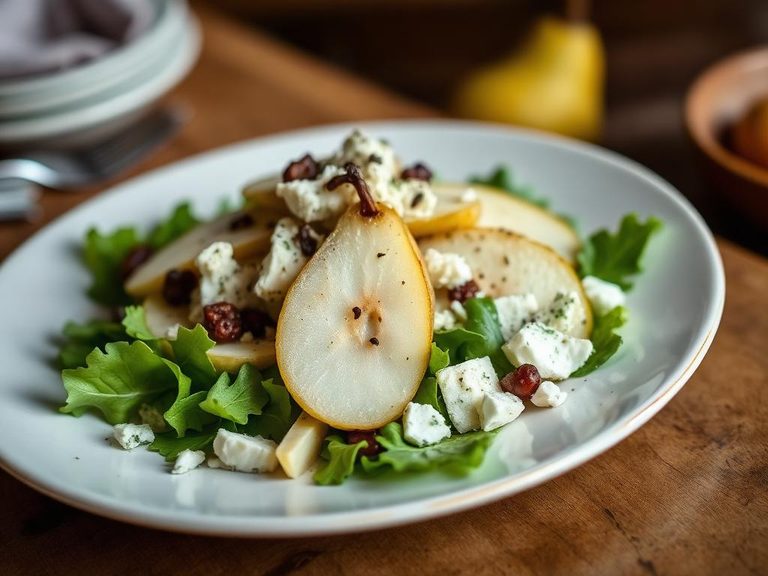
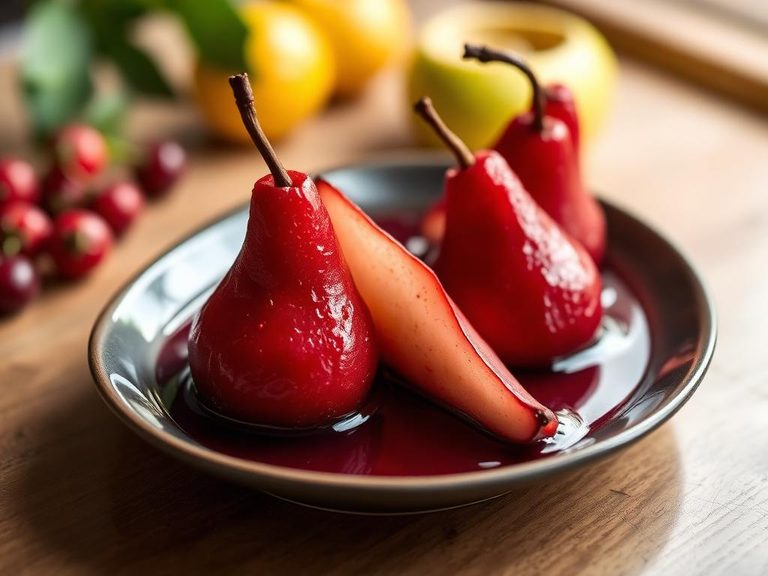
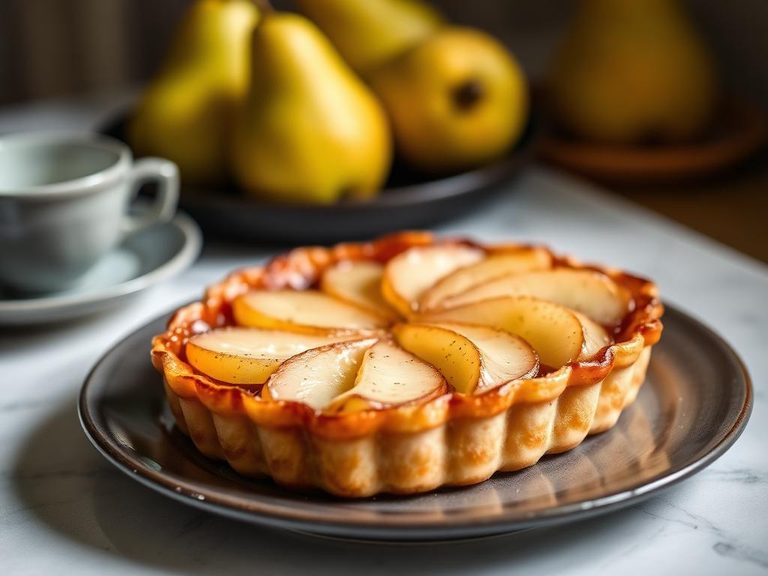
🍽️ Popular dishes
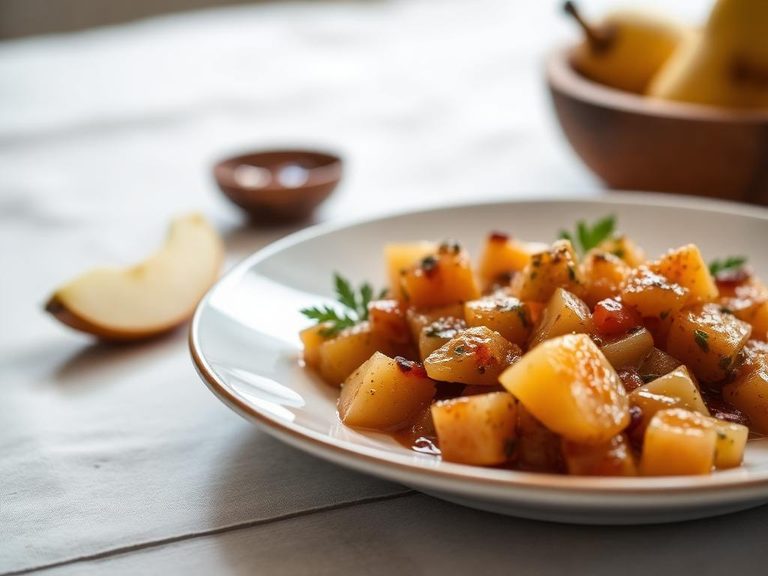
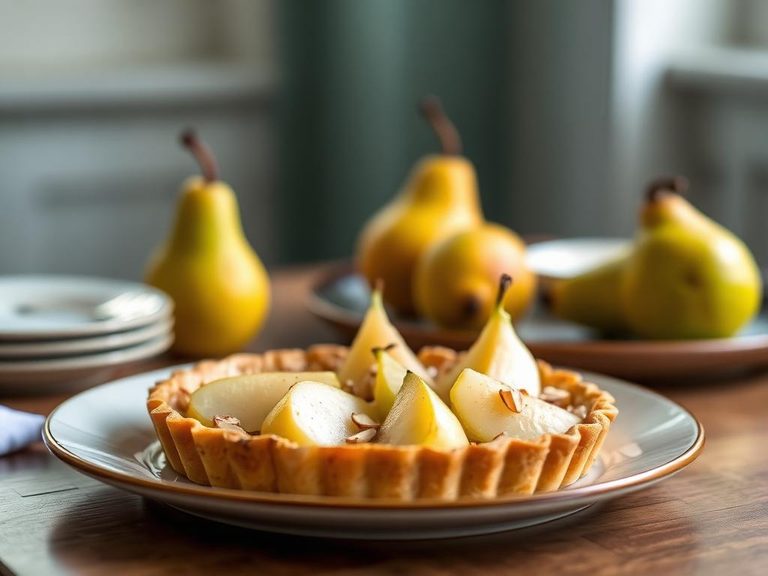
🌍 Where it's eaten
💡 Did you know?
The Anjou pear is one of the few pear varieties that does not change color as it ripens; it remains green, so you must gently press the neck near the stem to check for softness.
Full nutrition (USDA data · scales with serving)
| Water | 84.3 g |
| Energy (Atwater General Factors) | 63.7 kcal |
| Energy (Atwater Specific Factors) | 57.3 kcal |
| Nitrogen | 0.05 g |
| Protein | 0.31 g |
| Total lipid (fat) | 0.37 g |
| Ash | 0.28 g |
| Carbohydrate, by difference | 14.8 g |
| Fiber, total dietary | 2.6 g |
| Sugars, Total | 7.8 g |
| Sucrose | 0.06 g |
| Glucose | 1.8 g |
| Fructose | 5.9 g |
| Lactose | 0.00 g |
| Maltose | 0.00 g |
| Calcium, Ca | 10.0 mg |
| Iron, Fe | 0.00 mg |
| Magnesium, Mg | 6.5 mg |
| Phosphorus, P | 12.3 mg |
| Potassium, K | 123 mg |
| Sodium, Na | 0.40 mg |
| Zinc, Zn | 0.11 mg |
| Copper, Cu | 0.08 mg |
| Manganese, Mn | 0.05 mg |
| Vitamin C, total ascorbic acid | 5.5 mg |
| Biotin | 0.00 ug |
Fat & fatty acid profile (per 100g)
Estimated from Pears, canned, heavy syrup pack, solids and liquids — USDA does not publish this profile for Pear.
| Fatty acids, total saturated | 0.01 g |
| SFA 4:0 | 0.00 g |
| SFA 6:0 | 0.00 g |
| SFA 8:0 | 0.00 g |
| SFA 10:0 | 0.00 g |
| SFA 12:0 | 0.00 g |
| SFA 14:0 | 0.00 g |
| SFA 16:0 | 0.01 g |
| SFA 18:0 | 0.00 g |
| Fatty acids, total monounsaturated | 0.03 g |
| MUFA 16:1 | 0.00 g |
| MUFA 18:1 | 0.03 g |
| MUFA 20:1 | 0.00 g |
| MUFA 22:1 | 0.00 g |
| Fatty acids, total polyunsaturated | 0.03 g |
| PUFA 18:2 | 0.03 g |
| PUFA 18:3 | 0.00 g |
| PUFA 18:4 | 0.00 g |
| PUFA 20:4 | 0.00 g |
| PUFA 20:5 n-3 (EPA) | 0.00 g |
| PUFA 22:5 n-3 (DPA) | 0.00 g |
| PUFA 22:6 n-3 (DHA) | 0.00 g |
| Fatty acids, total trans | 0.00 g |
| Cholesterol | 0.00 mg |
Amino acid profile (per 100g)
Estimated from Pears, canned, heavy syrup pack, solids and liquids — USDA does not publish this profile for Pear.
| Threonine | 0.01 g |
| Isoleucine | 0.01 g |
| Leucine | 0.01 g |
| Lysine | 0.01 g |
| Methionine | 0.00 g |
| Cystine | 0.00 g |
| Phenylalanine | 0.01 g |
| Tyrosine | 0.00 g |
| Valine | 0.01 g |
| Arginine | 0.00 g |
| Histidine | 0.00 g |
| Alanine | 0.01 g |
| Aspartic acid | 0.04 g |
| Glutamic acid | 0.01 g |
| Glycine | 0.01 g |
| Proline | 0.01 g |
| Serine | 0.01 g |
FAQ
How do I know when an Anjou pear is ripe?
Unlike many fruits, Anjou pears don't change color when ripe. Gently press the neck near the stem; if it yields slightly to pressure, it's ready to eat. If it's firm, let it ripen at room temperature for a few days.
Can I eat the skin of an Anjou pear?
Yes, the skin is edible and contains a significant portion of the pear's fiber and nutrients. It's smooth and thin, making it pleasant to eat raw.
What's the best way to store Anjou pears?
Store unripe pears at room temperature until they ripen. Once ripe, they can be refrigerated for 3-5 days to slow further ripening. Keep them away from other fruits like apples or bananas, which emit ethylene gas that speeds up ripening.
Nutrient density (calculated · NRF9.3)
Nutrient Rich Foods index: beneficial nutrients (protein, fiber, vitamins, minerals) minus saturated fat, added sugar & sodium, per 100 kcal.
NRF9.3 index — Fulgoni, Keast & Drewnowski, 2009. Computed from USDA nutrients.
Weight-loss friendliness (composite index)
Energy density 0.64 kcal/g · 2% calories from protein · 2.6 g fiber · 0.0 g sugar per 100 g.
Composite of energy density (Rolls et al., 1999), protein & fiber satiety, minus sugar. A calculated heuristic — ranks satiety-per-calorie, not a clinical measure.
Dietary load (calculated from USDA values)
Potential renal acid load. Positive = acid-forming, negative = alkaline-forming.
Sodium-to-potassium ratio: 0.00 (lower is better — aim for ≤ 1)
Sodium:potassium per WHO potassium guidance. Computed from USDA nutrients.