Baby's First Fruit Puree
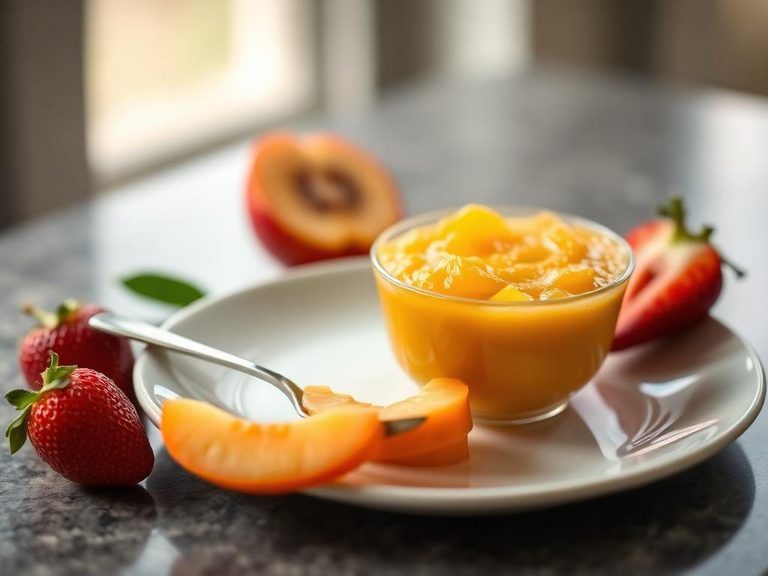
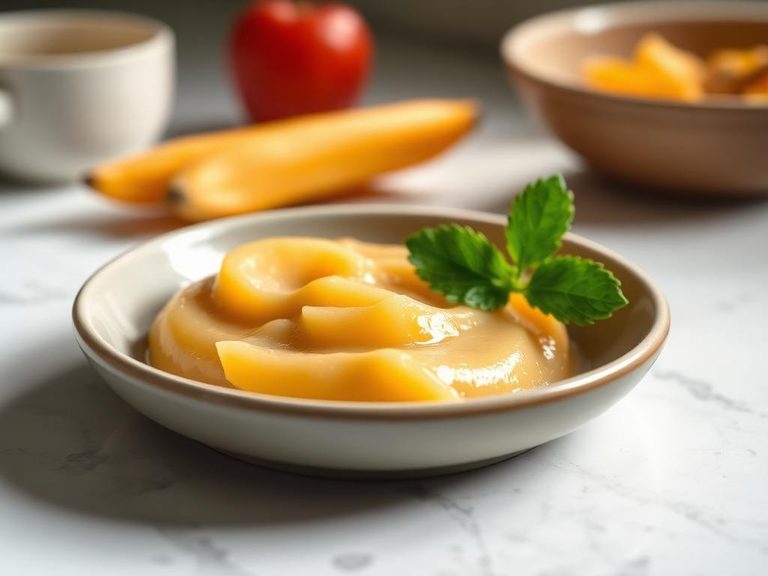
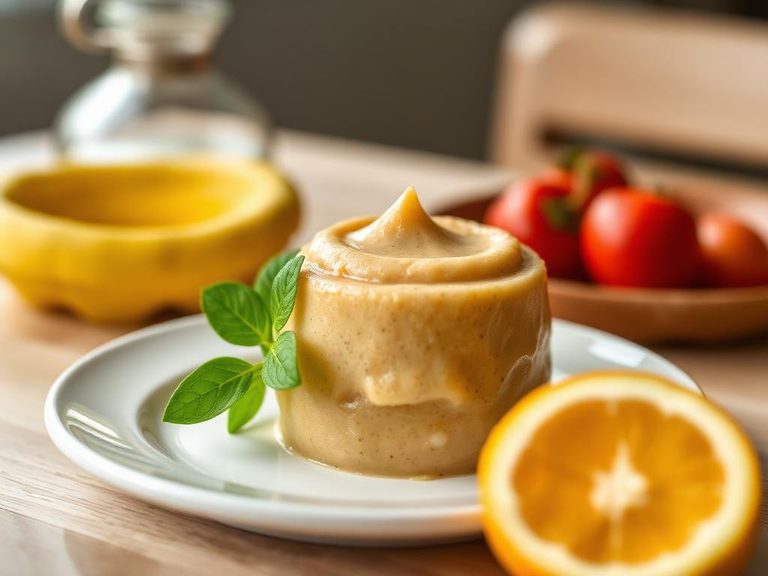
Baby's First Fruit Puree is a simple, smooth blend of a single fruit, typically apples, pears, or bananas, introduced to infants around 6 months old. It is a foundational food in many cultures, marking the transition from an all-milk diet to solid foods. The puree is usually made by steaming or baking the fruit and then blending it with water, breast milk, or formula to achieve a thin, spoonable consistency.
🍽️ Nutrition at a glance
This dish is primarily a source of simple carbohydrates from natural fruit sugars, providing quick energy for a growing baby. It is very low in protein and fat but offers essential vitamins like Vitamin C and potassium, with a typical serving containing around 50-80 calories.
Nutrition breakdown
| Calories | 60 kcal |
| Protein | 0.3 g |
| Carbs | 15 g |
| Fat | 0.1 g |
| Fiber | 2.1 g |
| Sugar | 11 g |
| Sodium | 0 mg |
| Vitamin C | 5 mg |
| Potassium | 150 mg |
| Vitamin A | 3 µg |
| Vitamin B6 | 0.04 mg |
| Manganese | 0.05 mg |
| Copper | 0.04 mg |
Per 1/2 cup (120 g) · estimated, varies by recipe
💡 What's interesting
Culturally, this puree represents a universal milestone in infant development, often called 'weaning food' globally. Nutritionally, it's unique because it introduces a baby's palate to the pure, unadulterated taste of whole foods, helping to establish preferences for natural flavors over processed ones.