

Infant meat broth
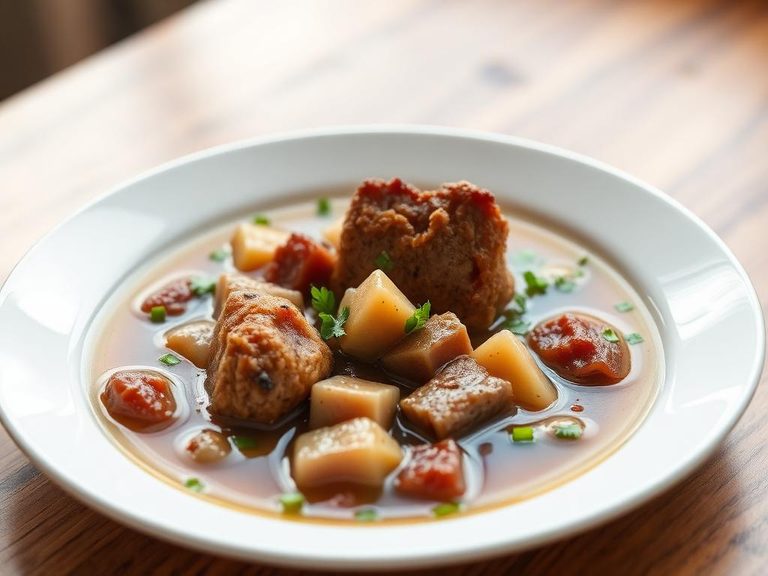
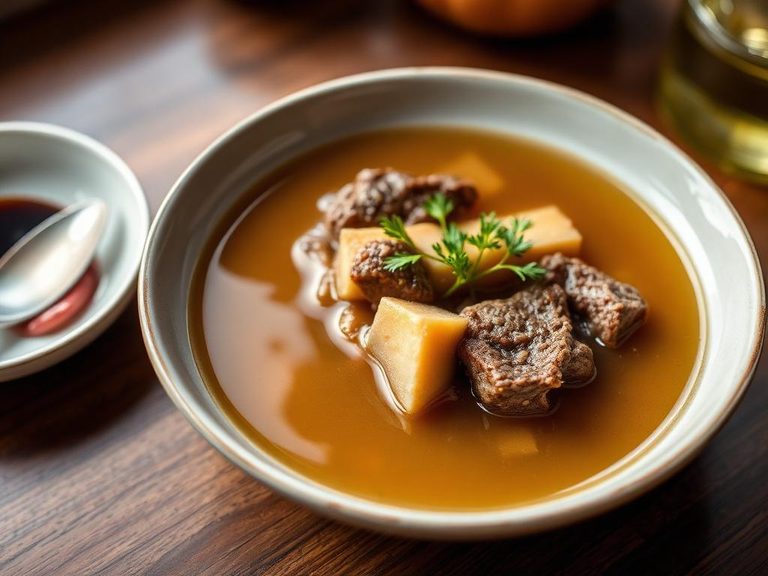
Infant meat broth, often referred to as 'baby broth' or 'meat stock for babies,' is a clear, savory liquid made by simmering lean meats (like chicken, beef, or pork) with water and sometimes mild vegetables. It is a foundational food in many cultures, used as a first introduction to savory flavors and as a base for preparing baby foods like cereals or purees. Originating from traditional home cooking practices worldwide, it's a staple in infant feeding in many Asian, European, and Latin American households.
🍽️ Nutrition at a glance
This broth is primarily a source of protein and minerals, with negligible carbohydrates and fat if made from lean cuts and skimmed. It provides essential nutrients like iron, zinc, and B vitamins, and a typical 1-cup serving contains roughly 30-50 calories.
Nutrition breakdown
| Calories | 40 kcal |
| Protein | 6 g |
| Carbs | 1 g |
| Fat | 1.5 g |
| Fiber | 0 g |
| Sugar | 0.5 g |
| Sodium | 300 mg |
| Iron | 0.8 mg |
| Zinc | 1.2 mg |
| Potassium | 150 mg |
| Phosphorus | 80 mg |
| Niacin (B3) | 2.0 mg |
| Vitamin B6 | 0.1 mg |
| Magnesium | 10 mg |
| Selenium | 5.0 mcg |
Per 1 cup (240 g) · estimated, varies by recipe
💡 What's interesting
Nutritionally, it's valued for providing bioavailable iron and zinc, crucial for an infant's growth and brain development. Culturally, the practice of making meat broth for babies is a widespread traditional method to introduce animal proteins and enhance the nutritional density of complementary foods.
🍽️ Related dishes
AI estimate may be inaccurate · Terms