

Soup, cream of mushroom, canned, prepared with equal volume low fat (2%) milk
Whole food · Soups, Sauces, and Gravies

Photo: Wikipedia
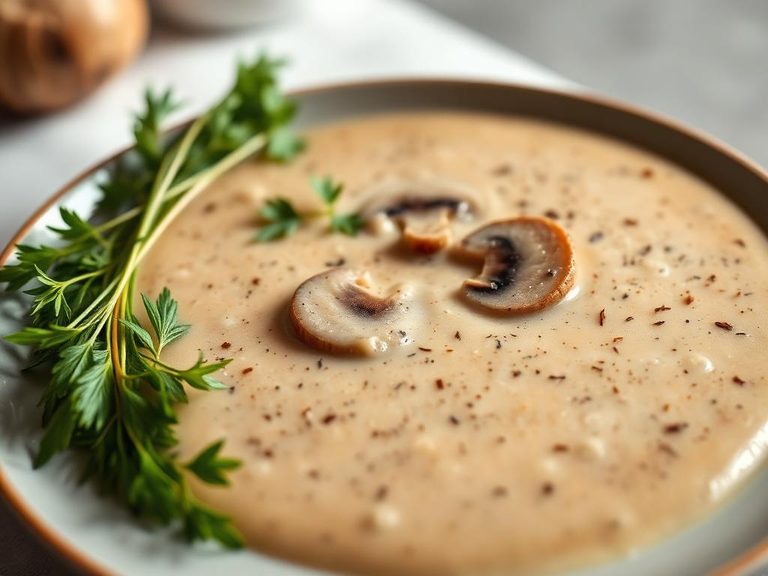
This is a classic, velvety soup made from a blend of pureed mushrooms and a creamy base, typically prepared with low-fat milk for a lighter, yet rich mouthfeel. It offers a savory, earthy flavor with a smooth, comforting texture that coats the spoon. Nutritionally, it provides a moderate source of protein and fat for a soup, with a relatively low calorie count per serving.
Calorie split: 15% protein · 36% carbs · 50% fat
↓ Full nutrition💚 Why it's loved
People love it for its deep, umami-rich mushroom flavor and creamy, satisfying texture that feels indulgent yet is relatively light. Its versatility makes it a beloved base for casseroles, a quick standalone meal, or a comforting starter in many households.
⚠️ Watch-outs & how to enjoy it better
The canned, prepared version can be high in sodium, which may be a concern for those monitoring blood pressure. It also contains milk, a common allergen. To counteract high sodium, look for low-sodium versions or dilute with a splash of water or unsalted broth. If concerned about blood sugar, pair it with a side of whole-grain crackers or a protein source like chicken to balance the meal.
Key benefits
- Good source of protein for a soup (2.36g per 100g)
- Provides dietary fat for satiety and nutrient absorption
- Low in sugar (2.82g per 100g)
- Contains some dietary fiber from mushrooms
- Convenient and shelf-stable pantry staple
🍽️ Popular dishes
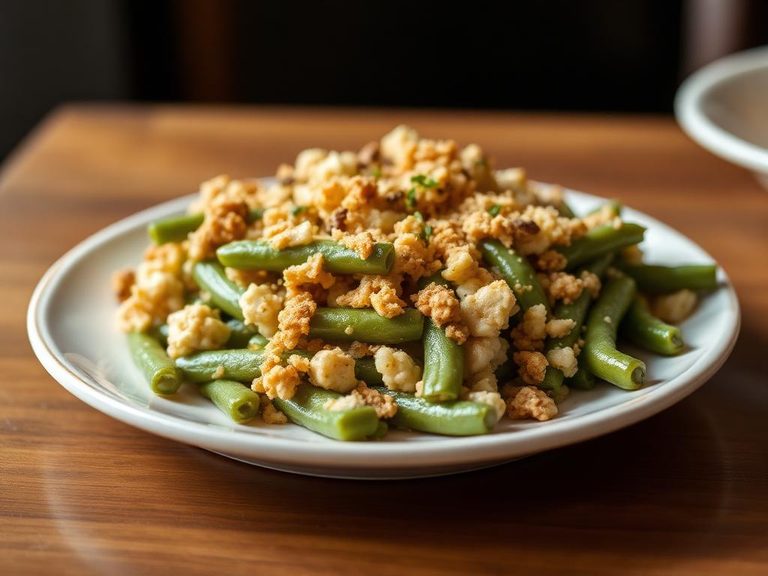
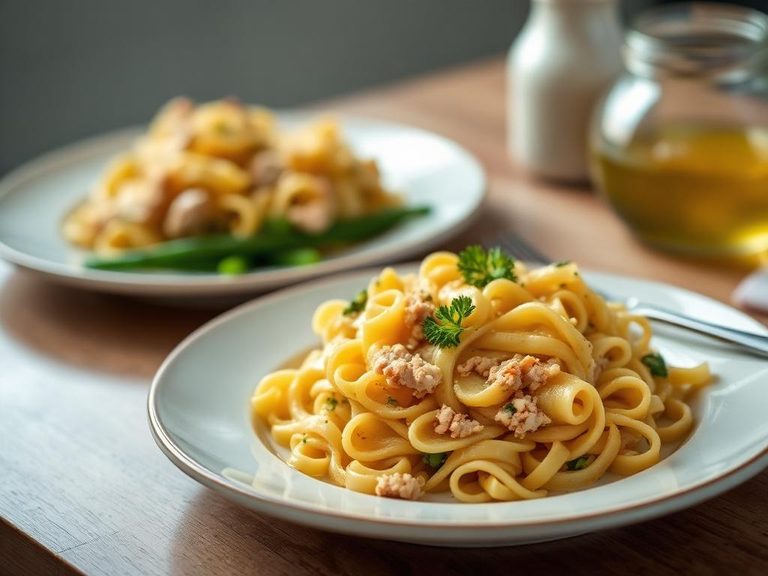
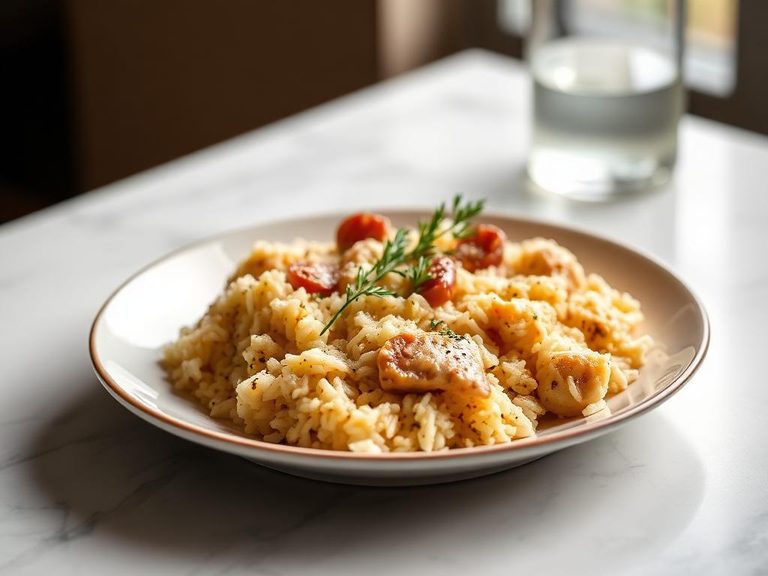
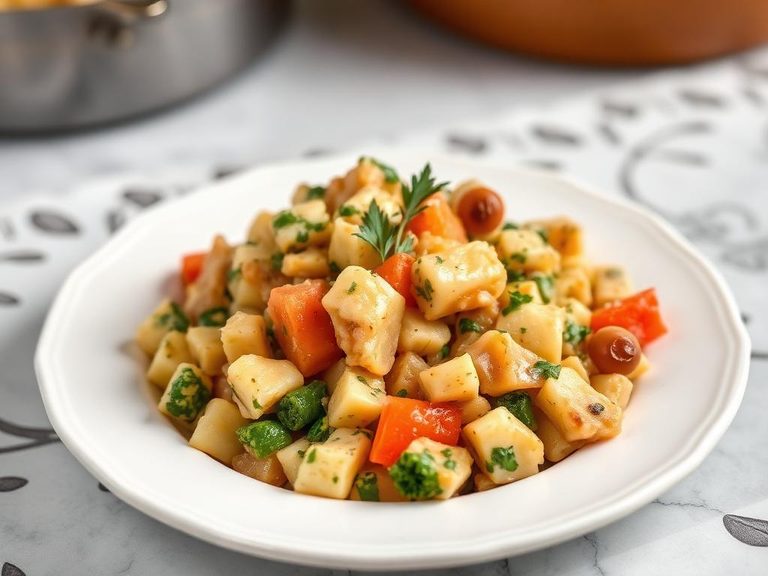
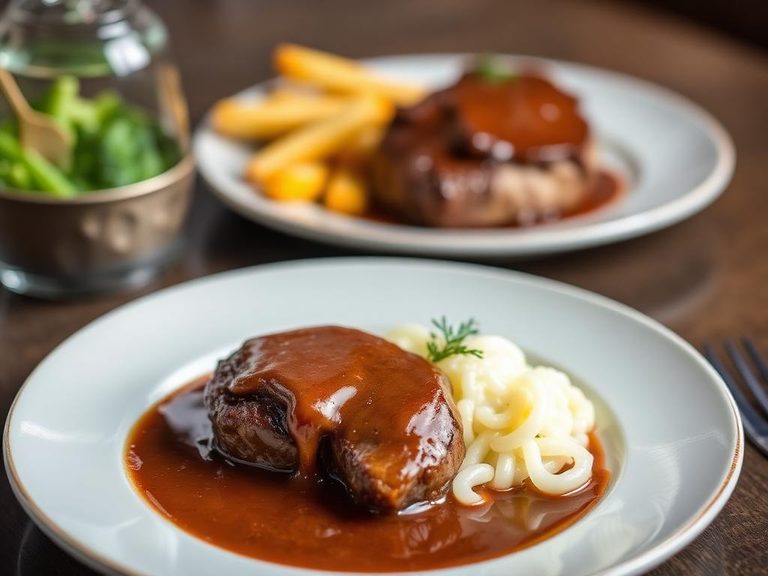
🌍 Where it's eaten
💡 Did you know?
The iconic Green Bean Casserole, a Thanksgiving staple in the U.S., was invented in 1955 by a home economist at Campbell's specifically to promote the use of Cream of Mushroom soup.
Full nutrition (USDA data · scales with serving)
| Water | 87.0 g |
| Energy | 65.0 kcal |
| Energy | 271 kj |
| Protein | 2.4 g |
| Total lipid (fat) | 3.6 g |
| Ash | 1.3 g |
| Carbohydrate, by difference | 5.8 g |
| Fiber, total dietary | 0.30 g |
| Total Sugars | 2.8 g |
| Sucrose | 0.00 g |
| Glucose | 0.00 g |
| Fructose | 0.00 g |
| Lactose | 2.8 g |
| Maltose | 0.00 g |
| Galactose | 0.01 g |
| Calcium, Ca | 68.0 mg |
| Iron, Fe | 0.10 mg |
| Magnesium, Mg | 7.0 mg |
| Phosphorus, P | 59.0 mg |
| Potassium, K | 103 mg |
| Sodium, Na | 357 mg |
| Zinc, Zn | 0.31 mg |
| Copper, Cu | 0.01 mg |
| Manganese, Mn | 0.03 mg |
| Selenium, Se | 2.7 ug |
| Vitamin C, total ascorbic acid | 0.10 mg |
| Thiamin | 0.03 mg |
| Riboflavin | 0.10 mg |
| Niacin | 0.21 mg |
| Pantothenic acid | 0.26 mg |
| Vitamin B-6 | 0.03 mg |
| Folate, total | 3.0 ug |
| Folic acid | 0.00 ug |
| Folate, food | 3.0 ug |
| Folate, DFE | 3.0 ug |
| Choline, total | 13.2 mg |
| Vitamin B-12 | 0.28 ug |
| Vitamin B-12, added | 0.00 ug |
| Vitamin A, RAE | 30.0 ug |
| Retinol | 30.0 ug |
| Carotene, beta | 2.0 ug |
| Carotene, alpha | 0.00 ug |
| Cryptoxanthin, beta | 0.00 ug |
| Vitamin A, IU | 102 iu |
| Lycopene | 0.00 ug |
| Lutein + zeaxanthin | 2.0 ug |
| Vitamin E (alpha-tocopherol) | 0.26 mg |
| Vitamin E, added | 0.00 mg |
| Tocopherol, beta | 0.04 mg |
| Tocopherol, gamma | 2.1 mg |
| Tocopherol, delta | 0.57 mg |
| Tocotrienol, alpha | 0.00 mg |
| Tocotrienol, beta | 0.00 mg |
| Tocotrienol, gamma | 0.01 mg |
| Tocotrienol, delta | 0.00 mg |
| Vitamin D (D2 + D3), International Units | 29.0 iu |
| Vitamin D (D2 + D3) | 0.70 ug |
| Vitamin K (phylloquinone) | 9.6 ug |
| Alcohol, ethyl | 0.00 g |
| Caffeine | 0.00 mg |
| Theobromine | 0.00 mg |
Fat & fatty acid profile (per 100g)
| Fatty acids, total saturated | 1.1 g |
| SFA 4:0 | 0.04 g |
| SFA 6:0 | 0.02 g |
| SFA 8:0 | 0.01 g |
| SFA 10:0 | 0.03 g |
| SFA 12:0 | 0.03 g |
| SFA 14:0 | 0.11 g |
| SFA 15:0 | 0.01 g |
| SFA 16:0 | 0.58 g |
| SFA 17:0 | 0.01 g |
| SFA 18:0 | 0.24 g |
| SFA 20:0 | 0.01 g |
| SFA 22:0 | 0.01 g |
| Fatty acids, total monounsaturated | 0.88 g |
| MUFA 14:1 | 0.01 g |
| MUFA 15:1 | 0.00 g |
| MUFA 16:1 | 0.02 g |
| MUFA 17:1 | 0.00 g |
| MUFA 18:1 | 0.83 g |
| MUFA 20:1 | 0.01 g |
| MUFA 22:1 | 0.00 g |
| Fatty acids, total polyunsaturated | 1.4 g |
| PUFA 18:2 | 1.3 g |
| PUFA 18:3 | 0.17 g |
| PUFA 18:4 | 0.00 g |
| PUFA 20:3 | 0.00 g |
| PUFA 20:4 | 0.00 g |
| PUFA 20:5 n-3 (EPA) | 0.00 g |
| PUFA 22:5 n-3 (DPA) | 0.00 g |
| PUFA 22:6 n-3 (DHA) | 0.00 g |
| Fatty acids, total trans | 0.06 g |
| Cholesterol | 4.0 mg |
Amino acid profile (per 100g)
| Tryptophan | 0.03 g |
| Threonine | 0.09 g |
| Isoleucine | 0.10 g |
| Leucine | 0.19 g |
| Lysine | 0.16 g |
| Methionine | 0.05 g |
| Cystine | 0.01 g |
| Phenylalanine | 0.11 g |
| Tyrosine | 0.10 g |
| Valine | 0.13 g |
| Arginine | 0.07 g |
| Histidine | 0.06 g |
| Alanine | 0.08 g |
| Aspartic acid | 0.18 g |
| Glutamic acid | 0.63 g |
| Glycine | 0.05 g |
| Proline | 0.20 g |
| Serine | 0.13 g |
| Hydroxyproline | 0.00 g |
FAQ
Is cream of mushroom soup made with real cream?
Traditional recipes use cream or milk for richness. Canned 'cream of' soups often use a combination of modified food starch, vegetable oil, and milk proteins to achieve a creamy texture, though this specific product is prepared with low-fat milk.
Can I use this soup as a sauce?
Absolutely. It's a classic shortcut for creamy sauces. Simply thin it with a little milk, broth, or wine to pour over chicken, pork, or vegetables.
What's the best way to enhance canned cream of mushroom soup?
Sauté fresh sliced mushrooms and garlic, then stir them into the heated soup. A dash of white wine, fresh thyme, or a sprinkle of black pepper can also elevate the flavor significantly.
Nutrient density (calculated · NRF9.3)
Nutrient Rich Foods index: beneficial nutrients (protein, fiber, vitamins, minerals) minus saturated fat, added sugar & sodium, per 100 kcal.
NRF9.3 index — Fulgoni, Keast & Drewnowski, 2009. Computed from USDA nutrients.
Weight-loss friendliness (composite index)
Energy density 0.65 kcal/g · 15% calories from protein · 0.3 g fiber · 2.8 g sugar per 100 g.
Composite of energy density (Rolls et al., 1999), protein & fiber satiety, minus sugar. A calculated heuristic — ranks satiety-per-calorie, not a clinical measure.
Dietary load (calculated from USDA values)
Potential renal acid load. Positive = acid-forming, negative = alkaline-forming.
Sodium-to-potassium ratio: 3.47 (lower is better — aim for ≤ 1)
Sodium:potassium per WHO potassium guidance. Computed from USDA nutrients.