

Shortening, vegetable, household, composite
Whole food · Fats and Oils

Photo: Wikipedia
Vegetable shortening is a solid, shelf-stable fat made from hydrogenated vegetable oils, typically soybean, palm, or cottonseed. It has a neutral, clean taste and a smooth, pliable texture that becomes flaky when cold, making it ideal for creating tender, layered pastries. Nutritionally, it is almost 100% fat, providing a dense source of calories with no protein, carbohydrates, or micronutrients.
Calorie split: 0% protein · 0% carbs · 100% fat
↓ Full nutrition💚 Why it's loved
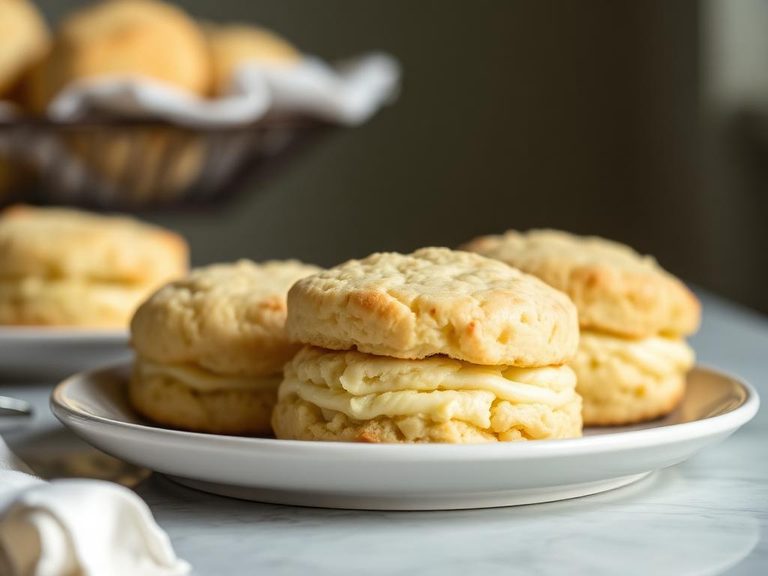
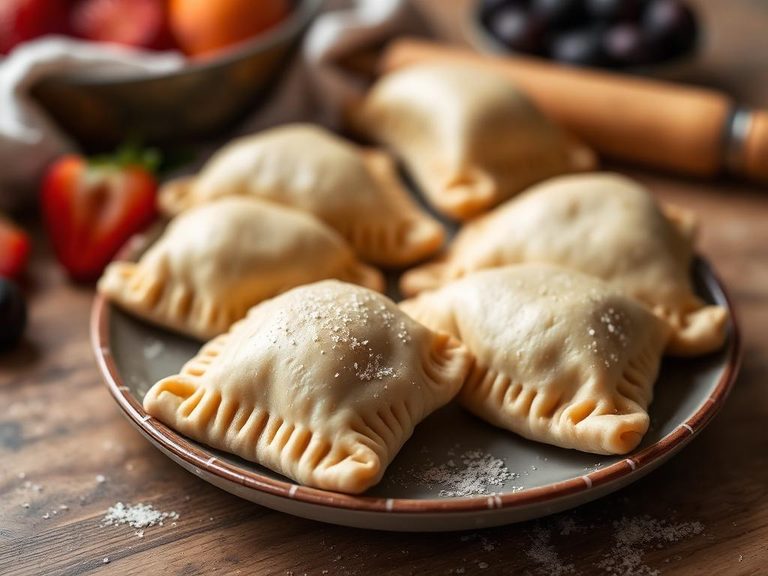
Bakers prize shortening for its unparalleled ability to create tender, flaky layers in pastries like pie crusts and biscuits, thanks to its high melting point and solid state at room temperature. Its neutral flavor and reliable performance make it a versatile staple in both home kitchens and commercial bakeries.
⚠️ Watch-outs & how to enjoy it better
As a highly processed fat with a high omega-6 content and potential for trans fats (if not fully hydrogenated), it offers minimal nutritional benefit and is best used sparingly. To counteract its empty-calorie profile, use it in moderation and balance meals with nutrient-dense foods rich in fiber, protein, and vitamins.
Key benefits
- Creates exceptionally flaky pie crusts and biscuits
- Has a very long shelf life and is shelf-stable
- Neutral flavor does not compete with other ingredients
- Provides a solid fat structure essential for certain baked goods
- Cost-effective for large-scale or home baking
🍽️ Popular dishes

🌍 Where it's eaten
💡 Did you know?
The invention of vegetable shortening by Procter & Gamble in 1911 (Crisco) was a major culinary shift, marketed as a 'cleaner' and cheaper alternative to lard, and it fundamentally changed American home baking.
Full nutrition (USDA data · scales with serving)
| Water | 0.00 g |
| Energy | 884 kcal |
| Energy | 3699 kj |
| Protein | 0.00 g |
| Total lipid (fat) | 100.0 g |
| Ash | 0.03 g |
| Carbohydrate, by difference | 0.00 g |
| Fiber, total dietary | 0.00 g |
| Total Sugars | 0.00 g |
| Calcium, Ca | 1.0 mg |
| Iron, Fe | 0.07 mg |
| Magnesium, Mg | 0.00 mg |
| Phosphorus, P | 0.00 mg |
| Potassium, K | 0.00 mg |
| Sodium, Na | 4.0 mg |
| Zinc, Zn | 0.00 mg |
| Copper, Cu | 0.00 mg |
| Manganese, Mn | 0.00 mg |
| Selenium, Se | 0.00 ug |
| Vitamin C, total ascorbic acid | 0.00 mg |
| Thiamin | 0.02 mg |
| Riboflavin | 0.00 mg |
| Niacin | 0.00 mg |
| Pantothenic acid | 0.68 mg |
| Vitamin B-6 | 0.00 mg |
| Folate, total | 0.00 ug |
| Folic acid | 0.00 ug |
| Folate, food | 0.00 ug |
| Folate, DFE | 0.00 ug |
| Choline, total | 0.20 mg |
| Vitamin B-12 | 0.00 ug |
| Vitamin B-12, added | 0.00 ug |
| Vitamin A, RAE | 0.00 ug |
| Retinol | 0.00 ug |
| Carotene, beta | 0.00 ug |
| Carotene, alpha | 0.00 ug |
| Cryptoxanthin, beta | 0.00 ug |
| Vitamin A, IU | 0.00 iu |
| Lycopene | 0.00 ug |
| Lutein + zeaxanthin | 0.00 ug |
| Vitamin E (alpha-tocopherol) | 6.1 mg |
| Vitamin E, added | 0.00 mg |
| Tocopherol, beta | 0.44 mg |
| Tocopherol, gamma | 32.3 mg |
| Tocopherol, delta | 15.4 mg |
| Vitamin D (D2 + D3), International Units | 0.00 iu |
| Vitamin D (D2 + D3) | 0.00 ug |
| Vitamin K (phylloquinone) | 53.2 ug |
| Vitamin K (Dihydrophylloquinone) | 165 ug |
| Alcohol, ethyl | 0.00 g |
| Caffeine | 0.00 mg |
| Theobromine | 0.00 mg |
Fat & fatty acid profile (per 100g)
| Fatty acids, total saturated | 25.0 g |
| SFA 4:0 | 0.00 g |
| SFA 6:0 | 0.00 g |
| SFA 8:0 | 0.00 g |
| SFA 10:0 | 0.00 g |
| SFA 12:0 | 0.00 g |
| SFA 14:0 | 0.17 g |
| SFA 16:0 | 12.5 g |
| SFA 17:0 | 0.10 g |
| SFA 18:0 | 11.4 g |
| SFA 20:0 | 0.43 g |
| SFA 22:0 | 0.37 g |
| SFA 24:0 | 0.05 g |
| Fatty acids, total monounsaturated | 41.2 g |
| MUFA 14:1 | 0.00 g |
| MUFA 16:1 | 0.02 g |
| MUFA 18:1 | 41.1 g |
| MUFA 18:1 c | 30.3 g |
| MUFA 20:1 | 0.09 g |
| MUFA 22:1 | 0.00 g |
| MUFA 24:1 c | 0.00 g |
| Fatty acids, total polyunsaturated | 28.1 g |
| PUFA 18:2 | 26.2 g |
| PUFA 18:2 n-6 c,c | 23.8 g |
| PUFA 18:2 CLAs | 0.06 g |
| PUFA 18:2 i | 2.4 g |
| PUFA 18:3 | 1.9 g |
| PUFA 18:3 n-3 c,c,c (ALA) | 1.9 g |
| PUFA 18:4 | 0.00 g |
| PUFA 20:4 | 0.00 g |
| PUFA 20:5 n-3 (EPA) | 0.00 g |
| PUFA 22:5 n-3 (DPA) | 0.00 g |
| PUFA 22:6 n-3 (DHA) | 0.00 g |
| Fatty acids, total trans | 13.2 g |
| Fatty acids, total trans-monoenoic | 10.8 g |
| TFA 18:1 t | 10.8 g |
| Fatty acids, total trans-polyenoic | 2.4 g |
| Cholesterol | 0.00 mg |
| Stigmasterol | 51.0 mg |
| Campesterol | 50.0 mg |
| Beta-sitosterol | 138 mg |
Amino acid profile (per 100g)
Estimated from Shortening, industrial, soy (partially hydrogenated), pourable liquid fry shortening — USDA does not publish this profile for Shortening.
| Tryptophan | 0.00 g |
| Threonine | 0.00 g |
| Isoleucine | 0.00 g |
| Leucine | 0.00 g |
| Lysine | 0.00 g |
| Methionine | 0.00 g |
| Cystine | 0.00 g |
| Phenylalanine | 0.00 g |
| Tyrosine | 0.00 g |
| Valine | 0.00 g |
| Arginine | 0.00 g |
| Histidine | 0.00 g |
| Alanine | 0.00 g |
| Aspartic acid | 0.00 g |
| Glutamic acid | 0.00 g |
| Glycine | 0.00 g |
| Proline | 0.00 g |
| Serine | 0.00 g |
FAQ
What is the difference between shortening and butter?
Shortening is 100% fat with a higher melting point, creating a more tender and flaky texture in baked goods. Butter contains about 80% fat and 20% water/milk solids, which adds flavor but can result in a slightly less flaky, more flavorful pastry.
Can I substitute butter for shortening in a recipe?
Yes, but it changes the texture and flavor. For every cup of shortening, use 1 cup plus 2 tablespoons of butter (to account for the water content) for a similar fat ratio, and expect a richer flavor but potentially less flakiness.
Is vegetable shortening vegan?
Yes, standard vegetable shortening like Crisco is made from plant oils and contains no animal products. Always check the label for specific brands or varieties.
Nutrient density (calculated · NRF9.3)
Nutrient Rich Foods index: beneficial nutrients (protein, fiber, vitamins, minerals) minus saturated fat, added sugar & sodium, per 100 kcal.
NRF9.3 index — Fulgoni, Keast & Drewnowski, 2009. Computed from USDA nutrients.
Weight-loss friendliness (composite index)
Energy density 8.84 kcal/g · 0% calories from protein · 0.0 g fiber · 0.0 g sugar per 100 g.
Composite of energy density (Rolls et al., 1999), protein & fiber satiety, minus sugar. A calculated heuristic — ranks satiety-per-calorie, not a clinical measure.
Dietary load (calculated from USDA values)
Potential renal acid load. Positive = acid-forming, negative = alkaline-forming.
Sodium:potassium per WHO potassium guidance. Computed from USDA nutrients.