

Pork, fresh, variety meats and by-products, feet, cooked, simmered
Whole food · Pork Products

Photo: Wikipedia
Pork feet, also known as pig's trotters, are a gelatin-rich cut of meat from the lower leg. When simmered, the connective tissue breaks down into a silky, collagen-rich broth, leaving the meat tender and the skin luxuriously soft. Nutritionally, they are a high-protein, zero-carb food, delivering a significant amount of fat and collagen per serving.
Calorie split: 38% protein · 0% carbs · 62% fat
↓ Full nutrition💚 Why it's loved
People love pork feet for their uniquely rich, savory flavor and the satisfying, melt-in-your-mouth texture of the skin and tendons. They are a culinary cornerstone in many cultures, prized for their ability to transform simple broths into deeply flavorful, nourishing dishes.
⚠️ Watch-outs & how to enjoy it better
The high fat content can be a concern for those monitoring saturated fat intake. The skin is also a common source of dietary cholesterol. To counteract this, enjoy them in moderation as part of a balanced diet, and consider pairing with high-fiber vegetables or legumes to balance the meal.
Key benefits
- Excellent source of collagen for skin and joint health
- High in protein, essential for muscle repair
- Rich in minerals like zinc and iron
- Provides gelatin, which may support gut lining integrity
- A traditional, nutrient-dense bone broth base
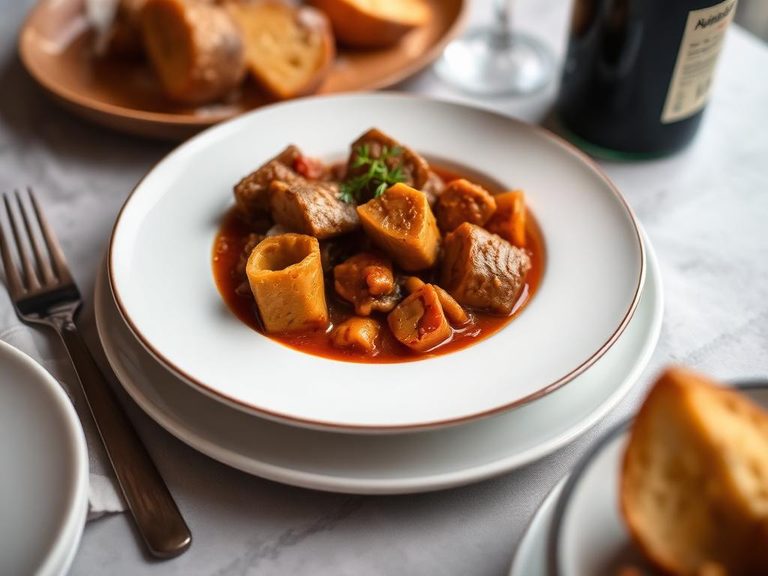
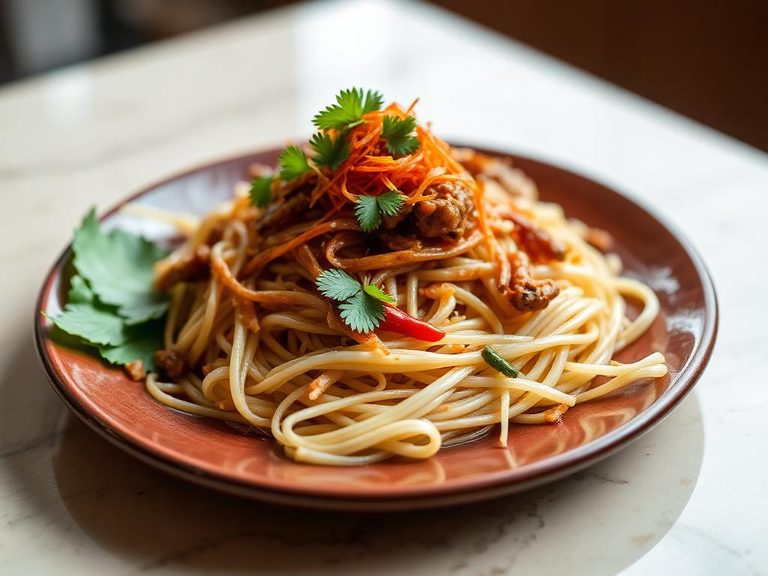
🍽️ Popular dishes
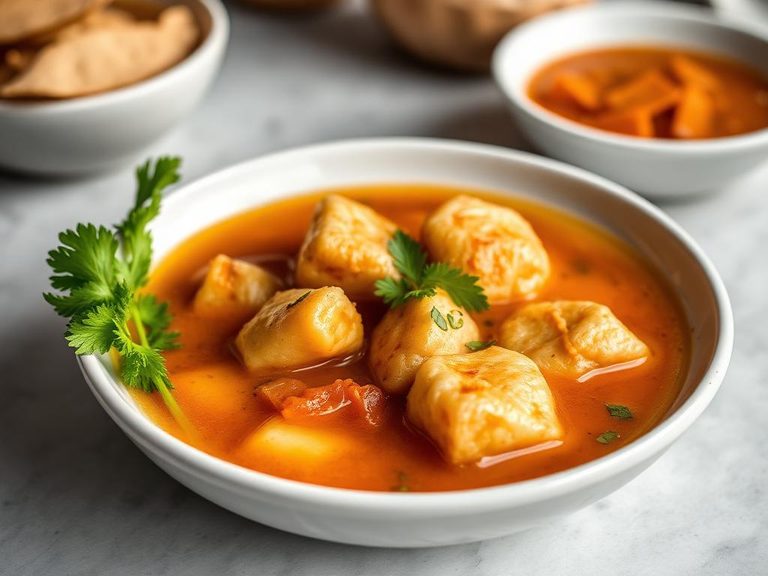
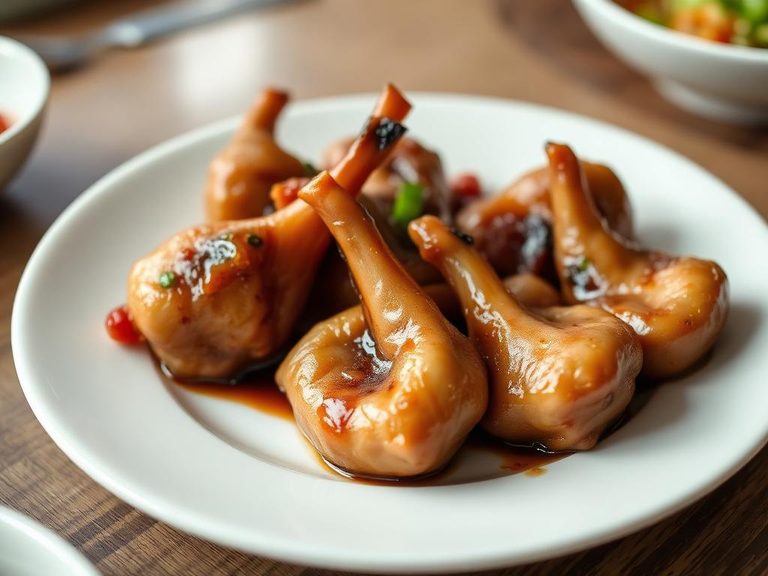
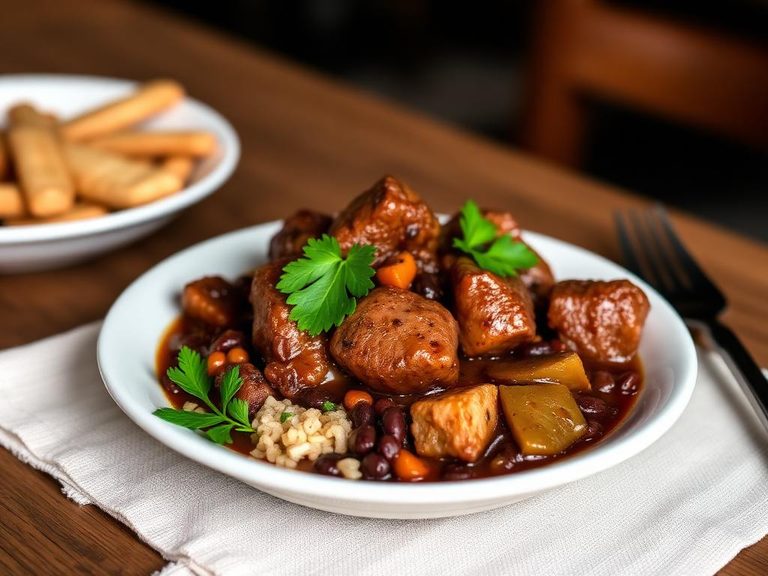
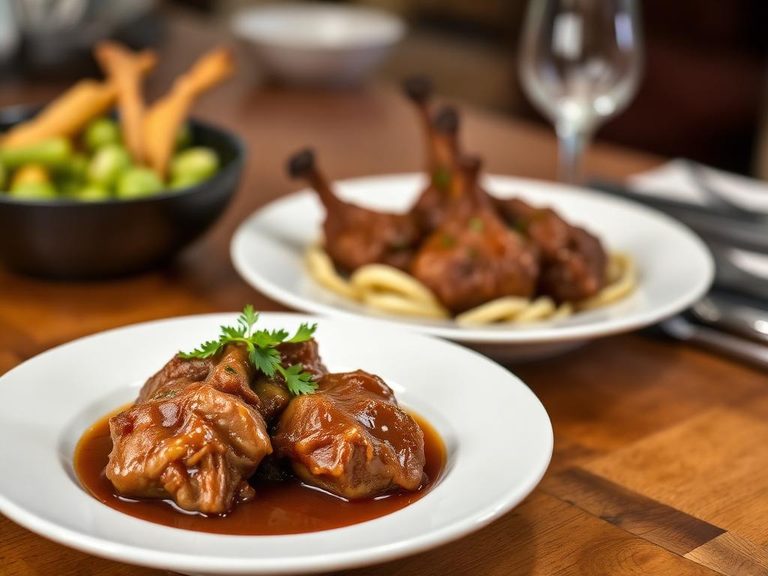
🌍 Where it's eaten
💡 Did you know?
The gelatin that makes pork feet so valuable in cooking is derived from collagen, which is the most abundant protein in the human body, making up about 30% of our total protein.
Full nutrition (USDA data · scales with serving)
| Water | 62.9 g |
| Energy | 238 kcal |
| Energy | 998 kj |
| Protein | 21.9 g |
| Total lipid (fat) | 16.1 g |
| Ash | 0.66 g |
| Carbohydrate, by difference | 0.00 g |
| Fiber, total dietary | 0.00 g |
| Total Sugars | 0.00 g |
| Calcium, Ca | 0.00 mg |
| Iron, Fe | 0.98 mg |
| Magnesium, Mg | 5.0 mg |
| Phosphorus, P | 82.0 mg |
| Potassium, K | 33.0 mg |
| Sodium, Na | 73.0 mg |
| Zinc, Zn | 1.1 mg |
| Copper, Cu | 0.06 mg |
| Manganese, Mn | 0.02 mg |
| Selenium, Se | 23.0 ug |
| Vitamin C, total ascorbic acid | 0.00 mg |
| Thiamin | 0.02 mg |
| Riboflavin | 0.06 mg |
| Niacin | 0.58 mg |
| Pantothenic acid | 0.24 mg |
| Vitamin B-6 | 0.04 mg |
| Folate, total | 2.0 ug |
| Folic acid | 0.00 ug |
| Folate, food | 2.0 ug |
| Folate, DFE | 2.0 ug |
| Choline, total | 75.4 mg |
| Betaine | 2.9 mg |
| Vitamin B-12 | 0.41 ug |
| Vitamin B-12, added | 0.00 ug |
| Vitamin A, RAE | 0.00 ug |
| Retinol | 0.00 ug |
| Carotene, beta | 0.00 ug |
| Carotene, alpha | 0.00 ug |
| Cryptoxanthin, beta | 0.00 ug |
| Vitamin A, IU | 0.00 iu |
| Lycopene | 0.00 ug |
| Lutein + zeaxanthin | 0.00 ug |
| Vitamin E (alpha-tocopherol) | 0.09 mg |
| Vitamin E, added | 0.00 mg |
| Tocopherol, beta | 0.00 mg |
| Tocopherol, gamma | 0.03 mg |
| Tocopherol, delta | 0.00 mg |
| Tocotrienol, alpha | 0.00 mg |
| Tocotrienol, beta | 0.00 mg |
| Tocotrienol, gamma | 0.03 mg |
| Tocotrienol, delta | 0.00 mg |
| Vitamin D (D2 + D3), International Units | 0.00 iu |
| Vitamin D (D2 + D3) | 0.00 ug |
| Vitamin D3 (cholecalciferol) | 0.00 ug |
| Vitamin K (phylloquinone) | 0.00 ug |
| Alcohol, ethyl | 0.00 g |
| Caffeine | 0.00 mg |
| Theobromine | 0.00 mg |
Fat & fatty acid profile (per 100g)
| Fatty acids, total saturated | 4.3 g |
| SFA 4:0 | 0.00 g |
| SFA 6:0 | 0.00 g |
| SFA 8:0 | 0.00 g |
| SFA 10:0 | 0.00 g |
| SFA 12:0 | 0.00 g |
| SFA 14:0 | 0.19 g |
| SFA 15:0 | 0.00 g |
| SFA 16:0 | 3.0 g |
| SFA 17:0 | 0.04 g |
| SFA 18:0 | 1.1 g |
| SFA 20:0 | 0.00 g |
| SFA 22:0 | 0.00 g |
| Fatty acids, total monounsaturated | 8.0 g |
| MUFA 14:1 | 0.00 g |
| MUFA 15:1 | 0.00 g |
| MUFA 16:1 | 0.61 g |
| MUFA 18:1 | 7.2 g |
| MUFA 20:1 | 0.16 g |
| MUFA 22:1 | 0.00 g |
| Fatty acids, total polyunsaturated | 1.5 g |
| PUFA 18:2 | 1.3 g |
| PUFA 18:3 | 0.06 g |
| PUFA 18:3 n-3 c,c,c (ALA) | 0.06 g |
| PUFA 18:3 n-6 c,c,c | 0.00 g |
| PUFA 18:4 | 0.00 g |
| PUFA 20:2 n-6 c,c | 0.08 g |
| PUFA 20:3 | 0.00 g |
| PUFA 20:4 | 0.08 g |
| PUFA 20:5 n-3 (EPA) | 0.00 g |
| PUFA 22:5 n-3 (DPA) | 0.00 g |
| PUFA 22:6 n-3 (DHA) | 0.00 g |
| Fatty acids, total trans | 0.00 g |
| Cholesterol | 107 mg |
Amino acid profile (per 100g)
Estimated from Pork, cured, salt pork, raw — USDA does not publish this profile for Pork.
| Tryptophan | 0.02 g |
| Threonine | 0.17 g |
| Isoleucine | 0.13 g |
| Leucine | 0.35 g |
| Lysine | 0.42 g |
| Methionine | 0.07 g |
| Cystine | 0.04 g |
| Phenylalanine | 0.19 g |
| Tyrosine | 0.08 g |
| Valine | 0.24 g |
| Arginine | 0.52 g |
| Histidine | 0.06 g |
| Alanine | 0.28 g |
| Aspartic acid | 0.42 g |
| Glutamic acid | 0.69 g |
| Glycine | 0.36 g |
| Proline | 0.27 g |
| Serine | 0.19 g |
FAQ
What is the texture of cooked pork feet?
When properly simmered, the texture is a combination of tender, falling-off-the-bone meat, soft, gelatinous skin, and a rich, slightly sticky broth.
Are pork feet a good source of protein?
Yes, they are an excellent source of protein, providing about 22 grams per 100g serving, which is comparable to lean cuts of meat.
How do I prepare pork feet for cooking?
They are typically cleaned, sometimes blanched to remove impurities, and then simmered slowly in a flavorful broth for several hours until the collagen breaks down.
Nutrient density (calculated · NRF9.3)
Nutrient Rich Foods index: beneficial nutrients (protein, fiber, vitamins, minerals) minus saturated fat, added sugar & sodium, per 100 kcal.
NRF9.3 index — Fulgoni, Keast & Drewnowski, 2009. Computed from USDA nutrients.
Weight-loss friendliness (composite index)
Energy density 2.38 kcal/g · 37% calories from protein · 0.0 g fiber · 0.0 g sugar per 100 g.
Composite of energy density (Rolls et al., 1999), protein & fiber satiety, minus sugar. A calculated heuristic — ranks satiety-per-calorie, not a clinical measure.
Dietary load (calculated from USDA values)
Potential renal acid load. Positive = acid-forming, negative = alkaline-forming.
Sodium-to-potassium ratio: 2.21 (lower is better — aim for ≤ 1)
Sodium:potassium per WHO potassium guidance. Computed from USDA nutrients.