

Peanut butter with omega-3, creamy
Whole food · Legumes and Legume Products

Photo: Wikipedia
This is a rich, creamy peanut butter fortified with omega-3 fatty acids, likely from added flaxseed or algal oil. It has a smooth, velvety texture and a deep, roasted nut flavor with a subtle, earthy undertone from the omega-3 source. Nutritionally, it's a calorie-dense powerhouse, offering a significant protein punch and healthy fats in every spoonful.
Calorie split: 15% protein · 10% carbs · 75% fat
↓ Full nutrition💚 Why it's loved
People adore its classic, comforting roasted peanut flavor and luxuriously creamy spreadability, making it a nostalgic staple. Its versatility is unmatched, serving as a protein-rich snack, a baking ingredient, or the star of savory sauces.
⚠️ Watch-outs & how to enjoy it better
It is very calorie-dense and high in fat, so overconsumption can lead to weight gain. It is a common allergen, and the added omega-3 source (like flax) can impart a slightly bitter or 'healthy' taste some may not prefer. Tip: Stick to a 2-tablespoon serving and pair it with fiber-rich fruit like apple slices to enhance satiety.
Key benefits
- Excellent source of plant-based protein (24.47g per 100g).
- High in heart-healthy monounsaturated fats.
- Provides added omega-3 fatty acids for brain and heart health.
- Good source of dietary fiber (6.1g per 100g).
- Contains essential vitamins and minerals like magnesium and vitamin E.
🍽️ Popular dishes

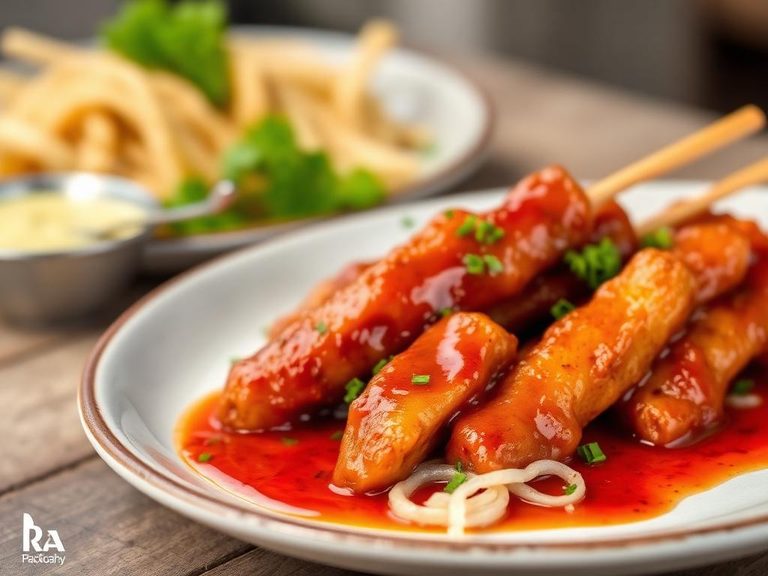
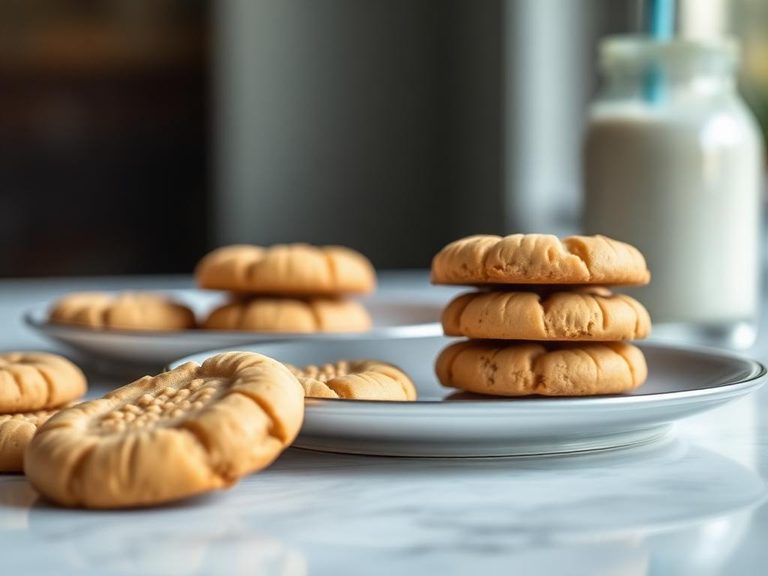
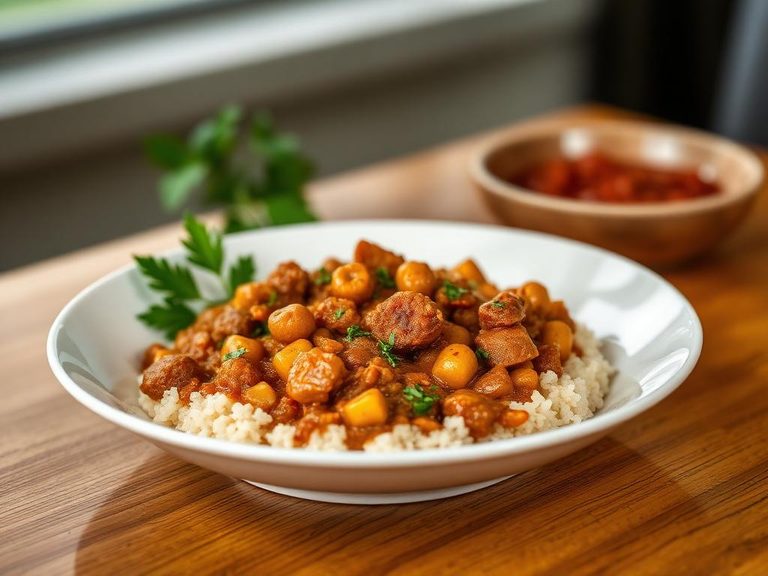
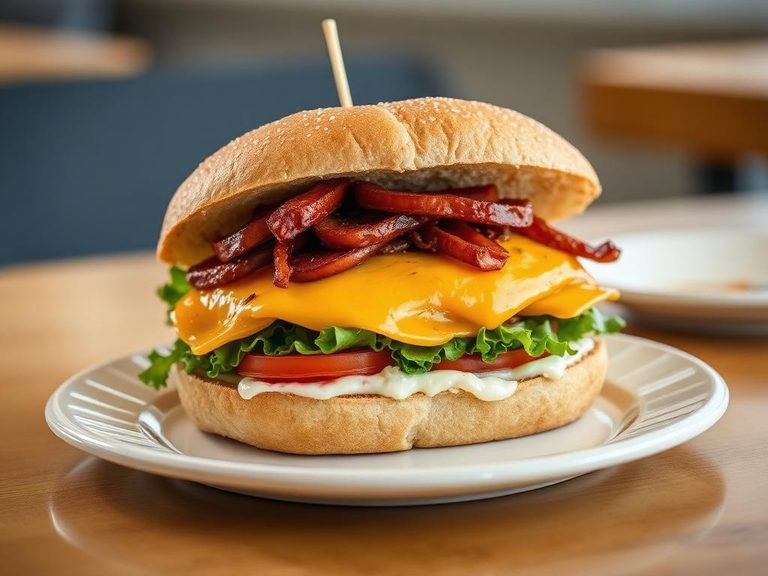
🌍 Where it's eaten
💡 Did you know?
It takes approximately 540 peanuts to make one 12-ounce jar of peanut butter.
Full nutrition (USDA data · scales with serving)
| Water | 0.99 g |
| Energy | 608 kcal |
| Energy | 2542 kj |
| Protein | 24.5 g |
| Total lipid (fat) | 54.2 g |
| Ash | 3.4 g |
| Carbohydrate, by difference | 17.0 g |
| Fiber, total dietary | 6.1 g |
| Total Sugars | 3.1 g |
| Sucrose | 3.1 g |
| Glucose | 0.00 g |
| Fructose | 0.00 g |
| Lactose | 0.00 g |
| Maltose | 0.00 g |
| Galactose | 0.00 g |
| Starch | 3.3 g |
| Calcium, Ca | 45.0 mg |
| Iron, Fe | 1.7 mg |
| Magnesium, Mg | 191 mg |
| Phosphorus, P | 426 mg |
| Potassium, K | 780 mg |
| Sodium, Na | 356 mg |
| Zinc, Zn | 3.1 mg |
| Copper, Cu | 0.48 mg |
| Manganese, Mn | 1.9 mg |
| Thiamin | 0.06 mg |
| Riboflavin | 0.09 mg |
| Niacin | 12.9 mg |
| Pantothenic acid | 0.87 mg |
| Vitamin B-6 | 0.29 mg |
| Choline, total | 94.5 mg |
| Betaine | 0.60 mg |
| Vitamin E (alpha-tocopherol) | 10.3 mg |
| Tocopherol, beta | 0.28 mg |
| Tocopherol, gamma | 13.4 mg |
| Tocopherol, delta | 0.96 mg |
| Tocotrienol, alpha | 0.00 mg |
| Tocotrienol, beta | 0.00 mg |
| Tocotrienol, gamma | 0.19 mg |
| Tocotrienol, delta | 0.00 mg |
Fat & fatty acid profile (per 100g)
| Fatty acids, total saturated | 9.7 g |
| SFA 4:0 | 0.00 g |
| SFA 6:0 | 0.00 g |
| SFA 8:0 | 0.00 g |
| SFA 10:0 | 0.02 g |
| SFA 12:0 | 0.01 g |
| SFA 14:0 | 0.05 g |
| SFA 15:0 | 0.01 g |
| SFA 16:0 | 5.3 g |
| SFA 17:0 | 0.04 g |
| SFA 18:0 | 1.4 g |
| SFA 20:0 | 0.58 g |
| SFA 22:0 | 1.3 g |
| SFA 24:0 | 0.92 g |
| Fatty acids, total monounsaturated | 36.6 g |
| MUFA 14:1 | 0.00 g |
| MUFA 15:1 | 0.00 g |
| MUFA 16:1 | 0.06 g |
| MUFA 16:1 c | 0.06 g |
| MUFA 17:1 | 0.04 g |
| MUFA 18:1 | 35.4 g |
| MUFA 18:1 c | 35.4 g |
| MUFA 20:1 | 1.0 g |
| MUFA 22:1 | 0.11 g |
| MUFA 22:1 c | 0.11 g |
| MUFA 24:1 c | 0.00 g |
| Fatty acids, total polyunsaturated | 7.0 g |
| PUFA 18:2 | 3.8 g |
| PUFA 18:2 n-6 c,c | 3.8 g |
| PUFA 18:2 CLAs | 0.01 g |
| PUFA 18:3 | 2.9 g |
| PUFA 18:3 n-3 c,c,c (ALA) | 2.9 g |
| PUFA 18:3 n-6 c,c,c | 0.01 g |
| PUFA 18:4 | 0.00 g |
| PUFA 20:2 n-6 c,c | 0.01 g |
| PUFA 20:3 | 0.00 g |
| PUFA 20:3 n-3 | 0.00 g |
| PUFA 20:3 n-6 | 0.00 g |
| PUFA 20:4 | 0.00 g |
| PUFA 20:5 n-3 (EPA) | 0.00 g |
| PUFA 22:4 | 0.00 g |
| PUFA 22:5 n-3 (DPA) | 0.16 g |
| PUFA 22:6 n-3 (DHA) | 0.00 g |
| Fatty acids, total trans | 0.04 g |
| Fatty acids, total trans-monoenoic | 0.03 g |
| TFA 16:1 t | 0.00 g |
| TFA 18:1 t | 0.02 g |
| TFA 22:1 t | 0.00 g |
| TFA 18:2 t not further defined | 0.01 g |
| Fatty acids, total trans-polyenoic | 0.01 g |
Amino acid profile (per 100g)
Estimated from Peanut Butter, smooth (Includes foods for USDA's Food Distribution Program) — USDA does not publish this profile for Peanut butter with omega-3.
| Tryptophan | 0.23 g |
| Threonine | 0.52 g |
| Isoleucine | 0.61 g |
| Leucine | 1.5 g |
| Lysine | 0.67 g |
| Methionine | 0.26 g |
| Cystine | 0.23 g |
| Phenylalanine | 1.2 g |
| Tyrosine | 0.82 g |
| Valine | 0.77 g |
| Arginine | 2.7 g |
| Histidine | 0.55 g |
| Alanine | 0.91 g |
| Aspartic acid | 3.0 g |
| Glutamic acid | 5.0 g |
| Glycine | 1.4 g |
| Proline | 1.4 g |
| Serine | 1.5 g |
FAQ
Is the omega-3 in this peanut butter natural?
Standard peanuts contain very little omega-3. The omega-3 in this product is almost certainly added, typically from a source like ground flaxseed, chia seeds, or algal oil, to boost its nutritional profile.
Why is the fat content so high?
Peanuts are naturally high in fat, mostly healthy monounsaturated and polyunsaturated fats. The 54.17g of fat per 100g is consistent with traditional peanut butter, with the added omega-3 contributing to the polyunsaturated fat total.
Can I use this for cooking and baking?
Absolutely. It works well in sauces, dressings, and baked goods like cookies and brownies. Be aware that the added omega-3 source might have a lower smoke point than pure peanut oil, so for high-heat frying, a refined oil is a better choice.
Nutrient density (calculated · NRF9.3)
Nutrient Rich Foods index: beneficial nutrients (protein, fiber, vitamins, minerals) minus saturated fat, added sugar & sodium, per 100 kcal.
NRF9.3 index — Fulgoni, Keast & Drewnowski, 2009. Computed from USDA nutrients.
Weight-loss friendliness (composite index)
Energy density 6.08 kcal/g · 16% calories from protein · 6.1 g fiber · 3.1 g sugar per 100 g.
Composite of energy density (Rolls et al., 1999), protein & fiber satiety, minus sugar. A calculated heuristic — ranks satiety-per-calorie, not a clinical measure.
Dietary load (calculated from USDA values)
Potential renal acid load. Positive = acid-forming, negative = alkaline-forming.
Sodium-to-potassium ratio: 0.46 (lower is better — aim for ≤ 1)
Sodium:potassium per WHO potassium guidance. Computed from USDA nutrients.