

Nuts, almonds, oil roasted, with salt added
Whole food · Nut and Seed Products
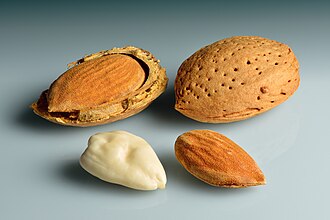
Photo: Wikipedia
These are whole almonds roasted in their own oil until golden and crunchy, then finished with a light, savory salt coating. The process intensifies their natural nutty sweetness and creates a deeply satisfying, crisp texture with a rich, toasty flavor. Nutritionally, they are a powerhouse, delivering over 55g of healthy fats and a solid 21g of protein per 100g, making them a very energy-dense snack.
Calorie split: 13% protein · 11% carbs · 76% fat
↓ Full nutrition💚 Why it's loved
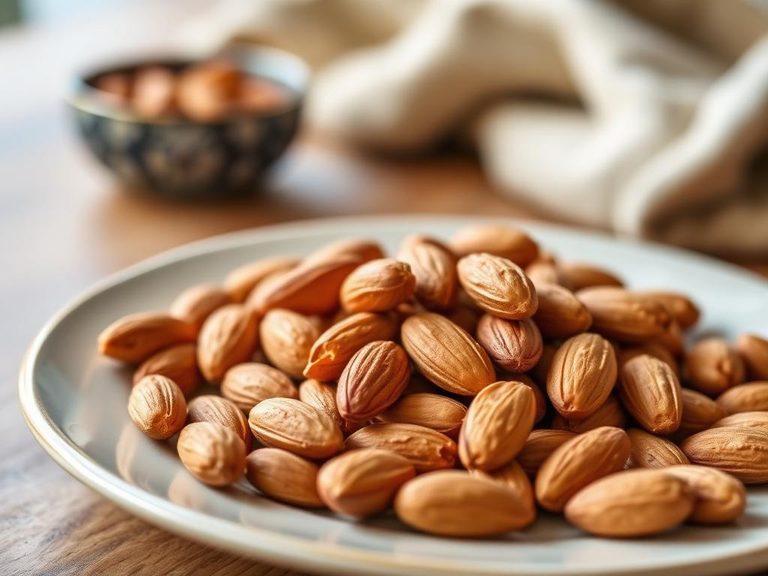
People adore them for their perfect balance of savory salt and deep, roasted nuttiness, which makes them incredibly moreish. They are a beloved, versatile snack that requires no preparation and pairs perfectly with everything from a crisp apple to a cold beer.
⚠️ Watch-outs & how to enjoy it better
The added salt can be a concern for those monitoring sodium intake, and as a tree nut, they are a common and serious allergen. Their high calorie density also means portion control is key for weight management. To counteract, choose low-sodium versions, always check allergen labels, and pre-portion into small bowls rather than eating from the bag.
Key benefits
- Excellent source of monounsaturated fats for heart health.
- High in plant-based protein for satiety and muscle maintenance.
- Rich in dietary fiber, aiding digestion.
- Provides key minerals like magnesium and vitamin E.
- Offers a long-lasting energy boost from healthy fats and protein.
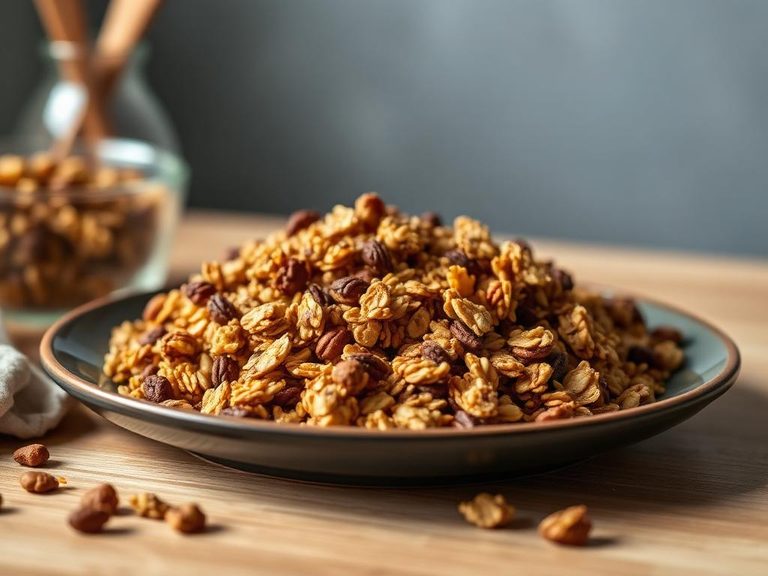
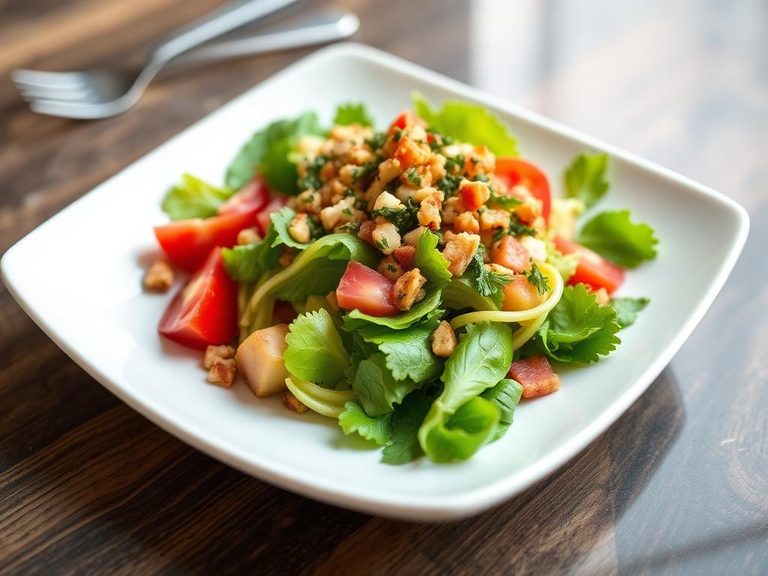
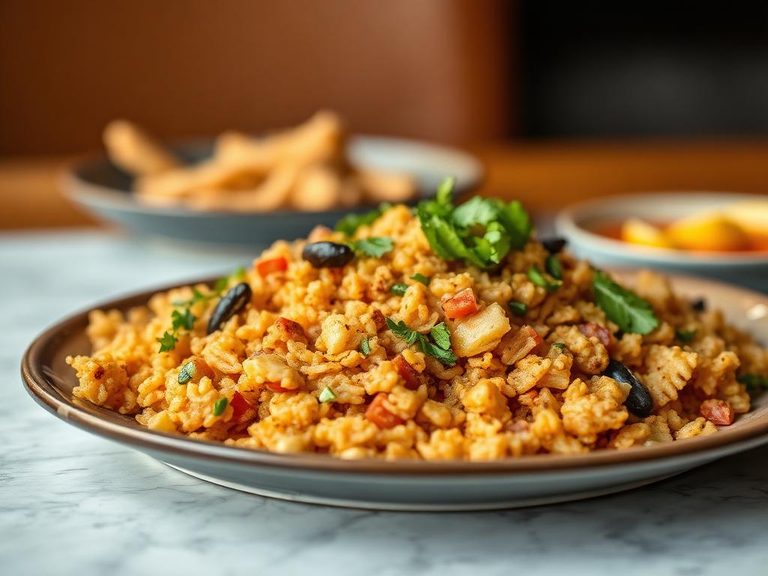
🍽️ Popular dishes
🌍 Where it's eaten
💡 Did you know?
The almond tree is a member of the peach family, and the shell of an almond is actually a drupe, not a true nut.
Full nutrition (USDA data · scales with serving)
| Water | 2.8 g |
| Energy | 607 kcal |
| Energy | 2541 kj |
| Protein | 21.2 g |
| Total lipid (fat) | 55.2 g |
| Ash | 3.1 g |
| Carbohydrate, by difference | 17.7 g |
| Fiber, total dietary | 10.5 g |
| Total Sugars | 4.5 g |
| Sucrose | 4.4 g |
| Glucose | 0.04 g |
| Fructose | 0.00 g |
| Lactose | 0.00 g |
| Maltose | 0.14 g |
| Starch | 0.56 g |
| Calcium, Ca | 291 mg |
| Iron, Fe | 3.7 mg |
| Magnesium, Mg | 274 mg |
| Phosphorus, P | 466 mg |
| Potassium, K | 699 mg |
| Sodium, Na | 339 mg |
| Zinc, Zn | 3.1 mg |
| Copper, Cu | 0.95 mg |
| Manganese, Mn | 2.5 mg |
| Selenium, Se | 4.1 ug |
| Vitamin C, total ascorbic acid | 0.00 mg |
| Thiamin | 0.09 mg |
| Riboflavin | 0.78 mg |
| Niacin | 3.7 mg |
| Pantothenic acid | 0.23 mg |
| Vitamin B-6 | 0.12 mg |
| Folate, total | 27.0 ug |
| Folic acid | 0.00 ug |
| Folate, food | 27.0 ug |
| Folate, DFE | 27.0 ug |
| Choline, total | 52.1 mg |
| Vitamin B-12 | 0.00 ug |
| Vitamin B-12, added | 0.00 ug |
| Vitamin A, RAE | 0.00 ug |
| Retinol | 0.00 ug |
| Carotene, beta | 1.0 ug |
| Carotene, alpha | 0.00 ug |
| Cryptoxanthin, beta | 0.00 ug |
| Vitamin A, IU | 1.0 iu |
| Lycopene | 0.00 ug |
| Lutein + zeaxanthin | 1.0 ug |
| Vitamin E (alpha-tocopherol) | 26.0 mg |
| Vitamin E, added | 0.00 mg |
| Tocopherol, beta | 0.42 mg |
| Tocopherol, gamma | 0.88 mg |
| Tocopherol, delta | 0.14 mg |
| Vitamin D (D2 + D3), International Units | 0.00 iu |
| Vitamin D (D2 + D3) | 0.00 ug |
| Vitamin K (phylloquinone) | 0.00 ug |
| Alcohol, ethyl | 0.00 g |
| Caffeine | 0.00 mg |
| Theobromine | 0.00 mg |
Fat & fatty acid profile (per 100g)
| Fatty acids, total saturated | 4.2 g |
| SFA 4:0 | 0.00 g |
| SFA 6:0 | 0.00 g |
| SFA 8:0 | 0.00 g |
| SFA 10:0 | 0.00 g |
| SFA 12:0 | 0.00 g |
| SFA 13:0 | 0.00 g |
| SFA 14:0 | 0.00 g |
| SFA 15:0 | 0.00 g |
| SFA 16:0 | 3.3 g |
| SFA 17:0 | 0.00 g |
| SFA 18:0 | 0.91 g |
| SFA 20:0 | 0.00 g |
| SFA 22:0 | 0.00 g |
| SFA 24:0 | 0.00 g |
| Fatty acids, total monounsaturated | 34.8 g |
| MUFA 14:1 | 0.00 g |
| MUFA 16:1 | 0.21 g |
| MUFA 18:1 | 34.6 g |
| MUFA 20:1 | 0.00 g |
| MUFA 22:1 | 0.00 g |
| MUFA 24:1 c | 0.00 g |
| Fatty acids, total polyunsaturated | 13.5 g |
| PUFA 18:2 | 13.5 g |
| PUFA 18:3 | 0.00 g |
| PUFA 18:4 | 0.00 g |
| PUFA 20:2 n-6 c,c | 0.00 g |
| PUFA 20:3 | 0.00 g |
| PUFA 20:4 | 0.00 g |
| PUFA 20:5 n-3 (EPA) | 0.00 g |
| PUFA 22:5 n-3 (DPA) | 0.00 g |
| PUFA 22:6 n-3 (DHA) | 0.00 g |
| Cholesterol | 0.00 mg |
| Phytosterols | 130 mg |
| Stigmasterol | 3.0 mg |
| Campesterol | 9.0 mg |
| Beta-sitosterol | 118 mg |
Amino acid profile (per 100g)
| Tryptophan | 0.19 g |
| Threonine | 0.68 g |
| Isoleucine | 0.69 g |
| Leucine | 1.5 g |
| Lysine | 0.60 g |
| Methionine | 0.19 g |
| Cystine | 0.28 g |
| Phenylalanine | 1.1 g |
| Tyrosine | 0.53 g |
| Valine | 0.80 g |
| Arginine | 2.5 g |
| Histidine | 0.59 g |
| Alanine | 1.00 g |
| Aspartic acid | 2.7 g |
| Glutamic acid | 5.2 g |
| Glycine | 1.5 g |
| Proline | 0.97 g |
| Serine | 1.0 g |
FAQ
Are oil-roasted almonds less healthy than raw?
Roasting doesn't significantly alter the core macronutrients (fat, protein, carbs). The primary difference is the added oil and salt. The healthy fats in almonds are stable at roasting temperatures, so they remain a nutritious choice, especially if you choose unsalted or low-sodium versions.
Why are they called 'Marcona' almonds sometimes?
Marcona is a specific, prized variety of almond from Spain, known for being shorter, rounder, and sweeter than common almonds. When oil-roasted and salted, they have a distinctive, luxurious flavor and are often sold at a premium.
How should I store them to keep them crunchy?
Store them in an airtight container in a cool, dark place like a pantry for up to 3 months. For longer storage, keep them in the refrigerator or freezer to prevent the oils from going rancid and to maintain their crispness.
Nutrient density (calculated · NRF9.3)
Nutrient Rich Foods index: beneficial nutrients (protein, fiber, vitamins, minerals) minus saturated fat, added sugar & sodium, per 100 kcal.
NRF9.3 index — Fulgoni, Keast & Drewnowski, 2009. Computed from USDA nutrients.
Weight-loss friendliness (composite index)
Energy density 6.07 kcal/g · 14% calories from protein · 10.5 g fiber · 4.5 g sugar per 100 g.
Composite of energy density (Rolls et al., 1999), protein & fiber satiety, minus sugar. A calculated heuristic — ranks satiety-per-calorie, not a clinical measure.
Dietary load (calculated from USDA values)
Potential renal acid load. Positive = acid-forming, negative = alkaline-forming.
Sodium-to-potassium ratio: 0.48 (lower is better — aim for ≤ 1)
Sodium:potassium per WHO potassium guidance. Computed from USDA nutrients.