

Nectarines, raw
Whole food · Fruits and Fruit Juices
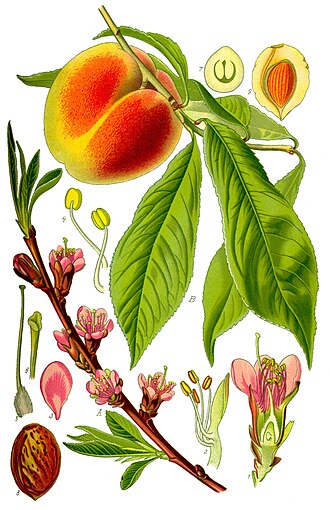
Photo: Wikipedia
A nectarine is a smooth-skinned variety of peach, boasting a vibrant, sun-kissed skin that ranges from gold to deep crimson. Its flesh is juicy and firm with a sweet-tart flavor profile, offering a satisfying crunch when fresh and a luscious, aromatic sweetness when perfectly ripe. Nutritionally, it is a low-calorie powerhouse, providing nearly 10 grams of carbohydrates and 1.5 grams of fiber per 100 grams, making it an excellent source of quick energy and digestive support.
Calorie split: 10% protein · 84% carbs · 6% fat
↓ Full nutrition💚 Why it's loved
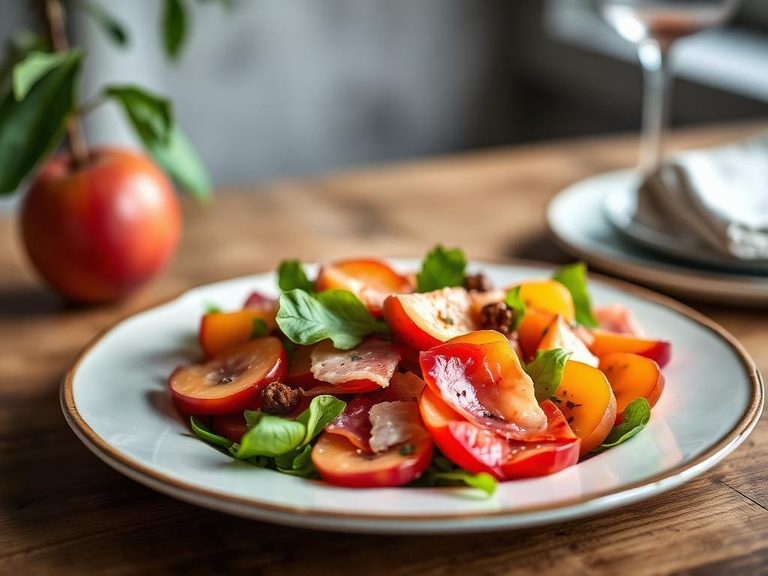
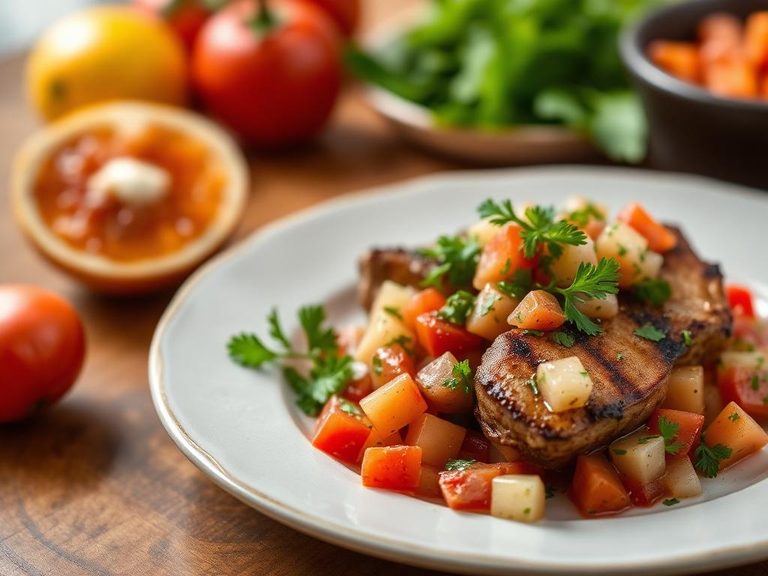
People love nectarines for their perfect balance of sweetness and acidity, combined with a smooth, fuzz-free skin that makes them easy to eat out of hand. Their versatility in both sweet and savory dishes, from fresh salads to grilled desserts, makes them a seasonal favorite in many cultures.
⚠️ Watch-outs & how to enjoy it better
Nectarines are high in natural sugars (around 9g per 100g), which can cause blood-sugar spikes if consumed in large quantities, especially for individuals with diabetes. To counteract this, pair them with protein or healthy fats like nuts or yogurt, and practice portion control by sticking to a single medium fruit.
Key benefits
- Low-calorie density at just 39 kcal per 100g
- Rich in dietary fiber (1.5g) for digestive health
- High water content for natural hydration
- Provides quick energy through natural carbohydrates
- Contains vitamin C and potassium for immune and heart health
🍽️ Popular dishes




🌍 Where it's eaten
💡 Did you know?
Nectarines are not a separate species from peaches—they are simply peaches with a recessive gene that eliminates the fuzzy skin, resulting in a smooth, glossy exterior.
Full nutrition (USDA data · scales with serving)
| Water | 89.0 g |
| Energy (Atwater General Factors) | 43.0 kcal |
| Energy (Atwater Specific Factors) | 39.0 kcal |
| Energy | 39.0 kcal |
| Energy | 163 kj |
| Nitrogen | 0.17 g |
| Protein | 1.1 g |
| Total lipid (fat) | 0.28 g |
| Total fat (NLEA) | 0.13 g |
| Ash | 0.48 g |
| Carbohydrate, by difference | 9.2 g |
| Carbohydrate, by summation | 9.4 g |
| Fiber, total dietary | 1.5 g |
| Fiber, soluble | 0.60 g |
| Fiber, insoluble | 0.90 g |
| Sugars, Total | 7.9 g |
| Sucrose | 4.8 g |
| Glucose | 1.7 g |
| Fructose | 1.4 g |
| Lactose | 0.00 g |
| Maltose | 0.00 g |
| Galactose | 0.00 g |
| Starch | 0.07 g |
| Calcium, Ca | 2.0 mg |
| Iron, Fe | 0.30 mg |
| Magnesium, Mg | 8.8 mg |
| Phosphorus, P | 26.0 mg |
| Potassium, K | 131 mg |
| Sodium, Na | 13.0 mg |
| Zinc, Zn | 0.21 mg |
| Copper, Cu | 0.08 mg |
| Manganese, Mn | 0.05 mg |
| Selenium, Se | 0.00 ug |
| Vitamin C, total ascorbic acid | 2.9 mg |
| Thiamin | 0.03 mg |
| Riboflavin | 0.03 mg |
| Niacin | 1.1 mg |
| Pantothenic acid | 0.18 mg |
| Vitamin B-6 | 0.03 mg |
| Folate, total | 6.0 ug |
| Vitamin A, RAE | 21.0 ug |
| Carotene, beta | 199 ug |
| Carotene, alpha | 0.00 ug |
| Cryptoxanthin, beta | 117 ug |
| Lycopene | 0.00 ug |
| Lutein + zeaxanthin | 130 ug |
| Vitamin E (alpha-tocopherol) | 0.61 mg |
| Tocopherol, beta | 0.01 mg |
| Tocopherol, gamma | 0.04 mg |
| Tocopherol, delta | 0.03 mg |
| Vitamin K (phylloquinone) | 2.0 ug |
| Vitamin K (Dihydrophylloquinone) | 0.00 ug |
Fat & fatty acid profile (per 100g)
| Fatty acids, total saturated | 0.00 g |
| SFA 4:0 | 0.00 g |
| SFA 6:0 | 0.00 g |
| SFA 8:0 | 0.00 g |
| SFA 10:0 | 0.00 g |
| SFA 12:0 | 0.00 g |
| SFA 14:0 | 0.00 g |
| SFA 15:0 | 0.00 g |
| SFA 16:0 | 0.00 g |
| SFA 17:0 | 0.00 g |
| SFA 18:0 | 0.00 g |
| SFA 20:0 | 0.00 g |
| SFA 22:0 | 0.00 g |
| SFA 24:0 | 0.00 g |
| Fatty acids, total monounsaturated | 0.00 g |
| MUFA 14:1 c | 0.00 g |
| MUFA 16:1 c | 0.00 g |
| MUFA 18:1 | 0.00 g |
| MUFA 18:1 c | 0.00 g |
| MUFA 20:1 | 0.00 g |
| MUFA 20:1 c | 0.00 g |
| MUFA 22:1 | 0.00 g |
| MUFA 22:1 c | 0.00 g |
| Fatty acids, total polyunsaturated | 0.00 g |
| PUFA 18:2 | 0.00 g |
| PUFA 18:2 c | 0.00 g |
| PUFA 18:3 | 0.00 g |
| PUFA 18:3 c | 0.00 g |
| PUFA 18:4 | 0.00 g |
| PUFA 20:4 | 0.00 g |
| PUFA 20:4c | 0.00 g |
| PUFA 20:5c | 0.00 g |
| PUFA 20:5 n-3 (EPA) | 0.00 g |
| PUFA 22:2 | 0.00 g |
| PUFA 22:6 c | 0.00 g |
| PUFA 22:6 n-3 (DHA) | 0.00 g |
Amino acid profile (per 100g)
| Tryptophan | 0.01 g |
| Threonine | 0.01 g |
| Isoleucine | 0.01 g |
| Leucine | 0.01 g |
| Lysine | 0.01 g |
| Methionine | 0.01 g |
| Cystine | 0.01 g |
| Phenylalanine | 0.01 g |
| Tyrosine | 0.01 g |
| Valine | 0.01 g |
| Arginine | 0.01 g |
| Histidine | 0.01 g |
| Alanine | 0.01 g |
| Aspartic acid | 0.57 g |
| Glutamic acid | 0.03 g |
| Glycine | 0.01 g |
| Proline | 0.01 g |
| Serine | 0.02 g |
FAQ
Are nectarines the same as peaches?
Yes, nectarines are a variety of peach with a smooth skin, caused by a recessive gene. They share the same nutritional profile and taste, but nectarines have a firmer texture and a slightly more intense flavor.
How do I choose a ripe nectarine?
Look for a nectarine with a vibrant color, slight give when gently pressed, and a sweet, fragrant aroma. Avoid fruits with bruises or green spots, which indicate under-ripeness.
Can nectarines be eaten with the skin?
Yes, the skin is edible and nutritious, providing additional fiber and antioxidants. Simply wash the fruit thoroughly before eating.
Nutrient density (calculated · NRF9.3)
Nutrient Rich Foods index: beneficial nutrients (protein, fiber, vitamins, minerals) minus saturated fat, added sugar & sodium, per 100 kcal.
NRF9.3 index — Fulgoni, Keast & Drewnowski, 2009. Computed from USDA nutrients.
Weight-loss friendliness (composite index)
Energy density 0.39 kcal/g · 11% calories from protein · 1.5 g fiber · 0.0 g sugar per 100 g.
Composite of energy density (Rolls et al., 1999), protein & fiber satiety, minus sugar. A calculated heuristic — ranks satiety-per-calorie, not a clinical measure.
Dietary load (calculated from USDA values)
Potential renal acid load. Positive = acid-forming, negative = alkaline-forming.
Sodium-to-potassium ratio: 0.10 (lower is better — aim for ≤ 1)
Sodium:potassium per WHO potassium guidance. Computed from USDA nutrients.