

Milk, nonfat, fluid, without added vitamin A and vitamin D (fat free or skim)
Whole food · Dairy and Egg Products
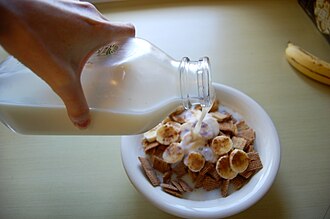
Photo: Wikipedia
This is the pure, water-rich essence of milk with nearly all fat removed, leaving a clean, slightly sweet, and watery liquid. Its nutrition is defined by its lean protein and natural lactose, making it a low-calorie, high-protein staple. It's the classic base for everything from cereal bowls to protein shakes.
Calorie split: 39% protein · 56% carbs · 5% fat
↓ Full nutrition💚 Why it's loved
People love it for its clean, mild taste that doesn't overpower other ingredients, making it the perfect canvas for coffee, smoothies, and cereals. It's a cultural cornerstone, a nostalgic childhood staple, and a reliable, affordable source of nutrition in many households.
⚠️ Watch-outs & how to enjoy it better
The removal of fat strips away the creamy mouthfeel, leaving a thin, sometimes 'watery' texture that some find unsatisfying. Its natural sugar (lactose) can cause digestive discomfort in those with lactose intolerance. **Tip:** For texture, blend it with a banana or a spoonful of nut butter. For lactose issues, try small portions, pair with solid food, or use lactase enzyme drops.
Key benefits
- Excellent source of high-quality protein for muscle repair and satiety
- Naturally rich in calcium for bone and dental health
- Low in calories and fat, supporting weight management goals
- Provides essential nutrients like potassium, phosphorus, and B vitamins (B12, riboflavin)
- Hydrating due to its high water content
🍽️ Popular dishes
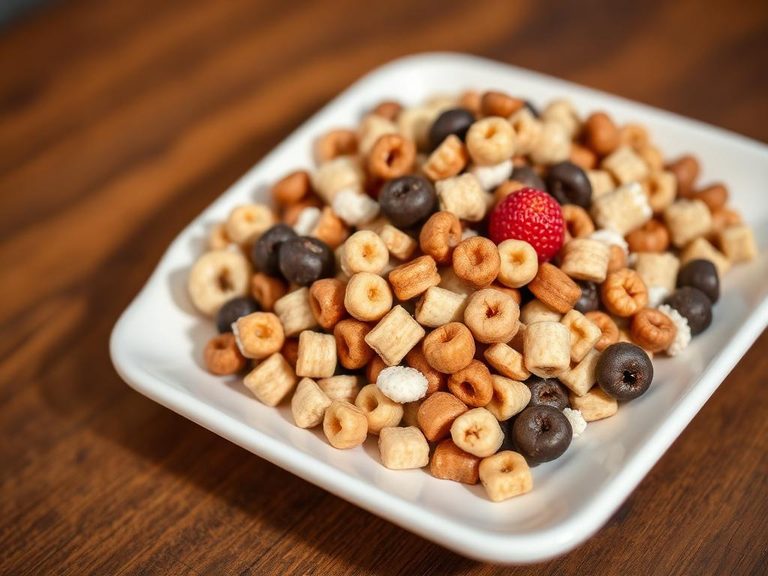
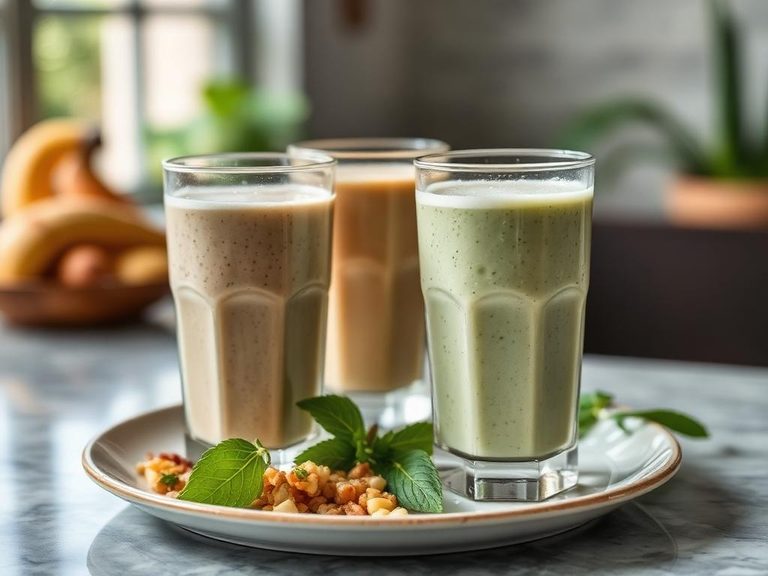

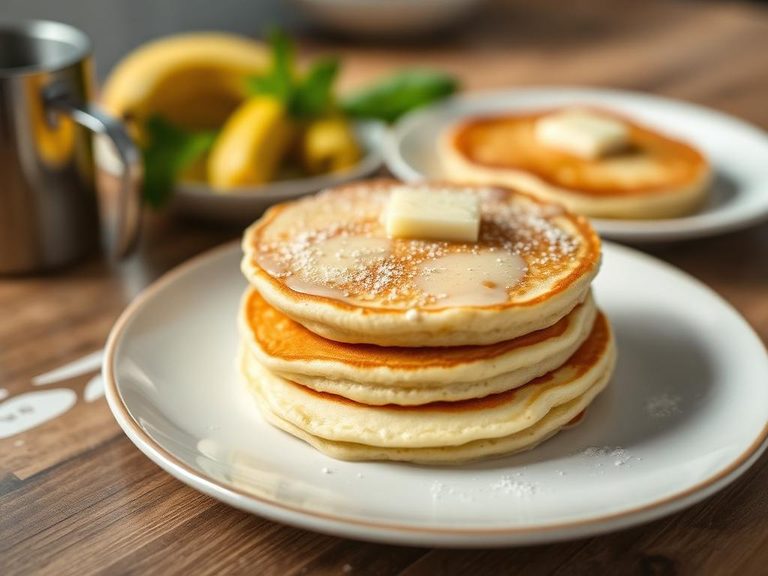

🌍 Where it's eaten
💡 Did you know?
Skimming milk to remove cream was historically a way to preserve the more perishable cream for butter and cheese, with the 'skim' milk left as a lower-value byproduct for the poor or for animal feed.
Full nutrition (USDA data · scales with serving)
| Water | 90.8 g |
| Energy | 35.0 kcal |
| Energy | 144 kj |
| Protein | 3.4 g |
| Total lipid (fat) | 0.18 g |
| Ash | 0.75 g |
| Carbohydrate, by difference | 4.9 g |
| Fiber, total dietary | 0.00 g |
| Total Sugars | 5.1 g |
| Sucrose | 0.00 g |
| Glucose | 0.00 g |
| Fructose | 0.00 g |
| Lactose | 5.1 g |
| Maltose | 0.00 g |
| Galactose | 0.00 g |
| Calcium, Ca | 122 mg |
| Iron, Fe | 0.03 mg |
| Magnesium, Mg | 11.0 mg |
| Phosphorus, P | 101 mg |
| Potassium, K | 156 mg |
| Sodium, Na | 42.0 mg |
| Zinc, Zn | 0.42 mg |
| Copper, Cu | 0.01 mg |
| Manganese, Mn | 0.00 mg |
| Selenium, Se | 3.1 ug |
| Fluoride, F | 3.1 ug |
| Vitamin C, total ascorbic acid | 0.00 mg |
| Thiamin | 0.04 mg |
| Riboflavin | 0.18 mg |
| Niacin | 0.09 mg |
| Pantothenic acid | 0.36 mg |
| Vitamin B-6 | 0.04 mg |
| Folate, total | 5.0 ug |
| Folic acid | 0.00 ug |
| Folate, food | 5.0 ug |
| Folate, DFE | 5.0 ug |
| Choline, total | 15.6 mg |
| Betaine | 1.9 mg |
| Vitamin B-12 | 0.50 ug |
| Vitamin B-12, added | 0.00 ug |
| Vitamin A, RAE | 2.0 ug |
| Retinol | 1.0 ug |
| Carotene, beta | 7.0 ug |
| Carotene, alpha | 0.00 ug |
| Cryptoxanthin, beta | 0.00 ug |
| Vitamin A, IU | 15.0 iu |
| Lycopene | 0.00 ug |
| Lutein + zeaxanthin | 0.00 ug |
| Vitamin E (alpha-tocopherol) | 0.01 mg |
| Vitamin E, added | 0.00 mg |
| Tocopherol, beta | 0.00 mg |
| Tocopherol, gamma | 0.00 mg |
| Tocopherol, delta | 0.00 mg |
| Tocotrienol, alpha | 0.00 mg |
| Tocotrienol, beta | 0.00 mg |
| Tocotrienol, gamma | 0.00 mg |
| Tocotrienol, delta | 0.00 mg |
| Vitamin D (D2 + D3), International Units | 0.00 iu |
| Vitamin D (D2 + D3) | 0.00 ug |
| Vitamin D3 (cholecalciferol) | 0.00 ug |
| Vitamin K (phylloquinone) | 0.00 ug |
| Vitamin K (Dihydrophylloquinone) | 0.00 ug |
| Alcohol, ethyl | 0.00 g |
| Caffeine | 0.00 mg |
| Theobromine | 0.00 mg |
Fat & fatty acid profile (per 100g)
| Fatty acids, total saturated | 0.12 g |
| SFA 4:0 | 0.01 g |
| SFA 6:0 | 0.00 g |
| SFA 8:0 | 0.00 g |
| SFA 10:0 | 0.00 g |
| SFA 12:0 | 0.00 g |
| SFA 14:0 | 0.02 g |
| SFA 16:0 | 0.05 g |
| SFA 18:0 | 0.02 g |
| Fatty acids, total monounsaturated | 0.05 g |
| MUFA 16:1 | 0.01 g |
| MUFA 18:1 | 0.04 g |
| MUFA 20:1 | 0.00 g |
| MUFA 22:1 | 0.00 g |
| Fatty acids, total polyunsaturated | 0.01 g |
| PUFA 18:2 | 0.01 g |
| PUFA 18:3 | 0.00 g |
| PUFA 18:4 | 0.00 g |
| PUFA 20:4 | 0.00 g |
| PUFA 20:5 n-3 (EPA) | 0.00 g |
| PUFA 22:5 n-3 (DPA) | 0.00 g |
| PUFA 22:6 n-3 (DHA) | 0.00 g |
| Cholesterol | 2.0 mg |
Amino acid profile (per 100g)
| Tryptophan | 0.04 g |
| Threonine | 0.14 g |
| Isoleucine | 0.17 g |
| Leucine | 0.32 g |
| Lysine | 0.28 g |
| Methionine | 0.09 g |
| Cystine | 0.02 g |
| Phenylalanine | 0.17 g |
| Tyrosine | 0.17 g |
| Valine | 0.22 g |
| Arginine | 0.10 g |
| Histidine | 0.10 g |
| Alanine | 0.11 g |
| Aspartic acid | 0.29 g |
| Glutamic acid | 0.76 g |
| Glycine | 0.07 g |
| Proline | 0.33 g |
| Serine | 0.20 g |
| Hydroxyproline | 0.00 g |
FAQ
Is skim milk as nutritious as whole milk?
It contains the same amount of protein, calcium, and most vitamins. The primary difference is the removal of fat, which also removes fat-soluble vitamins A and D (often added back in fortification) and calories. The choice depends on dietary fat and calorie needs.
Why is skim milk sometimes called 'fat-free' or 'nonfat'?
These terms are legally defined. In the U.S., 'skim milk' must contain less than 0.5 grams of fat per serving, while 'fat-free' or 'nonfat' must contain less than 0.5 grams of fat per reference amount customarily consumed (typically 240ml).
Does skim milk have more sugar than whole milk?
No. The sugar in milk is naturally occurring lactose. The amount is nearly identical in skim and whole milk (about 12g per cup). The difference is in fat content and calories, not sugar.
Nutrient density (calculated · NRF9.3)
Nutrient Rich Foods index: beneficial nutrients (protein, fiber, vitamins, minerals) minus saturated fat, added sugar & sodium, per 100 kcal.
NRF9.3 index — Fulgoni, Keast & Drewnowski, 2009. Computed from USDA nutrients.
Weight-loss friendliness (composite index)
Energy density 0.35 kcal/g · 39% calories from protein · 0.0 g fiber · 5.1 g sugar per 100 g.
Composite of energy density (Rolls et al., 1999), protein & fiber satiety, minus sugar. A calculated heuristic — ranks satiety-per-calorie, not a clinical measure.
Dietary load (calculated from USDA values)
Potential renal acid load. Positive = acid-forming, negative = alkaline-forming.
Sodium-to-potassium ratio: 0.27 (lower is better — aim for ≤ 1)
Sodium:potassium per WHO potassium guidance. Computed from USDA nutrients.