

White sauce
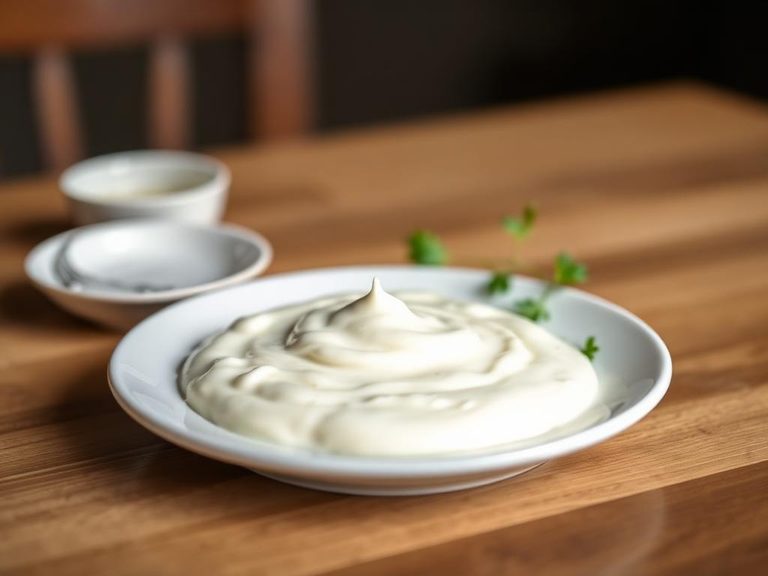
Béchamel, also known as white sauce, is one of the five French mother sauces, traditionally made by whisking milk into a white roux (butter and flour) until thick and creamy. It forms the base for countless classic dishes, from lasagna and macaroni and cheese to creamy gratins and soufflés.
🍳 View the full White sauce recipe →
🍽️ Nutrition at a glance
Béchamel is primarily a source of fat and carbohydrates, with moderate protein from the milk and butter. A typical ½-cup serving contains roughly 150-200 calories, along with calcium and some B vitamins from the dairy.
Nutrition breakdown
| Calories | 120 kcal |
| Protein | 3 g |
| Carbs | 8 g |
| Fat | 9 g |
| Fiber | 0 g |
| Sugar | 3 g |
| Sodium | 480 mg |
| Calcium | 100 mg |
| Phosphorus | 80 mg |
| Vitamin A | 90 mcg RAE |
| Vitamin D | 0.5 mcg |
| Vitamin B12 | 0.2 mcg |
| Riboflavin (B2) | 0.05 mg |
| Selenium | 3 mcg |
| Choline | 15 mg |
Per 1/2 cup (120 g) · estimated, varies by recipe
💡 What's interesting
Culturally, béchamel is a cornerstone of French cuisine, named after Louis de Béchameil, a steward to King Louis XIV, though its origins may trace back to Italian cooks. Nutritionally, its high fat and calorie content makes it a rich, indulgent component rather than a standalone dish.
🍽️ Related dishes

AI estimate may be inaccurate · Terms