

Cereal
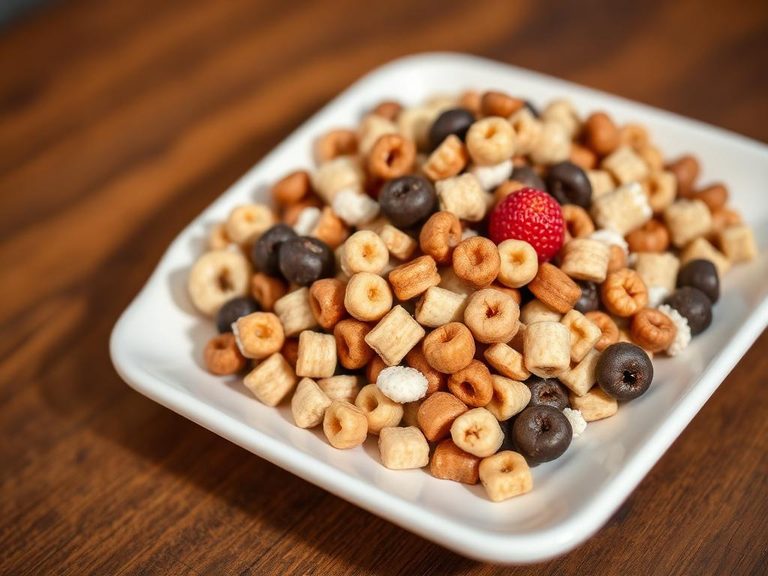
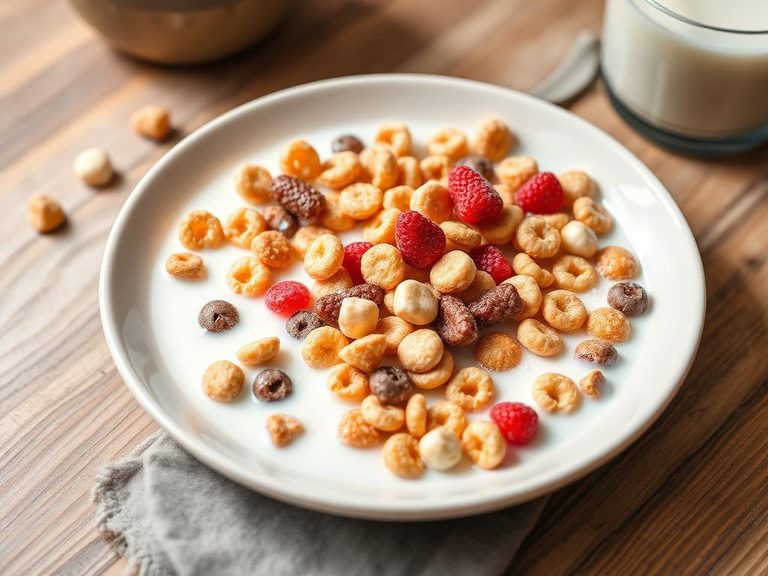
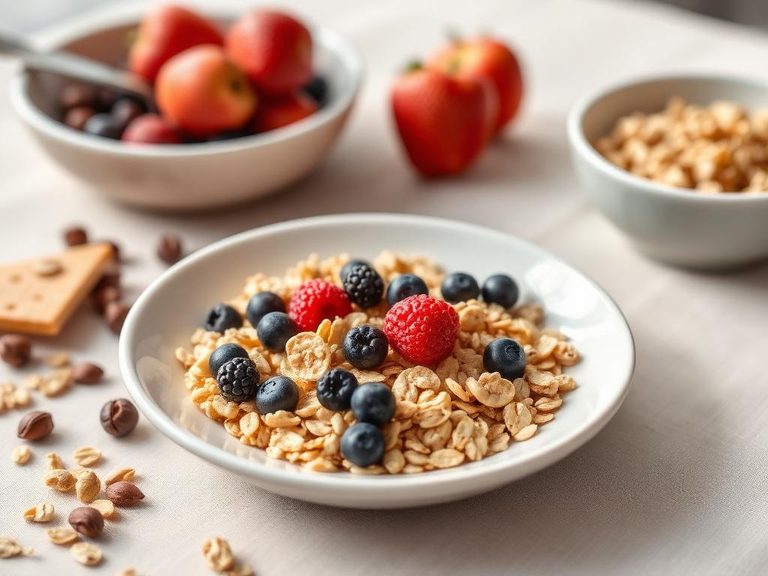
Cereal is a processed grain-based food, typically ready-to-eat or quick-cooking, made from oats, wheat, corn, or rice. It is most commonly served cold with milk and often topped with fresh fruit, nuts, or sweeteners. While its origins trace back to 19th-century health movements in the United States, it has become a global breakfast staple.
🍳 View the full Cereal recipe →
🍽️ Nutrition at a glance
Most commercial cereals are high in carbohydrates, often with added sugars, and can range from 100 to 300 calories per serving. They are frequently fortified with essential vitamins and minerals like iron, B vitamins, and vitamin D, making them a common source of micronutrients in many diets.
Nutrition breakdown
| Calories | 150 kcal |
| Protein | 3 g |
| Carbs | 30 g |
| Fat | 2 g |
| Fiber | 3 g |
| Sugar | 10 g |
| Sodium | 200 mg |
| Iron | 10 mg |
| Calcium | 130 mg |
| Potassium | 100 mg |
| Vitamin D | 2 mcg |
| Vitamin B12 | 1.5 mcg |
| Folate | 200 mcg |
| Zinc | 3.8 mg |
| Phosphorus | 100 mg |
Per 1 cup (40 g) · estimated, varies by recipe
💡 What's interesting
Cereal's invention is tied to the 19th-century health reform movement, originally promoted as a simple, digestible alternative to heavy, meat-centric breakfasts. Today, it represents a fascinating cultural phenomenon, evolving from a health food into a category that includes everything from sugary children's brands to high-fiber, low-sugar options.
🍽️ Related dishes



AI estimate may be inaccurate · Terms