

Milk, chocolate, lowfat, reduced sugar
Whole food · Dairy and Egg Products
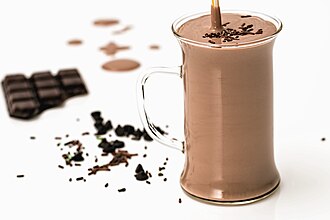
Photo: Wikipedia
This is a smooth, creamy chocolate milk made with reduced-fat milk and less added sugar, offering a lighter take on a classic treat. It delivers a rich chocolate flavor and satisfying drinkability with a significantly lower calorie count than traditional versions. Its standout feature is the strong protein content relative to its modest energy, making it a more balanced choice for a sweet beverage.
Calorie split: 26% protein · 57% carbs · 17% fat
↓ Full nutrition💚 Why it's loved
People love it for delivering the nostalgic, comforting taste of chocolate milk in a more diet-conscious format. It's a versatile drink that satisfies a sweet craving while also serving as a practical, protein-rich snack or recovery beverage.
⚠️ Watch-outs & how to enjoy it better
Despite reduced sugar, it still contains added sugars and lactose, which can cause blood sugar spikes or digestive issues for some. Those monitoring sugar intake or with lactose intolerance should exercise caution. To mitigate, pair it with a source of fiber or healthy fat (like a handful of nuts) to slow sugar absorption, or choose a lactose-free version if sensitive.
Key benefits
- Excellent source of high-quality protein for muscle repair and satiety.
- Provides essential calcium and vitamin D for bone health.
- Lower in fat and calories than regular chocolate milk.
- Contains less added sugar than standard varieties.
- Convenient post-exercise recovery drink with a good carb-to-protein ratio.
🍽️ Popular dishes
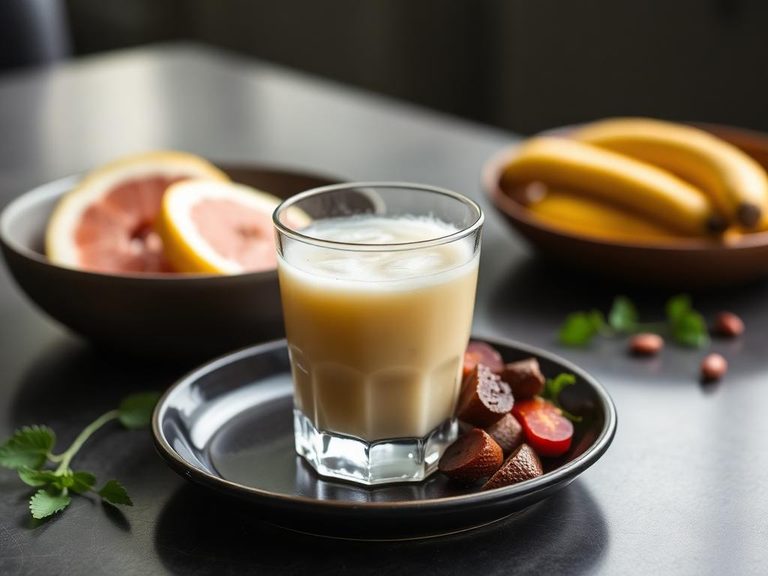
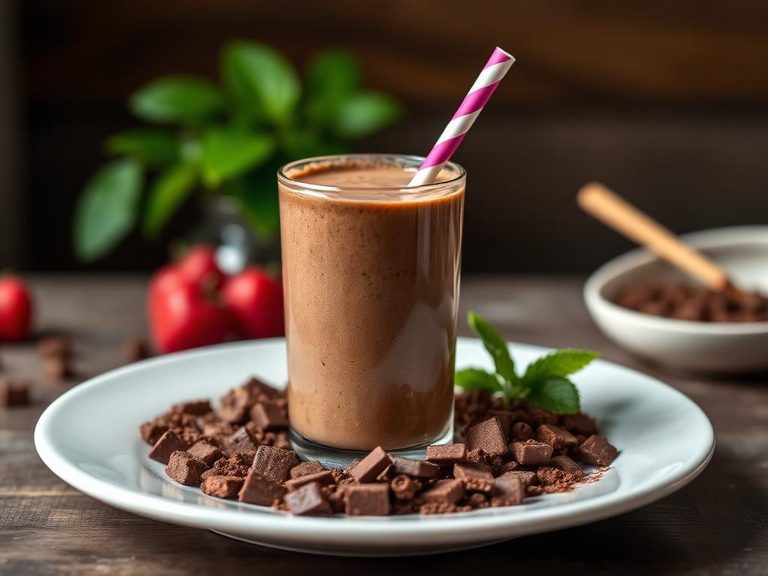
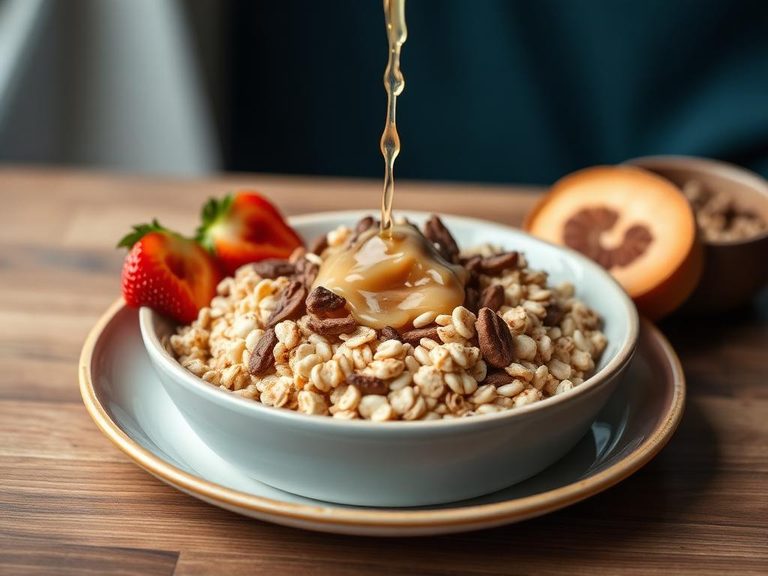
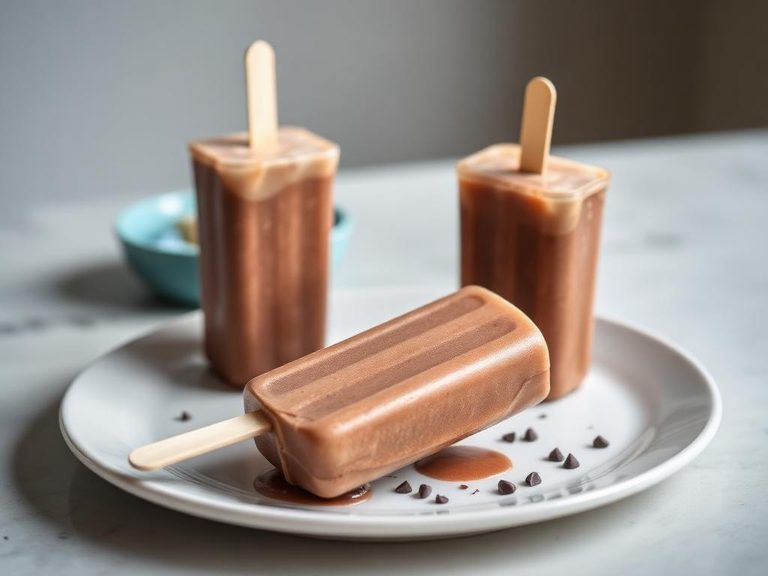
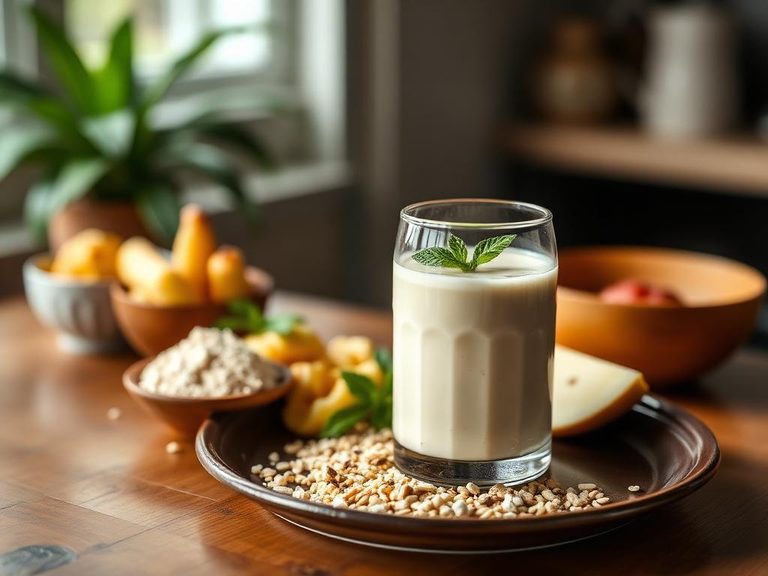
🌍 Where it's eaten
💡 Did you know?
Chocolate milk was first introduced to the American public in the 19th century as a health tonic, not a treat.
Full nutrition (USDA data · scales with serving)
| Water | 87.1 g |
| Energy | 57.0 kcal |
| Energy | 237 kj |
| Protein | 3.4 g |
| Total lipid (fat) | 1.0 g |
| Ash | 0.76 g |
| Carbohydrate, by difference | 7.7 g |
| Fiber, total dietary | 0.00 g |
| Total Sugars | 7.3 g |
| Calcium, Ca | 122 mg |
| Iron, Fe | 0.16 mg |
| Magnesium, Mg | 13.0 mg |
| Phosphorus, P | 98.0 mg |
| Potassium, K | 168 mg |
| Sodium, Na | 66.0 mg |
| Zinc, Zn | 0.46 mg |
| Copper, Cu | 0.02 mg |
| Manganese, Mn | 0.02 mg |
| Selenium, Se | 1.9 ug |
| Vitamin C, total ascorbic acid | 0.00 mg |
| Thiamin | 0.04 mg |
| Riboflavin | 0.23 mg |
| Niacin | 0.12 mg |
| Pantothenic acid | 0.47 mg |
| Vitamin B-6 | 0.05 mg |
| Folate, total | 5.0 ug |
| Folic acid | 0.00 ug |
| Folate, food | 5.0 ug |
| Folate, DFE | 5.0 ug |
| Choline, total | 15.2 mg |
| Betaine | 0.70 mg |
| Vitamin B-12 | 0.20 ug |
| Vitamin B-12, added | 0.00 ug |
| Vitamin A, RAE | 96.0 ug |
| Retinol | 96.0 ug |
| Carotene, beta | 2.0 ug |
| Carotene, alpha | 0.00 ug |
| Cryptoxanthin, beta | 0.00 ug |
| Vitamin A, IU | 321 iu |
| Lycopene | 0.00 ug |
| Lutein + zeaxanthin | 0.00 ug |
| Vitamin E (alpha-tocopherol) | 0.00 mg |
| Vitamin E, added | 0.00 mg |
| Tocopherol, beta | 0.00 mg |
| Tocopherol, gamma | 0.00 mg |
| Tocopherol, delta | 0.00 mg |
| Tocotrienol, alpha | 0.00 mg |
| Tocotrienol, beta | 0.00 mg |
| Tocotrienol, gamma | 0.00 mg |
| Tocotrienol, delta | 0.00 mg |
| Vitamin D (D2 + D3), International Units | 60.0 iu |
| Vitamin D (D2 + D3) | 1.5 ug |
| Vitamin D2 (ergocalciferol) | 0.00 ug |
| Vitamin D3 (cholecalciferol) | 1.5 ug |
| Vitamin K (phylloquinone) | 0.10 ug |
| Vitamin K (Dihydrophylloquinone) | 0.00 ug |
| Vitamin K (Menaquinone-4) | 0.20 ug |
| Alcohol, ethyl | 0.00 g |
| Caffeine | 0.00 mg |
| Theobromine | 6.0 mg |
Fat & fatty acid profile (per 100g)
| Fatty acids, total saturated | 0.62 g |
| SFA 4:0 | 0.02 g |
| SFA 6:0 | 0.01 g |
| SFA 8:0 | 0.01 g |
| SFA 10:0 | 0.03 g |
| SFA 12:0 | 0.03 g |
| SFA 14:0 | 0.10 g |
| SFA 15:0 | 0.01 g |
| SFA 16:0 | 0.28 g |
| SFA 17:0 | 0.01 g |
| SFA 18:0 | 0.12 g |
| SFA 20:0 | 0.00 g |
| SFA 22:0 | 0.00 g |
| SFA 24:0 | 0.00 g |
| Fatty acids, total monounsaturated | 0.29 g |
| MUFA 14:1 | 0.01 g |
| MUFA 15:1 | 0.00 g |
| MUFA 16:1 | 0.01 g |
| MUFA 16:1 c | 0.01 g |
| MUFA 17:1 | 0.00 g |
| MUFA 18:1 | 0.26 g |
| MUFA 18:1 c | 0.23 g |
| MUFA 20:1 | 0.00 g |
| MUFA 22:1 | 0.00 g |
| MUFA 22:1 c | 0.00 g |
| MUFA 24:1 c | 0.00 g |
| Fatty acids, total polyunsaturated | 0.05 g |
| PUFA 18:2 | 0.04 g |
| PUFA 18:2 n-6 c,c | 0.03 g |
| PUFA 18:2 CLAs | 0.01 g |
| PUFA 18:3 | 0.01 g |
| PUFA 18:3 n-3 c,c,c (ALA) | 0.01 g |
| PUFA 18:3 n-6 c,c,c | 0.00 g |
| PUFA 18:3i | 0.00 g |
| PUFA 18:4 | 0.00 g |
| PUFA 20:2 n-6 c,c | 0.00 g |
| PUFA 20:3 | 0.00 g |
| PUFA 20:3 n-3 | 0.00 g |
| PUFA 20:3 n-6 | 0.00 g |
| PUFA 20:4 | 0.00 g |
| PUFA 20:5 n-3 (EPA) | 0.00 g |
| PUFA 22:4 | 0.00 g |
| PUFA 22:5 n-3 (DPA) | 0.00 g |
| PUFA 22:6 n-3 (DHA) | 0.00 g |
| Fatty acids, total trans | 0.04 g |
| Fatty acids, total trans-monoenoic | 0.03 g |
| TFA 16:1 t | 0.00 g |
| TFA 18:1 t | 0.03 g |
| TFA 22:1 t | 0.00 g |
| TFA 18:2 t not further defined | 0.01 g |
| Fatty acids, total trans-polyenoic | 0.01 g |
| Cholesterol | 5.0 mg |
Amino acid profile (per 100g)
| Hydroxyproline | 0.00 g |
FAQ
Is low-fat, reduced-sugar chocolate milk a good post-workout drink?
Yes, it's often recommended. The combination of carbohydrates (from the milk's natural lactose and some added sugar) and high-quality protein helps replenish glycogen stores and repair muscle tissue effectively.
How does the sugar content compare to regular chocolate milk?
A typical reduced-sugar version contains about 25-30% less added sugar than regular chocolate milk, though it still has more sugar than plain milk due to the chocolate flavoring.
Can I use this in baking or cooking?
Absolutely. It works well in recipes like chocolate pancakes, muffins, or as a moistening agent in cakes, adding flavor while slightly reducing the overall fat content compared to using whole milk.
Nutrient density (calculated · NRF9.3)
Nutrient Rich Foods index: beneficial nutrients (protein, fiber, vitamins, minerals) minus saturated fat, added sugar & sodium, per 100 kcal.
NRF9.3 index — Fulgoni, Keast & Drewnowski, 2009. Computed from USDA nutrients.
Weight-loss friendliness (composite index)
Energy density 0.57 kcal/g · 24% calories from protein · 0.0 g fiber · 7.3 g sugar per 100 g.
Composite of energy density (Rolls et al., 1999), protein & fiber satiety, minus sugar. A calculated heuristic — ranks satiety-per-calorie, not a clinical measure.
Dietary load (calculated from USDA values)
Potential renal acid load. Positive = acid-forming, negative = alkaline-forming.
Sodium-to-potassium ratio: 0.39 (lower is better — aim for ≤ 1)
Sodium:potassium per WHO potassium guidance. Computed from USDA nutrients.