

Lamb, New Zealand, imported, tunnel-boned leg, chump off, shank off, separable lean and fat, cooked, slow roasted
Whole food · Lamb, Veal, and Game Products

Photo: Wikipedia
This is a premium cut of New Zealand lamb, specifically the lean, slow-roasted leg with the chump and shank removed for a uniform, tender result. Its texture is succulent and finely grained, with a rich, savory flavor that is deepened by the slow-rooking process, creating a beautiful contrast between the juicy lean meat and the rendered, flavorful fat. Nutritionally, it's a powerhouse of high-quality protein with virtually no carbohydrates, making it a centerpiece for low-carb or high-protein meals.
Calorie split: 45% protein · 0% carbs · 55% fat
↓ Full nutrition💚 Why it's loved
People adore this cut for its deep, complex umami flavor and melt-in-the-mouth tenderness when slow-roasted. Its versatility allows it to shine as a simple Sunday roast centerpiece or be shredded for luxurious sandwiches and salads.
⚠️ Watch-outs & how to enjoy it better
The primary downside is its high saturated fat content (about 5g per 100g), which those monitoring heart health should consume in moderation. To counteract this, pair it with fiber-rich vegetables like roasted carrots or a leafy green salad to aid digestion and balance the meal, and practice portion control by serving it as part of a balanced plate rather than the sole focus.
Key benefits
- Excellent source of complete, high-quality protein (23.4g per 100g)
- Virtually zero carbohydrates, suitable for ketogenic diets
- Rich in essential minerals like iron, zinc, and selenium
- Provides B vitamins, particularly B12, crucial for nerve function
- Slow-roasting method helps retain moisture and nutrients
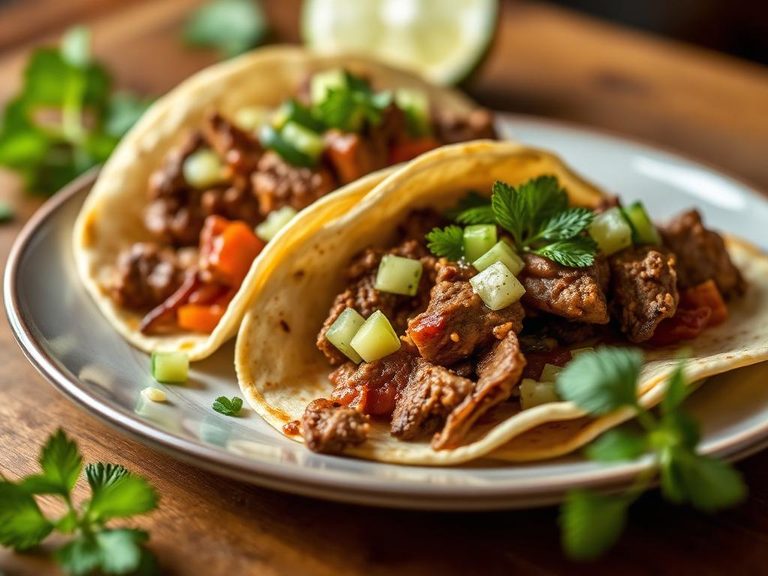
🍽️ Popular dishes
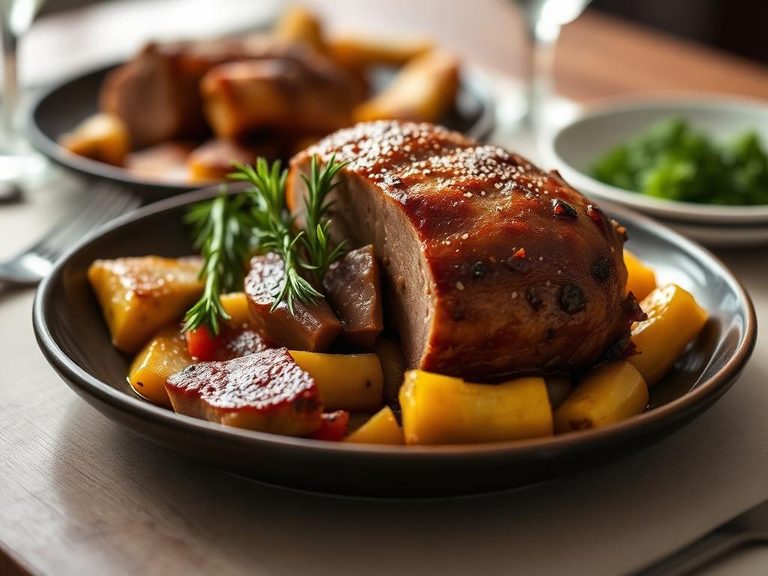
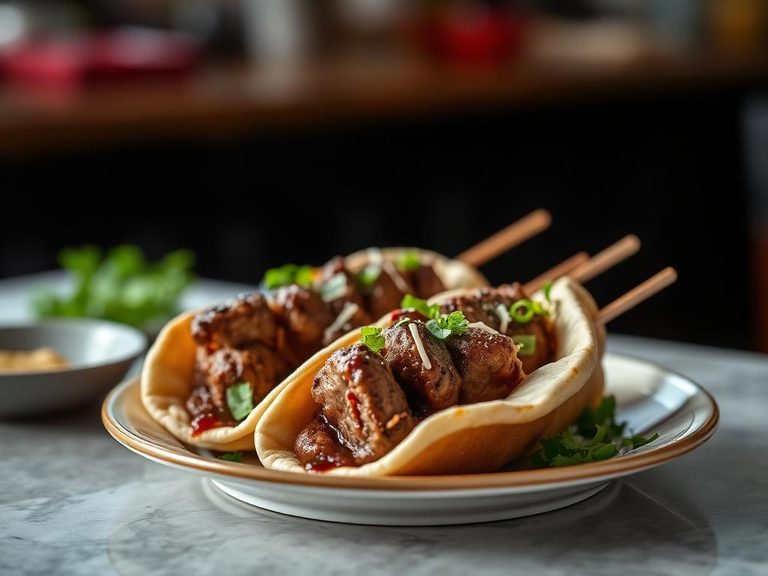
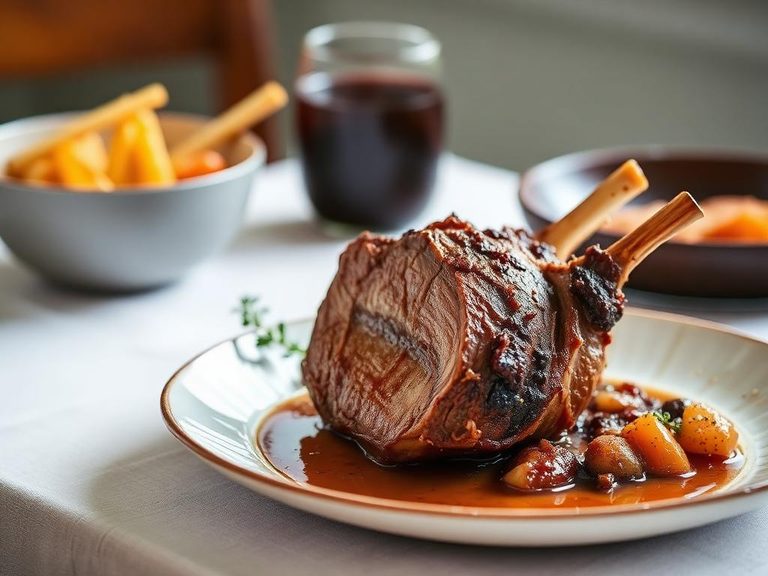
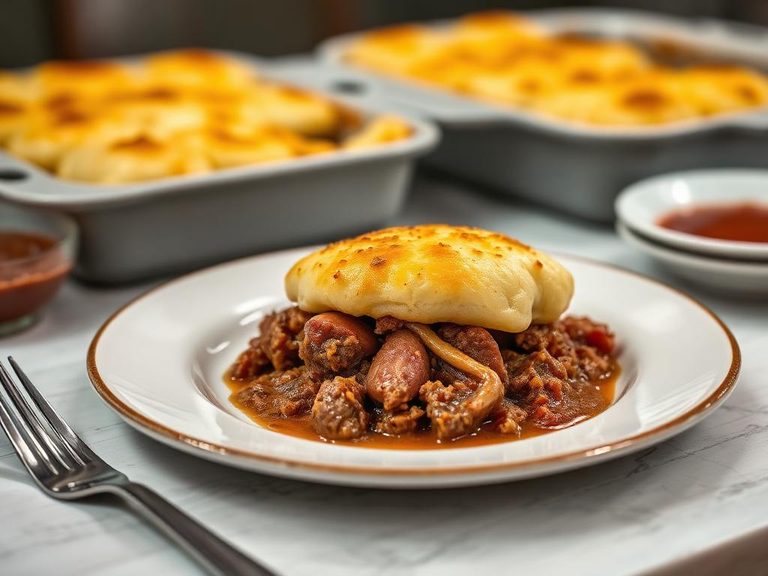
🌍 Where it's eaten
💡 Did you know?
The term 'tunnel-boned' refers to a butchery technique where the femur bone is removed through a small hole in the meat, leaving a neat, cylindrical roast that cooks evenly and is easy to carve.
Full nutrition (USDA data · scales with serving)
| Water | 63.8 g |
| Energy | 208 kcal |
| Energy | 870 kj |
| Protein | 23.4 g |
| Total lipid (fat) | 12.7 g |
| Ash | 1.1 g |
| Carbohydrate, by difference | 0.03 g |
| Fiber, total dietary | 0.00 g |
| Total Sugars | 0.00 g |
| Calcium, Ca | 4.0 mg |
| Iron, Fe | 1.6 mg |
| Magnesium, Mg | 24.0 mg |
| Phosphorus, P | 201 mg |
| Potassium, K | 349 mg |
| Sodium, Na | 61.0 mg |
| Zinc, Zn | 3.5 mg |
| Copper, Cu | 0.14 mg |
| Manganese, Mn | 0.01 mg |
| Selenium, Se | 4.4 ug |
| Vitamin C, total ascorbic acid | 0.00 mg |
| Thiamin | 0.11 mg |
| Riboflavin | 0.23 mg |
| Niacin | 5.5 mg |
| Pantothenic acid | 0.76 mg |
| Vitamin B-6 | 0.25 mg |
| Vitamin B-12 | 1.5 ug |
| Vitamin A, RAE | 7.0 ug |
| Retinol | 7.0 ug |
| Carotene, beta | 0.00 ug |
| Carotene, alpha | 0.00 ug |
| Cryptoxanthin, beta | 0.00 ug |
| Vitamin A, IU | 24.0 iu |
| Lycopene | 0.00 ug |
| Lutein + zeaxanthin | 0.00 ug |
| Vitamin E (alpha-tocopherol) | 0.40 mg |
| Vitamin D (D2 + D3), International Units | 1.0 iu |
| Vitamin D (D2 + D3) | 0.00 ug |
| Vitamin D3 (cholecalciferol) | 0.00 ug |
| Alcohol, ethyl | 0.00 g |
| Caffeine | 0.00 mg |
| Theobromine | 0.00 mg |
Fat & fatty acid profile (per 100g)
| Fatty acids, total saturated | 4.8 g |
| SFA 4:0 | 0.00 g |
| SFA 6:0 | 0.00 g |
| SFA 8:0 | 0.00 g |
| SFA 10:0 | 0.02 g |
| SFA 12:0 | 0.02 g |
| SFA 14:0 | 0.25 g |
| SFA 16:0 | 1.9 g |
| SFA 17:0 | 0.21 g |
| SFA 18:0 | 2.4 g |
| SFA 20:0 | 0.01 g |
| SFA 22:0 | 0.02 g |
| SFA 24:0 | 0.00 g |
| Fatty acids, total monounsaturated | 3.6 g |
| MUFA 14:1 | 0.01 g |
| MUFA 15:1 | 0.00 g |
| MUFA 16:1 | 0.11 g |
| MUFA 16:1 c | 0.10 g |
| MUFA 17:1 | 0.00 g |
| MUFA 18:1 | 3.4 g |
| MUFA 18:1 c | 2.9 g |
| MUFA 20:1 | 0.00 g |
| MUFA 22:1 | 0.00 g |
| MUFA 22:1 c | 0.00 g |
| MUFA 24:1 c | 0.00 g |
| Fatty acids, total polyunsaturated | 0.59 g |
| PUFA 18:2 | 0.34 g |
| PUFA 18:2 n-6 c,c | 0.17 g |
| PUFA 18:2 CLAs | 0.17 g |
| PUFA 18:3 | 0.17 g |
| PUFA 18:3 n-3 c,c,c (ALA) | 0.17 g |
| PUFA 18:3 n-6 c,c,c | 0.00 g |
| PUFA 18:4 | 0.00 g |
| PUFA 20:2 n-6 c,c | 0.00 g |
| PUFA 20:3 | 0.00 g |
| PUFA 20:3 n-3 | 0.00 g |
| PUFA 20:3 n-6 | 0.00 g |
| PUFA 20:4 | 0.02 g |
| PUFA 20:4 n-6 | 0.02 g |
| PUFA 20:5 n-3 (EPA) | 0.03 g |
| PUFA 22:5 n-3 (DPA) | 0.03 g |
| PUFA 22:6 n-3 (DHA) | 0.01 g |
| Fatty acids, total trans | 0.57 g |
| Fatty acids, total trans-monoenoic | 0.57 g |
| TFA 16:1 t | 0.01 g |
| TFA 18:1 t | 0.55 g |
| TFA 18:2 t,t | 0.00 g |
| Fatty acids, total trans-polyenoic | 0.00 g |
| Cholesterol | 79.0 mg |
Amino acid profile (per 100g)
| Tryptophan | 0.26 g |
| Threonine | 1.1 g |
| Isoleucine | 1.0 g |
| Leucine | 1.8 g |
| Lysine | 2.0 g |
| Methionine | 0.76 g |
| Cystine | 0.31 g |
| Phenylalanine | 0.92 g |
| Tyrosine | 0.81 g |
| Valine | 1.2 g |
| Arginine | 1.6 g |
| Histidine | 0.50 g |
| Alanine | 1.2 g |
| Glutamic acid | 3.3 g |
| Glycine | 1.0 g |
| Proline | 0.75 g |
| Serine | 0.80 g |
FAQ
How is 'tunnel-boned' different from a regular boneless leg of lamb?
Tunnel-boning removes the bone through a small incision, preserving the roast's compact, cylindrical shape for even cooking and neat slices. A regular boneless leg is often butterflied (opened flat), which is better for stuffing or grilling.
What does 'chump off, shank off' mean?
It means the chump (the rump end, a tougher cut) and the shank (the lower leg) have been removed, leaving a premium, uniform piece of lean meat from the center of the leg for consistent tenderness.
Is slow-roasting the best way to cook this cut?
Yes, slow-roasting at a low temperature is ideal. It gently breaks down connective tissue, rendering the fat and resulting in exceptionally tender, juicy meat. High-heat methods can make this lean cut dry and tough.
Nutrient density (calculated · NRF9.3)
Nutrient Rich Foods index: beneficial nutrients (protein, fiber, vitamins, minerals) minus saturated fat, added sugar & sodium, per 100 kcal.
NRF9.3 index — Fulgoni, Keast & Drewnowski, 2009. Computed from USDA nutrients.
Weight-loss friendliness (composite index)
Energy density 2.08 kcal/g · 45% calories from protein · 0.0 g fiber · 0.0 g sugar per 100 g.
Composite of energy density (Rolls et al., 1999), protein & fiber satiety, minus sugar. A calculated heuristic — ranks satiety-per-calorie, not a clinical measure.
Dietary load (calculated from USDA values)
Potential renal acid load. Positive = acid-forming, negative = alkaline-forming.
Sodium-to-potassium ratio: 0.17 (lower is better — aim for ≤ 1)
Sodium:potassium per WHO potassium guidance. Computed from USDA nutrients.