

Lamb, New Zealand, imported, loin chop, separable lean and fat, cooked, fast fried
Whole food · Lamb, Veal, and Game Products
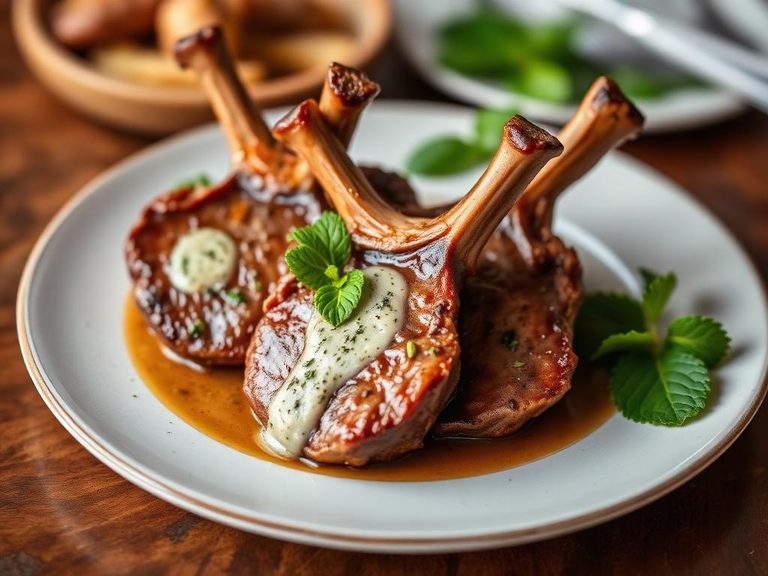
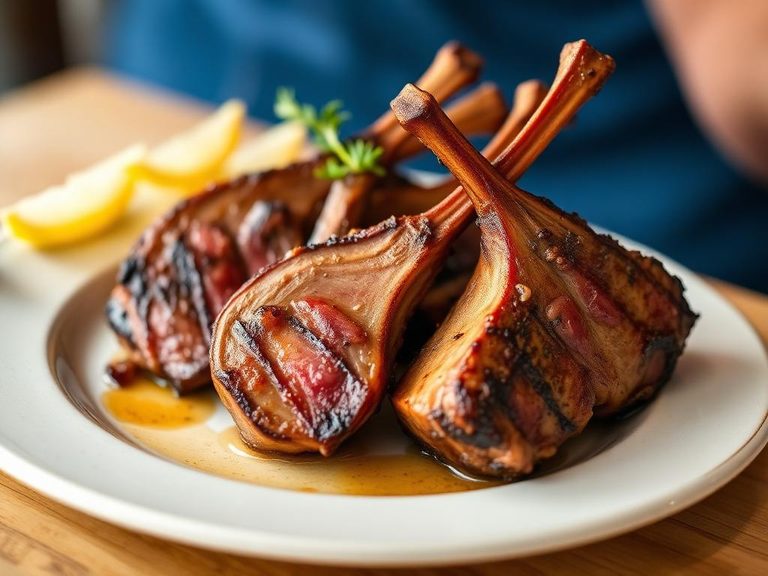
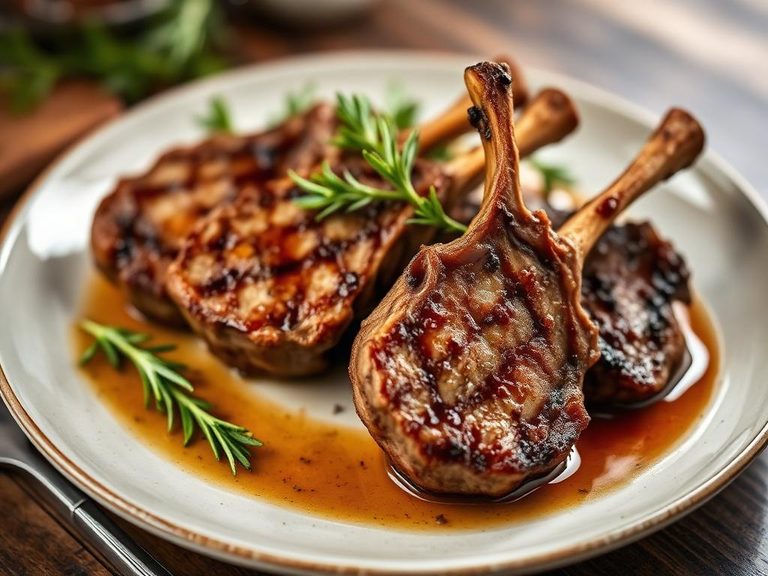
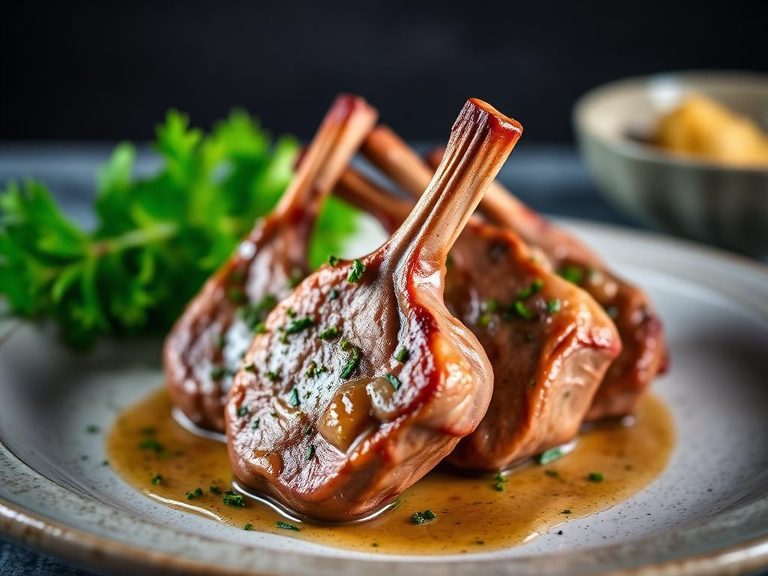
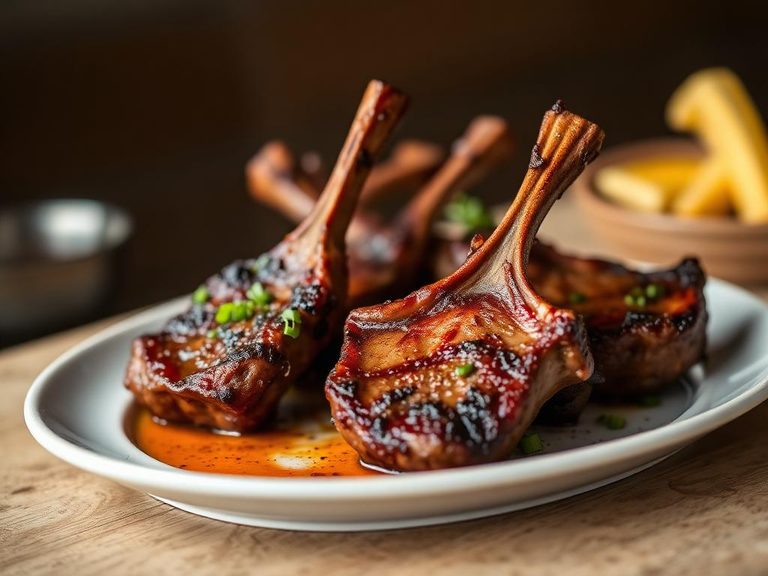
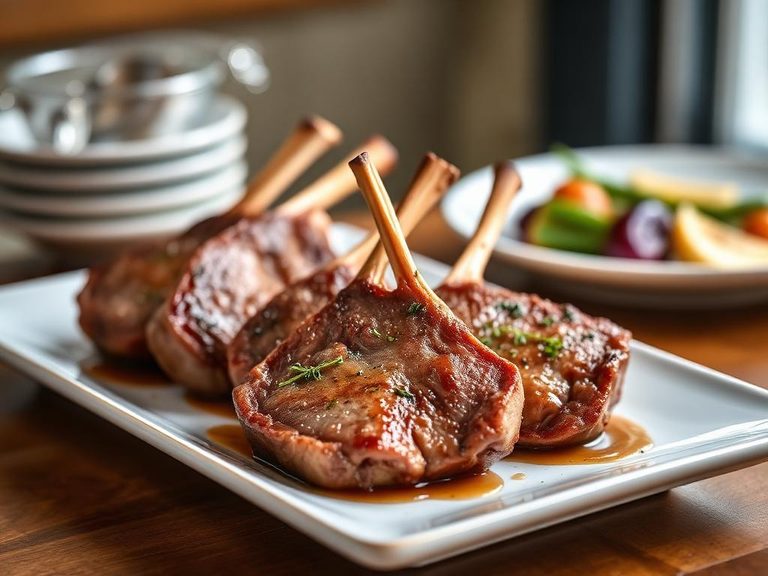
This is a cut of premium New Zealand lamb, cooked quickly over high heat to render its rich, marbled fat into a savory, slightly crispy exterior while keeping the lean meat tender and juicy. The flavor is distinctly sweet, gamey, and mineral-rich, characteristic of grass-fed lamb. Nutritionally, it's a dense source of high-quality protein and energy, with nearly all calories coming from protein and fat.
Calorie split: 26% protein · 0% carbs · 74% fat
↓ Full nutrition💚 Why it's loved
People adore it for the profound, savory umami flavor and the luxurious texture contrast between the crisp fat cap and succulent lean meat. Its robust taste makes it a centerpiece for celebratory meals and a versatile canvas for bold herbs and spices.
⚠️ Watch-outs & how to enjoy it better
The high saturated fat content means it should be enjoyed in moderation by those monitoring heart health or calorie intake. The strong, gamey flavor can be off-putting to some palates. To balance, pair it with acidic sides like a mint-yogurt sauce or a tangy tomato salad to cut the richness, and practice portion control by making it part of a meal loaded with vegetables.
Key benefits
- Excellent source of complete, high-quality protein for muscle maintenance.
- Provides essential minerals like iron, zinc, and selenium.
- Contains conjugated linoleic acid (CLA), a fatty acid studied for various health properties.
- Naturally very low in carbohydrates and sugars.
- Grass-fed origin may offer a more favorable omega-3 to omega-6 fatty acid ratio.
🍽️ Popular dishes
🌍 Where it's eaten
💡 Did you know?
New Zealand lamb is often exported at a very young age (typically from lambs under 12 months old), which contributes to its exceptionally tender and mild flavor compared to older mutton.
Full nutrition (USDA data · scales with serving)
| Water | 50.1 g |
| Energy | 332 kcal |
| Energy | 1387 kj |
| Protein | 21.5 g |
| Total lipid (fat) | 27.1 g |
| Ash | 0.95 g |
| Carbohydrate, by difference | 0.41 g |
| Fiber, total dietary | 0.00 g |
| Total Sugars | 0.00 g |
| Calcium, Ca | 31.0 mg |
| Iron, Fe | 1.6 mg |
| Magnesium, Mg | 22.0 mg |
| Phosphorus, P | 194 mg |
| Potassium, K | 313 mg |
| Sodium, Na | 73.0 mg |
| Zinc, Zn | 2.9 mg |
| Copper, Cu | 0.12 mg |
| Manganese, Mn | 0.01 mg |
| Selenium, Se | 5.8 ug |
| Vitamin C, total ascorbic acid | 0.00 mg |
| Thiamin | 0.10 mg |
| Riboflavin | 0.18 mg |
| Niacin | 5.2 mg |
| Pantothenic acid | 0.63 mg |
| Vitamin B-6 | 0.15 mg |
| Vitamin B-12 | 1.5 ug |
| Vitamin A, RAE | 19.0 ug |
| Retinol | 19.0 ug |
| Carotene, beta | 0.00 ug |
| Carotene, alpha | 0.00 ug |
| Cryptoxanthin, beta | 0.00 ug |
| Vitamin A, IU | 63.0 iu |
| Lycopene | 0.00 ug |
| Lutein + zeaxanthin | 0.00 ug |
| Vitamin E (alpha-tocopherol) | 0.54 mg |
| Vitamin D (D2 + D3), International Units | 3.0 iu |
| Vitamin D (D2 + D3) | 0.10 ug |
| Vitamin D3 (cholecalciferol) | 0.10 ug |
| Alcohol, ethyl | 0.00 g |
| Caffeine | 0.00 mg |
| Theobromine | 0.00 mg |
Fat & fatty acid profile (per 100g)
| Fatty acids, total saturated | 11.3 g |
| SFA 4:0 | 0.00 g |
| SFA 6:0 | 0.00 g |
| SFA 8:0 | 0.01 g |
| SFA 10:0 | 0.03 g |
| SFA 12:0 | 0.04 g |
| SFA 14:0 | 0.55 g |
| SFA 16:0 | 4.1 g |
| SFA 17:0 | 0.48 g |
| SFA 18:0 | 6.0 g |
| SFA 20:0 | 0.03 g |
| SFA 22:0 | 0.05 g |
| SFA 24:0 | 0.00 g |
| Fatty acids, total monounsaturated | 7.3 g |
| MUFA 14:1 | 0.01 g |
| MUFA 15:1 | 0.00 g |
| MUFA 16:1 | 0.22 g |
| MUFA 16:1 c | 0.19 g |
| MUFA 17:1 | 0.00 g |
| MUFA 18:1 | 7.1 g |
| MUFA 18:1 c | 5.7 g |
| MUFA 20:1 | 0.01 g |
| MUFA 22:1 | 0.00 g |
| MUFA 22:1 c | 0.00 g |
| MUFA 24:1 c | 0.00 g |
| Fatty acids, total polyunsaturated | 1.0 g |
| PUFA 18:2 | 0.65 g |
| PUFA 18:2 n-6 c,c | 0.27 g |
| PUFA 18:2 CLAs | 0.36 g |
| PUFA 18:3 | 0.29 g |
| PUFA 18:3 n-3 c,c,c (ALA) | 0.29 g |
| PUFA 18:3 n-6 c,c,c | 0.00 g |
| PUFA 18:4 | 0.00 g |
| PUFA 20:2 n-6 c,c | 0.00 g |
| PUFA 20:3 | 0.00 g |
| PUFA 20:3 n-3 | 0.00 g |
| PUFA 20:3 n-6 | 0.00 g |
| PUFA 20:4 | 0.02 g |
| PUFA 20:4 n-6 | 0.02 g |
| PUFA 20:5 n-3 (EPA) | 0.02 g |
| PUFA 22:5 n-3 (DPA) | 0.03 g |
| PUFA 22:6 n-3 (DHA) | 0.01 g |
| Fatty acids, total trans | 1.4 g |
| Fatty acids, total trans-monoenoic | 1.4 g |
| TFA 16:1 t | 0.03 g |
| TFA 18:1 t | 1.4 g |
| TFA 18:2 t,t | 0.01 g |
| Fatty acids, total trans-polyenoic | 0.01 g |
| Cholesterol | 81.0 mg |
Amino acid profile (per 100g)
| Tryptophan | 0.24 g |
| Threonine | 1.0 g |
| Isoleucine | 0.96 g |
| Leucine | 1.7 g |
| Lysine | 1.9 g |
| Methionine | 0.70 g |
| Cystine | 0.28 g |
| Phenylalanine | 0.85 g |
| Tyrosine | 0.74 g |
| Valine | 1.1 g |
| Arginine | 1.4 g |
| Histidine | 0.46 g |
| Alanine | 1.1 g |
| Glutamic acid | 3.0 g |
| Glycine | 0.92 g |
| Proline | 0.69 g |
| Serine | 0.73 g |
FAQ
What's the best way to cook loin chops to keep them tender?
Fast, high-heat methods like grilling, pan-searing, or broiling are ideal. Cook to medium-rare (145°F/63°C internal temp) and let them rest for 5-10 minutes before serving to allow juices to redistribute.
Is the fat on the chop meant to be eaten?
Yes, the separable fat is a key part of the flavor and texture. Rendering it by cooking the chop fat-side down first creates a delicious, crispy layer. You can trim excess fat before eating if preferred.
How does New Zealand lamb differ from other lamb?
It is predominantly grass-fed, free-range, and exported young, resulting in a leaner, more tender, and distinctly sweet, less 'gamey' flavor compared to grain-fed or older lamb from other regions.
Nutrient density (calculated · NRF9.3)
Nutrient Rich Foods index: beneficial nutrients (protein, fiber, vitamins, minerals) minus saturated fat, added sugar & sodium, per 100 kcal.
NRF9.3 index — Fulgoni, Keast & Drewnowski, 2009. Computed from USDA nutrients.
Weight-loss friendliness (composite index)
Energy density 3.32 kcal/g · 26% calories from protein · 0.0 g fiber · 0.0 g sugar per 100 g.
Composite of energy density (Rolls et al., 1999), protein & fiber satiety, minus sugar. A calculated heuristic — ranks satiety-per-calorie, not a clinical measure.
Dietary load (calculated from USDA values)
Potential renal acid load. Positive = acid-forming, negative = alkaline-forming.
Sodium-to-potassium ratio: 0.23 (lower is better — aim for ≤ 1)
Sodium:potassium per WHO potassium guidance. Computed from USDA nutrients.