

Lamb, New Zealand, imported, hind-shank, separable lean and fat, raw
Whole food · Lamb, Veal, and Game Products

Photo: Wikipedia
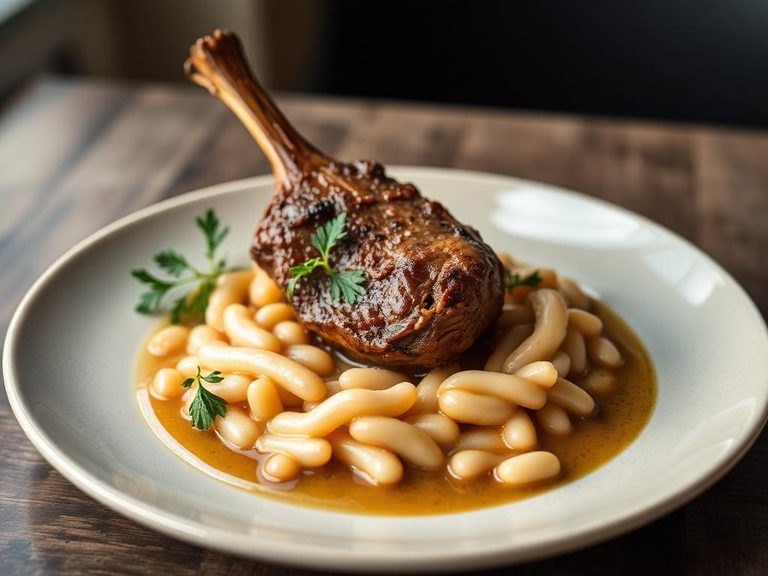
This is a raw, bone-in cut from the lower leg of New Zealand lamb, featuring a rich, deep-red lean muscle marbled with a distinct layer of fat. It offers a robust, slightly gamey flavor and a firm, dense texture that transforms into tender, fall-off-the-bone succulence when slow-cooked. Nutritionally, it's a powerhouse of high-quality protein with a moderate calorie count, driven primarily by its fat content.
Calorie split: 40% protein · 2% carbs · 59% fat
↓ Full nutrition💚 Why it's loved
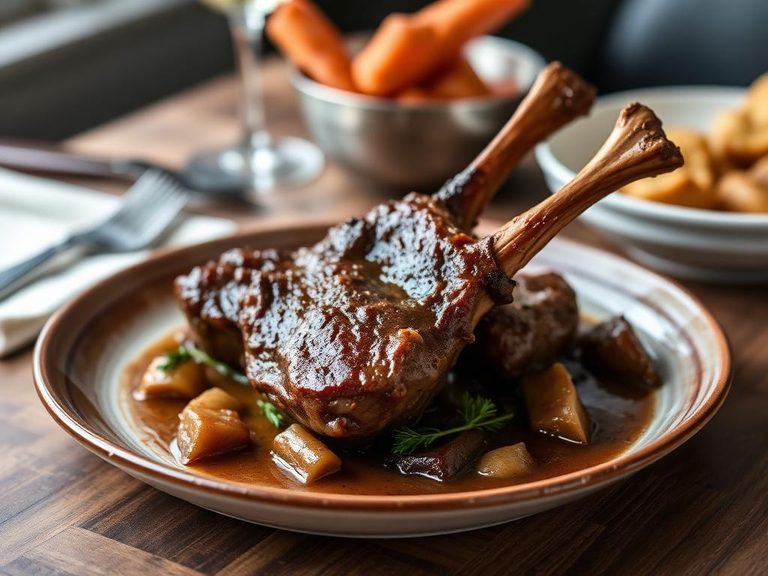
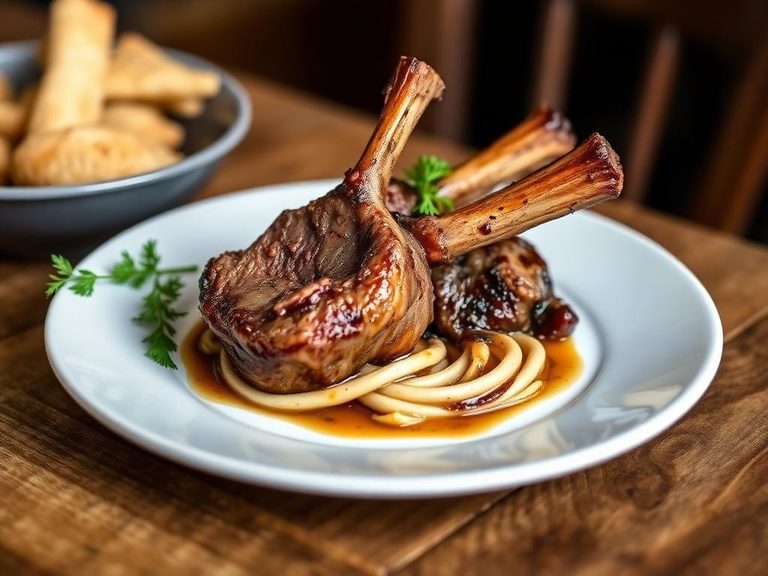
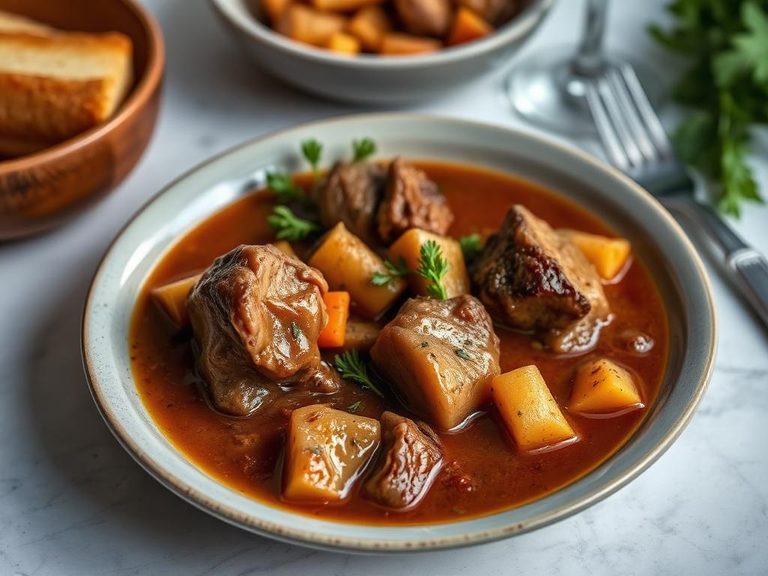
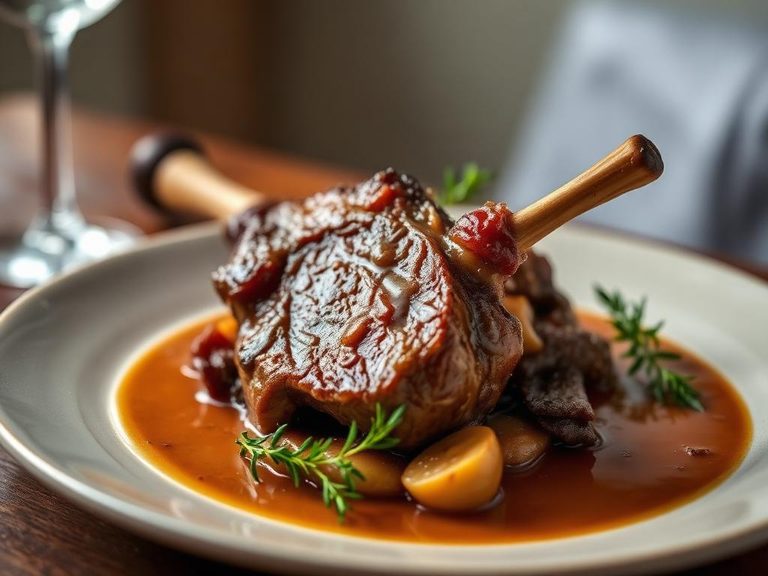
People love it for its deep, savory flavor that becomes incredibly tender and gelatinous with slow, moist cooking methods. It's a versatile cut for hearty, comforting dishes and is a cultural staple in many cuisines, often associated with rustic, home-style cooking.
⚠️ Watch-outs & how to enjoy it better
The high fat content, while flavorful, can be a concern for those monitoring saturated fat intake. Its connective tissue requires long cooking times; undercooked, it can be tough and chewy. To counteract, trim excess external fat before cooking and use methods like braising or stewing to break down collagen. Pairing with fiber-rich vegetables like root vegetables can create a more balanced meal.
Key benefits
- Excellent source of complete protein for muscle maintenance
- Rich in bioavailable iron and zinc for immune function
- Provides B vitamins, especially B12, for energy metabolism
- Contains conjugated linoleic acid (CLA), a naturally occurring fatty acid
🍽️ Popular dishes
🌍 Where it's eaten
💡 Did you know?
The 'hind-shank' comes from the leg that does more work, making its muscle denser and more flavorful than the fore-shank, but also requiring more careful cooking to achieve tenderness.
Full nutrition (USDA data · scales with serving)
| Water | 67.8 g |
| Energy | 186 kcal |
| Energy | 776 kj |
| Protein | 18.4 g |
| Total lipid (fat) | 12.1 g |
| Ash | 0.93 g |
| Carbohydrate, by difference | 0.73 g |
| Fiber, total dietary | 0.00 g |
| Total Sugars | 0.00 g |
| Calcium, Ca | 5.0 mg |
| Iron, Fe | 1.3 mg |
| Magnesium, Mg | 20.0 mg |
| Phosphorus, P | 168 mg |
| Potassium, K | 299 mg |
| Sodium, Na | 76.0 mg |
| Zinc, Zn | 3.1 mg |
| Copper, Cu | 0.10 mg |
| Manganese, Mn | 0.01 mg |
| Selenium, Se | 4.3 ug |
| Vitamin C, total ascorbic acid | 0.00 mg |
| Thiamin | 0.07 mg |
| Riboflavin | 0.15 mg |
| Niacin | 4.4 mg |
| Pantothenic acid | 0.45 mg |
| Vitamin B-6 | 0.13 mg |
| Vitamin B-12 | 1.3 ug |
| Vitamin A, RAE | 7.0 ug |
| Retinol | 7.0 ug |
| Carotene, beta | 0.00 ug |
| Carotene, alpha | 0.00 ug |
| Cryptoxanthin, beta | 0.00 ug |
| Vitamin A, IU | 25.0 iu |
| Lycopene | 0.00 ug |
| Lutein + zeaxanthin | 0.00 ug |
| Vitamin E (alpha-tocopherol) | 0.40 mg |
| Vitamin D (D2 + D3), International Units | 2.0 iu |
| Vitamin D (D2 + D3) | 0.10 ug |
| Vitamin D3 (cholecalciferol) | 0.10 ug |
| Alcohol, ethyl | 0.00 g |
| Caffeine | 0.00 mg |
| Theobromine | 0.00 mg |
Fat & fatty acid profile (per 100g)
| Fatty acids, total saturated | 4.9 g |
| SFA 4:0 | 0.00 g |
| SFA 6:0 | 0.00 g |
| SFA 8:0 | 0.00 g |
| SFA 10:0 | 0.01 g |
| SFA 12:0 | 0.02 g |
| SFA 14:0 | 0.24 g |
| SFA 16:0 | 1.9 g |
| SFA 17:0 | 0.22 g |
| SFA 18:0 | 2.4 g |
| SFA 20:0 | 0.01 g |
| SFA 22:0 | 0.03 g |
| SFA 24:0 | 0.00 g |
| Fatty acids, total monounsaturated | 3.5 g |
| MUFA 14:1 | 0.01 g |
| MUFA 15:1 | 0.00 g |
| MUFA 16:1 | 0.11 g |
| MUFA 16:1 c | 0.10 g |
| MUFA 17:1 | 0.00 g |
| MUFA 18:1 | 3.4 g |
| MUFA 18:1 c | 2.8 g |
| MUFA 20:1 | 0.00 g |
| MUFA 22:1 | 0.00 g |
| MUFA 22:1 c | 0.00 g |
| MUFA 24:1 c | 0.00 g |
| Fatty acids, total polyunsaturated | 0.54 g |
| PUFA 18:2 | 0.33 g |
| PUFA 18:2 n-6 c,c | 0.14 g |
| PUFA 18:2 CLAs | 0.18 g |
| PUFA 18:3 | 0.13 g |
| PUFA 18:3 n-3 c,c,c (ALA) | 0.13 g |
| PUFA 18:3 n-6 c,c,c | 0.00 g |
| PUFA 18:4 | 0.00 g |
| PUFA 20:2 n-6 c,c | 0.00 g |
| PUFA 20:3 | 0.00 g |
| PUFA 20:3 n-3 | 0.00 g |
| PUFA 20:3 n-6 | 0.00 g |
| PUFA 20:4 | 0.03 g |
| PUFA 20:4 n-6 | 0.03 g |
| PUFA 20:5 n-3 (EPA) | 0.02 g |
| PUFA 22:5 n-3 (DPA) | 0.03 g |
| PUFA 22:6 n-3 (DHA) | 0.00 g |
| Fatty acids, total trans | 0.58 g |
| Fatty acids, total trans-monoenoic | 0.57 g |
| TFA 16:1 t | 0.02 g |
| TFA 18:1 t | 0.56 g |
| TFA 18:2 t,t | 0.01 g |
| Fatty acids, total trans-polyenoic | 0.01 g |
| Cholesterol | 64.0 mg |
Amino acid profile (per 100g)
| Tryptophan | 0.20 g |
| Threonine | 0.88 g |
| Isoleucine | 0.82 g |
| Leucine | 1.4 g |
| Lysine | 1.6 g |
| Methionine | 0.60 g |
| Cystine | 0.24 g |
| Phenylalanine | 0.72 g |
| Tyrosine | 0.64 g |
| Valine | 0.94 g |
| Arginine | 1.2 g |
| Histidine | 0.39 g |
| Alanine | 0.91 g |
| Glutamic acid | 2.6 g |
| Glycine | 0.79 g |
| Proline | 0.59 g |
| Serine | 0.63 g |
FAQ
What's the best way to cook a lamb shank to make it tender?
The key is low-and-slow, moist heat. Braising (searing then simmering in liquid) or stewing for 2-3 hours at a low temperature breaks down the tough collagen into gelatin, resulting in fork-tender meat.
Is this a lean cut of meat?
While it contains a significant layer of fat, the lean muscle itself is quite lean. The overall fat content is moderate (12g per 100g raw), with much of it rendering out during long cooking processes.
How does New Zealand lamb differ from other lamb?
New Zealand lamb is typically from sheep that graze freely on pasture year-round, which can contribute to a distinct, clean flavor and often a slightly firmer texture compared to grain-fed lamb.
Nutrient density (calculated · NRF9.3)
Nutrient Rich Foods index: beneficial nutrients (protein, fiber, vitamins, minerals) minus saturated fat, added sugar & sodium, per 100 kcal.
NRF9.3 index — Fulgoni, Keast & Drewnowski, 2009. Computed from USDA nutrients.
Weight-loss friendliness (composite index)
Energy density 1.86 kcal/g · 40% calories from protein · 0.0 g fiber · 0.0 g sugar per 100 g.
Composite of energy density (Rolls et al., 1999), protein & fiber satiety, minus sugar. A calculated heuristic — ranks satiety-per-calorie, not a clinical measure.
Dietary load (calculated from USDA values)
Potential renal acid load. Positive = acid-forming, negative = alkaline-forming.
Sodium-to-potassium ratio: 0.25 (lower is better — aim for ≤ 1)
Sodium:potassium per WHO potassium guidance. Computed from USDA nutrients.