

Lamb, New Zealand, imported, fore-shank, separable lean only, raw
Whole food · Lamb, Veal, and Game Products

Photo: Wikipedia
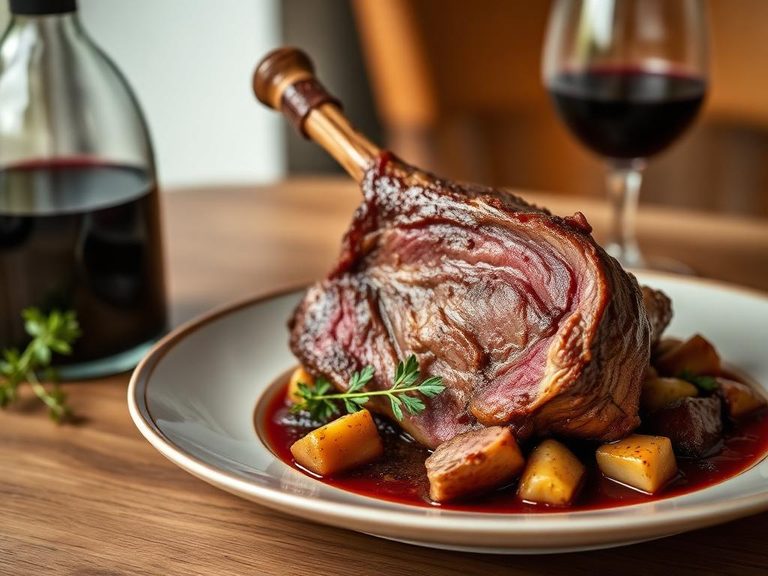
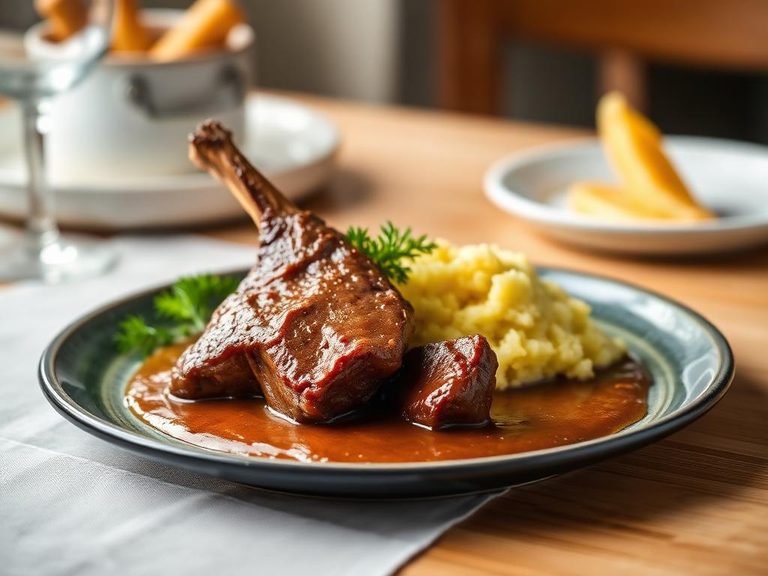
New Zealand lamb fore-shank is a lean, muscular cut prized for its deep, robust flavor that intensifies with slow cooking. When braised, the connective tissue melts into a silky, unctuous texture, while the meat itself remains tender and succulent. With 22g of protein and under 4g of fat per 100g, it's a nutrient-dense powerhouse for muscle maintenance and satiety.
Calorie split: 72% protein · 0% carbs · 28% fat
↓ Full nutrition💚 Why it's loved
People love the fore-shank for its profound, meaty flavor that stands up to bold herbs and spices, making it a centerpiece for comforting, slow-cooked meals. Its versatility in stews, braises, and curries, combined with its ability to become fork-tender, makes it a favorite for home cooks and chefs alike.
⚠️ Watch-outs & how to enjoy it better
The cut can be tough and chewy if not cooked properly, as it requires long, slow, moist heat to break down the collagen. Those watching their sodium intake should be cautious, as many traditional recipes and marinades for lamb shank are high in salt; using low-sodium broths and fresh herbs can help counteract this.
Key benefits
- High-quality complete protein for muscle repair
- Low in carbohydrates and sugar
- Rich in essential minerals like iron and zinc
- Source of B vitamins, especially B12
- Naturally low in fat compared to other lamb cuts
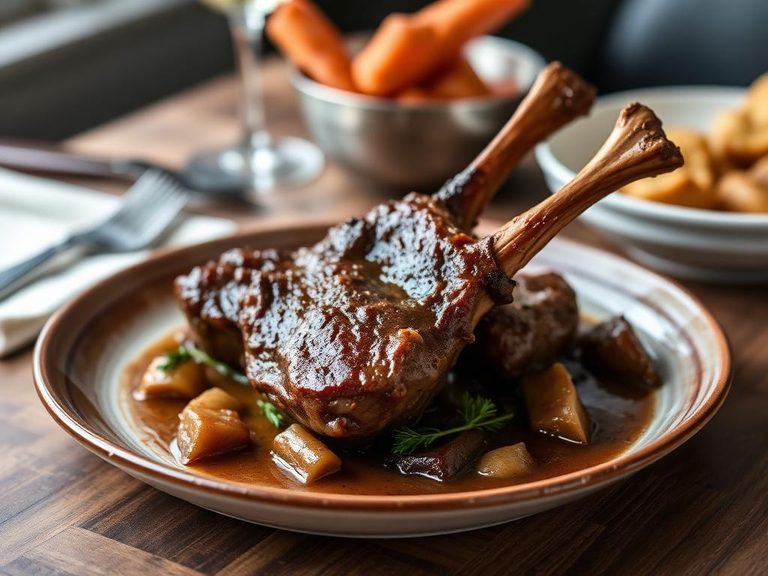
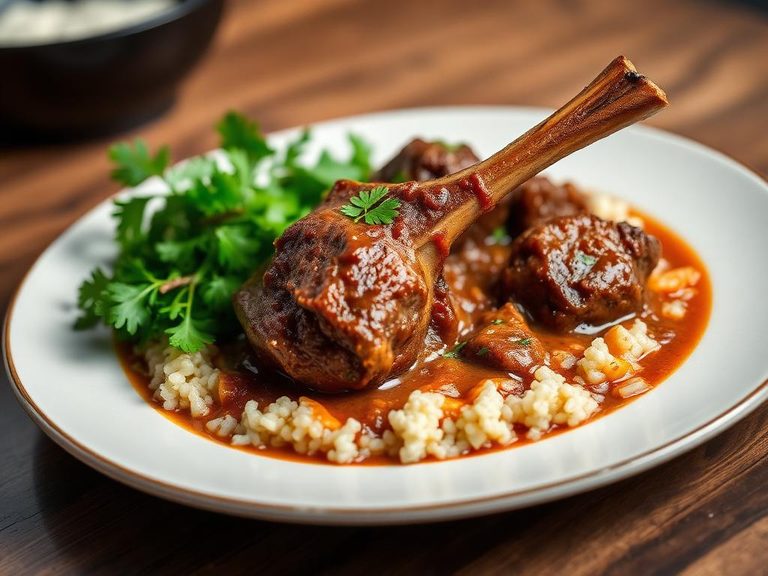
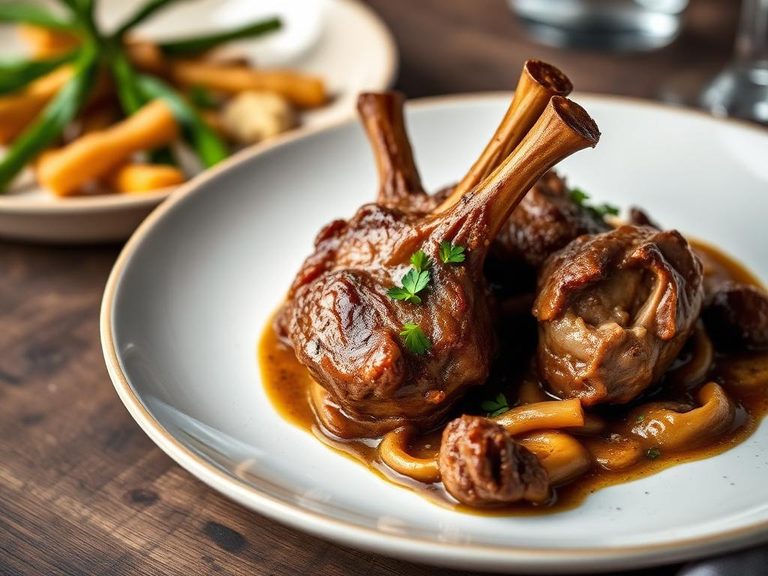
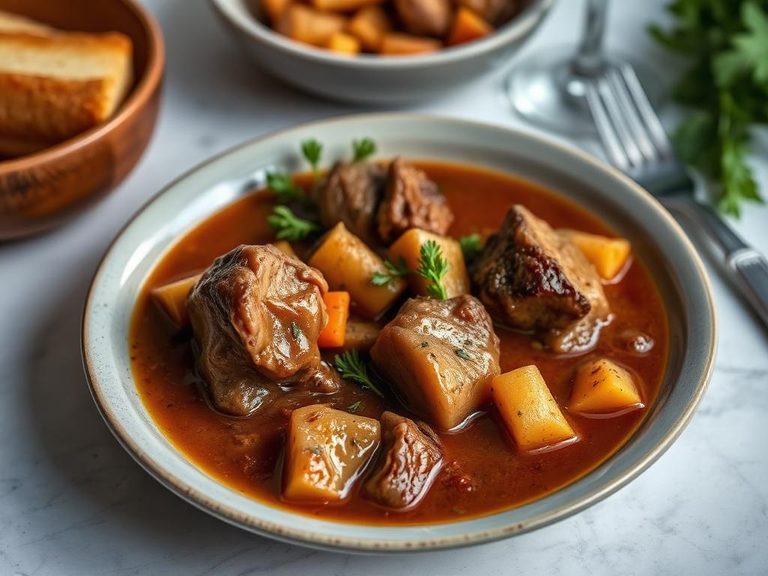
🍽️ Popular dishes
🌍 Where it's eaten
💡 Did you know?
Lamb fore-shank is one of the most exercised muscles on the animal, which is why it's packed with collagen that transforms into rich, gelatinous goodness during slow cooking.
Full nutrition (USDA data · scales with serving)
| Water | 74.5 g |
| Energy | 122 kcal |
| Energy | 511 kj |
| Protein | 22.1 g |
| Total lipid (fat) | 3.8 g |
| Ash | 1.0 g |
| Carbohydrate, by difference | 0.00 g |
| Fiber, total dietary | 0.00 g |
| Total Sugars | 0.00 g |
| Calcium, Ca | 7.0 mg |
| Iron, Fe | 1.4 mg |
| Magnesium, Mg | 20.0 mg |
| Phosphorus, P | 170 mg |
| Potassium, K | 309 mg |
| Sodium, Na | 82.0 mg |
| Zinc, Zn | 4.3 mg |
| Copper, Cu | 0.09 mg |
| Manganese, Mn | 0.01 mg |
| Selenium, Se | 7.0 ug |
| Vitamin C, total ascorbic acid | 0.00 mg |
| Thiamin | 0.10 mg |
| Riboflavin | 0.10 mg |
| Niacin | 4.5 mg |
| Pantothenic acid | 0.47 mg |
| Vitamin B-6 | 0.10 mg |
| Folic acid | 0.00 ug |
| Vitamin B-12 | 2.2 ug |
| Vitamin A, RAE | 3.0 ug |
| Retinol | 3.0 ug |
| Carotene, beta | 0.00 ug |
| Carotene, alpha | 0.00 ug |
| Cryptoxanthin, beta | 0.00 ug |
| Vitamin A, IU | 10.0 iu |
| Lycopene | 0.00 ug |
| Lutein + zeaxanthin | 0.00 ug |
| Vitamin E (alpha-tocopherol) | 0.18 mg |
| Vitamin D (D2 + D3), International Units | 1.0 iu |
| Vitamin D (D2 + D3) | 0.00 ug |
| Vitamin D3 (cholecalciferol) | 0.00 ug |
| Alcohol, ethyl | 0.00 g |
| Caffeine | 0.00 mg |
| Theobromine | 0.00 mg |
Fat & fatty acid profile (per 100g)
| Fatty acids, total saturated | 1.3 g |
| SFA 4:0 | 0.00 g |
| SFA 6:0 | 0.00 g |
| SFA 8:0 | 0.00 g |
| SFA 10:0 | 0.01 g |
| SFA 12:0 | 0.01 g |
| SFA 14:0 | 0.09 g |
| SFA 16:0 | 0.61 g |
| SFA 17:0 | 0.05 g |
| SFA 18:0 | 0.50 g |
| SFA 20:0 | 0.00 g |
| SFA 22:0 | 0.01 g |
| SFA 24:0 | 0.00 g |
| Fatty acids, total monounsaturated | 1.1 g |
| MUFA 14:1 | 0.01 g |
| MUFA 15:1 | 0.00 g |
| MUFA 16:1 | 0.05 g |
| MUFA 16:1 c | 0.05 g |
| MUFA 17:1 | 0.00 g |
| MUFA 18:1 | 1.1 g |
| MUFA 18:1 c | 1.00 g |
| MUFA 20:1 | 0.00 g |
| MUFA 22:1 | 0.00 g |
| MUFA 22:1 c | 0.00 g |
| MUFA 24:1 c | 0.00 g |
| Fatty acids, total polyunsaturated | 0.29 g |
| PUFA 18:2 | 0.16 g |
| PUFA 18:2 n-6 c,c | 0.10 g |
| PUFA 18:2 CLAs | 0.06 g |
| PUFA 18:3 | 0.07 g |
| PUFA 18:3 n-3 c,c,c (ALA) | 0.07 g |
| PUFA 18:3 n-6 c,c,c | 0.00 g |
| PUFA 18:4 | 0.00 g |
| PUFA 20:2 n-6 c,c | 0.00 g |
| PUFA 20:3 | 0.00 g |
| PUFA 20:3 n-3 | 0.00 g |
| PUFA 20:3 n-6 | 0.00 g |
| PUFA 20:4 | 0.03 g |
| PUFA 20:4 n-6 | 0.03 g |
| PUFA 20:5 n-3 (EPA) | 0.02 g |
| PUFA 22:5 n-3 (DPA) | 0.02 g |
| PUFA 22:6 n-3 (DHA) | 0.01 g |
| Fatty acids, total trans | 0.09 g |
| Fatty acids, total trans-monoenoic | 0.09 g |
| TFA 16:1 t | 0.00 g |
| TFA 18:1 t | 0.09 g |
| TFA 18:2 t,t | 0.00 g |
| Fatty acids, total trans-polyenoic | 0.00 g |
| Cholesterol | 65.0 mg |
Amino acid profile (per 100g)
| Tryptophan | 0.24 g |
| Threonine | 1.1 g |
| Isoleucine | 0.99 g |
| Leucine | 1.7 g |
| Lysine | 1.9 g |
| Methionine | 0.72 g |
| Cystine | 0.29 g |
| Phenylalanine | 0.87 g |
| Tyrosine | 0.76 g |
| Valine | 1.1 g |
| Arginine | 1.5 g |
| Histidine | 0.47 g |
| Alanine | 1.1 g |
| Glutamic acid | 3.1 g |
| Glycine | 0.94 g |
| Proline | 0.71 g |
| Serine | 0.75 g |
FAQ
What's the best way to cook lamb fore-shank?
The best method is slow, moist cooking like braising, stewing, or roasting at low temperatures for 2-3 hours to break down the tough connective tissue into tender, flavorful meat.
Is lamb fore-shank a lean cut?
Yes, it is a lean cut with only 3.77g of fat per 100g, making it a good choice for those looking for high-protein, lower-fat meat options.
Can I use lamb fore-shank in a slow cooker?
Absolutely. Slow cookers are ideal for lamb shank, as the long, gentle cooking time ensures the meat becomes fork-tender while developing deep, rich flavors.
Nutrient density (calculated · NRF9.3)
Nutrient Rich Foods index: beneficial nutrients (protein, fiber, vitamins, minerals) minus saturated fat, added sugar & sodium, per 100 kcal.
NRF9.3 index — Fulgoni, Keast & Drewnowski, 2009. Computed from USDA nutrients.
Weight-loss friendliness (composite index)
Energy density 1.22 kcal/g · 72% calories from protein · 0.0 g fiber · 0.0 g sugar per 100 g.
Composite of energy density (Rolls et al., 1999), protein & fiber satiety, minus sugar. A calculated heuristic — ranks satiety-per-calorie, not a clinical measure.
Dietary load (calculated from USDA values)
Potential renal acid load. Positive = acid-forming, negative = alkaline-forming.
Sodium-to-potassium ratio: 0.27 (lower is better — aim for ≤ 1)
Sodium:potassium per WHO potassium guidance. Computed from USDA nutrients.