

Chicken, wing, frozen, glazed, barbecue flavored, heated (conventional oven)
Whole food · Poultry Products
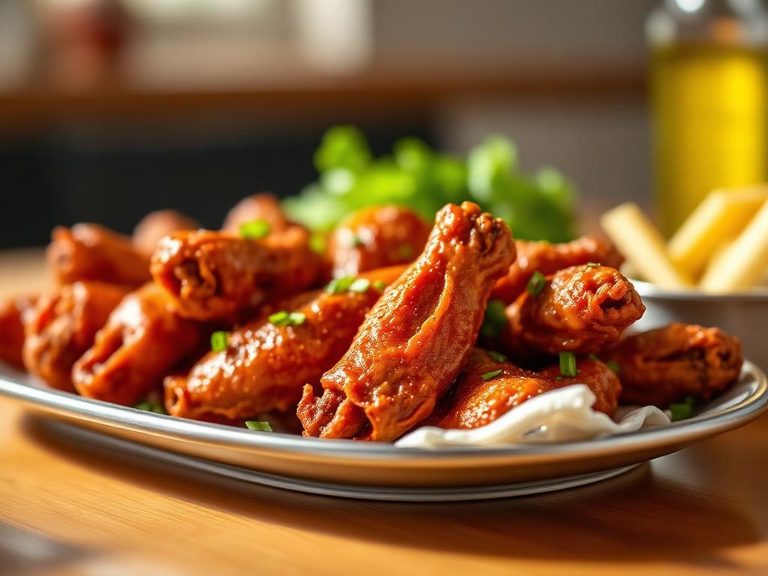
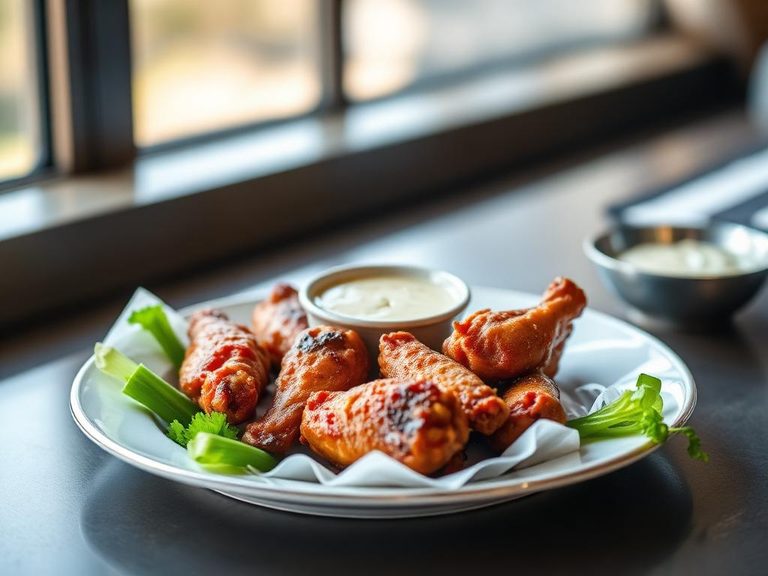
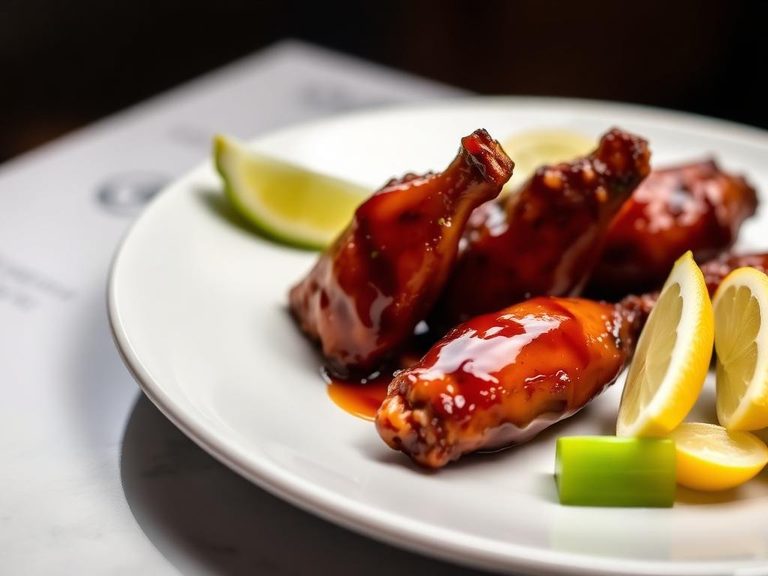
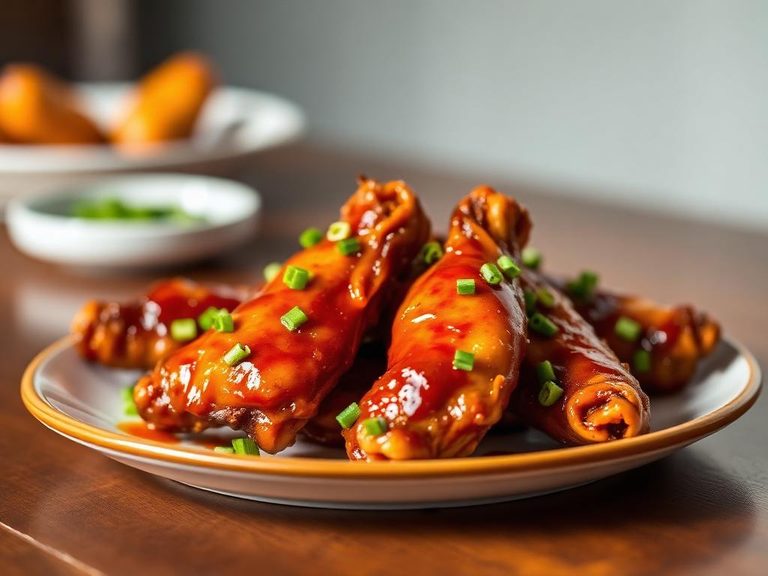
This is a classic, convenient comfort food: a chicken wing coated in a sweet and smoky barbecue glaze, then baked until the skin is sticky and slightly caramelized. The texture is a satisfying mix of tender meat and a slightly chewy, flavorful skin. It's a protein-rich snack or meal component, though the glaze adds a noticeable amount of sugar and fat.
Calorie split: 38% protein · 6% carbs · 57% fat
↓ Full nutrition💚 Why it's loved
People love it for the irresistible combination of smoky, sweet, and savory flavors that are deeply satisfying. It's a culturally iconic food, central to casual gatherings, sports events, and backyard barbecues across the United States.
⚠️ Watch-outs & how to enjoy it better
The glaze can be high in added sugars and sodium, which may concern those monitoring blood sugar or blood pressure. The skin is also high in saturated fat. To counteract this, pair with a large, fiber-rich side salad or steamed vegetables to increase fullness and slow sugar absorption, and practice portion control by enjoying 2-3 wings as a treat rather than a full meal.
Key benefits
- High-quality protein source (22g per 100g) for muscle maintenance.
- Convenient and quick to prepare from frozen.
- Provides essential minerals like phosphorus and selenium.
- A satisfying, flavorful option for high-protein diets.
🍽️ Popular dishes
🌍 Where it's eaten
💡 Did you know?
The modern concept of the 'Buffalo wing' was reportedly invented by accident in 1964 at the Anchor Bar in Buffalo, New York, when the owner's son and his friends wanted a late-night snack.
Full nutrition (USDA data · scales with serving)
| Water | 57.3 g |
| Energy | 242 kcal |
| Energy | 1013 kj |
| Protein | 22.2 g |
| Total lipid (fat) | 14.9 g |
| Ash | 2.3 g |
| Carbohydrate, by difference | 3.4 g |
| Fiber, total dietary | 0.50 g |
| Total Sugars | 1.9 g |
| Sucrose | 0.60 g |
| Glucose | 0.92 g |
| Fructose | 0.34 g |
| Lactose | 0.00 g |
| Maltose | 0.07 g |
| Galactose | 0.00 g |
| Starch | 0.76 g |
| Calcium, Ca | 28.0 mg |
| Iron, Fe | 2.0 mg |
| Magnesium, Mg | 21.0 mg |
| Phosphorus, P | 233 mg |
| Potassium, K | 218 mg |
| Sodium, Na | 559 mg |
| Zinc, Zn | 1.3 mg |
| Copper, Cu | 0.00 mg |
| Manganese, Mn | 0.00 mg |
| Selenium, Se | 34.2 ug |
| Vitamin C, total ascorbic acid | 0.00 mg |
| Thiamin | 0.12 mg |
| Riboflavin | 0.26 mg |
| Niacin | 6.0 mg |
| Pantothenic acid | 0.60 mg |
| Vitamin B-6 | 0.18 mg |
| Folate, total | 10.0 ug |
| Folic acid | 0.00 ug |
| Folate, food | 10.0 ug |
| Folate, DFE | 10.0 ug |
| Vitamin B-12 | 0.55 ug |
| Vitamin A, RAE | 21.0 ug |
| Retinol | 21.0 ug |
| Carotene, beta | 0.00 ug |
| Carotene, alpha | 0.00 ug |
| Cryptoxanthin, beta | 0.00 ug |
| Vitamin A, IU | 69.0 iu |
| Lycopene | 0.00 ug |
| Lutein + zeaxanthin | 0.00 ug |
| Vitamin E (alpha-tocopherol) | 0.44 mg |
| Tocopherol, beta | 0.01 mg |
| Tocopherol, gamma | 0.40 mg |
| Tocopherol, delta | 0.09 mg |
| Tocotrienol, alpha | 0.08 mg |
| Tocotrienol, beta | 0.00 mg |
| Tocotrienol, gamma | 0.09 mg |
| Tocotrienol, delta | 0.00 mg |
| Alcohol, ethyl | 0.00 g |
| Caffeine | 0.00 mg |
| Theobromine | 0.00 mg |
Fat & fatty acid profile (per 100g)
| Fatty acids, total saturated | 4.0 g |
| SFA 4:0 | 0.00 g |
| SFA 6:0 | 0.00 g |
| SFA 8:0 | 0.00 g |
| SFA 10:0 | 0.00 g |
| SFA 12:0 | 0.00 g |
| SFA 14:0 | 0.08 g |
| SFA 15:0 | 0.00 g |
| SFA 16:0 | 3.1 g |
| SFA 17:0 | 0.01 g |
| SFA 18:0 | 0.72 g |
| SFA 20:0 | 0.01 g |
| SFA 22:0 | 0.00 g |
| SFA 24:0 | 0.00 g |
| Fatty acids, total monounsaturated | 6.7 g |
| MUFA 14:1 | 0.03 g |
| MUFA 15:1 | 0.00 g |
| MUFA 16:1 | 1.1 g |
| MUFA 17:1 | 0.00 g |
| MUFA 18:1 | 5.5 g |
| MUFA 20:1 | 0.05 g |
| MUFA 22:1 | 0.00 g |
| Fatty acids, total polyunsaturated | 2.8 g |
| PUFA 18:2 | 2.5 g |
| PUFA 18:3 | 0.14 g |
| PUFA 18:4 | 0.03 g |
| PUFA 20:2 n-6 c,c | 0.02 g |
| PUFA 20:3 | 0.03 g |
| PUFA 20:4 | 0.09 g |
| PUFA 20:5 n-3 (EPA) | 0.00 g |
| PUFA 22:5 n-3 (DPA) | 0.03 g |
| PUFA 22:6 n-3 (DHA) | 0.01 g |
| Cholesterol | 136 mg |
Amino acid profile (per 100g)
| Tryptophan | 0.20 g |
| Threonine | 0.84 g |
| Isoleucine | 0.84 g |
| Leucine | 1.4 g |
| Lysine | 1.5 g |
| Methionine | 0.47 g |
| Cystine | 0.21 g |
| Phenylalanine | 0.82 g |
| Tyrosine | 0.56 g |
| Valine | 0.92 g |
| Arginine | 1.3 g |
| Histidine | 0.52 g |
| Alanine | 1.2 g |
| Aspartic acid | 1.9 g |
| Glutamic acid | 2.9 g |
| Glycine | 1.4 g |
| Proline | 1.0 g |
| Serine | 0.80 g |
| Hydroxyproline | 0.58 g |
FAQ
How does the nutritional profile change if I remove the skin?
Removing the skin significantly reduces the fat and calorie content, but you also lose a large portion of the flavor from the glaze and rendered fat. The protein content remains high.
Is this a good option for a low-carb diet?
It can be, but with caution. The chicken itself is zero-carb, but the barbecue glaze typically contains sugar. Checking the label for 'total carbohydrates' is essential; some brands have 2-3g per wing, others more.
What's the best way to reheat these to keep the skin from getting soggy?
Reheat in a conventional oven or toaster oven at 375°F (190°C) for 10-15 minutes. Avoid the microwave, which will steam the skin and make it rubbery.
Nutrient density (calculated · NRF9.3)
Nutrient Rich Foods index: beneficial nutrients (protein, fiber, vitamins, minerals) minus saturated fat, added sugar & sodium, per 100 kcal.
NRF9.3 index — Fulgoni, Keast & Drewnowski, 2009. Computed from USDA nutrients.
Weight-loss friendliness (composite index)
Energy density 2.42 kcal/g · 37% calories from protein · 0.5 g fiber · 1.9 g sugar per 100 g.
Composite of energy density (Rolls et al., 1999), protein & fiber satiety, minus sugar. A calculated heuristic — ranks satiety-per-calorie, not a clinical measure.
Dietary load (calculated from USDA values)
Potential renal acid load. Positive = acid-forming, negative = alkaline-forming.
Sodium-to-potassium ratio: 2.56 (lower is better — aim for ≤ 1)
Sodium:potassium per WHO potassium guidance. Computed from USDA nutrients.