

Beef, variety meats and by-products, tripe, raw
Whole food · Beef Products

Photo: Wikipedia
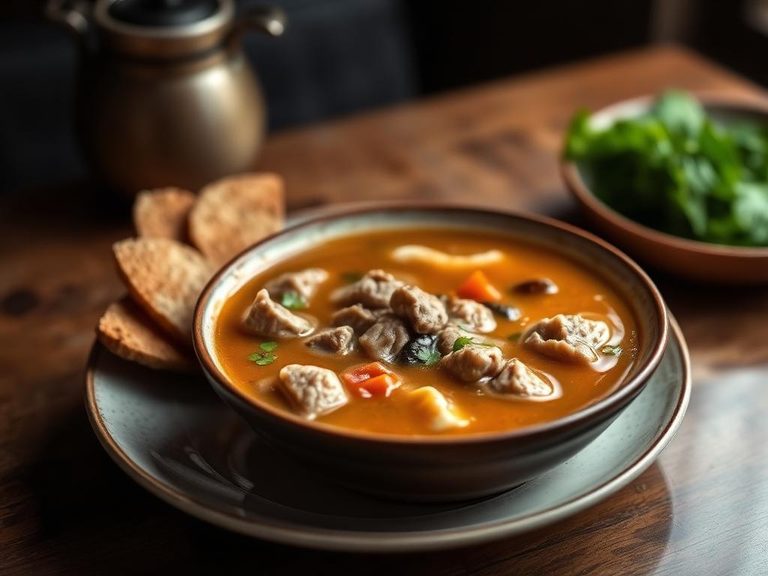
Beef tripe is the edible stomach lining of cattle, prized for its unique, honeycomb-like texture and mild, savory flavor that absorbs the seasonings of any dish it's cooked in. Nutritionally, it's a lean protein powerhouse with virtually no carbohydrates, making it a staple in many traditional cuisines. When properly cleaned and slow-cooked, it transforms from a tough cut into a tender, gelatinous delicacy.
Calorie split: 59% protein · 0% carbs · 41% fat
↓ Full nutrition💚 Why it's loved
People love tripe for its incredible ability to soak up rich broths and spices, becoming a flavor sponge in stews and soups. It's a cultural cornerstone in many cuisines, often celebrated in hearty, comforting dishes that bring families together.
⚠️ Watch-outs & how to enjoy it better
The primary downside is its strong, sometimes off-putting smell and texture if not prepared correctly, which can be a barrier for newcomers. To counteract this, it must be thoroughly cleaned and blanched before cooking, and it's best paired with bold, acidic ingredients like tomatoes or vinegar to balance its richness.
Key benefits
- High-quality, low-fat protein source
- Rich in collagen and gelatin for joint and gut health
- Contains B vitamins, especially B12, for energy
- Naturally low in carbohydrates and sugar
- Provides essential minerals like iron and zinc
🍽️ Popular dishes
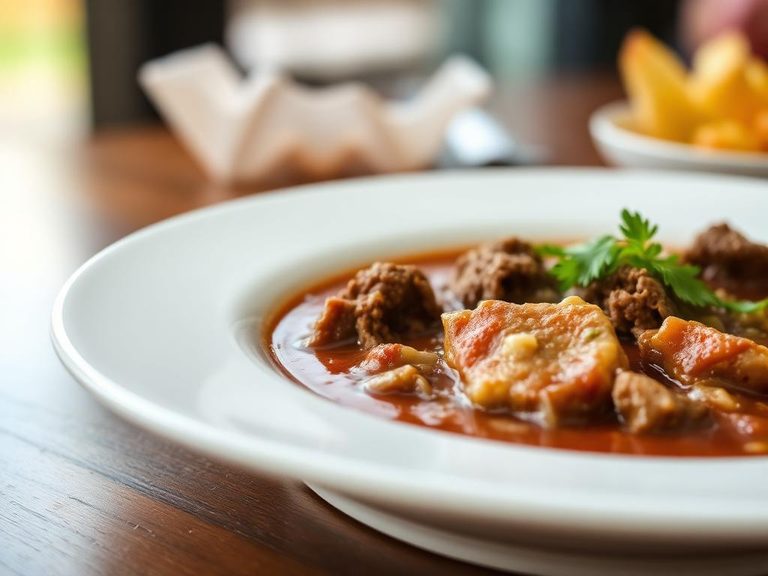
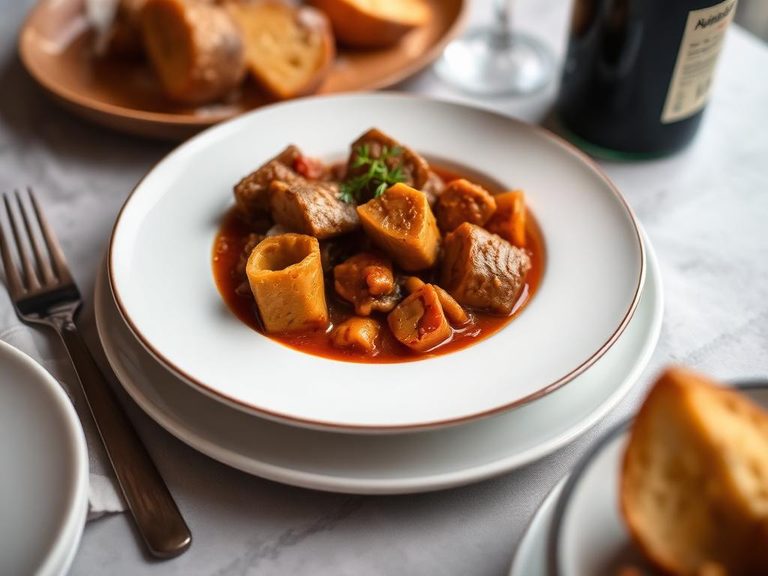
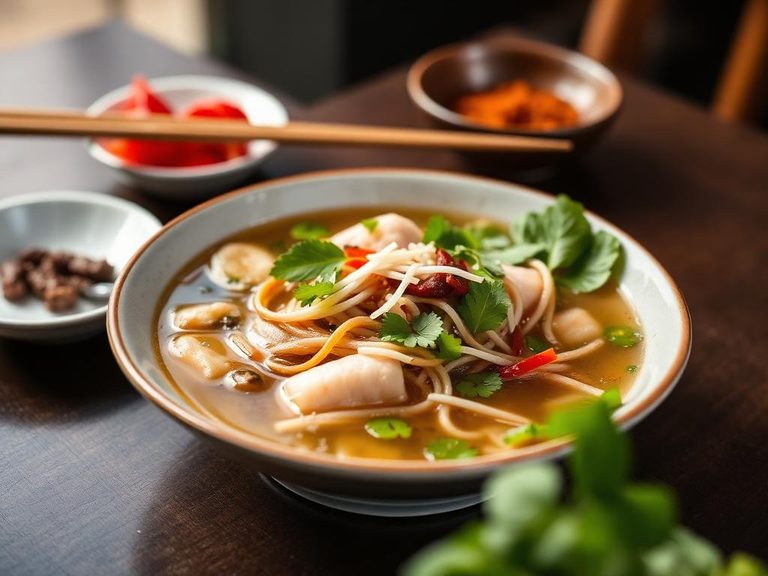
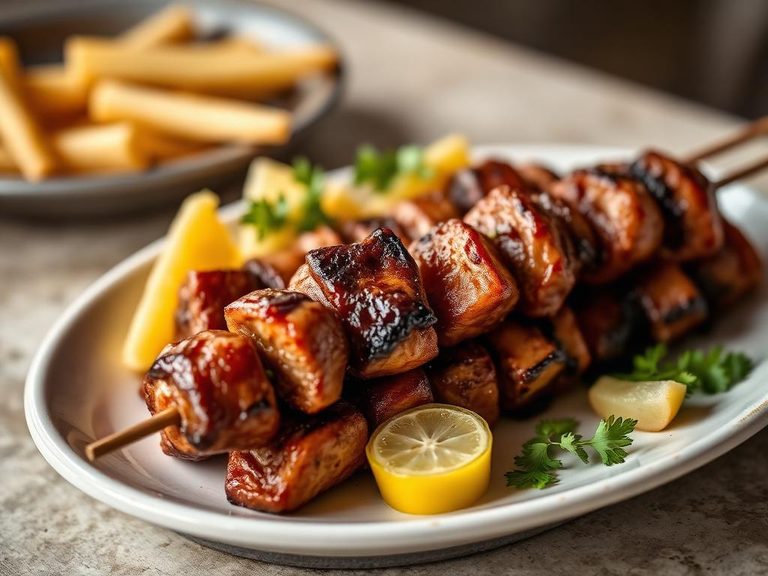
🌍 Where it's eaten
💡 Did you know?
Beef tripe is one of the few foods that is naturally high in the enzyme papain, which helps break down proteins and aids digestion.
Full nutrition (USDA data · scales with serving)
| Water | 84.2 g |
| Energy | 85.0 kcal |
| Energy | 355 kj |
| Protein | 12.1 g |
| Total lipid (fat) | 3.7 g |
| Ash | 0.55 g |
| Carbohydrate, by difference | 0.00 g |
| Fiber, total dietary | 0.00 g |
| Total Sugars | 0.00 g |
| Calcium, Ca | 69.0 mg |
| Iron, Fe | 0.59 mg |
| Magnesium, Mg | 13.0 mg |
| Phosphorus, P | 64.0 mg |
| Potassium, K | 67.0 mg |
| Sodium, Na | 97.0 mg |
| Zinc, Zn | 1.4 mg |
| Copper, Cu | 0.07 mg |
| Manganese, Mn | 0.09 mg |
| Selenium, Se | 12.5 ug |
| Vitamin C, total ascorbic acid | 0.00 mg |
| Thiamin | 0.00 mg |
| Riboflavin | 0.06 mg |
| Niacin | 0.88 mg |
| Pantothenic acid | 0.23 mg |
| Vitamin B-6 | 0.01 mg |
| Folate, total | 5.0 ug |
| Folic acid | 0.00 ug |
| Folate, food | 5.0 ug |
| Folate, DFE | 5.0 ug |
| Choline, total | 195 mg |
| Vitamin B-12 | 1.4 ug |
| Vitamin B-12, added | 0.00 ug |
| Vitamin A, RAE | 0.00 ug |
| Retinol | 0.00 ug |
| Carotene, beta | 0.00 ug |
| Carotene, alpha | 0.00 ug |
| Cryptoxanthin, beta | 0.00 ug |
| Vitamin A, IU | 0.00 iu |
| Lycopene | 0.00 ug |
| Lutein + zeaxanthin | 0.00 ug |
| Vitamin E (alpha-tocopherol) | 0.09 mg |
| Vitamin E, added | 0.00 mg |
| Tocopherol, beta | 0.00 mg |
| Tocopherol, gamma | 0.02 mg |
| Tocopherol, delta | 0.00 mg |
| Tocotrienol, alpha | 0.02 mg |
| Tocotrienol, beta | 0.00 mg |
| Tocotrienol, gamma | 0.00 mg |
| Tocotrienol, delta | 0.00 mg |
| Vitamin D (D2 + D3), International Units | 0.00 iu |
| Vitamin D (D2 + D3) | 0.00 ug |
| Vitamin D3 (cholecalciferol) | 0.00 ug |
| Vitamin K (phylloquinone) | 0.00 ug |
| Alcohol, ethyl | 0.00 g |
| Caffeine | 0.00 mg |
| Theobromine | 0.00 mg |
Fat & fatty acid profile (per 100g)
| Fatty acids, total saturated | 1.3 g |
| SFA 4:0 | 0.00 g |
| SFA 6:0 | 0.00 g |
| SFA 8:0 | 0.00 g |
| SFA 10:0 | 0.00 g |
| SFA 12:0 | 0.00 g |
| SFA 14:0 | 0.07 g |
| SFA 15:0 | 0.02 g |
| SFA 16:0 | 0.64 g |
| SFA 17:0 | 0.08 g |
| SFA 18:0 | 0.46 g |
| SFA 20:0 | 0.00 g |
| SFA 22:0 | 0.01 g |
| Fatty acids, total monounsaturated | 1.5 g |
| MUFA 14:1 | 0.01 g |
| MUFA 15:1 | 0.00 g |
| MUFA 16:1 | 0.09 g |
| MUFA 18:1 | 1.4 g |
| MUFA 20:1 | 0.02 g |
| MUFA 22:1 | 0.00 g |
| Fatty acids, total polyunsaturated | 0.18 g |
| PUFA 18:2 | 0.12 g |
| PUFA 18:3 | 0.01 g |
| PUFA 18:3 n-3 c,c,c (ALA) | 0.01 g |
| PUFA 18:3 n-6 c,c,c | 0.00 g |
| PUFA 18:4 | 0.00 g |
| PUFA 20:2 n-6 c,c | 0.01 g |
| PUFA 20:3 | 0.00 g |
| PUFA 20:4 | 0.05 g |
| PUFA 20:5 n-3 (EPA) | 0.00 g |
| PUFA 22:5 n-3 (DPA) | 0.00 g |
| PUFA 22:6 n-3 (DHA) | 0.00 g |
| Fatty acids, total trans | 0.15 g |
| Cholesterol | 122 mg |
Amino acid profile (per 100g)
Estimated from Beef, variety meats and by-products, mechanically separated beef, raw — USDA does not publish this profile for Beef.
| Tryptophan | 0.17 g |
| Threonine | 0.47 g |
| Isoleucine | 0.58 g |
| Leucine | 1.2 g |
| Lysine | 1.2 g |
| Methionine | 0.43 g |
| Cystine | 0.23 g |
| Phenylalanine | 0.64 g |
| Tyrosine | 0.38 g |
| Valine | 0.92 g |
| Arginine | 1.2 g |
| Histidine | 0.44 g |
| Alanine | 1.0 g |
| Aspartic acid | 1.3 g |
| Glutamic acid | 2.1 g |
| Glycine | 1.2 g |
| Proline | 0.92 g |
| Serine | 0.57 g |
FAQ
How do I clean and prepare raw tripe?
Rinse thoroughly under cold water, then blanch in boiling water with vinegar or lemon juice for 10-15 minutes to remove impurities and odor. Repeat if necessary, then simmer for several hours until tender.
Is tripe high in cholesterol?
While tripe contains cholesterol, it is relatively low in saturated fat compared to other organ meats. Moderation is key, and it can be part of a balanced diet when consumed in reasonable portions.
Can I use tripe in a slow cooker?
Yes, tripe is ideal for slow cooking. It requires long, gentle cooking (2-4 hours) to become tender, so a slow cooker or pressure cooker is perfect for breaking down its tough fibers.
Nutrient density (calculated · NRF9.3)
Nutrient Rich Foods index: beneficial nutrients (protein, fiber, vitamins, minerals) minus saturated fat, added sugar & sodium, per 100 kcal.
NRF9.3 index — Fulgoni, Keast & Drewnowski, 2009. Computed from USDA nutrients.
Weight-loss friendliness (composite index)
Energy density 0.85 kcal/g · 57% calories from protein · 0.0 g fiber · 0.0 g sugar per 100 g.
Composite of energy density (Rolls et al., 1999), protein & fiber satiety, minus sugar. A calculated heuristic — ranks satiety-per-calorie, not a clinical measure.
Dietary load (calculated from USDA values)
Potential renal acid load. Positive = acid-forming, negative = alkaline-forming.
Sodium-to-potassium ratio: 1.45 (lower is better — aim for ≤ 1)
Sodium:potassium per WHO potassium guidance. Computed from USDA nutrients.