

Kokoretsi
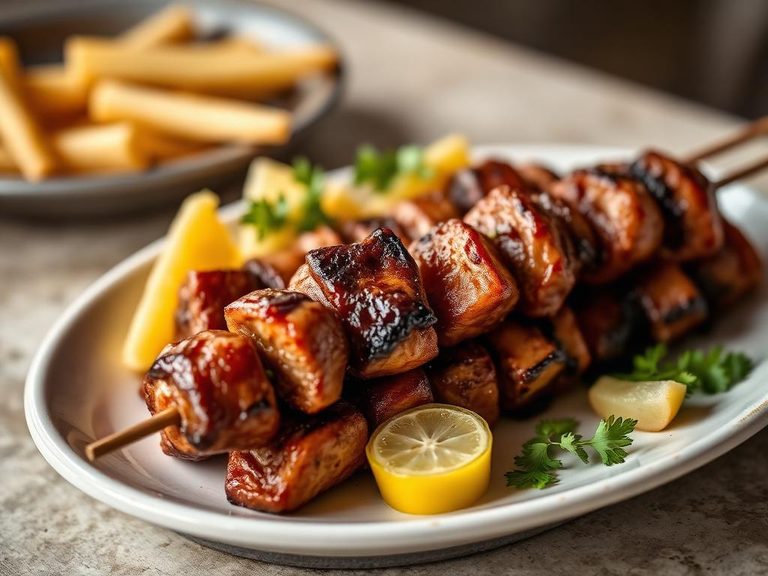
Kokoretsi is a traditional Greek Easter dish made from seasoned lamb or goat offal (often heart, liver, and lungs) wrapped in cleaned intestines and grilled on a spit. The intestines act as a natural casing, crisping up while keeping the inner meat juicy and flavorful. It's a celebratory centerpiece, especially popular during Orthodox Easter festivities.
🍽️ Nutrition at a glance
This dish is very high in protein and fat, with minimal carbohydrates. It provides rich sources of iron, vitamin B12, and zinc, with a rough calorie count of 350-450 per serving, depending on the specific cuts and preparation.
Nutrition breakdown
| Calories | 350 kcal |
| Protein | 28 g |
| Carbs | 2 g |
| Fat | 25 g |
| Fiber | 0 g |
| Sugar | 0 g |
| Sodium | 600 mg |
| Iron | 4.5 mg |
| Vitamin B12 | 25 µg |
| Zinc | 5 mg |
| Selenium | 35 µg |
| Phosphorus | 300 mg |
| Vitamin A | 400 µg |
| Copper | 0.6 mg |
| Niacin (B3) | 10 mg |
Per 1 skewer (about 150 g) · estimated, varies by recipe
💡 What's interesting
Kokoretsi is a prime example of nose-to-tail eating, a culinary tradition that honors the whole animal and reduces waste. Its unique preparation, where intestines are used as a natural casing for other organs, showcases a resourceful and flavorful approach to cooking that's deeply rooted in Greek pastoral culture.
🍽️ Related dishes
AI estimate may be inaccurate · Terms