

Beef, short loin, porterhouse steak, separable lean and fat, trimmed to 1/8" fat, all grades, raw
Whole food · Beef Products

Photo: Wikipedia
A porterhouse steak is a premium cut from the short loin, distinguished by a generous T-shaped bone that separates two distinct muscles: the larger, beefy strip loin and the tender, buttery tenderloin. When trimmed to 1/8-inch fat and served raw, it presents a deep ruby-red color with fine marbling, promising a rich, beefy flavor and a luxuriously tender texture upon cooking. Nutritionally, it's a powerhouse of high-quality protein with a substantial fat content that contributes to its signature juiciness and mouthfeel.
Calorie split: 39% protein · 0% carbs · 61% fat
↓ Full nutrition💚 Why it's loved
People adore the porterhouse for its unique 'two-steaks-in-one' experience, offering the best of both worlds: the robust flavor of the strip and the melt-in-your-mouth tenderness of the filet. It's the ultimate centerpiece for celebratory meals, symbolizing indulgence and culinary tradition, especially in American steakhouses.
⚠️ Watch-outs & how to enjoy it better
The significant fat and calorie density (214 kcal per 100g) requires mindful portion control for those managing weight or cardiovascular health. To counteract this, pair a smaller steak with fiber-rich, non-starchy vegetables like roasted broccoli or a large salad to enhance satiety and balance the meal. Always cook to a safe internal temperature (145°F for medium-rare) to minimize foodborne risk.
Key benefits
- Excellent source of complete protein for muscle maintenance and repair
- Provides essential nutrients like iron, zinc, and B vitamins (especially B12)
- Fat content includes monounsaturated fats and conjugated linoleic acid (CLA)
- Contains no carbohydrates, making it suitable for low-carb and ketogenic diets
🍽️ Popular dishes
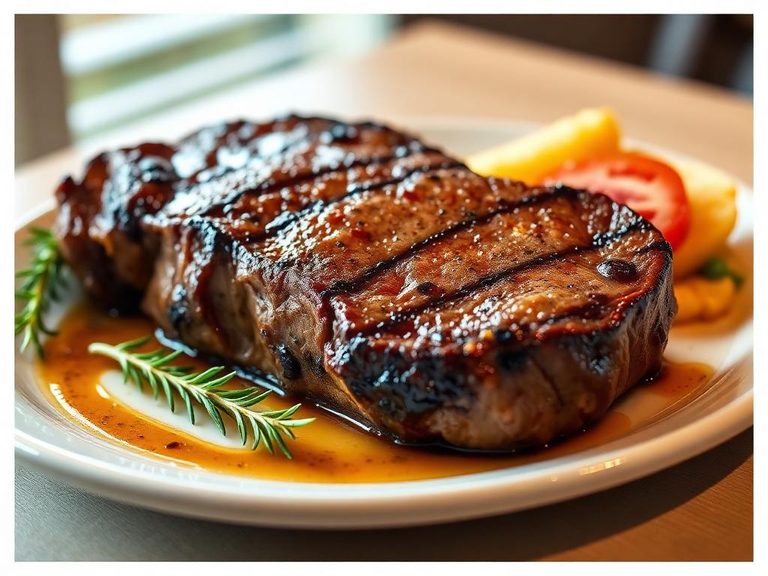
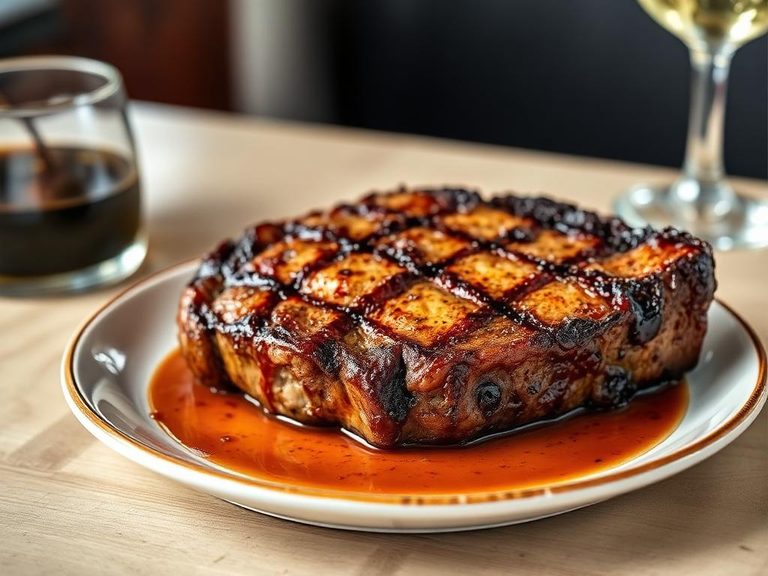
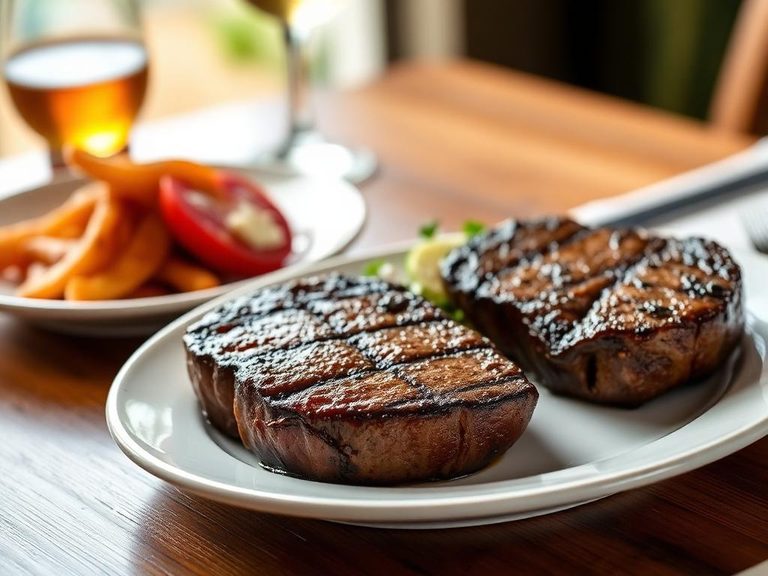
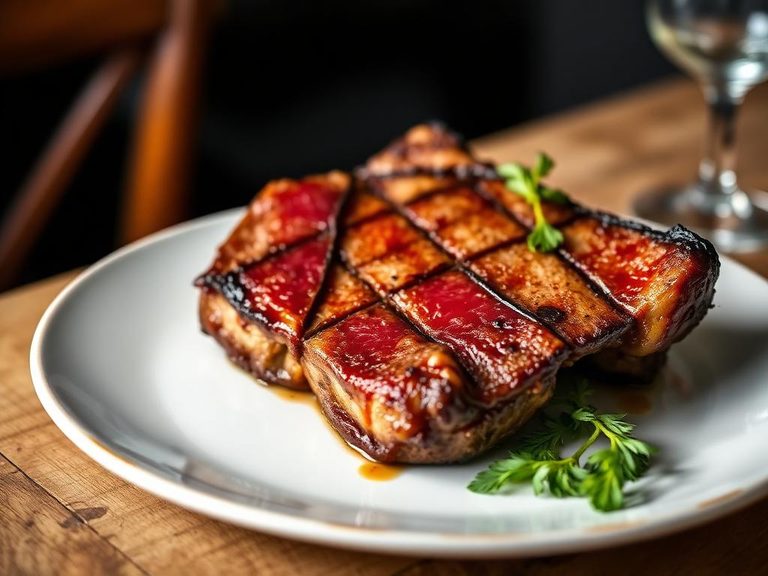
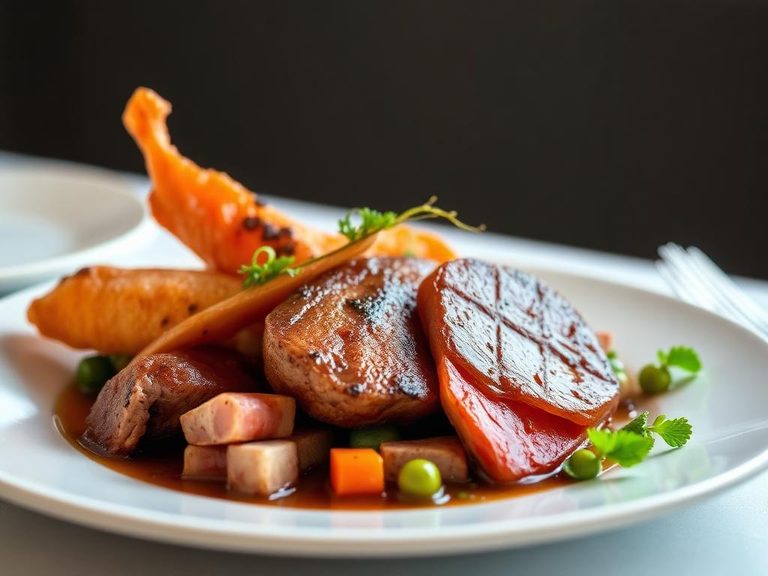
🌍 Where it's eaten
💡 Did you know?
The 'porterhouse' name likely originated in the 19th century from a New York City porterhouse (a type of tavern or beer house) that was famous for serving this particular cut of beef to its patrons.
Full nutrition (USDA data · scales with serving)
| Water | 64.7 g |
| Energy | 214 kcal |
| Energy | 897 kj |
| Protein | 20.5 g |
| Total lipid (fat) | 14.1 g |
| Ash | 0.94 g |
| Carbohydrate, by difference | 0.00 g |
| Fiber, total dietary | 0.00 g |
| Total Sugars | 0.00 g |
| Calcium, Ca | 19.0 mg |
| Iron, Fe | 2.0 mg |
| Magnesium, Mg | 10.0 mg |
| Phosphorus, P | 185 mg |
| Potassium, K | 243 mg |
| Sodium, Na | 48.0 mg |
| Zinc, Zn | 3.1 mg |
| Copper, Cu | 0.06 mg |
| Manganese, Mn | 0.00 mg |
| Selenium, Se | 19.7 ug |
| Vitamin C, total ascorbic acid | 0.00 mg |
| Thiamin | 0.05 mg |
| Riboflavin | 0.23 mg |
| Niacin | 4.9 mg |
| Vitamin B-6 | 0.62 mg |
| Folate, total | 3.0 ug |
| Folic acid | 0.00 ug |
| Folate, food | 3.0 ug |
| Folate, DFE | 3.0 ug |
| Choline, total | 53.0 mg |
| Betaine | 9.0 mg |
| Vitamin B-12 | 1.8 ug |
| Vitamin B-12, added | 0.00 ug |
| Vitamin A, RAE | 4.0 ug |
| Retinol | 4.0 ug |
| Carotene, beta | 0.00 ug |
| Carotene, alpha | 0.00 ug |
| Cryptoxanthin, beta | 0.00 ug |
| Vitamin A, IU | 14.0 iu |
| Lycopene | 0.00 ug |
| Lutein + zeaxanthin | 0.00 ug |
| Vitamin E (alpha-tocopherol) | 0.24 mg |
| Vitamin E, added | 0.00 mg |
| Vitamin D (D2 + D3), International Units | 4.0 iu |
| Vitamin D (D2 + D3) | 0.10 ug |
| Vitamin D3 (cholecalciferol) | 0.10 ug |
| Vitamin K (phylloquinone) | 1.5 ug |
| Alcohol, ethyl | 0.00 g |
| Caffeine | 0.00 mg |
| Theobromine | 0.00 mg |
Fat & fatty acid profile (per 100g)
| Fatty acids, total saturated | 6.0 g |
| SFA 4:0 | 0.00 g |
| SFA 6:0 | 0.00 g |
| SFA 8:0 | 0.00 g |
| SFA 10:0 | 0.01 g |
| SFA 12:0 | 0.01 g |
| SFA 14:0 | 0.42 g |
| SFA 15:0 | 0.07 g |
| SFA 16:0 | 3.3 g |
| SFA 17:0 | 0.17 g |
| SFA 18:0 | 2.0 g |
| SFA 20:0 | 0.01 g |
| SFA 24:0 | 0.00 g |
| Fatty acids, total monounsaturated | 6.5 g |
| MUFA 14:1 | 0.11 g |
| MUFA 16:1 | 0.49 g |
| MUFA 16:1 c | 0.45 g |
| MUFA 17:1 | 0.12 g |
| MUFA 18:1 | 5.8 g |
| MUFA 18:1 c | 5.1 g |
| MUFA 20:1 | 0.03 g |
| MUFA 22:1 | 0.00 g |
| Fatty acids, total polyunsaturated | 0.66 g |
| PUFA 18:2 | 0.56 g |
| PUFA 18:2 n-6 c,c | 0.41 g |
| PUFA 18:2 CLAs | 0.07 g |
| PUFA 18:3 | 0.03 g |
| PUFA 18:3 n-3 c,c,c (ALA) | 0.03 g |
| PUFA 18:4 | 0.00 g |
| PUFA 20:2 n-6 c,c | 0.00 g |
| PUFA 20:3 | 0.02 g |
| PUFA 20:3 n-6 | 0.02 g |
| PUFA 20:4 | 0.04 g |
| PUFA 20:5 n-3 (EPA) | 0.00 g |
| PUFA 22:5 n-3 (DPA) | 0.01 g |
| PUFA 22:6 n-3 (DHA) | 0.00 g |
| Fatty acids, total trans | 0.85 g |
| Fatty acids, total trans-monoenoic | 0.77 g |
| TFA 16:1 t | 0.04 g |
| TFA 18:1 t | 0.72 g |
| TFA 18:2 t not further defined | 0.08 g |
| Fatty acids, total trans-polyenoic | 0.08 g |
| Cholesterol | 61.0 mg |
Amino acid profile (per 100g)
| Tryptophan | 0.23 g |
| Threonine | 0.97 g |
| Isoleucine | 0.95 g |
| Leucine | 1.8 g |
| Lysine | 2.0 g |
| Methionine | 0.55 g |
| Cystine | 0.21 g |
| Phenylalanine | 0.82 g |
| Tyrosine | 0.76 g |
| Valine | 1.0 g |
| Arginine | 1.4 g |
| Histidine | 0.77 g |
| Alanine | 1.3 g |
| Aspartic acid | 2.0 g |
| Glutamic acid | 3.4 g |
| Glycine | 1.0 g |
| Proline | 0.92 g |
| Serine | 0.84 g |
| Hydroxyproline | 0.14 g |
FAQ
What's the difference between a porterhouse and a T-bone steak?
Both come from the short loin and have a T-shaped bone. The key difference is size: a porterhouse must have a tenderloin section at least 1.25 inches wide at its widest point, while a T-bone's tenderloin is smaller. The porterhouse essentially gives you more of the prized tenderloin filet.
How should I cook a raw porterhouse steak for the best results?
For optimal flavor and texture, pat the steak dry, season generously with salt and pepper, and let it come to room temperature. Sear it in a very hot cast-iron skillet or on a grill for a deep crust, then finish in a 400°F (200°C) oven to your desired doneness (130°F for medium-rare). Let it rest for 5-10 minutes before slicing against the grain.
Is the fat on a porterhouse steak healthy to eat?
The fat is a significant source of the steak's flavor and calories. While it contains some beneficial monounsaturated fats, it should be consumed in moderation as part of a balanced diet. You can trim excess external fat before or after cooking if desired, but the internal marbling is what makes the cut tender and juicy.
Nutrient density (calculated · NRF9.3)
Nutrient Rich Foods index: beneficial nutrients (protein, fiber, vitamins, minerals) minus saturated fat, added sugar & sodium, per 100 kcal.
NRF9.3 index — Fulgoni, Keast & Drewnowski, 2009. Computed from USDA nutrients.
Weight-loss friendliness (composite index)
Energy density 2.14 kcal/g · 38% calories from protein · 0.0 g fiber · 0.0 g sugar per 100 g.
Composite of energy density (Rolls et al., 1999), protein & fiber satiety, minus sugar. A calculated heuristic — ranks satiety-per-calorie, not a clinical measure.
Dietary load (calculated from USDA values)
Potential renal acid load. Positive = acid-forming, negative = alkaline-forming.
Sodium-to-potassium ratio: 0.20 (lower is better — aim for ≤ 1)
Sodium:potassium per WHO potassium guidance. Computed from USDA nutrients.